The Quieter Venice: Finding Solitude in Cannaregio and the Lagoon Islands
As luxury hotels migrate to forgotten neighbourhoods and distant islets, the city's most singular pleasures are found where the daytrippers never go.
The Retreat Beyond Strada Nova
There is a moment, somewhere between the fifth bridge and the seventh canal, when the noise begins to recede. The selfie sticks thin out. The tour groups peel away. You are still in Venice, still threading narrow calli between ochre façades and iron balconies strung with laundry, but the city has shifted into a lower register. This is Cannaregio, the northernmost sestiere, where locals still outnumber visitors and the evening light catches on water that moves, for once, undisturbed.
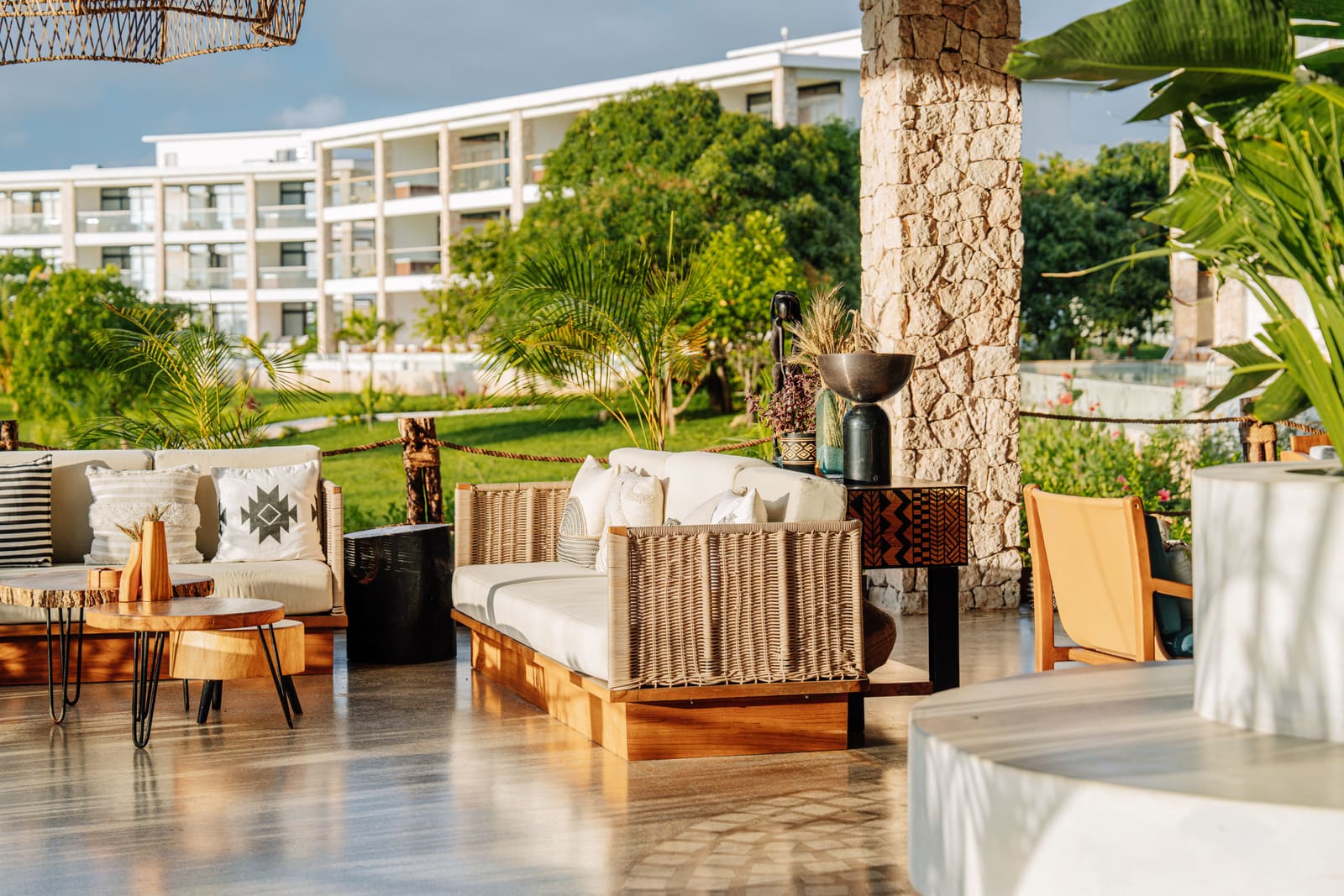
It is here, in a fifteenth-century palazzo along a side canal, that Orient Express Venezia has taken root. The building itself - Palazzo Donà Giovannelli - speaks in frescoes and mosaic floors, in spiral staircases carved from stone and ceilings held aloft by beams dark with age. Architect Aline Asmar d'Amman, who previously reimagined the Hôtel de Crillon in Paris, has threaded art-deco flourishes through the bones of the palace: velvet banquettes, a bar designed to evoke a train carriage, chandeliers that dangle like jewellery. The courtyard at the rear is walled in greenery, striped with shade, silent but for the occasional clink of glass and the rustle of wind through the vines.
Step out the front entrance in the morning and you will find an alleyway, a woman buying bread, a man wheeling a trolley of vegetables. Arrive by boat and you glide up an empty canal to a Gothic water gate, the kind of entrance that feels like a secret even when it is not.
A City Straining Under Its Own Beauty
Venice logged nearly 5.9 million tourist arrivals in 2024, according to official tourism data - a record high and a 2.5 per cent increase on the previous year. The numbers are both a testament to the city's enduring magnetism and a source of mounting tension. The journey from the airport by polished wooden motorboat remains one of the most arresting transfers in the world: a crossing of the lagoon, a slowing as the island nears, a passage beneath arched bridges and past palazzi the colour of apricot and rose that seem to rise straight out of the water. But set foot on the Riva degli Schiavoni in high season and the romance collapses beneath the weight of bodies, flags, and the glare of smartphones held aloft.
The paradox is familiar. Venice is as appealing as it is overwhelming. Those who love it return compulsively, drawn by a singularity that no other city can replicate. "Venice will always be Venice," says Fulvio De Bonis, CEO and founder of Italy-based travel company Imago Artis. "It's one of those places our clients want to come back to again and again. There really is no other city in the world like it."
Yet the pressure is unmistakable. Locals express frustration as private islands and historic buildings are converted into hotels, squeezing out residents and altering the fabric of neighbourhoods. De Bonis acknowledges the tension but suggests that new luxury openings in less-visited quarters may offer a form of relief - not by reducing visitor numbers, but by redistributing them. "We are seeing more luxury hotels looking at neighbourhoods such as Cannaregio, which gives them the opportunity to offer something a little different and, importantly, to become a starting point for discovering other parts of the city and the lagoon."
Islands as Refuge
The recent wave of openings extends beyond the main island. On Giudecca, a narrow strip across the canal from the Zattere, French hospitality group Airelles has opened its first property outside France in a sixteenth-century palace. A five-minute boat ride from Piazza San Marco, it offers proximity without immersion, a vantage point rather than a vortex.
Further out, on Torcello - an island six miles northeast of central Venice, beyond the painted houses of Burano - the Cipriani family has reopened Locanda Cipriani after a two-year restoration. The inn first opened in 1947 and has long been a retreat for those willing to make the journey. Its gardens look out towards the Church of Santa Fosca, a Romanesque structure dating to the eleventh and twelfth centuries, and the island itself retains the quiet of a place that has seen its population dwindle to double digits.
These properties are not merely hotels; they are anchors in a geography that most daytrippers never chart. They unlock parts of the lagoon that have remained, until now, largely the province of locals and the occasional cognoscente. De Bonis suggests that such developments, if managed thoughtfully, can serve a dual purpose: preserving crumbling infrastructure and easing the strain on Venice's historic centre. "There is also a positive side to restoring and preserving some of Venice's beautiful historic palazzi, giving them a new life while protecting an important part of the city's heritage."
The Texture of Cannaregio
Cannaregio itself warrants more than a pass-through. Once home to Gothic palaces and artisans' workshops, it became, in 1516, the site of the city's ghetto - the first in Europe - where Venice's Jewish community was confined and where, today, synagogues and a museum preserve that history. The district is the most populated on the main island, its streets lined with bakeries, hardware shops, and the kind of anonymous doorways that suggest life rather than spectacle.
The Rialto Bridge is a fifteen-minute walk from the Orient Express Venezia, but there is little need to venture that far for sustenance or atmosphere. The Rio della Misericordia, a canal a few minutes south of the hotel, is edged with restaurants and wine bars that fill with locals as the evening deepens. Vino Vero, beneath a green awning, pours natural wines and serves cicchetti - small bites on toasted bread, topped with mortadella, artichoke, or pâté. If the tables are full, it is not uncommon to see diners perched on the edge of the fondamenta, legs dangling over the water, watching boats glide past.
One canal over, Anice Stellato occupies a corner where the light, in the hour before dusk, turns the brick façades the colour of rust. Chef Mattia Cantonetti works with ingredients drawn from the lagoon: zucchini salad, pasta with tomato and mussels, fried sardines that arrive crisp and salt-edged. The cooking is straightforward, rooted in place, and the dining room fills early.
After dinner, the neighbourhood empties. The alleys grow quiet, the only sound the slap of water against stone and the occasional echo of footsteps. At the ferry stop, the lagoon stretches wide and still, the sky fading to pink, and there is no queue, no jostling, no sense that you are sharing this moment with anyone but the city itself.
The Argument for Staying
The question is not whether to visit Venice - its beauty remains undeniable - but how to engage with it in a way that respects both the city and the visitor's own experience. The answer, increasingly, lies in geography. To stay in Cannaregio, Giudecca, or Torcello is to step outside the well-worn circuit, to encounter Venice at a slower pace and in a quieter register. It is to arrive at a restaurant without a reservation and find a table, to walk an alley at night and hear nothing but your own footsteps, to sit by a canal with a glass of wine and watch the light change without interruption.
These are not minor pleasures. In a city where beauty and overcrowding have become inseparable, they are radical ones. The new hotels are making them easier to access, but they are also, in their way, making an argument: that Venice need not be endured. That it can still be savoured. That the city's singularity is not diminished by stepping away from its most famous squares, but rather revealed in the margins, where the crowds have not yet learned to go.
A City on Its Own Terms
Venice will not empty. The daytrippers will continue to arrive by cruise ship and coach, to queue for the Doge's Palace and photograph the Bridge of Sighs. But for those willing to lodge in the periphery, to venture beyond the Strada Nova or across the lagoon, a different Venice emerges - one where the architecture still astonishes, where the water still catches the light, and where the silence, when it comes, feels earned.
The palazzo hotels and island inns are not solutions to overtourism, nor do they claim to be. But they offer something more modest and, perhaps, more valuable: a way in. A starting point. A quiet canal at dusk, a courtyard walled in green, a table by the water where no one is waiting for your seat. In a city that has been photographed, catalogued, and trampled to the point of exhaustion, these small acts of removal feel like a kind of restoration - not of buildings, but of experience. Of the possibility that Venice, approached from the edges, can still surprise.