Bangkok's River of Kings Finds Its Soul Again
Along the Chao Phraya, centuries-old temples and forgotten canals are drawing a new generation of designers, chefs and preservationists back to the water.
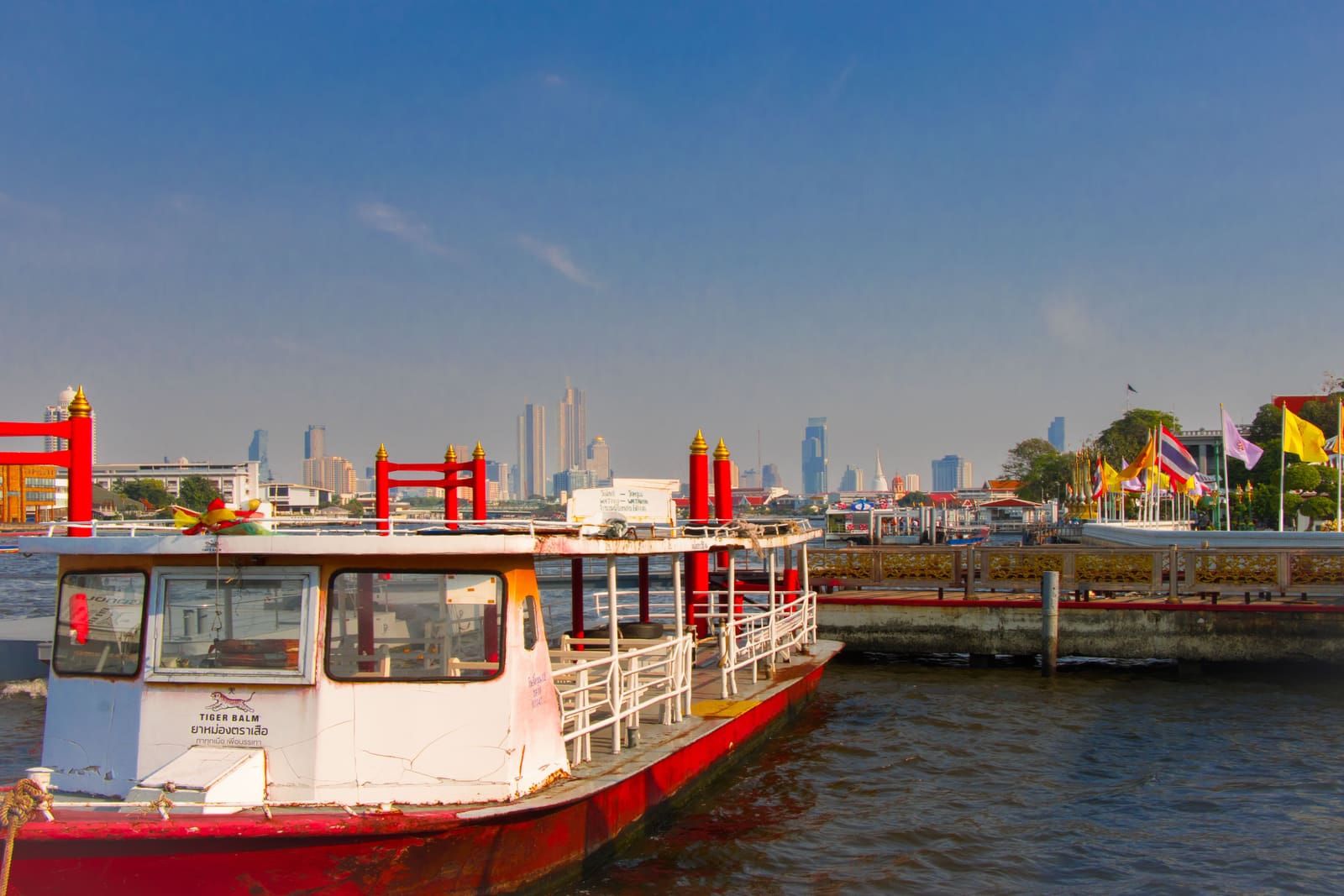
The Colour of Memory
The water runs the colour of terracotta, thick with sediment and history. On a vintage wooden cruiser built in 1957, the late afternoon sun slants through a canvas canopy as the boat slips past Wat Arun's spires and turns into Thonburi's quieter western bank. Interior designer Irinrat Prasongchaikul, who goes by Jern, uncorks champagne and gestures toward the maze of canals branching off the main artery. "I grew up knowing the Chao Phraya was important," she says. "But so much has been forgotten."
For centuries this river, the Chao Phraya or River of Kings, was the pulse of Bangkok. The golden-roofed temples of the Kingdom of Siam rose along its banks in the eighteenth century; European legations and warehouses followed in the 1800s. Then, in the decades after the Second World War, the city's centre of gravity shifted east, toward glass towers and elevated expressways, and the waterfront districts quietly emptied. The River of Kings became a backdrop, admired from a distance but seldom lived with.
That forgetting, however, is ending. Over the past five years a different kind of energy has returned to the river's edge. Preservationists, hoteliers, young chefs and designers have begun filtering back, drawn by the open sky, the old architecture and the sense that something essential to Bangkok's identity still lives here. New ferry routes have stitched neighbourhoods back together. Derelict buildings are being reimagined. The 1888 Custom House is being converted into a hotel under The Langham flag. Plans for a pedestrian bridge are in motion. The Chao Phraya is becoming, once more, a place where the city recognises itself.
Temples, Canals and Floating Wishes
Jern's evening excursion winds deeper into the klong network, narrow canals that branch like capillaries from the main river. The boat moors at a rickety wooden pier beside Wat Ratchaorasaram, a temple compound closed for the day. The abbot agrees to let the group slip inside. In the inner sanctum, an orange-robed monk pauses his vacuuming. Every surface, ceiling to floor, is covered in ancient Buddhist imagery: gods, miracles, cosmologies rendered in pigment that has survived monsoons and neglect.
Dinner is taken at a family-run eatery perched over the water: squid in black sauce, tom yum soup sharp with lime and chilli, giant river prawns. As darkness settles, the boat glides along silent canals toward the floodlit Phra Buddha Dhammakaya Thepmongkhon, a 226-foot golden statue of the seated Buddha. Jern hands each guest a small bowl holding a lit candle. Make a wish, she instructs. The bowls are set on the moonlit water and drift away, small flames flickering like fireflies into the night.
"Water is revered in every form in Thailand," Jern explains. "We're taught to respect Phra Mae Khongkha, the water goddess, associated with purification and fertility. We can live without electricity, but water is our first resource."
The Old Town Awakens
From the Mandarin Oriental Bangkok, celebrating its 150th anniversary this year, the view sweeps across the Chao Phraya's busy traffic: long-tail boats, ferries, cargo barges. The hotel opened in 1876 and has hosted Somerset Maugham, Noël Coward, Graham Greene. Floor-to-ceiling windows in the renovated Garden Wing frame the river like a moving canvas. Below, in the original antique building, white flowers cascade from vases in the Authors' Lounge, where portraits of resident writers line the walls.
A short ferry ride downstream lies Talat Noi, the Small Market district that was Bangkok's commercial hub in the nineteenth century. Its back alleys remain pedestrian-only, save for the occasional motorbike. Fish markets jostle against vendors selling pad thai and duck noodle soup. Used-car-parts dealers, a neighbourhood fixture for decades, occupy shopfronts beside elegantly repurposed relics: the 1940 General Post Office, now the Thailand Creative & Design Center; Second World War-era storehouses transformed into Warehouse 30, filled with furniture and fashion boutiques. The Siam Commercial Bank, established in 1906, has been restored and still operates. The Holy Rosary Church, completed in 1897, raises its Gothic spire above the labyrinth.
Smaller bursts of creativity punctuate the district. Timo and Tintin, a café and gallery near a pier, occupies a shophouse that once belonged to the owner's grandmother. "I used to visit every week as a boy," says Pelagan, a designer in his thirties with bleached hair who also sells art photographs and dog collars. His nickname, he adds mysteriously, is O. Further along, Naam 1608 perches over the river in a creaking wooden structure, accessible only by climbing over piles of rusted auto chassis outside a workshop. Inside, diners on bar stools face directly onto the water, close enough to wave at passing long-tail-boat drivers.
Chinatown's Accidental Pioneers
Across the river from Wat Arun, the boutique hotel Sala Rattanakosin sits amid the waterfront bustle of Chinatown. To reach the entrance, guests navigate a pedestrian path shared with tattooed warehouse workers shouldering sacks of rice. The temple's magnificent silhouette fills the picture windows; at dusk the rooftop bar offers front-row seats to the changing light.
In 2021, chef Pichaya Soontornyanakij, known as Pam, opened Potong in a 115-year-old herbal medicine shop a few blocks inland. The Michelin-starred Thai Chinese restaurant became a catalyst for the district's revival. "We were accidental pioneers," Pam recalls over cocktails at Opium Bar, a homage to old Bangkok where drinks incorporate Thai sticky rice liquor. The building had been in her family for five generations. "When my grandfather and father first brought us to see the old shop in 2018, it was filled with wholesale tenants. The neighbourhood was all shoe vendors, cooking supplies, noodle stalls. There wasn't even a coffee shop. Friends thought we were crazy."
Her husband and business partner, Tor, adds: "We were honestly scared. We weren't sure people would come. Now there are over a hundred restaurants around us in the Chinatown waterfront."
In 2025 the couple opened Khao San Sek, a more casual spot near Soi Song Wat, a commercial road running parallel to the river. Interior designer Jern, who worked on several of Pam's projects, remembers lunching daily at a taciturn Chinese noodle stall during construction. "Finally the hawker just looked at me and said, 'What are you doing here? Nobody ever comes down here.'"
In the past few years the river-adjacent blocks of Song Wat Road have filled with fashion boutiques, coffee shops and perfumeries. Foot traffic has grown so dense that sidewalks were recently widened. Yet side alleys still harbour old-school dumpling vendors and antiques stores by the water. Wanjai Cafe House, a local favourite, serves what many consider Bangkok's finest mango sticky rice.
Green Lungs and Island Paths
Tropical foliage overgrows much of the riverside: vines drape from knotted trees, flowers sprout from cracks in pavement. But true wilderness exists within the megalopolis. The Chao Phraya once coiled tightly; in the sixteenth century Thai kings ordered canals cut to shorten the course for navigation, creating artificial islands that remained untouched by the city's explosive expansion.
Bang Kachao, south of the city centre, is known as Bangkok's green lung. A five-minute boat ride from a ramshackle wharf deposits visitors on the island, where bicycles can be rented for rides through Sri Nakhon Khuean Khan Park, a shaded forest where kingfishers dart across ponds.
Further north, Ko Kret offers a more immersive journey. The thirteen-mile route from downtown follows trails cobbled from rickety wooden planks, threading through flooded agricultural fields before a tiny ferry crosses to the island itself. Ko Kret is entirely car-free. Bicycle paths wind through flower-filled groves and shaded laneways, a reminder that the River of Kings still holds pockets of the world Bangkok was built upon.
The Return to Water
The revival unfolding along the Chao Phraya is not a reconstruction but a reawakening. The temples, the canals, the wooden shophouses never disappeared; they simply waited. Now a generation of Thais is finding its way back, not to recreate the past but to inhabit it differently. Designers open cafés in their grandmothers' shophouses. Chefs turn herbal medicine shops into restaurants. Preservationists argue for pedestrian bridges. Ferries reconnect neighbourhoods that had drifted apart.
Jern's boat, with its polished teak and canvas canopy, is itself an act of memory and imagination. It belongs to an era of river travel that predates the expressways and the gridlock, but it carries passengers who live firmly in the present. As the candles float away into the darkness, each one a private wish, the gesture feels both ancient and entirely contemporary. The Chao Phraya has always been here. Bangkok is simply learning, once more, to listen to it.