Five Rituals That Mark Time in Bangkok's Seasonless Expanse
Without autumn leaves or spring blooms, the Thai capital runs on fruit harvests, festival lanterns, and the mating calls of tropical birds.
The Problem with Perpetual Summer
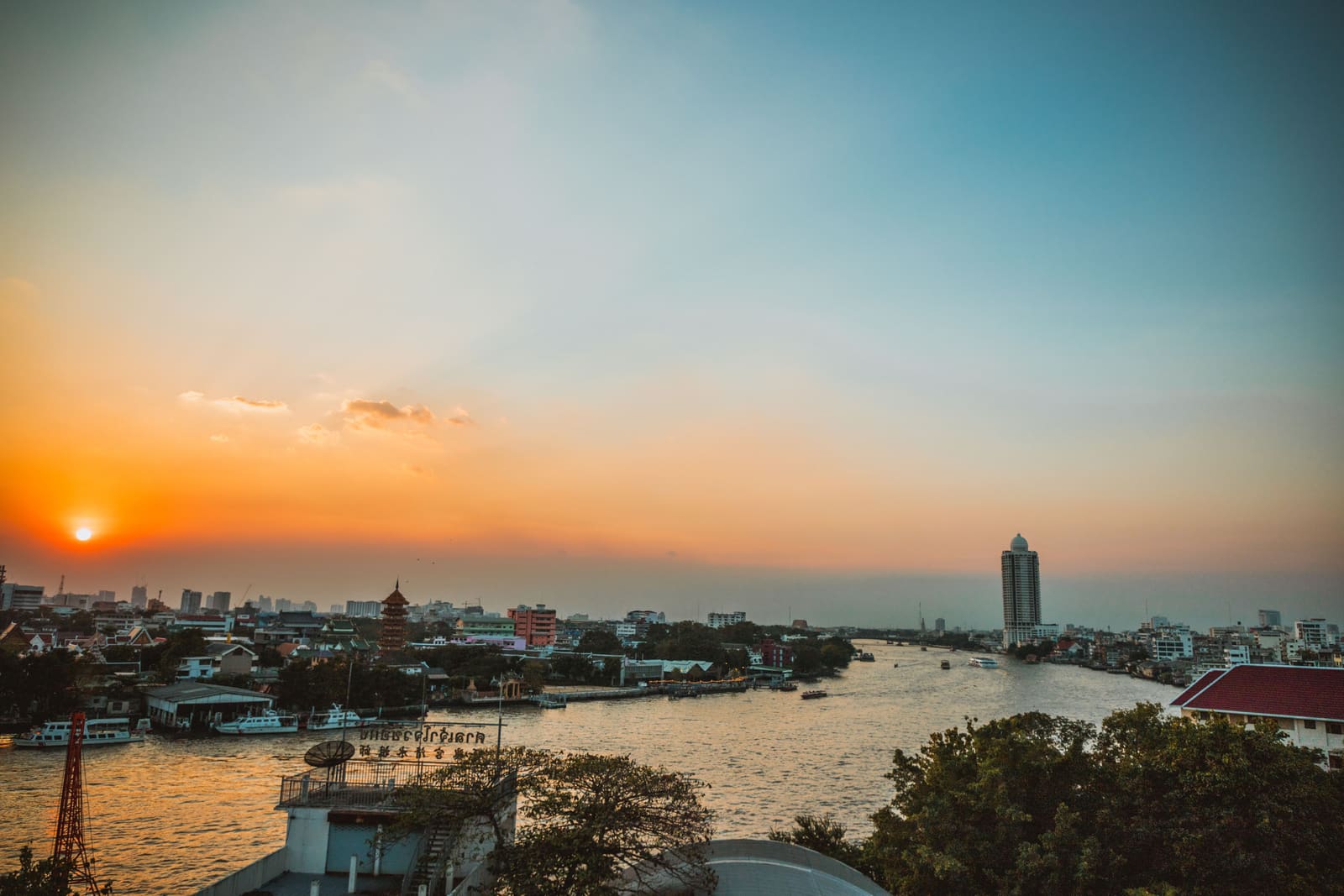
The quarterly magazine arrives from Europe in its crisp paper sleeve, full of essays about mist-draped mornings and the transient beauty of falling leaves. Outside the window, a jet cuts across an unbroken blue sky. The air conditioner hums. There is no autumn here, not in the way poets have catalogued it for centuries, and the disconnect can feel strange even after years of living under palm fronds instead of oak canopies.
Bangkok does not observe the four-season calendar that governs so much of the temperate world. Clocks never change. Evenings darken at roughly the same hour year-round, give or take sixty minutes. April, not July, brings the peak heat. Flu vaccinations arrive in May, timed to the onset of monsoon rains rather than winter colds. For expatriates raised on the rhythms of spring planting and autumn harvest, the adjustment is not a hardship but it is an adjustment all the same. The signposts disappear. The rituals that once divided the year into legible chapters no longer apply.
Yet humans require milestones. Birthdays, feast days, the first frost, the last swim of summer. Thailand offers its own, many of them tied not to the Gregorian calendar but to lunar cycles, astrological calculations, and the actual behaviour of the natural world. The Royal Ploughing Ceremony, a public holiday that marks the start of the rice-growing season, is announced annually based on Brahmin astrology. Buddhist observances follow the waxing and waning of the moon. These are not arbitrary dates fixed centuries ago by papal decree. They shift, responsive to something older than clocks.
For those still learning the contours of Thai culture, these festivals provide a scaffolding. But in the gaps between Songkran and Loy Krathong, between Visakha Bucha and the King's birthday, there are subtler markers. Five of them, in particular, have come to structure the year for those paying attention.
Fruit as Calendar
In the late afternoon, a pickup truck parks at the kerb. A voice crackles through a handheld speaker, announcing the day's harvest in rapid Thai. The words are incomprehensible to many, but the cargo is not. Piled in the truck bed are the season's offerings: mangoes in March, durian in May, mangosteens giving way to pomegranates as the rains taper off.
This mobile greengrocer is Bangkok's most reliable seasonal indicator. The fruit bowl on the kitchen counter becomes a kind of almanac. When the mayongchid appear, small and golden and egg-shaped, somewhere between mango and plum, it is March. Their harvest window lasts only a few weeks, and their arrival signals the start of "Thai summer" and the approach of Songkran, the traditional New Year. The mango glut that follows is cause for celebration. The durian season that comes after is, for some, cause for holding one's breath.
Fruit in the tropics does not ripen according to the same logic as apples in an English orchard. There are no storage cellars, no waiting for the first frost to sweeten the crop. The produce is immediate, abundant, and fleeting. The trick is learning to read it.
Festivals That Float
Water fights in April, lanterns in November. Songkran, the Thai New Year, turns the entire country into a three-day splash zone, a ritual cleansing that doubles as street theatre. But Loy Krathong, which falls on the full moon of the twelfth lunar month, is quieter, more contemplative. Small vessels woven from banana leaves and shaped like lotus blossoms are loaded with candles, incense, and flowers, then set adrift on rivers and lakes. The gesture is both apology and offering, a way of thanking the water goddess and releasing the past year's misfortunes.
There is something comforting in the fact that Christmas, too, is observed in Bangkok, though not as a religious occasion so much as a commercial one. The city dresses itself in tinsel and fairy lights. Shopping malls erect towering trees. The confusing part is that many of these decorations stay up all year. Government offices and hospitals leave Santa Claus in place well into June, a year-round optimism that feels either charmingly pragmatic or slightly surreal, depending on one's mood.
The festivals do not follow a fixed calendar. They arrive when the moon is full or when the stars align, and in this way they remain tethered to something older than the grid of days printed on an office wall.
The Footwear Transition
Winter is approaching in the northern hemisphere, which means wool coats and boots with traction. In Bangkok, the only wardrobe shift involves shoes. The city is deep into its rainy season now, and a sudden downpour can flood a street in minutes, turning leather trainers into casualties. The wise keep a pair of rubber flip-flops in the car. The hospitality industry favours canvas shoes punched full of drainage holes, a local adaptation of the classic plimsoll.
Jelly sandals make a reappearance, though the buckles can be fiddly. The real luxury comes in November, when the rains finally ease and it becomes safe again to wear suede, to walk in leather loafers without checking the sky every ten minutes. This is Bangkok's version of packing away the winter coat: the moment when rubber gives way to more delicate materials, when footwear can be chosen for style rather than survival.
Flags and Royal Colours
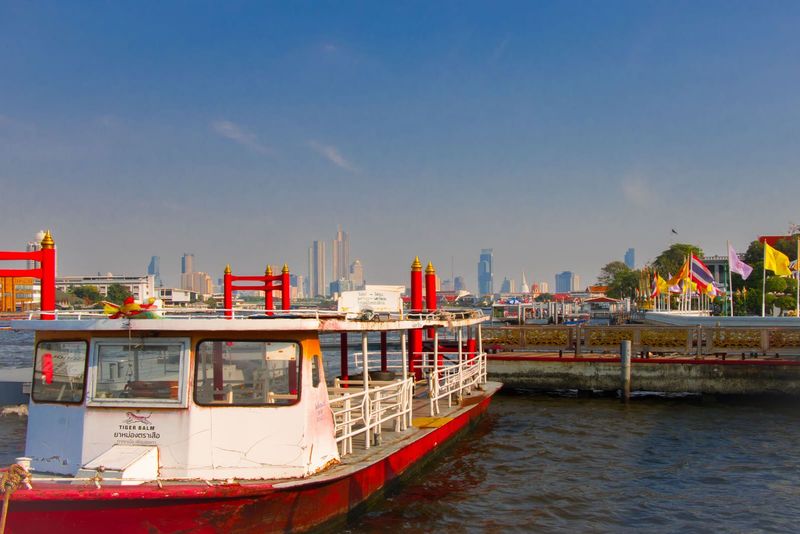
Living near government buildings has its advantages. The revenue department and the finance ministry both fly flags and hang bunting, and the colours change ahead of major royal birthdays. Each member of the royal family is associated with a colour determined by the day of their birth. Yellow belongs to the King, who was born on a Monday, and on Monday mornings civil servants across the city wear yellow polo shirts in quiet homage.
The bank headquarters down the street erects elaborate structures for these occasions, and the shifting palette becomes another way to mark the passage of time. When the flags turn purple, it is the Queen Mother's birthday. When they turn blue, it is the King's. The colours are a kind of civic punctuation, a way of dividing the year into chapters that have nothing to do with solstices or equinoxes.
The Sound of Mating Season
Thailand's wildlife does not hibernate. Its geckos and monitor lizards are year-round residents, accustomed to urban life and mostly harmless. The water monitors that prowl the parks in search of fish can grow to impressive sizes, but they are indifferent to humans. The real challenge in Bangkok is not the animals themselves but the noise they produce.
Late in the year, as the gecko mating season winds down, a new sound takes over. The Asian Koel, a member of the cuckoo family, begins its courtship. The call is a rising squawk, insistent and impossible to ignore, louder than traffic and more effective than any alarm clock. It starts before dawn and continues until the city drowns it out. For a few weeks each year, mornings belong entirely to the Koel, and the sound becomes as reliable a marker of the season as any calendar date.
This is the tropical symphony: not the rustle of leaves turning colour, but the escalating cries of a bird determined to be heard. It is not poetic in the way autumn mist is poetic, but it divides the year all the same.
A Different Kind of Rhythm
The rituals are small, easily overlooked. A bowl of fruit, a pair of flip-flops, the colour of a flag, the call of a bird. They do not appear in guidebooks or on official calendars. But they add up to something larger: a way of reading time that has nothing to do with the four-season structure imported from temperate climates.
Living in Bangkok does not mean losing the passage of time. It means learning to recognise it in a different register. The city offers its own milestones, its own punctuation. The trick is paying attention to the fruit truck, the festival lanterns, the morning squawk. These are the markers that matter here, the ones that turn a seasonless expanse into a year with shape and texture. They are not autumn leaves, but they are enough.