The Australian Hotels That Justify the Journey
From clifftop homesteads in the Kimberley to glass pavilions suspended above the Southern Ocean, Australia's lodges have learned to frame wilderness as luxury.
The Geography of Anticipation
The flight path to Australia traces a map of patience. Somewhere over the dateline, between the second meal service and the third attempt at sleep, the concept of arrival shifts. You are not simply travelling to a hotel; you are crossing into a landscape that has spent millennia perfecting the art of remoteness. The properties that justify this passage are those that comprehend what lies beyond the tarmac: not convenience, but consequence.
On Kangaroo Island's southwestern coast, Southern Ocean Lodge sits like a minimalist sculpture against the cliffs. The original structure, opened in 2008, was claimed by bushfires in the catastrophic summer of 2020. Its December 2023 reopening preserved the profile: a low, saucer-shaped form that hovers above the limestone escarpment, its 25 glass-fronted suites extending along the ridgeline. Each room holds a sunken living room, a fireplace, sliding doors that open to the Antarctic wind. The four-bedroom Baillie Pavilion, a new addition, arranges itself as an amphitheatre of stone and glass, with an infinity pool that appears to tip into the Southern Ocean. The spa now faces north, its hot and cold plunge pools calibrated to the revised orientation. This is not reconstruction; it is recalibration.
Island Time, Measured in Coral
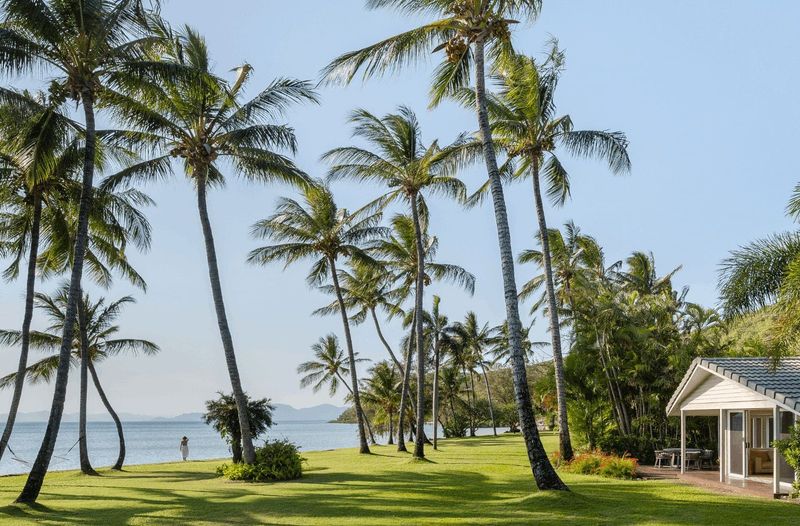
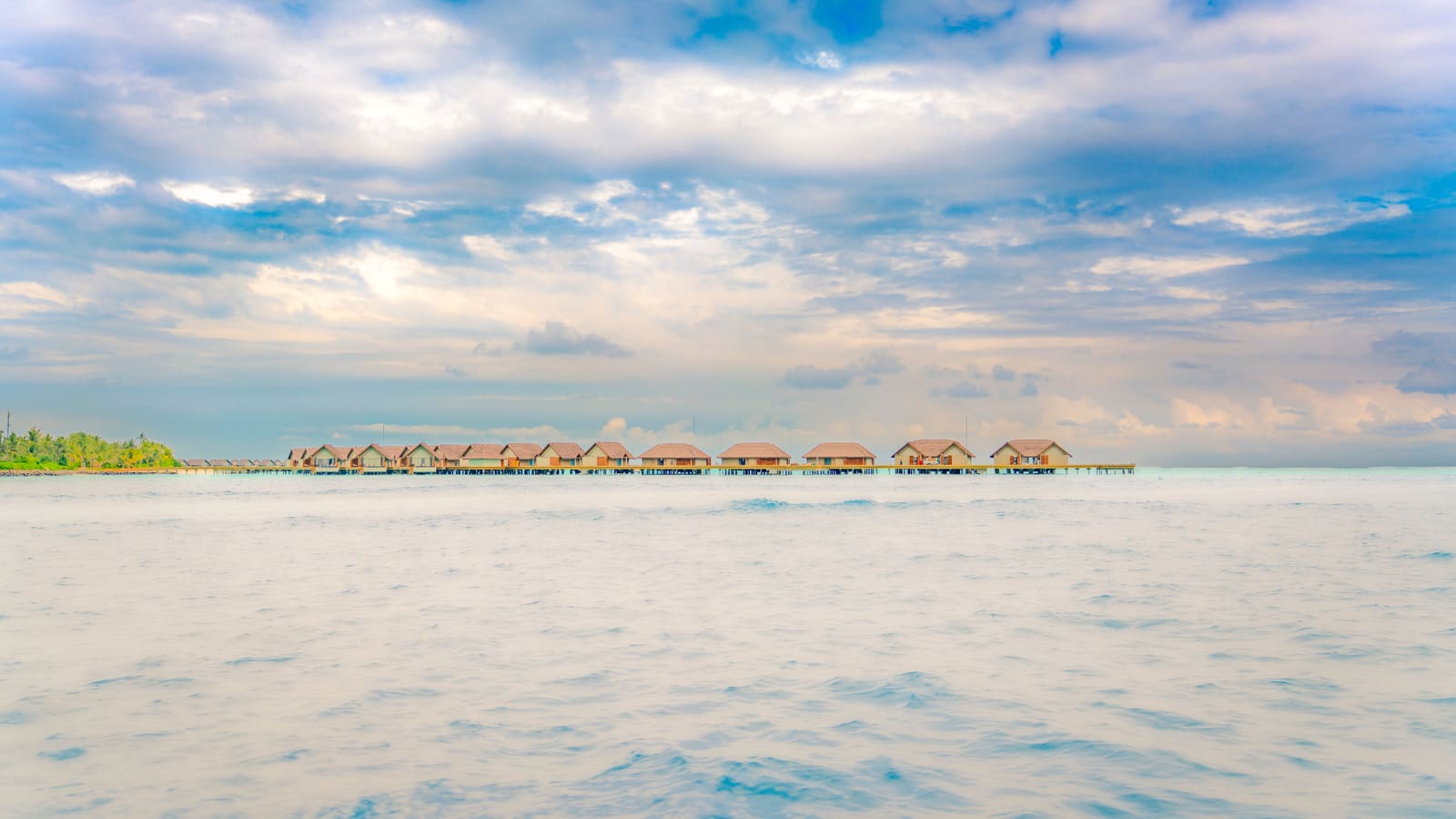
Lizard Island lies 120 miles north of Cairns, a thousand hectares of tawny bush ringed by beaches the colour of raw sugar. The property holds the distinction of sitting directly on the Great Barrier Reef, a ten-minute snorkel from shore revealing the neon alternate universe of the fringing reef: silvery fish, purple giant clams, coral shaped like uncooked spaghetti. The white-weatherboard villas dot the island, timber decks still wet from swimsuits left to drip. Rooms are bright, high-ceilinged, some with wide views of the lapping sea, others wrapped in gardens alive with scuttling creatures.
On a granite outcrop, The House sits alone: a brutalist concrete and copper villa with three bedrooms, surrounded by empty stretches of white sand. Yet the island's true distinction lies not in its obvious beauty but in the Lizard Island Research Station, one of the world's leading reef-research facilities. Opened in 1973 and operated by a husband-and-wife team, the station welcomes guests for tours and hands-on citizen science initiatives across the endangered reef. It is an unexpected pairing: a luxury resort housing serious marine research. The arrangement suggests Australia's evolving relationship with tourism, a recognition that paradise can sustain both pleasure and purpose.
The Harbour as Theatre
Park Hyatt Sydney occupies the western side of Sydney Cove, in the historic Rocks neighbourhood. For 35 years, the hotel has offered floor-to-ceiling windows framing the harbour's daily choreography: ferries cutting across the water, runners on the boardwalk, the sun rising behind the Opera House. The rooms are large and quietly luxurious, the breakfast menu fresh and generous. But the real currency here is position. New Year's Eve fireworks erupt from both the Opera House and Harbour Bridge, visible from private balconies. On an ordinary Wednesday, the view alone justifies the stay. This is not spectacle manufactured for guests; it is Sydney conducting its life, and the hotel happens to hold the best seat.
The Homestead and Its Histories
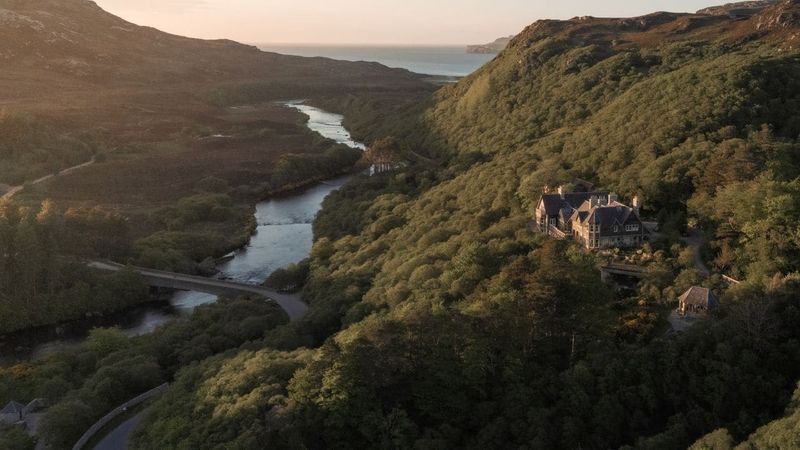
El Questro Homestead sits on a clifftop above the Chamberlain River in the Kimberley, ten rooms and suites scattered across what was once a working cattle station. A 2022 Indigenous Land Use Agreement returned more than 400,000 acres to the traditional Ngarinyin landowners, a historic arrangement that has increased Indigenous employment while preserving the property's character. Mornings begin with screeching cockatoos. Evenings bring crocodiles visible in the waters below, tree frogs hopping into bathrooms. Four-wheel drive safaris and helicopter tours reach remote waterfalls and hot springs in one of the world's most sparsely inhabited regions, where new animal and plant species are discovered regularly.
The most lasting element of a stay, however, may be Injiid Marlabu Calls Us, an immersive experience developed by traditional owners Mary and Nelson O'Reeri and their daughter Shonelle. The family recounts how Nelson's grandmother Injiid grew up on this land, how it was taken by cattle barons, how her son was forced into a state home, how she found him decades later. The story is not ancillary to the landscape; it is the landscape, narrated by those who hold its memory. To listen is to understand that luxury, in this context, includes the responsibility of witness.
Postcard from the Whitsundays
Qualia occupies the northern tip of Hamilton Island, 63 villas scattered across a secluded hillside overlooking the Coral Sea. The studio-style Leeward Pavilions face south, ideal for sunset; the larger Windward Pavilions include plunge pools, living rooms, and bathtubs set against waterfront views. Windward Pavilion number six offers the quietest refuge. The treetop Long Pavilion serves breakfast; Pebble Beach, poolside, shifts from light Mediterranean lunch to multi-course dinner. Helicopters ferry guests to the Great Barrier Reef or a private island golf course. A 75-foot yacht cruises past Whitsunday Beach. The concierge customises itineraries and delivers seamless service. The resort reads like a Bond film, all gleaming surfaces and improbable access, yet it functions with the efficiency of a private club.
A Mediterranean Mirage on the Pacific
Halcyon House sits on the pandanus-lined beachfront of Cabarita, halfway between the Gold Coast and Byron Bay. The signature cocktail, made with local Ink Gin, shifts from deep blue to dusty pink, matching the navy and white sun beds and oversized hats. Brisbane designer Anna Spiro created 21 rooms, each distinct, each a study in 1960s eclecticism: brass fixtures, antique memorabilia, dark wood furniture combined with Mediterranean patterned tiles, starched linens, and wall panelling. A Moroccan-accented day spa with a domed hammam-style steam room was added in 2017.
Paper Daisy, the hotel's restaurant, is led by chef Ben Devlin, who worked at Noma before returning to Australia. Breakfast brings kefir pancakes with macadamia cream, passionfruit, and berries; lunch offers prawn sandwiches with iceberg lettuce and avocado. General manager Mauro De Riso brings Italian hospitality to the coastal setting, a warmth that elevates the property beyond its design. This is the Australian beach lifestyle reconsidered: surf, sun, and sand filtered through a more sophisticated lens.
The Fullerton's Civic Grandeur
The Fullerton Hotel Sydney inhabits a sandstone building constructed more than 150 years ago, which served for decades as the city's General Post Office. The architecture carries real weight, and staying here feels like participating in civic history. The 516 rooms and suites follow a white-and-beige palette, with generous floor space and minimal furnishings. Well-stocked minibars, international television channels, and in-room coffee machines ease jet lag. The Place, the hotel's restaurant, draws guests and locals with a Southeast Asian-inflected menu and decadent desserts. The bar occupies a corner of the grand atrium.
Martin Place, a pedestrianised plaza overlooked by grand old banking buildings, sits just outside. The harbour is a 20-minute walk; several train stations are nearby. Messina, the city's favourite ice-cream purveyor, is across the road, alongside fashion boutiques and upscale dining. The hotel does not compete with the city; it anchors itself within it, offering a base from which to navigate Sydney's layered urban fabric.
The Measure of Distance
Australia's most compelling hotels share an understanding: they do not minimise the journey required to reach them. Instead, they justify it. The distance becomes part of the narrative, the long flight and the subsequent transfers reframed as necessary prelude. What awaits is not simply comfort but context - lodges that sit within landscapes rather than beside them, properties that engage with Indigenous history rather than ornament it, resorts that recognise the reef as a living system requiring stewardship, not just a snorkelling backdrop.
The Australian hotel experience, at its best, is one of calibrated immersion. You arrive tired, disoriented, carrying the residue of transit. And then, through floor-to-ceiling glass or from a clifftop terrace or while listening to a family recount their grandmother's story, you begin to understand why you came. The distance was never the obstacle. It was the point.