Where the Rainforest Meets the Sea: A Week on Noyes Island
In the heart of Tongass National Forest, a remote Alaskan lodge offers more than sport fishing - it offers entry into a millennia-old relationship between people, salmon, and survival.
A Journey by Water and Air
The floatplane banks low over Tongass National Forest, 45 minutes out of Ketchikan, and the view narrows to a single truth: this is the world's largest intact temperate rainforest, and human presence here remains provisional. Below, unbroken canopy stretches to the waterline, interrupted only by the occasional inlet or cove. Then Noyes Island appears - serene, forested to the shore, the kind of place that exists on few maps and in fewer imaginations.
Steamboat Bay Fishing Club occupies a rare position on this island, its private dock the only threshold between floatplane and forest. Since 2013, the lodge has hosted a maximum of 24 guests at a time, a deliberate restraint that shapes everything from the pace of the day to the quality of silence after dark. Certified by Alaska Green Adventure, the property threads sustainability through its operations - from waste management to the rhythms of its guided excursions. Three-night stays typically include fishing expeditions, multi-course dinners prepared by an on-site chef, nature walks that move at the speed of observation, and evenings spent around the fire pit, where storytelling unfolds beneath a sky untouched by light pollution.
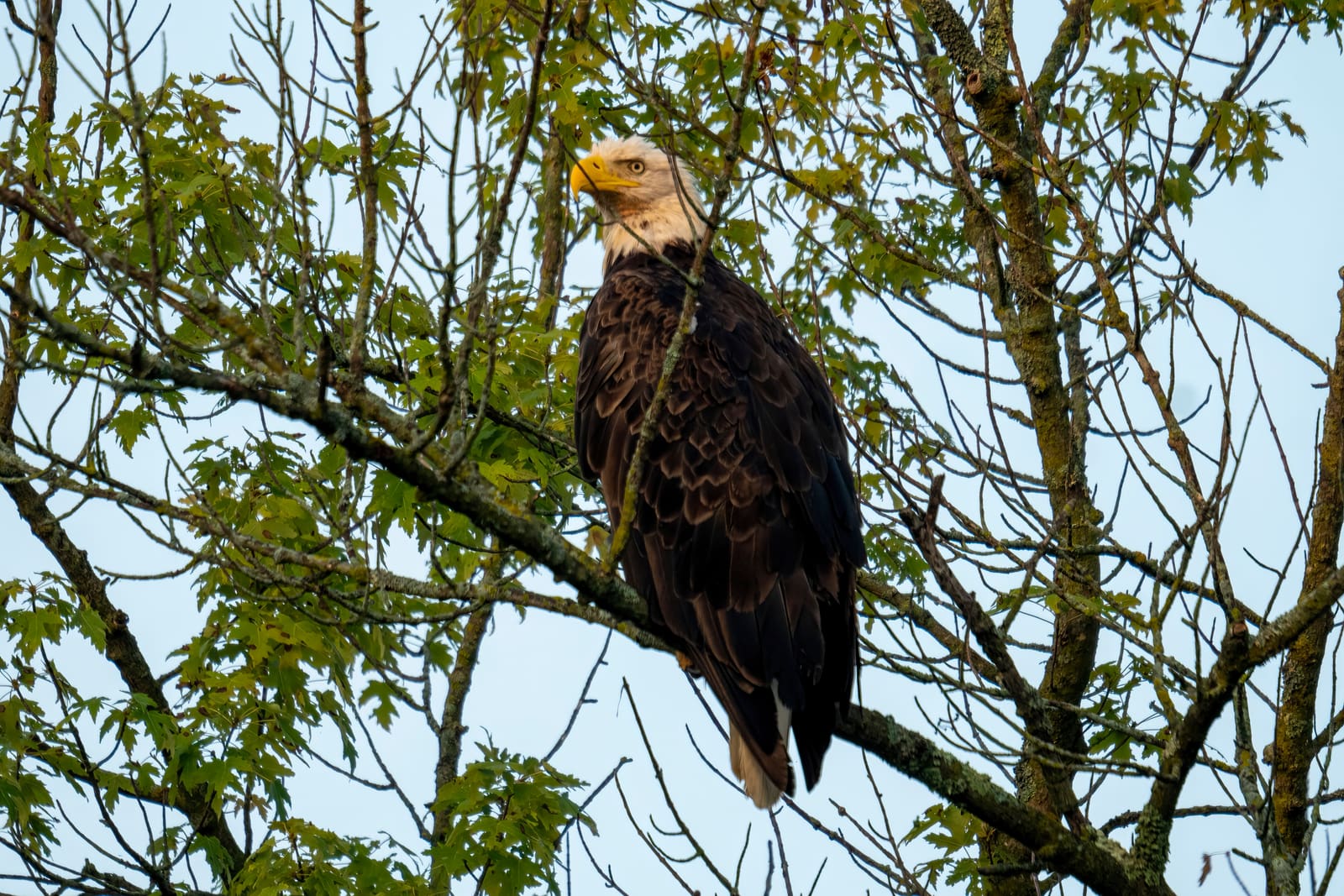
Wildlife sightings punctuate the hours: bald eagles overhead, orcas cutting through the bay, humpback whales breaching in the distance, sea otters floating on their backs, sea lions hauled out on rocky points. The encounters are frequent enough to feel inevitable, rare enough to command attention.
The Guide and the Knowledge He Carries
Everett Athorp has been guiding at Steamboat Bay since the lodge opened. A Haida-Tsimshian fisherman and artist based in Klawock on Prince of Wales Island, he brings to the work not only technical skill but also a lineage of knowledge passed down through generations. His demeanour on the water is unhurried, his commentary woven into the rhythm of casting and retrieval, and regulars return each summer specifically to fish with him.
"There's nothing like getting out on the water on a beautiful day and seeing the sunrise and all the wildlife," Athorp has said. His appreciation for the landscape is not performative; it is structural. For him, guiding is less about instruction and more about presence - being in a place that continues to astonish him, even after years of daily immersion.
What Athorp shares with guests extends beyond technique. He speaks of the old methods: wooden halibut hooks carved by hand, fish traps constructed with precision and patience, the smokehouses and summer fish camps that remain in use across Southeast Alaska. These are not museum artefacts; they are living practices, part of an unbroken chain of subsistence and stewardship.
Salmon as Sustenance, Symbol, and Ceremony
For Alaska's 229 federally recognised tribal nations, salmon occupy a place that transcends the culinary or the economic. They are central to survival, particularly in rural communities where subsistence hunting and fishing remain the primary means of feeding families. This reliance is not a relic of the past; it is a present-day reality, shaped by geography, climate, and choice.
The relationship extends back millennia. Alaska Native communities have managed wild salmon runs with a precision that modern fisheries science is only beginning to fully appreciate. Oral histories recount the rhythms of the runs, the protocols for harvest, the ceremonies of gratitude. Formline artwork - those elegant, interlocking shapes that define Northwest Coast Indigenous art - frequently features salmon, their bodies abstracted into curves and ovoids that speak to both abundance and respect. Traditional dances honour the fish, and among the Tlingit, salmon are considered sacred beings, embodiments of renewal and life itself.
Athorp carries this understanding into his work. When he speaks of salmon, it is not as quarry but as kin. He hopes that guests, even those who come purely for sport, leave with a deeper respect - not just for the fish, but for the fishery, the land, and the people who have sustained both.
What the Lodge Offers Beyond the Catch
Steamboat Bay is not a place built for hurry. The schedule allows for long stretches of unstructured time: mornings on the water, afternoons spent in the lodge's common areas or exploring the immediate shoreline, evenings that begin with dinner and drift into conversation. The massage therapist on staff offers treatments designed to ease the particular aches of a day spent casting, and the chef prepares meals that reflect both the season and the catch.
But the real luxury here is access - to a landscape largely inaccessible, to guides whose knowledge is both technical and cultural, to a version of Alaska that exists outside the cruise-ship corridors and highway networks. The island itself enforces a kind of slowness, a recalibration of expectation. On days when the fishing is slow, the measure of success shifts: a close encounter with a pod of orcas, a conversation about ancestral fishing methods, the way light moves across the water at dusk.
The Weight of Place
There is a particular quality to Southeast Alaska that resists easy description. It is not wilderness in the sense of emptiness; it is abundance held in check by remoteness. The old-growth forest that blankets Noyes Island has stood for centuries, and the salmon that return each year follow routes older than any human map. To spend time here, even briefly, is to be reminded of scale - of the smallness of human ambition against the patience of geological and biological time.
Athorp's presence at Steamboat Bay is a reminder, too, that this landscape is not neutral. It is home, workplace, and inheritance for the Indigenous peoples of the region, whose stewardship has ensured that places like Noyes Island remain intact. The lodge's Alaska Green Adventure certification is one form of accountability; the decision to employ guides like Athorp, who bring cultural context to the experience, is another.
For visitors, the invitation is not to conquer or collect, but to witness. To understand that the salmon pulled from these waters are part of a system far older and more intricate than sport fishing alone can convey. To recognise that the eagles, the whales, the forest itself exist within a web of relationships that predate - and will outlast - any single human encounter.
The Return
The floatplane lifts off from the dock, and Noyes Island recedes into the forest. The experience does not end cleanly; it lingers in sense memory, in the particular cold of early-morning air on the water, in the weight of a salmon on the line, in Athorp's voice recounting the old ways. What remains is not a checklist of sightings or catches, but a shift in understanding - a recognition that some places demand more than admiration. They demand respect, patience, and a willingness to listen to those who have always been here.