
The Viewfinder's Lesson: Why Slowing Down to See Matters More Than the Shot Itself
In an age of algorithmic lenses and instant capture, the deliberate act of looking through a camera teaches us how to notice - and why that skill extends far beyond photography.
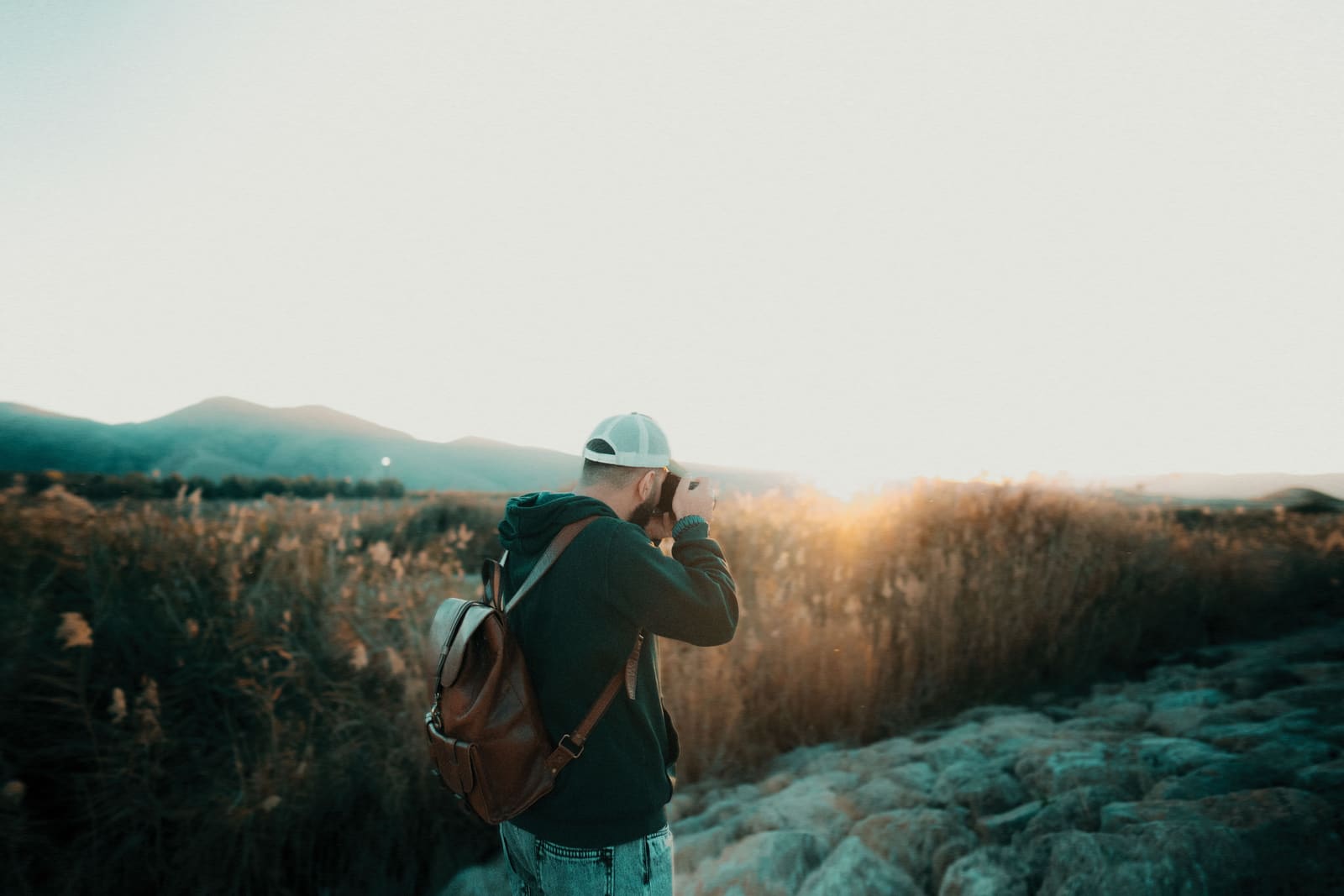
The Economics of Exposure
A photographer who works with some of Europe's most distinguished hotels recently found himself in an uncomfortable negotiation. The property in question, a storied establishment commanding several thousand euros per night during high season, had invited him to shoot. When he submitted his proposal, the response caught him off guard: the hotel did not pay for photography. Instead, they offered him permission to post the images on his own social media channels, framed as an opportunity for visibility. The photographer declined.
The exchange reveals something curious about how luxury has begun to mirror the transactional logic of influencer culture. Establishments that once understood the value of craft now occasionally confuse access with compensation, reputation with remuneration. It is a strange inversion, one in which the institutions charging the most for experience are sometimes the least willing to pay for the skill required to capture it.
The Device That Demands Good Light
Not all cameras are created equal in temperament. A fixed-lens camera, the kind that requires thought and patience, behaves like a collaborator with standards. On grey days, when the sky flattens and the light turns sullen, it resists. It withholds. A smartphone camera, by contrast, pushes through regardless, producing serviceable images under almost any condition. The difference is not merely technical; it is philosophical.
On a recent Saturday in Palma, the day arrived with blue skies and the soft, slanting light particular to autumn. Shadows stretched long across the stones. It was the sort of morning that invites a particular kind of attention, so the camera came along for a walk down to the coast. The mission was simple: to take some pictures. Not to document anything in particular, not to post, not to prove anything. Just to look.
What the Viewfinder Teaches
There is something about the act of raising a camera to your eye that changes how you see. The frame narrows. The peripheral noise falls away. What remains is a rectangle of the world, isolated and considered. It is not about the photograph that results, though that can be satisfying. It is about the looking itself, the way the viewfinder forces a kind of focus that daily life rarely demands.
Walking with a camera becomes an exercise in noticing: the way light catches the edge of a building, the texture of weathered wood, the angle at which a shadow falls. You might return home with only a handful of images worth keeping, but the act of searching for them has already done its work. The camera's capriciousness, its refusal to perform under certain conditions, becomes part of the lesson. Perfection is not the point. The imperfections are where the interest lives.
Photography and a well-lived life share this in common: both require presence, both reward attention, and both are enriched by accepting what cannot be controlled.
The Dinner Without Devices
An architect recently hosted a small dinner at his home. Four guests, including an artist and maker from Texas now based in London, and a woman who owns a tile factory. The host cooked a large seabass in the kitchen while a record played. Wine was poured. What stood out most, though, was the absence of phones. Not a single screen appeared during the meal, not even for the reflex gesture of looking something up mid-conversation.
It was, in the highest sense, an easy dinner. No elaborate courses, no performance of hospitality. Ice cream, cheese, more wine. What emerged in the space where distraction might have been was time: time to talk, time to listen, time to let a conversation find its own shape. The architecture of the evening was simple, and that simplicity allowed for depth.
The Tailor's Eye
Some people seem to carry a kind of internal viewfinder, a way of seeing that is always active. A tailor, met recently, had a tape measure draped around his neck but barely consulted it. With his eye alone, he could gauge the width of a shoulder, the size of a waist. He was constructing the finished garment in his mind, seeing what was not yet there, noticing details that others would overlook entirely.
It is a form of expertise that goes beyond measurement. It is the ability to perceive not just what is, but what could be, and to hold both in view at once. The tailor's skill is not just in cutting fabric; it is in reading the body, understanding proportion, anticipating how cloth will move. It is another kind of focus, honed over years, that transforms looking into a craft.
The Practice of Paying Attention
What ties these moments together is not photography, or hospitality, or tailoring. It is the practice of paying attention. In a culture that increasingly values speed, volume, and the frictionless capture of experience, there is something quietly radical about slowing down enough to see properly. The camera, in this sense, is not just a tool for making images. It is a training device for the eye and the mind, a way of learning to notice what is already there.
The viewfinder teaches you to frame, to select, to consider. It asks you to pause. And in that pause, something shifts. You begin to see not just subjects for photographs, but the texture of the world itself: the quality of light, the rhythm of a conversation, the precision of a craftsman's eye. These are not lessons that translate easily into metrics or posts. They accumulate slowly, shaping how you move through the day.
The photographer who turned down the unpaid hotel shoot understood this. His work is not currency for exposure; it is the result of years spent learning to see, and that learning has value. The dinner without phones honoured the same principle: that presence, undivided, is its own reward. The tailor's eye, trained over decades, exemplifies it. These are all forms of focus, practised deliberately in a world that often discourages it.
What Remains After the Shutter Closes
The handful of photographs brought back from that walk in Palma may or may not be technically accomplished. Some will be kept, others discarded. But the walk itself, the act of looking, the hour spent in deliberate attention to light and shadow - that remains. It shapes the way you see the next street, the next meal, the next conversation. The camera, temperamental as it is, becomes a teacher. And the lesson it offers is not about image-making. It is about learning to see what is in front of you, and choosing to look closely enough to let it matter.
- STYLE & CULTUREFive Rituals That Mark Time in Bangkok's Seasonless Expanse
- STYLE & CULTUREWhen the Steppe Speaks: Kazakhstan's Artisans Reclaim a Vanished World
- STYLE & CULTUREA Chef's Compass: Merlin Labron-Johnson on Travelling Light and Eating Well
- STYLE & CULTUREThere Is a Reason People Get Close: Justin Mott on Photographing the Guardians of the Last Animals