The Alps Recast Miss Marple's World
A new Alpine thriller places Christie's sleuth in rugged terrain once claimed by masculine adventure novels, reframing both landscape and power.
A Holiday Long Overdue
In the original canon, Miss Marple takes precisely one holiday. The rest of her mysteries unfold in parlours and vicarages, over tea and gossip, in the close-knit geometry of St. Mary Mead. That single excursion has always felt like an outlier, a narrative concession rather than a structural choice. The new novel, the first Miss Marple mystery in half a century, begins with the recognition that the sleuth deserves another trip, and that the trip itself might be the story.
The decision to send her to the Swiss Alps was not nostalgic. It was tactical. The mountains represent a genre as much as a geography: the 1950s masculine thriller, all ice axes and existential peril, written by authors who understood that rugged landscapes could carry moral weight. Ian Fleming's peaks. Eric Ambler's crags. Places where men tested themselves against stone and weather, where the stakes were survival and the prose was taut.
What happens when you place two elderly women at the centre of that landscape? Miss Marple and her companion, Mrs. Bantry, become the nexus of power in a setting designed to exclude them. The novel does not mock the adventure tradition; it inhabits it, then quietly rearranges the furniture.
The Romantic Reframing
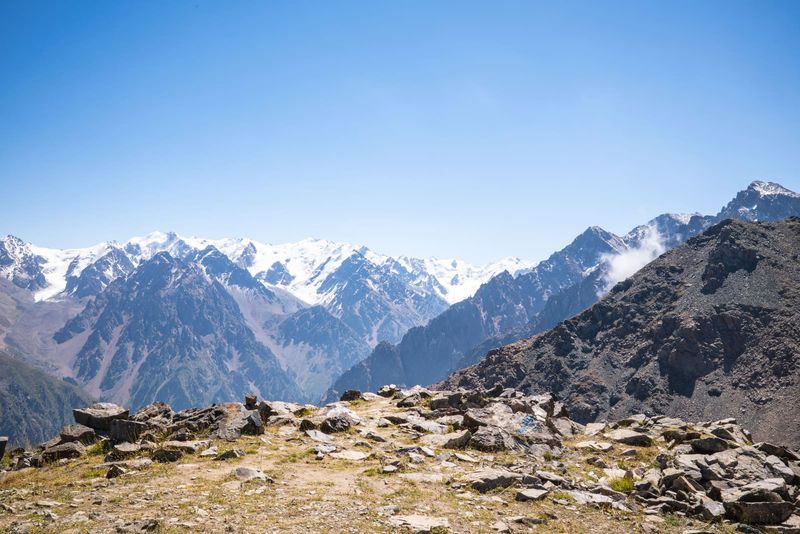
The Alps have not always been beautiful. Before the Romantics arrived in the late eighteenth century, the mountains were considered ugly, even malevolent: a zone of dragons, bad spirits, and certain death. The shift in perception was abrupt and total. Suddenly the peaks were sublime, a site of wonder rather than dread. That transformation is not merely historical trivia. It is built into the way contemporary travellers experience the Alps, a strange duality of beauty and menace that persists in every cable car ascent, every glacier traverse.
The novel leans into that dichotomy. The mountains are gorgeous, yes, but they retain their capacity for danger. The texture of the place matters: the particular quality of light on snow, the way altitude changes breath and thought, the social rituals of mid-century Alpine resorts. These are not details that can be invented from a distance. They require immersion.
A Research Itinerary
The author travelled extensively through the Alps to capture that texture. Chamonix, in the French Alps, served as the base, but the research extended across borders: a drive to Zermatt, a visit to Saint Moritz, a passage through the Mont Blanc tunnel to Le Corbier and various Italian resorts. The proximity of France, Switzerland, and Italy in the Alpine arc allows for a comparative study of resort culture, architecture, and atmosphere within a compact region.
This was not the author's first encounter with the mountains. A childhood spent skiing with keen parents provided foundational familiarity, but research demands a different kind of attention. The goal was to reconstruct not only the physical environment but also the way people in the 1950s understood it: the specific codes of resort society, the class dynamics, the unspoken rules governing who belonged and who did not.
Genre as Conversation
The novel positions itself in deliberate conversation with its sources. It acknowledges Christie's original books, but it also acknowledges the mid-century thrillers that used Alpine settings as proving grounds for male protagonists. Those books were written by men, for men, and they delivered a particular kind of vicarious adventure: travel on the page, danger at a safe distance, landscapes that functioned as both setting and antagonist.
The new Miss Marple does not reject that formula. It borrows it, then asks what happens when the protagonist is not a lone man with a gun but two women with patience, observation, and an unsettling ability to see through social performance. The Alps remain rugged. The danger remains real. But the narrative centre shifts, and with it the nature of the mystery.
The Estate's Brief
The Christie estate, in commissioning the novel, requested the author's take on Miss Marple rather than a faithful replica. That brief created space for risk. Setting the story in St. Mary Mead would have been safe, a return to familiar ground. But safety is not always the same as vitality. The Alps offered something the village could not: a collision of genres, a chance to test whether Miss Marple's particular intelligence could function outside the social ecosystem that defined her.
The answer, it seems, is yes. The village sleuth and the mountain thriller are not as incompatible as they first appear. Both depend on close observation, on reading landscapes for clues, on understanding that danger often wears a polite face. The difference is scale and scenery. The logic remains the same.
What the Mountains Reveal
Mountains have always been places of revelation in literature, sites where characters confront truths they could avoid at lower altitudes. The new Miss Marple novel uses that tradition without sentimentalising it. The peaks do not offer redemption or clarity as a gift. They offer exposure: to weather, to risk, to the limits of one's own assumptions.
Miss Marple, transported from her village, becomes a different kind of observer. She is no longer embedded in the social fabric she reads so fluently. She is a visitor, an outsider, forced to interpret a culture that is not her own. That displacement is the novel's real experiment. It asks whether her skills are portable, whether the intelligence honed in St. Mary Mead can translate to Zermatt or Saint Moritz.
The mountains, in this reading, are not merely a backdrop. They are a test. And the novel, in placing Miss Marple there, is testing the Christie legacy itself: whether it can stretch, whether it can accommodate new landscapes and new conversations, whether it can still surprise.