
The Science Behind the Sea's Most Captivating Shade
Why some coastlines blaze with turquoise while others remain grey-blue has less to do with purity than with physics, chemistry, and what lies beneath the surface.
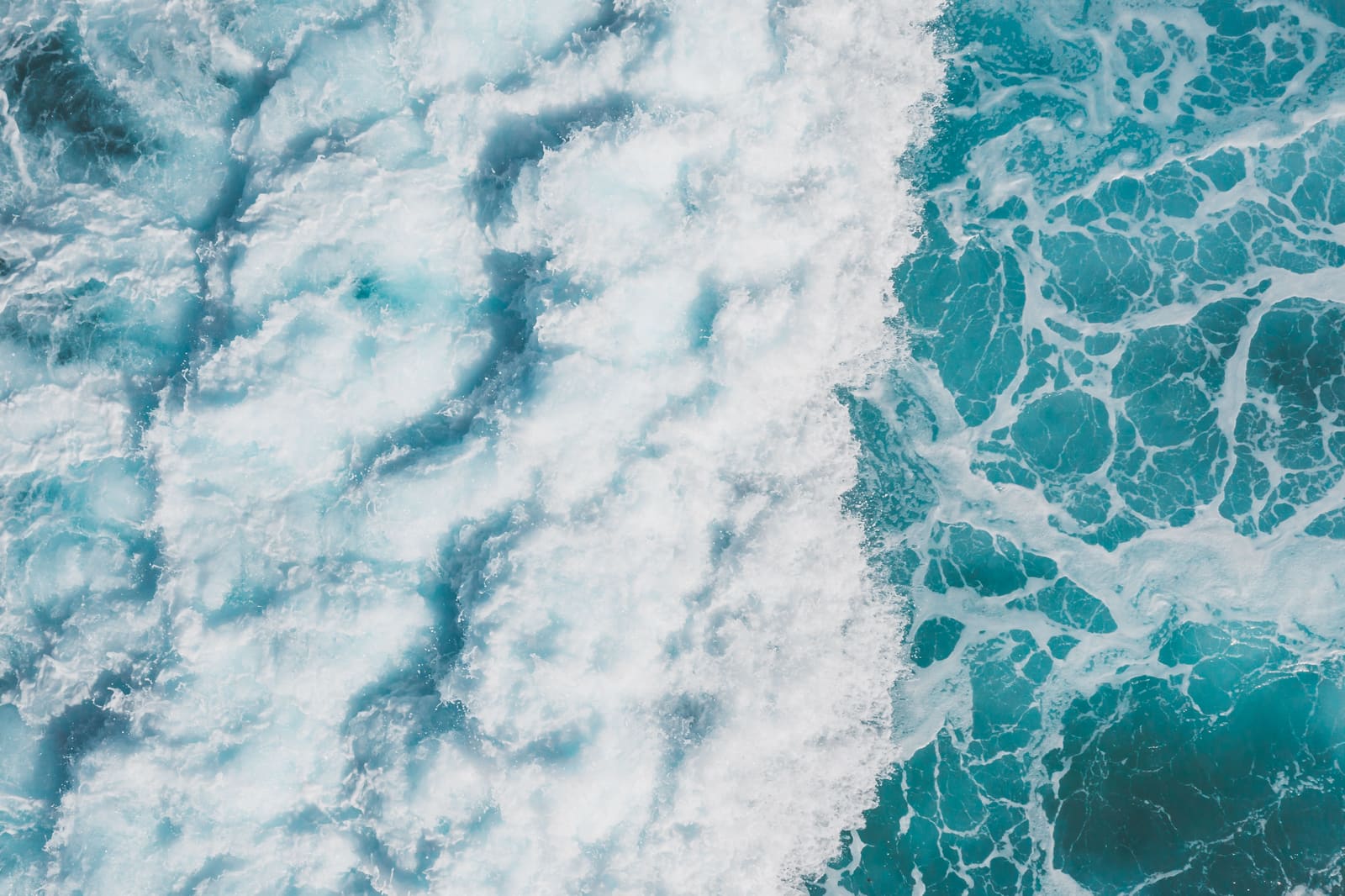
A Question of Light
Stand at the edge of the Maldives and you will see water the colour of gemstones. Travel north to the Atlantic coast of Scotland and the same ocean reads slate, pewter, occasionally cobalt under rare sun. The difference is not contamination. It is optics, biology, and geology working in concert.
Water itself has no intrinsic hue. What we perceive as colour is light scattered and absorbed by molecules, particles, and the seabed itself. Pure water absorbs red wavelengths and scatters blue, which is why deep ocean appears indigo. But the vivid turquoise that defines postcard lagoons requires a more complex recipe: shallow depth, a pale sandy bottom, and often a particular kind of suspended matter.
The Caribbean, the Seychelles, and stretches of the South Pacific share these conditions. Light penetrates to a white or beige seabed, reflects back upward, and mingles with the blue scatter of the water column. The result is a luminous cyan that seems to glow from within. Remove any one ingredient and the effect collapses. Deepen the water beyond fifteen metres and the reflected light dims. Replace sand with dark volcanic rock or coral rubble and the palette shifts to navy or teal.
The Role of Sediment and Plankton
Suspended particles amplify or mute the effect. Fine calcium carbonate sediment, ground from coral and shells, acts like a diffuser, scattering light in all directions and intensifying the turquoise cast. This is why waters around coral atolls often appear more radiant than those over bare sand.
Phytoplankton, microscopic algae drifting in the upper layers, tint water green when present in large blooms. Coastal regions with high nutrient runoff support dense plankton populations, which is why temperate and polar seas lean towards jade or grey-green despite being no less pristine. Tropical oligotrophic waters, nutrient-poor and biologically sparse, remain clearer and bluer.
The interplay is delicate. A slight increase in phytoplankton can shift turquoise towards aquamarine. A storm that stirs up sediment from the seabed can cloud the water for days, replacing brilliance with opacity. The most vivid hues emerge where conditions align: low nutrient input, steady sunlight, shallow bathymetry, and a reflective substrate.
Geography and Geology
Coastlines shaped by limestone and coral produce the most striking turquoise. The Bahamas, built on carbonate platforms, exemplify this. Erosion releases fine white particles into the water, and the shallow banks that stretch for kilometres provide the perfect depth for light to bounce back. The same geological recipe appears in the Turks and Caicos, the Cook Islands, and parts of the Great Barrier Reef.
Volcanic islands, by contrast, often lack the pale seabed necessary for the effect. Black sand beaches in Iceland or Hawaii sit beside water that reads deep blue or grey, no matter how transparent. The darkness of the substrate absorbs rather than reflects, and the eye registers depth rather than luminosity.
Even within a single archipelago, colour varies. Windward coasts exposed to open ocean swell tend towards deeper blues, while sheltered lagoons on the leeward side glow turquoise. The difference is depth, wave action, and sediment suspension, all modulated by the shape of the land.
Why Clarity Alone Is Not Enough
A common misconception equates turquoise water with purity. Certainly, pollution, algae blooms, and suspended silt can obscure colour. But many of the world's cleanest seas, from the mid-Atlantic to the Southern Ocean, appear grey or steely blue simply because they lack the shallow, reflective conditions required for turquoise.
Conversely, some lagoons with vivid colour host thriving ecosystems that contribute organic matter and microscopic life. The water is not sterile; it is balanced. Coral reefs, seagrass beds, and mangroves all influence the optical properties of the surrounding water, sometimes enhancing the turquoise effect through the fine particles they generate.
The eye craves turquoise as shorthand for paradise, but the science reveals a more layered narrative. The shade is a convergence of light physics, substrate composition, biological activity, and coastal morphology. It signals not just cleanliness but a particular set of environmental conditions, many of them rare and fragile.
The Changing Palette
Climate shifts and human activity are already altering the colours of the sea. Coral bleaching events strip reefs of their structure and the fine carbonate sediment they produce. Rising sea levels change the depth profile of lagoons, sometimes deepening them beyond the threshold for turquoise. Nutrient runoff from agriculture fuels plankton blooms that tint coastal waters green.
Remote sensing studies have documented subtle shifts in ocean colour over the past two decades, particularly in tropical regions. While the changes are often too gradual to register on a single visit, they point to broader disruptions in the systems that create the hues we associate with unspoiled coastlines.
Protecting the turquoise waters that define so many destinations means safeguarding the reefs, seagrass meadows, and sediment dynamics that generate them. It is not only a matter of preventing pollution but of maintaining the delicate balance of light, life, and geology that makes certain shores luminous and others not.

- TRENDS & INSPIRATIONAustin's Emerging Design Language Rewrites the Rules of American Hospitality
- TRENDS & INSPIRATIONThe Private Terminal That Sits Between First Class and a Chartered Jet
- TRENDS & INSPIRATIONWhy the World's Finest Restaurants Are Serving Fewer Ingredients
- TRENDS & INSPIRATIONTokyo Tops the Searches and Seoul the Bookings, but Japan's Hotels Are Fuller