
When Grandchildren Choose the Destination and Grandparents Write the Cheque
At a recent industry summit, travel specialists unpacked the shifting dynamics of family holidays, luxury's elusive definition, and the new economics of intergenerational leisure.
The New Geography of Family Time
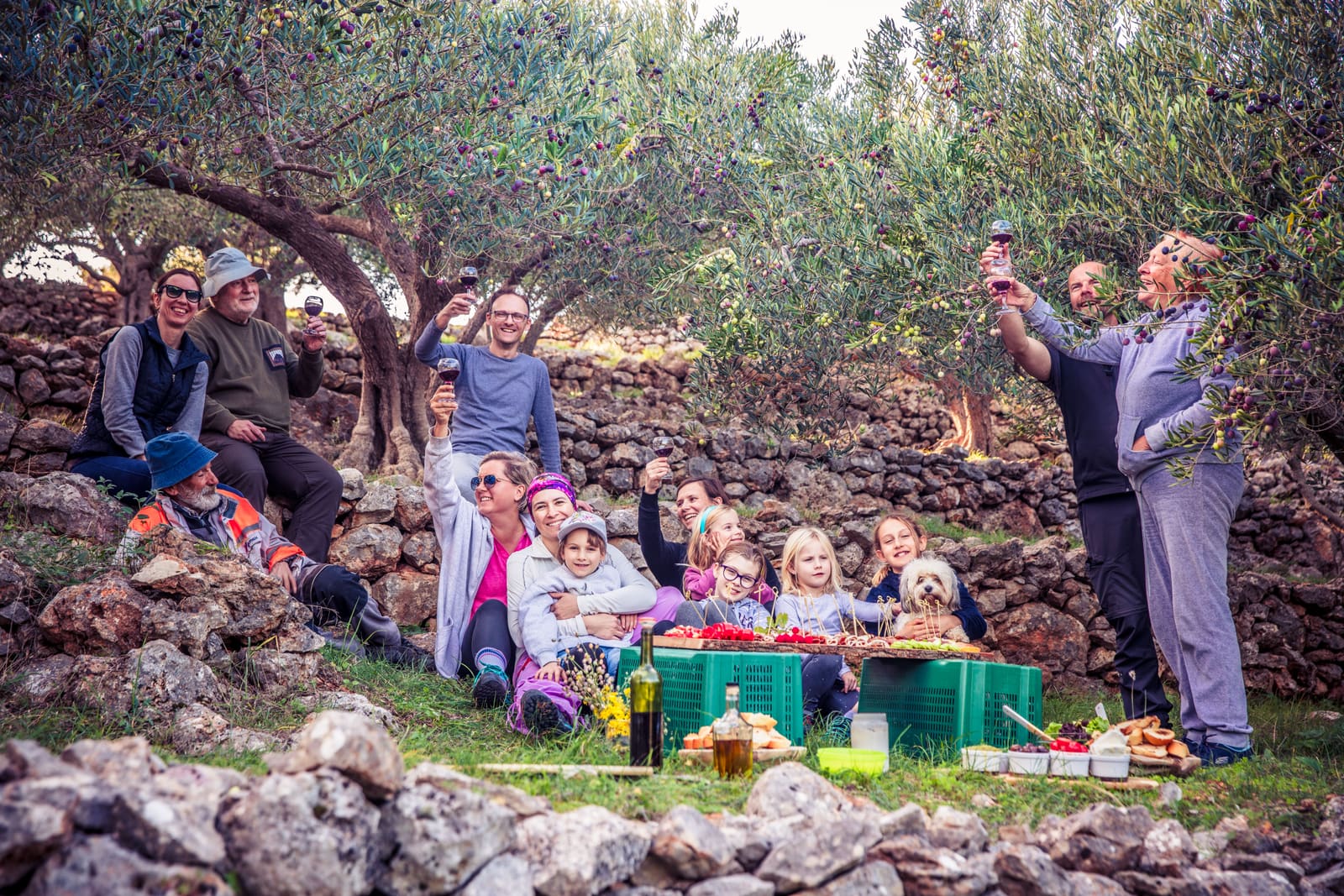
Picture a villa in Umbria, a yacht anchored off the Cyclades, or a lodge in the Serengeti. The itinerary bears the fingerprints of a twenty-something who has spent months curating a wishlist on Instagram, yet the invoice lands on the desk of someone in their late seventies. This is the emerging architecture of multigenerational travel: grandchildren selecting the coordinates, grandparents underwriting the journey. It is, specialists note, a form of legacy-building that unfolds not in wills or trusts but in shared sunsets and dinner tables that span four generations.
At a recent travel industry summit, designers and advisors gathered to dissect the forces reshaping family holidays. The conversation, steered by video and commerce leaders within the sector, surfaced a demographic reality that has quietly upended the old model. Because adults today are starting families later than previous generations did, the grandparents joining these trips are no longer the sprightly sixty-somethings of decades past. Travellers in their eighties and nineties are now common participants, and their presence demands a recalibration of what a family itinerary can reasonably ask of its eldest members.
The implications ripple through every layer of trip design. Where once a single day's programme might have suited everyone, planners now speak of building in what one might call optionality at scale. The goal is to offer three distinct tracks within a single day, each calibrated to a different threshold of exertion and interest. The youngest cohort might embark on a canyon hike or a street-food tour; the middle generation could opt for a cooking class or a gallery visit; the eldest might prefer a morning at the villa, a gentle stroll through a garden, or a private viewing arranged to avoid crowds and heat. The family reconvenes for lunch, perhaps an afternoon boat excursion, and dinner, moments that anchor the day without demanding uniformity of experience.
The Architecture of Togetherness
What emerged from the summit discussions was a consensus that the most enduring family trips are those that permit both separation and reunion. The rhythm matters. Too much enforced proximity breeds friction; too much independence dissolves the rationale for travelling together in the first place. The sweet spot, specialists agreed, lies in designing days that allow each generation to pursue its own curiosities, then gather at intervals that feel natural rather than obligatory.
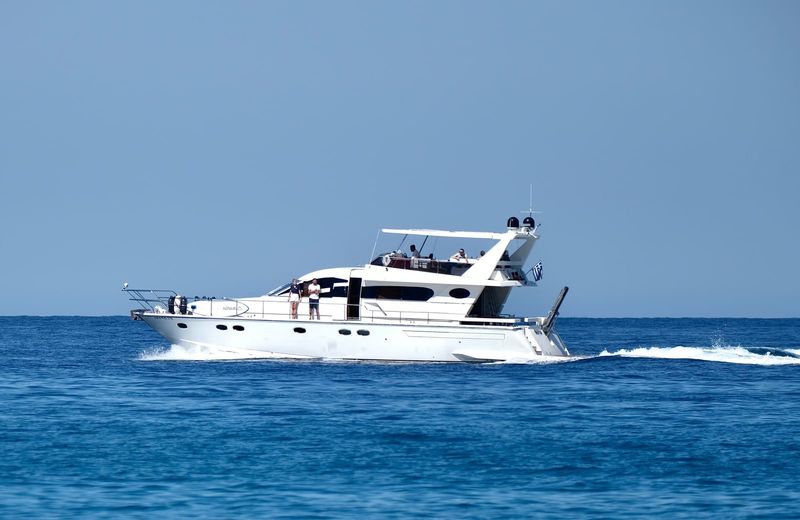
Boats and yachts were singled out as particularly effective vessels, both literally and metaphorically, for this kind of travel. On a yacht, there is nowhere for restless teenagers to disappear. The physical boundaries of the vessel enforce a kind of gentle captivity, yet the open water and changing vistas provide enough novelty to keep boredom at bay. Meals become communal by default, and the shared experience of navigation, weather, and anchorage creates a narrative thread that binds the group without requiring constant interaction.
The shift in who pays for these journeys is equally telling. Historically, parents funded family holidays as an extension of their role as providers. Now, the flow of money is reversing. Adults in their thirties and forties, many of whom have reached a measure of financial stability, are increasingly the ones booking trips and inviting their parents along. Milestone birthdays and anniversaries serve as the catalyst, but the underlying motivation is more complex. It is part gratitude, part recognition of mortality, part desire to create memories while health and mobility still permit. One travel advisor noted that her clients in this age bracket speak openly about wanting to give their parents experiences rather than objects, to spend money on time together rather than on inheritances that will arrive too late to be enjoyed jointly.
Luxury Without a Fixed Address
If multigenerational travel is being reshaped by demographics, luxury travel is being redefined by a crisis of definition. The summit's breakout session on ultra-luxury revealed a sector grappling with the fact that the word itself has become nearly meaningless. What one traveller considers the pinnacle of indulgence, another dismisses as performative excess. Some clients arrive with itineraries so dense they resemble military campaigns, determined to extract maximum value from every waking hour. Others seek the opposite: permission to do nothing, to spend a week in a single place without agenda or ambition, to treat idleness as the ultimate privilege.
The specialists who design these trips have learned to listen for the subtext. One managing partner at a luxury travel firm described the appeal in terms that had little to do with thread counts or Michelin stars. Luxury, she suggested, is the capacity to pass on meaning, to expose children and grandchildren to the breadth of the world's cultures in ways that leave an imprint. It is not the villa or the resort that defines the experience, but the degree to which the trip feels tailored to the specific desires and rhythms of the family in question. Personalisation, in this view, is the true currency of luxury, more valuable than any material amenity.
Another advisor, whose practice focuses on high-net-worth clients, observed that younger travellers, particularly those in the millennial and Gen Z cohorts, are willing to spend generously but insist on transparency. They want to know where their money goes, not out of mistrust but out of a desire for alignment. They prefer to fund experiences that support local economies, employ artisans, or contribute to conservation efforts. They are less interested in status symbols and more interested in stories they can tell without embarrassment. This is not frugality; it is a recalibration of what constitutes value.
The Economics of the Thirty-Something Benefactor
The rise of the thirty- and forty-something trip funder represents a quiet but significant shift in the economics of leisure. These are not the ultra-wealthy commissioning private islands, but professionals who have reached a point where discretionary income allows for meaningful gestures. They book villas in Provence, safaris in Botswana, or weeks in Kyoto, and they invite their parents to join them. The trips are ambitious but not ostentatious, designed to create shared experiences rather than to broadcast wealth.
Milestone events, birthdays ending in zero, anniversaries marking decades, serve as the trigger. But the underlying impulse is more urgent. These travellers are acutely aware that their parents' window for adventurous travel is closing. They see friends whose parents can no longer fly long-haul, whose mobility has narrowed the range of possible destinations, whose health has made travel itself a source of anxiety rather than pleasure. So they act while the opportunity remains, booking trips that might have seemed extravagant a decade ago but now feel necessary.
This cohort also tends to approach trip planning with a level of research and curation that previous generations might have delegated entirely to agents. They arrive at consultations with mood boards, lists of restaurants, articles bookmarked from half a dozen publications. They want expertise, but they also want collaboration. The best travel advisors, specialists noted, are those who can absorb this flood of input, discern the underlying preferences, and then shape an itinerary that feels both personalised and surprising.
Designing for Divergent Needs
The practical challenge of accommodating travellers in their eighties and nineties alongside teenagers and young adults is considerable. It requires not just logistical flexibility but a kind of imaginative empathy. Trip designers must anticipate needs that clients themselves may not articulate: the grandmother who will not admit she cannot manage cobblestones, the teenager who will sulk through a museum unless given agency over at least one day's agenda, the middle-aged daughter who is trying to please everyone and ends up pleasing no one.
The solution, specialists agreed, lies in building redundancy into the itinerary. Multiple options for every segment of the day, so that no one feels trapped by the group's lowest common denominator. Private guides who can split the group without making it feel like a failure of cohesion. Accommodations that offer both communal spaces and private retreats, so that togetherness is a choice rather than an obligation. Meals that are long and leisurely, allowing conversation to unfold without the pressure of a ticking clock.
Boat-based travel emerged repeatedly as an ideal format. The confined space paradoxically creates freedom, because the family is together without needing to coordinate constant movement. The boat itself becomes the destination, and the ports of call are variations on a theme rather than a checklist to be completed. For older travellers, the elimination of packing and unpacking, of navigating airports and train stations, removes a significant source of stress. For younger travellers, the novelty of waking up in a different harbour each morning provides enough stimulation to offset the lack of urban intensity.
The Intangible Ledger
What runs through all these conversations is an acknowledgement that the most valuable aspect of these trips cannot be invoiced. It is the accumulation of small moments: a grandchild asking a grandparent about their own childhood travels, a shared joke that becomes part of family lore, a sunset watched in companionable silence. The travel industry, for all its focus on logistics and amenities, is ultimately in the business of creating conditions under which these moments can occur.
The specialists who spoke at the summit were candid about the fact that not every trip succeeds. Families arrive with unspoken tensions, unrealistic expectations, or a fundamental mismatch between what different members want from the experience. The best planners try to surface these conflicts early, to have the difficult conversations before the first flight is booked. They ask questions that feel intrusive but are necessary: Who actually wants to go on this trip? What does success look like for each person? What are the non-negotiables, and where is there room for compromise?
The answers reveal a great deal. Sometimes the trip is less about the destination than about fulfilling a promise, honouring a parent's long-held dream, or creating a memory that will serve as a bulwark against future loss. The travel itself is secondary; the real product is time, and the real luxury is the ability to spend it together without the distractions and obligations of daily life.
A Market Shaped by Mortality
There is an unspoken urgency in much of this travel, a recognition that the window for certain kinds of trips is finite. Grandparents in their nineties will not be making these journeys indefinitely. Parents who are healthy now may not be in five years. The thirty-somethings funding these trips are old enough to have lost friends' parents, to have seen how quickly mobility and health can decline, to understand that waiting for the perfect moment often means missing the moment entirely.
This awareness shapes not just the timing of trips but their tenor. There is less interest in superficial tourism, in ticking off landmarks for the sake of a checklist. Instead, there is a desire for depth, for experiences that allow genuine engagement with a place and its people. Cooking classes where the family learns together, guided walks led by historians who can make the past vivid, visits to artisans whose work connects to the family's own heritage or interests. These are the elements that specialists now prioritise, because they are the ones that clients remember and talk about years later.
The industry is adapting, slowly, to these shifts. More operators are offering itineraries explicitly designed for age diversity, with built-in flexibility and a recognition that one size does not fit all. More accommodations are training staff to anticipate the needs of older travellers without making them feel diminished. More guides are learning to engage multiple generations simultaneously, to find the throughline that connects a teenager's curiosity with a grandparent's nostalgia.
The result is a kind of travel that feels both more intentional and more forgiving, that acknowledges the messiness of family dynamics while still aspiring to create something memorable. It is not always seamless, and it is rarely cheap, but for the families who commit to it, the return is measured in a currency that has nothing to do with money.

- TRENDS & INSPIRATIONAsia's Ascent in Luxury Travel Reflects a Search for Human Connection
- TRENDS & INSPIRATIONThe confirmation email that settles nothing
- TRENDS & INSPIRATIONBeyond Bali: The High Art of Curated Travel Through Indonesia's Archipelago
- TRENDS & INSPIRATIONWhere Culture Leads, Travelers Follow