Where Sand Meets Solitude: The World's Most Voted Islands for 2026
From the coral atolls of the Maldives to the limestone cliffs of Phi Phi, these archipelagos earned the devotion of travellers seeking more than sun.
The Geography of Longing
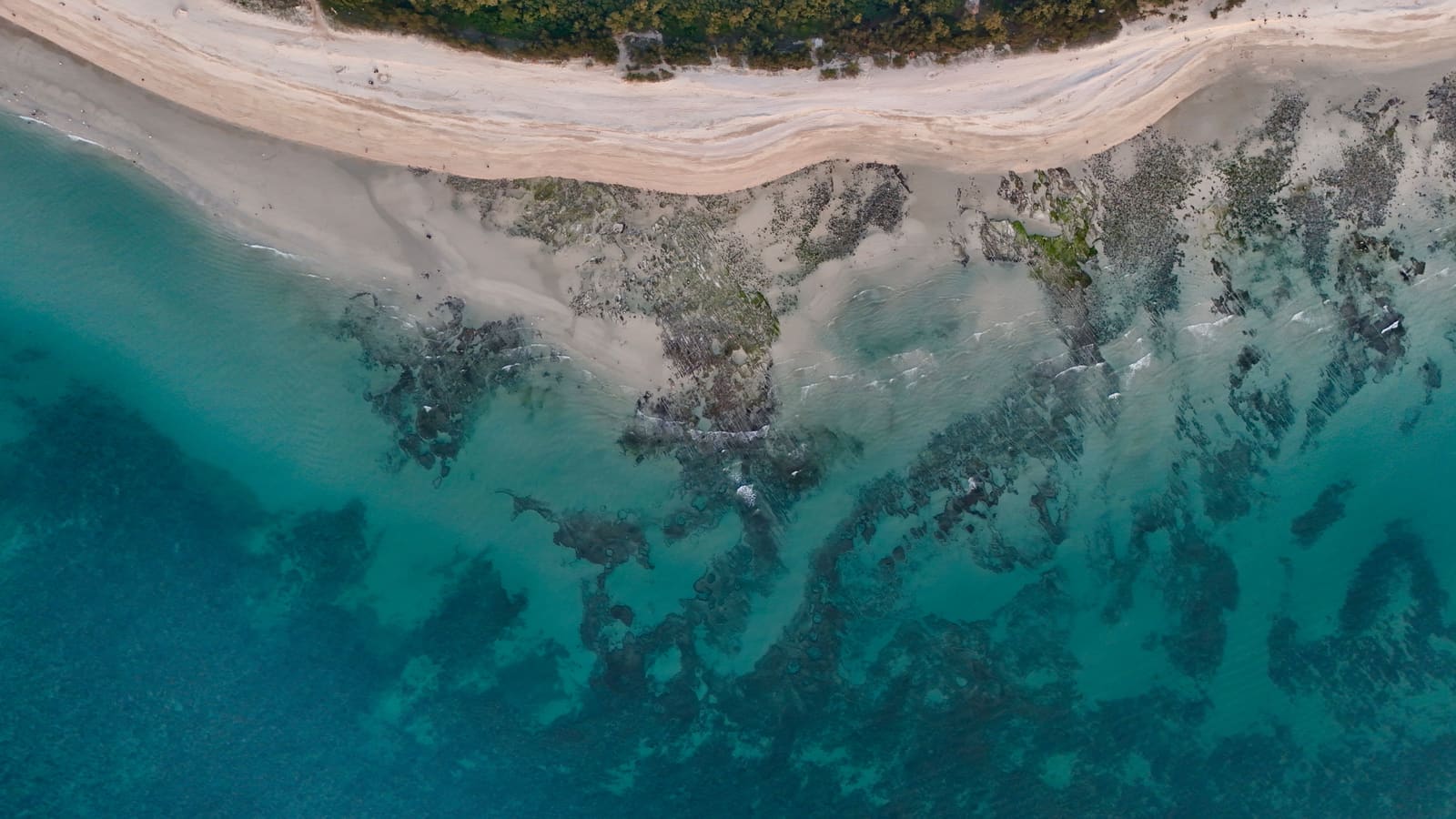
There is a particular stillness that settles over Radhanagar Beach at dusk, when the Andaman Sea turns the colour of unripe mango and the only sound is the drag of foam across sand. It is the kind of quiet that makes you believe, however briefly, that the world has paused its turning. This year, nearly 800,000 travellers cast votes for their most cherished island destinations, and what emerges from the tally is less a ranking than a collective portrait of desire: for coral gardens unmarred by footprints, for limestone cliffs that rise like cathedrals from turquoise shallows, for the particular alchemy of sun, salt, and distance from the ordinary.
The winners span three continents and encompass every shade of escapism, from the manatee-inhabited shallows of Mozambique's Bazaruto Archipelago to the all-night beach parties of Ko Pha Ngan. What they share is not a single aesthetic but a capacity to deliver on the promise implicit in the word "island": separation, transformation, the chance to become briefly unmoored.
The Indian Ocean's Pearls
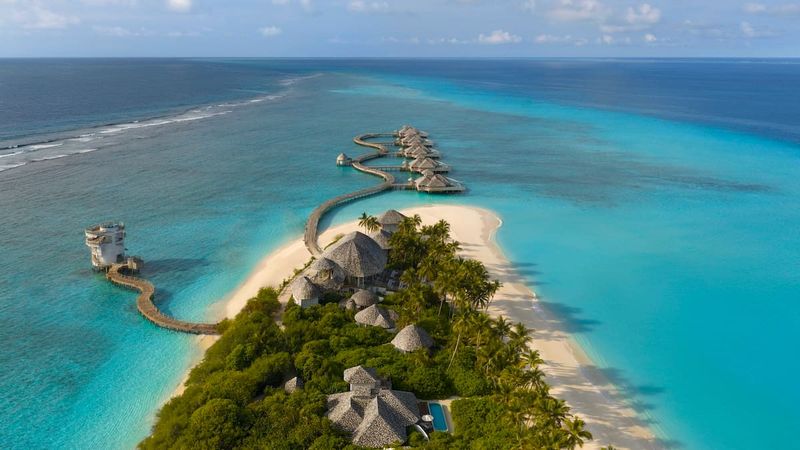
At the top of the global rankings sits the Maldives, that improbable republic of 26 atolls and more than 1,000 islands scattered across the Indian Ocean like a spill of gemstones. The draw is elemental: water so clear it appears to have no substance, villas perched on stilts above lagoons where rays glide in slow circles, dive sites at Ari Atoll where reef sharks patrol the deeper currents. Coral bleaching has claimed portions of the underwater landscape, yet the Maldives retains its hold on the collective imagination, a place where the boundary between sea and sky seems negotiable.
Just behind it in the rankings, Seychelles offers a different flavour of island perfection. The granite boulders of La Digue, worn smooth by millennia of wave action, frame beaches so pristine that filmmakers chose them as the setting for cinematic isolation. Snorkelling here reveals a density of marine life, schools of fish moving in synchronised patterns among the coral formations off Félicité. The archipelago has long attracted those seeking privacy: royal honeymoons have unfolded on North Island, far from telephoto lenses and the machinery of public life.
Zanzibar, by contrast, wears its history on the surface. In Stone Town, the 19th-century House of Wonders still stands, its carved wooden doors opening onto courtyards where sultans once held court. The island's appeal lies in this layering: white coral sand beaches meet turquoise water, yes, but also winding lanes fragrant with clove and cardamom, minarets rising above terracotta rooftops, the accumulated sediment of centuries as a trade crossroads. The dry season between June and October brings average temperatures of 25 degrees Celsius and overlaps conveniently with safari season on the mainland, should one wish to pair Indian Ocean languor with Serengeti dust.
Mauritius, further east, has found renewed attention through aerial photography that captures what appears to be an underwater waterfall, a trick of perspective created by runoff of sand and silt cascading off the continental shelf. The island sits atop what some geologists believe to be a drowned microcontinent, fragments of ancient crust submerged beneath the waves. It possesses another curious distinction: a gravitational field strong enough to make objects measurably heavier than they would be elsewhere, a detail that delights physicists and dismays anyone who steps on a scale after a week of Creole curries.
The Bazaruto Archipelago, off Mozambique's eastern coast, rounds out the Indian Ocean contingent. Six islands, Bazaruto, Benguerra, Magaruque, Santa Carolina, Bangue, and Shell, form a protected conservation area and national park nicknamed the Pearl of the Indian Ocean. Big-name hospitality arrived only in the past decade; andBeyond Benguerra Island opened in 2015, bringing the kind of understated luxury that prizes silence and sightlines over spectacle. The surrounding waters shelter populations of dugongs, those improbable marine mammals that sailors once mistook for mermaids in the half-light of dawn.
Thailand's Archipelago of Pleasures
Thailand claims four spots in the Asian top ten, each island offering a distinct interpretation of tropical escape. Ko Pha Ngan has built its reputation on excess: full-moon parties at Haad Rin's Sunrise Beach draw upwards of 20,000 revellers during peak season, the beach transforming into a pulsing mass of bodies under the lunar glow. For those unable to time their visit to the lunar calendar, half-moon and black-moon parties fill the intervening weeks, and the island's beach bars maintain a steady thrum of activity every night.
Yet even Ko Pha Ngan harbours pockets of solitude. Bottle Beach, accessible primarily by boat, offers the kind of powder-sand seclusion that feels increasingly rare. The Ayurvana Spa at Santhiya Resort, perched on Thong Nai Pan Noi Beach in the island's northern reaches, provides sanctuary for those requiring recovery from the previous night's excesses, with treatments ranging from functional to transcendent.
The Phi Phi Islands, cradled between Phuket and the Straits of Malacca, present a study in contrasts across six islands. Ko Phi Phi Don, the largest and most populated, pulses with the rhythms of daily life: fishing boats departing at dawn, markets selling mangosteen and rambutan, the clatter of motorbikes on narrow lanes. Ko Phi Phi Le, by comparison, is largely uninhabited, its dramatic limestone cliffs plunging into water of such impossible clarity that boats appear to hover in mid-air. The beaches here rank among Southeast Asia's finest, silky white sand meeting cliffs carved by wind and water into fantastical shapes.
Phuket, Thailand's largest island, suffers from its own popularity. The west coast groans under the weight of development, high-rise hotels blocking sight lines to the Andaman Sea, beaches crowded shoulder to shoulder in high season. But the island is large enough to absorb the crowds and still offer refuge. Cape Panwa, on the quieter southeastern coast, shelters luxury properties and small-batch rum distilleries, places where one can pass an afternoon watching long-tail boats trace lines across the bay. Phuket Town, often bypassed in the rush to the beaches, rewards those who linger: Taoist temples with incense coiling towards rafters, street markets piled with turmeric and galangal, murals splashed across shophouse facades in shades of ochre and cobalt.
Koh Samui, Thailand's second-largest island, has refined the art of the beach resort. Five-mile Chaweng Beach curves along the eastern coast, its northern end given over to nightlife, the southern stretches offering relative calm. A natural reef encircles much of the shoreline, creating lagoons where the water barely reaches waist height. The island's luxury properties span styles: AVANI+ Samui Resort with its contemporary lines, Four Seasons with villas terraced into hillsides, The Library with floor-to-ceiling bookshelves that frame ocean views, a temple to the idea that reading and beach-going need not be mutually exclusive.
Malaysia, Indonesia, and India's Offerings
Langkawi, an archipelago of 99 islands off Malaysia's northwestern coast, has leveraged its natural assets into a thriving tourism economy while retaining stretches of genuine wilderness. The Sky Bridge, suspended above the rainforest canopy, has become visual shorthand for the destination, but the real draw is the conjunction of coral reefs, limestone mountains cloaked in jungle, and a food culture that treats eating as both art and competitive sport. Satay skewers slick with peanut sauce, coconuts split with practised machete strokes, the funk of durian and belacan paste: the olfactory landscape is as vivid as the visual one. The Ritz-Carlton occupies a plot within a 10-million-year-old rainforest, its spa and beachfront restaurants benefiting from a setting that feels primordial.
Bali has become shorthand for overtourism, its temples and rice terraces flooded with visitors clutching smartphones, the island's spiritual infrastructure straining under the weight of Instagram pilgrimage. Yet pockets of the island remain stubbornly authentic. The shoulder months of April, May, September and October offer a reprieve: lower airfares, emptier beaches, the chance to visit Tirta Empul or Tanah Lot without navigating human gridlock. The island's appeal has always rested on a particular combination: world-class surf breaks, Hindu ceremonies performed with flowers and incense at dawn, sunsets that paint the sky in gradations of flame.
India's Andaman Islands, scattered across the Bay of Bengal, offer 365 days of reliably warm weather and a spectrum of experiences from adrenaline to meditation. Havelock Island's beaches cater to both impulses: Radhanagar for those seeking contemplation, Elephant Beach for water sports enthusiasts who prefer their ocean time loud and kinetic. Beyond the coastline, the Baratang Limestone Caves provide a counterpoint, their natural corridors carved by water over geological time, stalactites dripping towards stalagmites in slow-motion collision.
The Arithmetic of Devotion
What the voting reveals is not simply a preference for warm water and palm trees, though both feature prominently. Rather, it illuminates the specific flavours of escape that resonate most deeply: the Maldives' geometric perfection, Zanzibar's layered history, Ko Pha Ngan's hedonistic abandon, Seychelles' aristocratic seclusion. Each island offers a version of removal, a temporary exit from the grid of ordinary obligation.
The numbers themselves, nearly 800,000 votes cast, suggest the scale of contemporary wanderlust and the degree to which island travel has become democratised. What was once the province of explorers and colonial administrators is now within reach of anyone with a passport and airfare. The challenge, increasingly, is finding versions of island life that have not been smoothed into generic resort experience, where local texture has been preserved alongside the infrastructure of comfort.
These rankings will shift, as they do each year. New properties will open, others will fade. Coral reefs will recover or succumb. What persists is the fundamental human attraction to islands, those fragments of land surrounded by water, offering the possibility of reinvention or at least a few days of forgetting. The best of them, as this year's voting makes clear, are those that deliver on that promise while remaining unmistakably themselves: not interchangeable backdrops but places with their own weather, their own rhythms, their own ways of marking the passage of time between one tide and the next.