Why the World's Finest Restaurants Are Serving Fewer Ingredients
From Cape Town to Singapore, the shift away from abundance signals a deeper confidence in the craft of restraint.
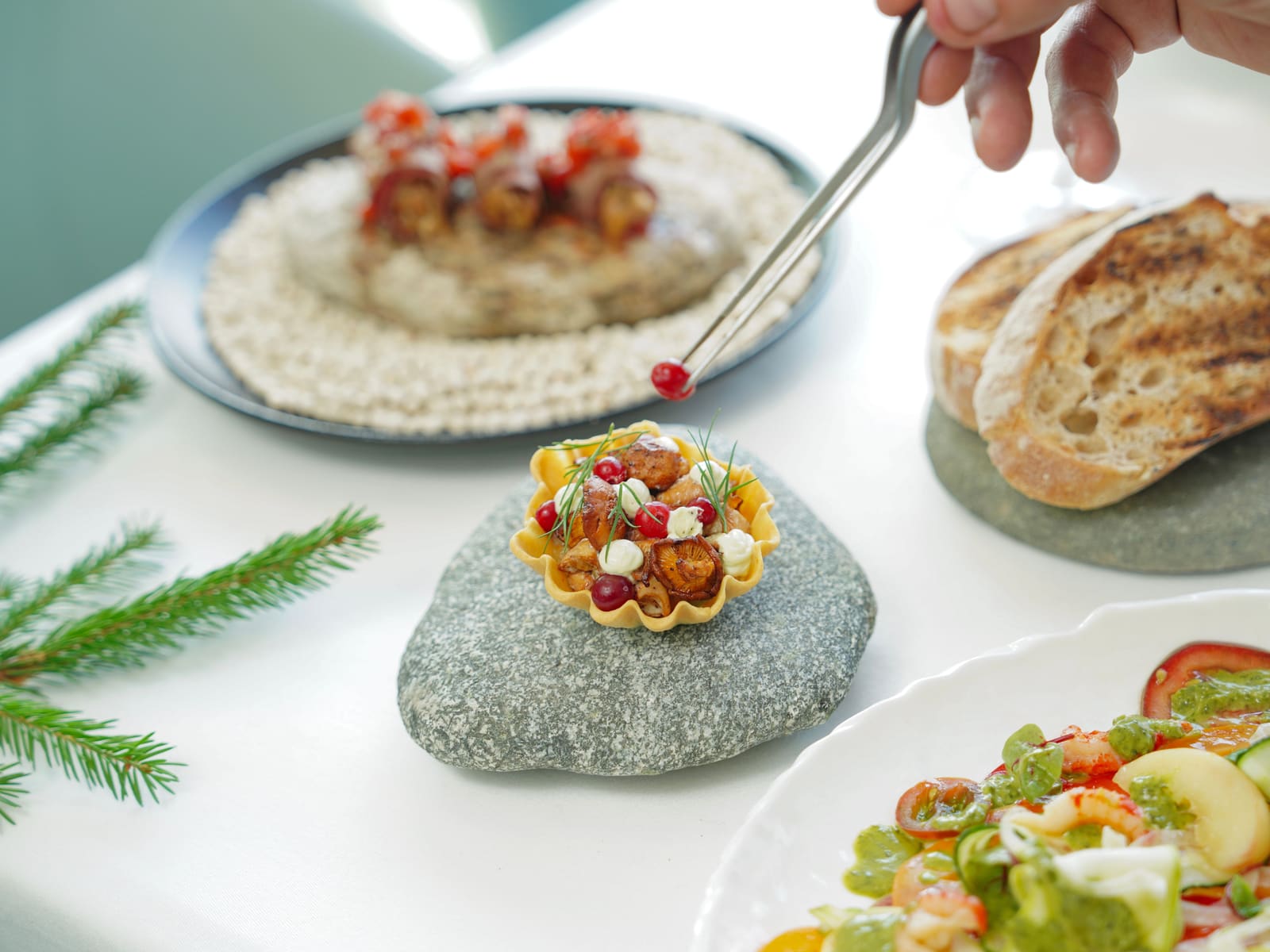
The Quiet Revolution on Fine Dining Tables
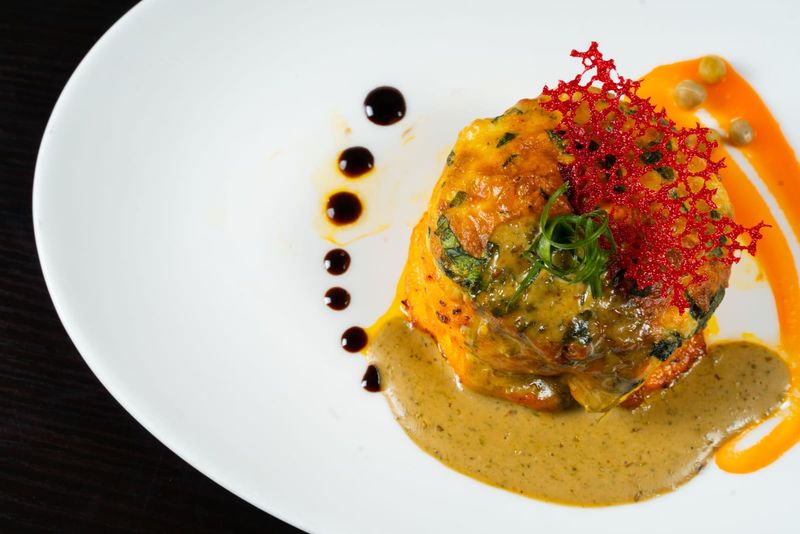
There is a particular kind of silence that settles over a dining room when a plate arrives bearing only three elements: a single piece of fish, a smear of sauce, a scatter of leaves. Not the silence of disappointment, but of anticipation. At La Colombe, set among the vineyards of South Africa's Constantia Valley, executive chef James Gaag has spent years learning what to leave off the plate. His menus, once dense with the fruits of his German upbringing and years of travel, now speak in whispers rather than shouts. The restaurant, which placed 35th and earned the title of Best Restaurant in Africa, reflects a broader recalibration taking place in kitchens from London to Hong Kong.
The sprawling tasting menu, the foam-crowned towers, the six-hour narrative journeys through a chef's psyche are giving way to something harder to execute: restraint. Gaag frames the shift plainly. Fewer courses. Fresher preparations. Lighter compositions. Less time tethered to the table. Where a decade ago a single plate might have carried a hundred ingredients, each applied with surgical precision, today's confidence lies in knowing when to stop.
What Confidence Looks Like
The move towards simplicity is not asceticism. It is the result of maturity. Gaag himself admits that his willingness to pare back grew in direct proportion to his tenure at La Colombe. Early in a chef's career, there is often an impulse to prove mastery through abundance, to demonstrate range by cramming references to every technique and tradition onto a single canvas. But as the years accumulate, so does the understanding that luxury is not measured in quantity. A perfectly sourced ingredient, treated with precision and presented without distraction, communicates more than any tower of architectural flourishes ever could.
This philosophy echoes across continents. At Ikoyi in London, chef Jeremy Chan and co-founder Iré Hassan-Odukale have built a Michelin-starred reputation on a menu that draws from British microseasonality and globally sourced spices. The restaurant climbed to number 48 this year, propelled by a kitchen that refuses to equate refinement with rigidity. Chan describes fine dining not as an exercise in preciousness or formality, but as the pursuit of a refined experience rooted in craft, responsibility, and precision. The goal is not to impress with complexity, but to make diners feel genuinely special.
The End of the White Glove
Parallel to the visual simplification of plates is the dismantling of another kind of excess: the performative formality that once defined high-end service. At Odette in Singapore, which placed 15th this year, chef de cuisine Sheng Xiong blends his Asian heritage with French training to create menus that are as technically rigorous as they are approachable. When asked which fine dining trend he would happily see disappear, he paused to joke about job security before offering a more serious answer. The white-glove service model, he suggested, is fading. At Odette, guests are treated not as patrons to be served with stiff ceremony, but as family members returning home.
The shift has not been without friction. Xiong notes that older generations in Singapore initially struggled to understand the departure from rigid, hierarchical service. But over time, the preference has swung decisively towards warmth over formality. The three-Michelin-starred restaurant now operates in a register that can feel almost casual, yet never careless. The distinction matters. Guests leave not awed by distance, but comforted by connection.
Asia's Ascending Influence
The trend towards stripped-back elegance is particularly visible across Asia's top-ranked establishments. Gaggan in Bangkok claimed the number two spot and the title of Best Restaurant in Asia. Wing in Hong Kong placed fifth, and the Chairman, also in Hong Kong, landed at number six. These restaurants share a common thread: they honour tradition without being imprisoned by it, and they present their craft with a lightness that does not diminish its seriousness.
Odette's rise within this cohort speaks to a broader realignment. French technique, once the unquestioned lingua franca of fine dining, is now in conversation with Asian ingredients, rhythms, and philosophies. The result is not fusion in the dated sense, but integration. Xiong's menus do not announce their influences with fanfare; they absorb them quietly, allowing diners to taste the synthesis without needing a programme to decode it.
The Economics of Less
Simplicity, paradoxically, is expensive. Sourcing a single perfect tomato costs more than assembling a medley of acceptable ones. Training a team to execute three elements flawlessly demands more rigour than choreographing a dozen. The kitchens embracing this approach are not cutting corners; they are sharpening them. The move towards lighter, shorter menus also responds to a shifting appetite among diners. The six-hour tasting menu, once a badge of commitment, now risks feeling like an endurance test. Gaag's emphasis on less time at the table reflects an awareness that luxury is increasingly defined by flexibility, not duration.
The economic logic extends beyond the kitchen. Restaurants that can deliver a refined experience in fewer courses and less time can serve more guests without sacrificing quality. This is not about turnover in the crass sense, but about accessibility. Fine dining has long grappled with accusations of elitism; offering shorter, lighter menus at lower price points without compromising craft is one way to answer that critique.
What Remains
The chefs leading this shift are not abandoning technique. If anything, they are doubling down on it. The difference is in the presentation. Where previous generations might have showcased every skill in a single dish, today's kitchens are content to let a single technique shine. A perfectly seared piece of fish does not need a supporting cast of foams and gels to justify its place on the menu. It needs only to be impeccably sourced, flawlessly cooked, and thoughtfully plated.
This is the new language of luxury: legibility. A diner should be able to look at a plate and understand it immediately, even if the work required to bring it to the table remains invisible. The goal is not to mystify, but to clarify. Not to overwhelm, but to satisfy. As kitchens from Cape Town to Singapore continue to refine this approach, the question is no longer how much can fit on a plate, but how little is needed to say everything.