A Marquis's Mansion Becomes Seville's Most Compelling Address
Inside Serras Sevilla, where designer Eva Martínez transforms a 1915 Aníbal González landmark into a study of Andalusian light and craft.
The Architecture of Proximity
The lobby of Serras Sevilla breathes with the kind of vertical space that only century-old architecture can offer, where marble pillars rise toward ceilings that refuse to press down on human ambition. Through glass frontage along Avenida de la Constitución, Seville Cathedral looms close enough to study the Gothic tracery without field glasses. The building housing this thirty-eight-room hotel was completed in 1915 as Casa Álvaro Dávila, a private residence commissioned by the Marquis of Villamarta and designed by Aníbal González, the architect whose vision shaped much of Seville's urban fabric during the early twentieth century.
A three-year restoration preceded the hotel's opening, the kind of meticulous intervention that honours original cornices and ironwork whilst inserting contemporary sensibilities. Spanish designer Eva Martínez led the interiors, constructing an environment where historical gravitas meets present-day luxury without the usual clash of eras. The result occupies that rare middle ground: neither museum nor showroom, but a space that acknowledges its 1915 bones whilst refusing to be imprisoned by them.
A Palette Drawn from Andalusian Earth
Martínez's material language speaks in textures rather than flourishes. Sand, cream, terracotta - the palette mirrors the Andalusian landscape beyond the city's whitewashed walls, grounding the hotel in a sense of place that transcends decorative gestures. Natural materials layer throughout: hand-glazed tiles from local ateliers, bespoke ceramics commissioned for this property alone, furnishings crafted by Sevillian artisans whose work carries the weight of regional tradition without nostalgia's cloying aftertaste.
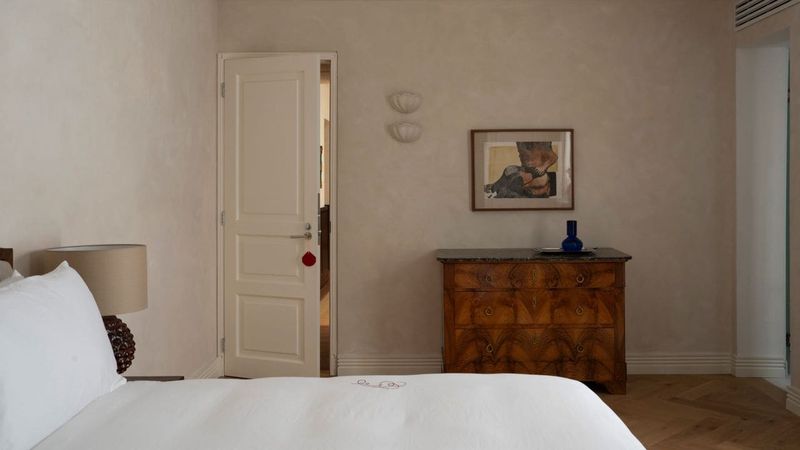
The thirty-eight rooms and five suites maintain the high ceilings González originally envisioned, allowing light to pool and circulate in ways modern construction rarely permits. Headboards fashioned from Andalusian tiles anchor each sleeping chamber, whilst fringed curtains frame windows with theatrical intent. Soundproofing shields guests from the animated streets radiating from the cathedral - lanes thick with tapas bars and ceramic shops where tourists and locals negotiate the same narrow pavements.
Superior Catedral Rooms and the Cathedral Itself
For those seeking visual dialogue with Seville's most commanding structure, the Superior Catedral rooms deliver twenty-six square metres oriented toward the cathedral and its Giralda bell tower. Waking here means confronting UNESCO World Heritage architecture before coffee, the world's largest Gothic cathedral filling your sightline with the insistence of something built to outlast empires. The Grand Suite, at one hundred square metres with three separate bedrooms, offers the most expansive quarters, though the cathedral views remain the true luxury regardless of room category.
The courtyard provides an airy counterpoint to the lobby's formality, a space where guests can retreat without ascending to the rooftop or descending to street level. It functions as the hotel's quiet lung, a pause between the vertical drama of the entrance and the horizontal sprawl of the city beyond.
Fismuler's Andalusian Proposition
The hotel houses Fismuler, a restaurant concept that began in Madrid before expanding to Barcelona and now Seville. The kitchen commits to seasonal ingredients with a daily shifting menu, drawing from Andalusian farms and coastline. This is the third iteration of the Fismuler model, and the Seville location leans into regional produce with the fervour of a concept finally arriving at its geographic logic. The Mediterranean and Atlantic both contribute to the menu, as do the inland plains where vegetables and grains grow under relentless sun.
Guests need not leave the building for a credible culinary experience, a convenience that matters when jet lag or July heat makes the prospect of navigating cobblestones feel Sisyphean. The restaurant operates independently enough to draw locals, which means the dining room avoids the sepulchral quiet that plagues many hotel restaurants after nine o'clock.
The Almagra Rooftop and Its Vantage
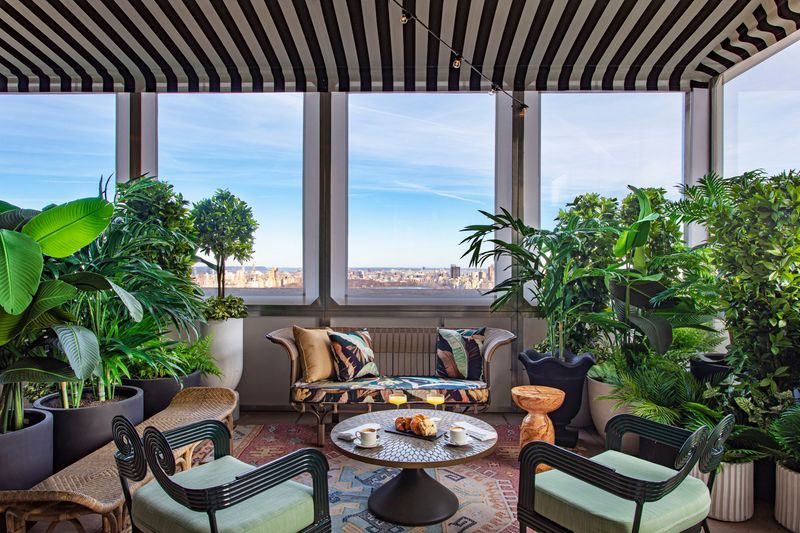
Climb to the Almagra Rooftop and the city reassembles itself into a legible map. The cathedral and Giralda tower dominate, their spires close enough to appreciate the stone carving's intricacy - details that blur into general impression from street level. A plunge pool offers respite when Seville's summer temperatures make walking feel like labour, whilst parasol-shaded loungers provide staging grounds for extended afternoons.
The rooftop bar has swiftly become a destination beyond hotel guests, which means securing a table at sunset requires either advance planning or well-timed luck. Cocktails arrive against a backdrop of terracotta rooftops and church domes, the kind of panoramic theatre that travel brochures promise but rarely deliver with this degree of proximity. The view is not merely expansive; it is intimate, bringing Gothic Revival architecture into a relationship with the viewer that feels almost intrusive.
The Serras Collection's Expansion Logic
Serras Sevilla represents the third property in the Serras Collection, following openings in Barcelona and Andorra. According to Jordi Serra Burges, President of Serras Collection, Seville's distinctive identity and historical depth align with the group's focus on personality-driven hospitality in exceptional locations. The collection positions itself around intimate scale - properties that measure rooms in dozens rather than hundreds - and sites chosen for cultural resonance rather than sheer tourist volume.
The hotel staff function as access brokers, arranging bespoke outings that leverage local knowledge. This is the contemporary luxury hospitality model: personal service as curated experience, the concierge reimagined as cultural translator. For guests willing to engage, the team can orchestrate entry to sites and experiences that remain opaque to independent travellers, though the value of such arrangements depends entirely on one's appetite for guided discovery versus solitary wandering.
Tradition and Modernity Without the Usual Friction
Seville rewards those who move slowly, and Serras Sevilla provides a base that neither rushes nor coddles. The building's 1915 architecture imposes a certain formality - lobbies this grand do not invite lounging in athleisure - yet Martínez's interiors soften González's monumentality with tactile warmth. The hotel succeeds because it refuses to choose between historical reverence and contemporary comfort, instead insisting that both can coexist without one diminishing the other.
The location delivers immediate access to the cathedral, the Alcázar, and the Archivo de Indias, three UNESCO sites clustered within minutes of each other. Yet the hotel's soundproofing and courtyard geometry create sufficient buffer that returning from sightseeing feels like genuine retreat rather than mere room change. This balance - proximity without saturation - defines the property's particular achievement.
Guests depart with an understanding of Seville filtered through Aníbal González's architectural vision and Eva Martínez's material choices, a layered perspective that acknowledges the city's Moorish, Renaissance, and Baroque inheritances whilst standing firmly in the present. The hotel does not pretend to encapsulate Seville, but it offers a vantage point from which the city's complexities become navigable, one hand-glazed tile and one cathedral view at a time.