AlUla and the Architecture of Stillness
In Saudi Arabia's north-west, a desert valley is revealing itself - slowly, deliberately, and on terms centuries in the making.
The Valley Opens
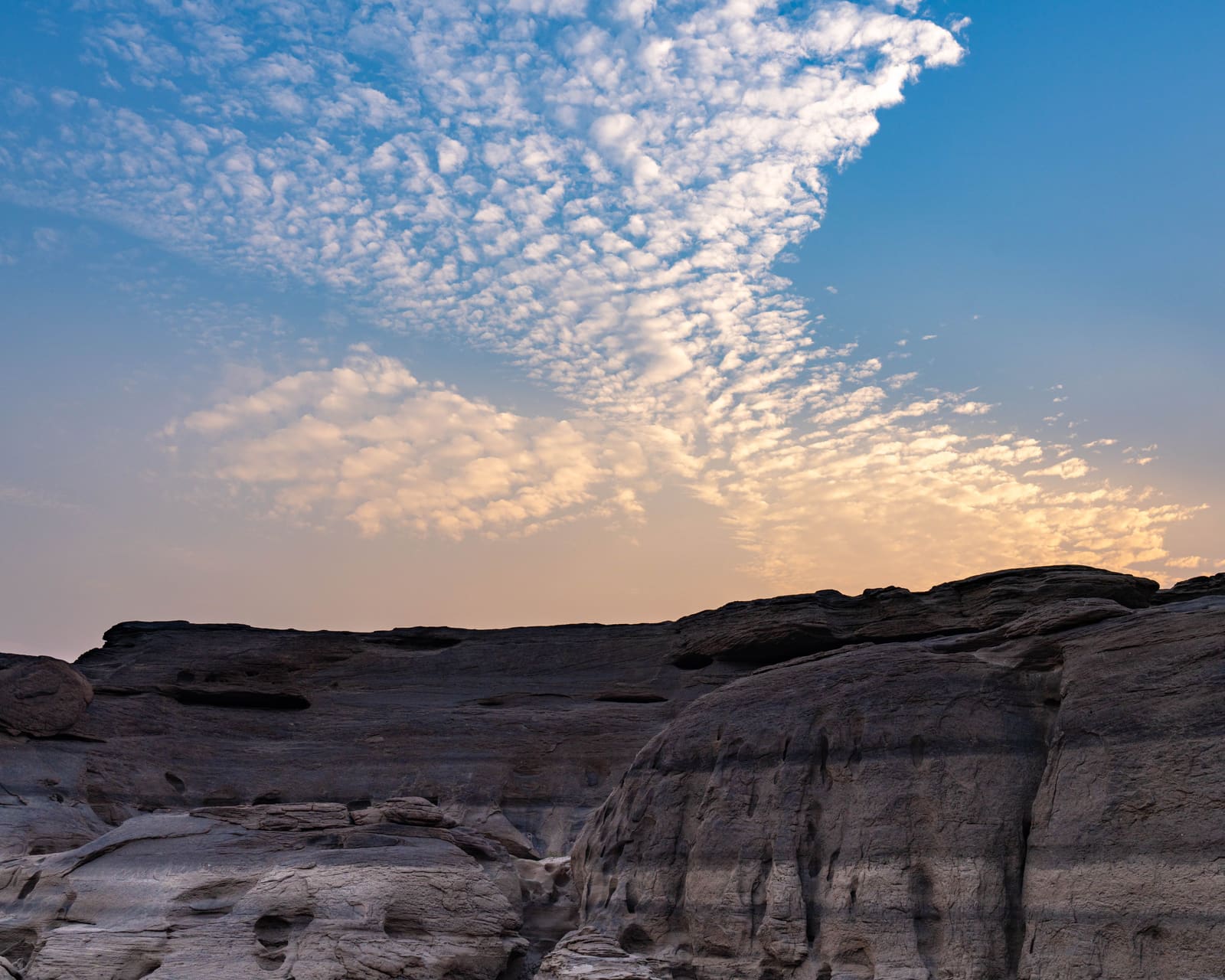
There is a quality of light in AlUla that photographers struggle to capture and poets have tried, for centuries, to name. It arrives oblique in the early morning, carving the sandstone cliffs into a thousand shades of ochre and rose, then softens by mid-afternoon into something almost tactile. Stand among the tombs of Hegra - the Nabataean necropolis that predates Petra - and the silence is not empty but dense, layered with the weight of two millennia.
This is Saudi Arabia's north-west, a region long closed to outsiders and only recently opening to travellers willing to meet it without hurry. AlUla is not a city in the conventional sense. It is a valley, an archaeological palimpsest, a living museum where Nabataean engineers carved facades into cliffs, where incense routes once carried frankincense north to Rome, and where today a new generation of architects and chefs is writing the next chapter with a reverence for what came before.
Hegra and the Language of Stone
The UNESCO-listed site of Hegra sprawls across 52 hectares, its 111 monumental tombs emerging from the desert floor like sentinels. These are not the work of a single dynasty but the accumulated legacy of Nabataean craftsmanship, each facade inscribed with the name of its occupant, the year of completion, and warnings to would-be grave robbers. The inscriptions are in Aramaic. The architectural vocabulary is Hellenistic, filtered through a desert sensibility that understood the drama of negative space.
What sets Hegra apart from its more famous sibling in Jordan is the degree of preservation. The tombs remain largely intact, their interiors cool even at midday, their thresholds still marked by the channels that once held wooden doors. Walking among them is an exercise in reading stone - the chisel marks still visible on unfinished facades, the evidence of seismic shifts that cracked lintels but left the structures standing.
Archaeologists continue to work here, mapping trade routes and excavating residential quarters that suggest Hegra was not merely a necropolis but a thriving caravan city. The site opens at dawn, and those who arrive early will have the tombs to themselves for an hour, perhaps two, before the first guided groups arrive.
Where Geology Becomes Theatre
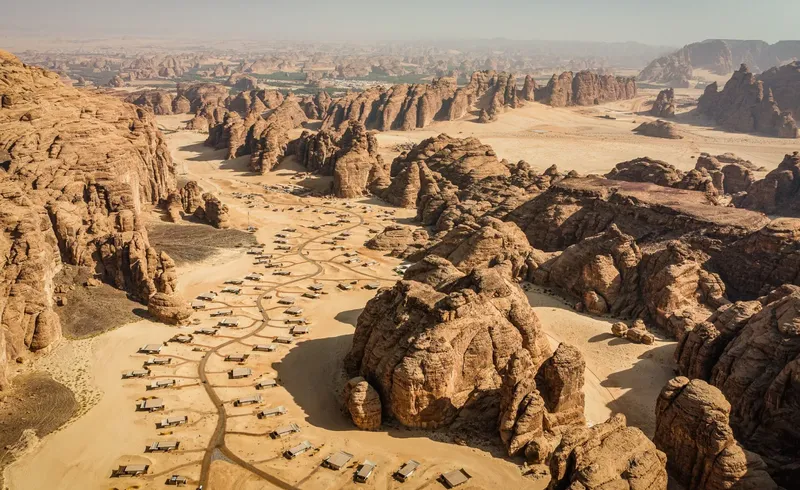
Beyond Hegra, AlUla's landscape is a study in erosion and time. The rock formations at Gharameel - locally known as the Dancing Rocks - rise in clusters, their bases narrowed by millennia of wind into shapes that defy structural logic. Geologists describe them as remnants of ancient lakebeds, the softer sediment worn away to leave these towers of harder sandstone. To stand among them at sunset is to witness geology as performance art, the shadows lengthening and the stone turning from gold to amber to a deep, smouldering red.
Further north, the rock-cut canyon of Jabal Ikmah functions as an open-air library. More than 500 inscriptions cover its walls - Dadanitic, Nabataean, Thamudic - recording treaties, property transactions, and prayers to long-forgotten deities. It is a palimpsest of languages, a reminder that this valley has always been a crossroads.
The New Hospitality
AlUla's accommodation landscape has shifted dramatically in recent years. A constellation of properties now dots the valley, each navigating the tension between luxury and restraint. Banyan Tree AlUla, set within a desert canyon, translates the brand's South-East Asian sensibility into local stone and woven textiles. The villas are low-slung, their silhouettes deferential to the surrounding cliffs, their courtyards designed to channel the evening breeze.
Habitas AlUla takes a different approach, its tented structures clustered around a central gathering space where communal meals unfold beneath the stars. The aesthetic is raw - exposed steel frames, canvas walls, furniture hewn from reclaimed timber - but the comforts are considered: deep bathtubs, Egyptian cotton linens, a menu that leans heavily on regional produce.
For those seeking intimacy at scale, Ashar Tented Resort offers a middle ground. The tents are spacious, each with a private deck overlooking the valley, and the property's compact size (fewer than 50 units) ensures a degree of seclusion. The design language here is quieter, less declarative, with an emphasis on natural materials and muted tones that allow the landscape to dominate.
Tables in the Sand
AlUla's culinary scene is still forming, but the foundations are intriguing. Maraya Social House, adjacent to the mirrored concert hall that has become an architectural landmark, serves a pan-Arabian menu informed by the valley's agricultural heritage. Dates from local groves appear in both sweet and savoury preparations; lamb is slow-roasted in underground ovens; bread is baked in traditional clay ovens that impart a faint smokiness.
At Somewhere, the emphasis is on place-making as much as plating. The restaurant occupies a series of interconnected courtyards, each with its own microclimate, and the menu changes with the seasons. Spring brings wild herbs foraged from the surrounding hills; autumn sees the arrival of pomegranates and figs. The wine list, necessarily limited by local regulations, focuses on Lebanese and Moroccan labels that complement the menu's flavour profile.
For a more immersive experience, several operators now offer private dinners within the archaeological sites themselves - tables set among the tombs of Hegra, lit by lanterns, the menu a collaboration between chefs and historians that attempts to reimagine Nabataean feasting traditions through a contemporary lens. These are not daily occurrences but occasions, requiring advance booking and a willingness to dine late, after the sites have closed to the public.
The Mechanics of Arrival
AlUla International Airport receives direct flights from Riyadh, Jeddah, and Dubai, with seasonal connections to European capitals. The airport itself is compact, its terminal designed by local architects to echo the surrounding rock formations. From there, the valley is a 30-minute drive through landscape that shifts from flat desert to dramatic escarpments with little warning.
Saudi Arabia's tourist visa process has simplified considerably, with e-visas available to citizens of 49 countries and processing times measured in hours rather than weeks. The climate is extreme - summer temperatures regularly exceed 40 degrees Celsius, making the cooler months between October and March the practical window for exploration. Winter nights can be cold, the temperature dropping to single digits, and layers are essential.
What Remains Unfinished
AlUla is not yet complete. Construction continues on several mega-projects, including a resort designed by Jean Nouvel that will be embedded into the canyon walls, visible only from certain angles. The valley's master plan, ambitious in scope, envisions AlUla as a cultural destination on par with Luxor or Angkor, a place where archaeology, contemporary art, and sustainable tourism coexist.
Whether that vision will materialise remains to be seen. What is certain is that AlUla has entered a phase of transformation, and those who visit now will witness a landscape in flux - ancient stones being unearthed, new buildings rising with varying degrees of sensitivity, a community negotiating what it means to open a valley that has, for much of its history, been closed.
The tombs at Hegra will endure regardless. They have survived empires, earthquakes, and centuries of neglect. What happens around them, in the space between preservation and progress, is the story still being written.