Where the Lake Meets the Villa: A Day in Bellagio
The northern Italian town has long understood that luxury is not just about opulence - it is about the careful choreography of light, water, and stone.
A Promontory Between Two Arms
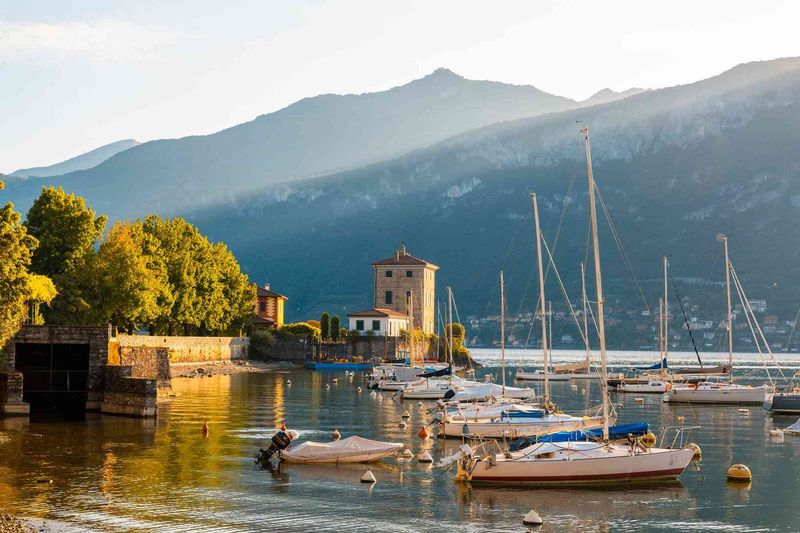
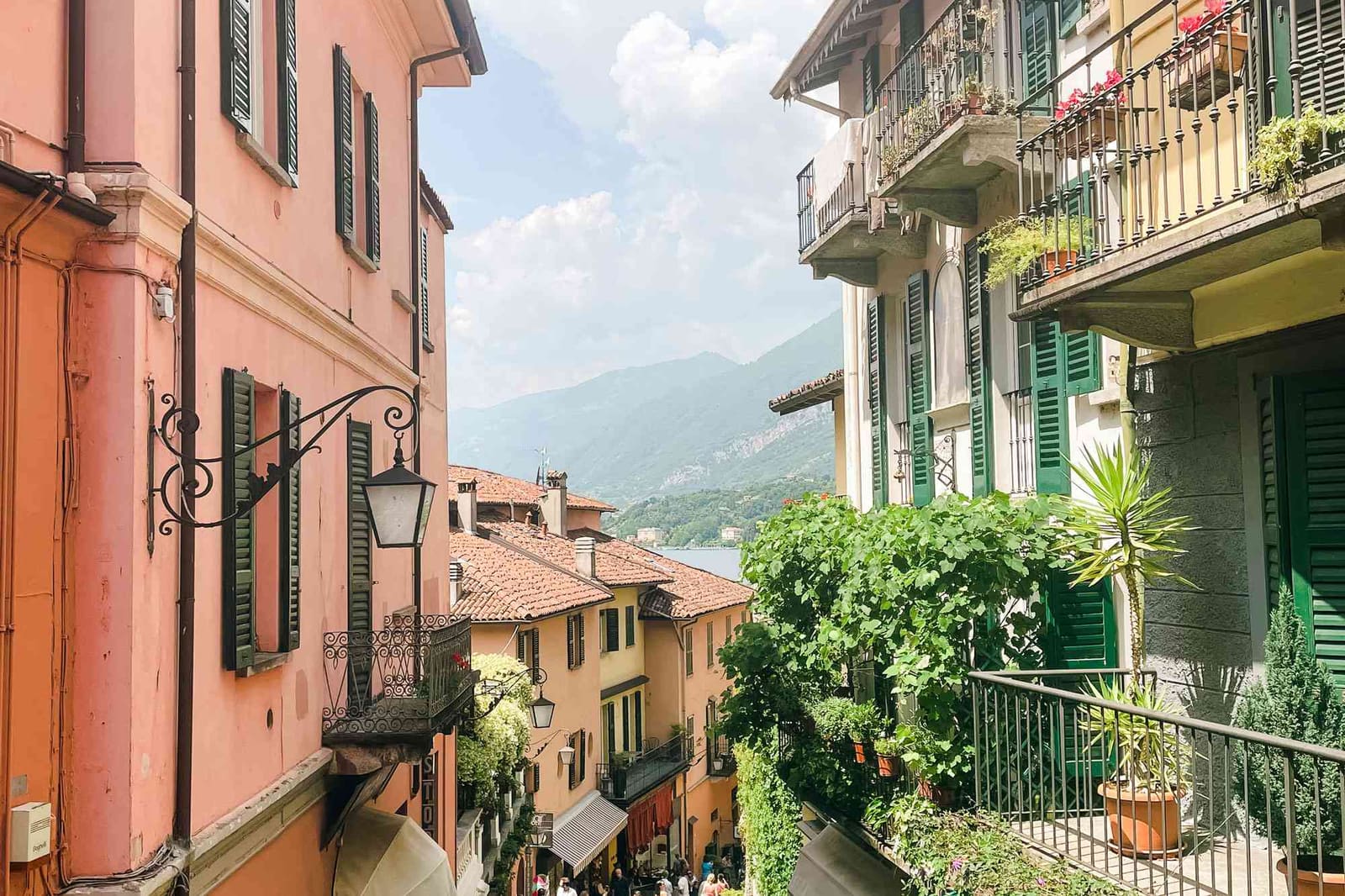
There is a moment, approaching Bellagio by boat from the southern reaches of Lake Como, when the town appears not as a destination but as a mirage - a cascade of ochre and terracotta facades tumbling down hillsides so steep they seem to defy the lake's horizontal calm. The ferry slows. The water, a shade of blue-grey that belongs neither to sea nor sky, laps against stone steps worn smooth by centuries of arrivals. This is the geography that has made Bellagio legendary: a wedge of land dividing Como's two southern arms, a place where every vista is framed by mountains and every garden seems to float between earth and water.
The town sits at the intersection of the lake's Lecco and Como branches, a position that has granted it both strategic importance and uncommon beauty. Roman patricians built villas here. Nineteenth-century aristocrats followed. Today, the same topography that attracted emperors and Grand Tourists continues to shape the rhythms of a place where steep cobbled lanes climb away from the waterfront and every turn offers another view of the lake's shifting moods.
The Architecture of Leisure
Bellagio's grand hotels are not merely places to sleep - they are monuments to a particular vision of leisure that emerged in the decades after Italian unification, when Lake Como became a proving ground for a new kind of hospitality. The belle époque buildings that line the waterfront, with their neoclassical colonnades and wrought-iron balconies, were designed to frame the landscape, to make the act of looking as important as the act of being looked at.
Villa Serbelloni, perched on the promontory's highest point, commands views across both branches of the lake. The building's symmetry and restrained elegance speak to an era when luxury meant proportion rather than excess. Nearby, the Grand Hotel Villa Serbelloni - a separate entity, despite the name - occupies a prime stretch of lakefront, its terraced gardens descending in measured steps towards the water. These are not hotels in the contemporary sense; they are stages on which a particular kind of dolce vita continues to unfold.
The architecture here is conversational rather than declarative. Stucco facades in shades of cream and rose harmonise with the natural palette of limestone cliffs and cypress groves. Loggias and terraces extend interior spaces outward, blurring the boundary between built environment and landscape. It is an approach that predates modern sustainability rhetoric but embodies many of its principles: buildings that defer to their setting, that enhance rather than dominate.
Gardens as Vertical Theatre
To understand Bellagio's relationship with horticulture, one must first understand its topography. The town's gardens are not flat expanses but vertical compositions, terraced and sculpted to follow the contours of steep hillsides. This is garden-making as a form of engineering, where retaining walls and stone staircases are as important as the plants themselves.
Villa Melzi d'Eril, located slightly south of the town centre, offers perhaps the most refined example of this approach. Laid out in the early nineteenth century, the garden unfolds along the lakeshore in a series of carefully orchestrated scenes: a neoclassical chapel, a Japanese water garden, groves of ancient plane trees and azaleas that blaze crimson in spring. The design respects the lake's presence, never attempting to compete with it but instead creating moments of repose from which to contemplate water and mountains.
Further uphill, the grounds of Villa Serbelloni - open to the public by guided tour only - demonstrate a different philosophy. Here, the garden climbs aggressively, using the elevation to create panoramic viewpoints that take in the full sweep of the lake. Roses, wisteria, and camellias spill over balustrades. Paths wind through dense woodland before emerging onto belvederes where the landscape suddenly reveals itself in full. It is theatre, but theatre that acknowledges the primacy of its natural setting.
These gardens are not botanical collections in the scientific sense. They are studies in composition, in the interplay of cultivated and wild, in the ways that human intervention can amplify rather than diminish a landscape's inherent drama.
The Waterfront as Public Stage
Bellagio's lungolago - the promenade that traces the shoreline - functions as the town's social spine. Here, the rituals of Italian public life unfold against a backdrop of water and mountains: the morning espresso taken at a lakefront café, the evening passeggiata, the slow choreography of arrival and departure as ferries and private boats come and go.
The waterfront is lined with plane trees, their dappled shade providing respite from the summer sun. Benches face outward towards the lake, an orientation that encourages contemplation rather than conversation. Small hotels and restaurants occupy the ground floors of centuries-old buildings, their terraces extending onto the promenade in a gentle assertion of hospitality.
This is where Bellagio's geography becomes its defining social asset. The promontory's position means that views extend in multiple directions, that the light shifts throughout the day in ways that constantly reframe the landscape. Morning brings a soft glow to the eastern shore; late afternoon bathes the western mountains in gold. The waterfront becomes a place to witness these transitions, to measure time not by the clock but by the lake's changing colours.
Navigating by Ferry
Lake Como's ferry system is not merely a transport network - it is the primary means by which the lake's towns remain in conversation with one another. The slow boats that trace the shoreline, stopping at every village and villa, offer a perspective that no road can provide. From the water, Bellagio's setting becomes fully legible: the way the town occupies its promontory, the relationship between built form and topography, the rhythms of terraced gardens descending to the lake.
The central ferry dock at Bellagio serves as a hub for routes heading north towards Varenna and Menaggio, south towards Como, and east towards Lecco. Timetables are frequent enough to be practical, slow enough to remain humane. The act of travel becomes an extension of leisure rather than an interruption of it.
On board, the geography unfolds in layers. Lakeside villas reveal themselves from new angles. Mountain profiles shift. The water itself becomes a subject - sometimes placid and reflective, sometimes rippled by winds that funnel through the valleys. This is landscape as narrative, a story told through gradual revelation rather than instant disclosure.
The Texture of Stone and Water
What distinguishes Bellagio from other lakeside resorts is not any single monument or vista but the accumulated texture of its materials and surfaces. The town is built from local limestone, a pale grey stone that weathers to soft silver. Cobblestones, worn smooth and uneven, create a streetscape that slows the pace of walking, that demands attention to each step.
Water is everywhere - not just the lake itself but the fountains that punctuate piazzas, the stone troughs that once watered horses, the channels that drain hillside gardens. The sound of water becomes a constant presence, a counterpoint to the visual drama of mountains and sky.
This is a place that has resisted the flattening effects of mass tourism not through exclusion but through the quiet insistence of its physical fabric. The narrow lanes that climb away from the waterfront cannot accommodate tour buses. The gardens require time and patience to appreciate. The light changes too quickly to be captured in a single photograph. Bellagio rewards the kind of attention that unfolds over days rather than hours, that values gradual immersion over checklist completion.
The Light of Late Afternoon
There is a quality of light peculiar to Lake Como in the hours before sunset, when the sun drops behind the western mountains and the entire basin fills with a diffuse, golden glow. In Bellagio, this light transforms the ordinary into the sublime - the stucco facades glow, the lake turns molten, the gardens seem suspended in amber.
This is when the town's cafés and terraces fill, when the rhythm of the day shifts from activity to observation. It is a time that belongs to no particular era, that could as easily be 1880 as 2026. The continuity is not accidental - it is the product of a built environment that has evolved slowly, that has resisted the erasures of modernisation in favour of incremental adaptation.
To sit on a lakefront terrace as the light softens, watching the ferry boats make their final runs of the day, is to participate in a ritual that connects contemporary travellers to generations of predecessors. The view has not changed. The mountains remain. The water reflects the same shifting sky. Bellagio endures not as a museum but as a living demonstration that luxury, in its truest sense, is inseparable from restraint.