Built to Last a Decade: Justin and Quynh Anh Mott on Producing Hotel Imagery
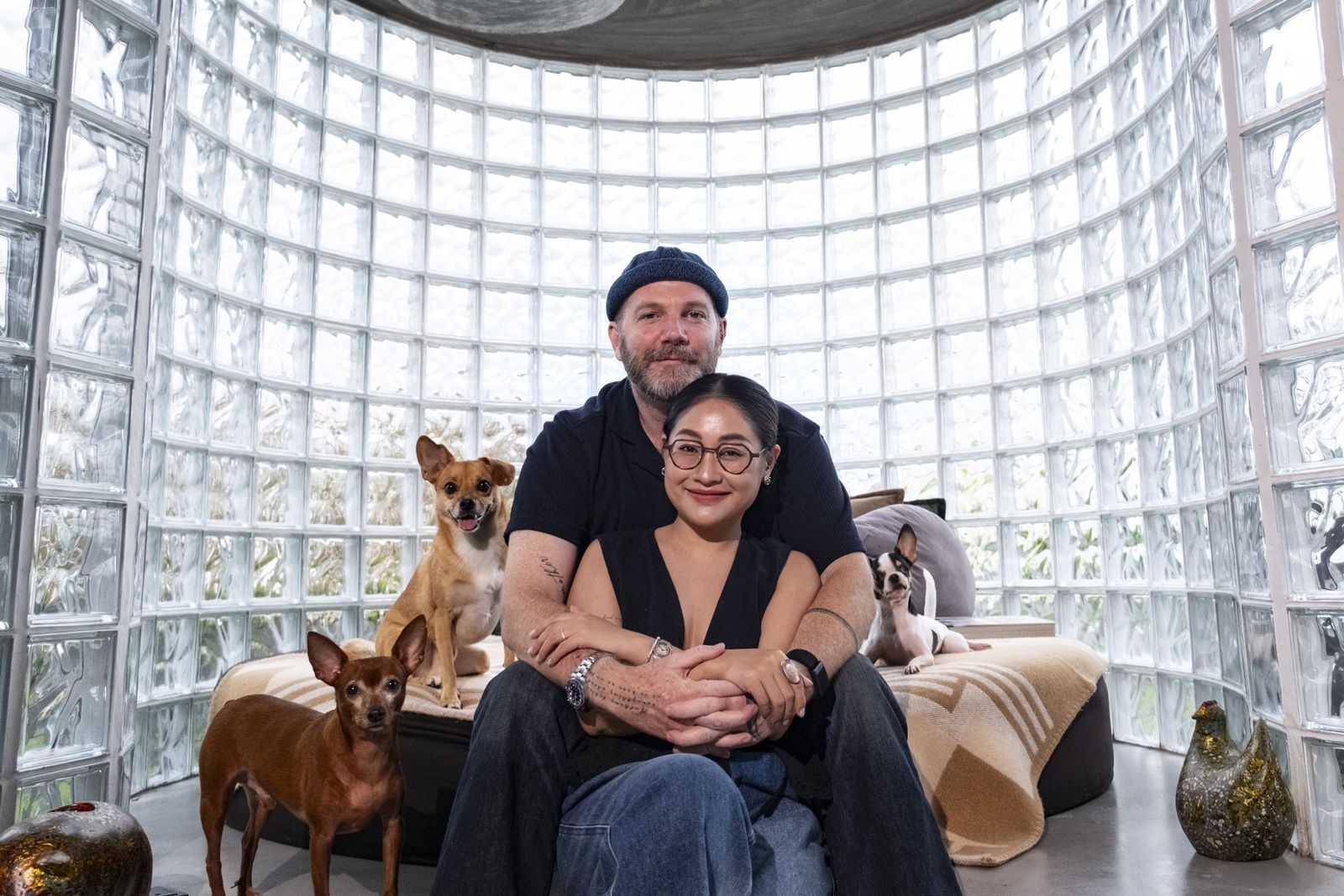
The couple behind Mott Visuals divide a hotel shoot between them. He leads the creative direction and chases the light. She runs the brief, the contract, the budget and a calendar that clients tend to underestimate. Speaking separately, they explain what a property is paying for and why the pictures are made to be used for years. Clients are not named.
Resorts ask Justin Mott for it often: a photograph of the sign at the bottom of the entrance, usually with little around it. He tends to steer them elsewhere. “If someone is already on the hotel’s website or social media, they probably know where they are,” he says. “A sign alone rarely gives them a reason to stay.” He would rather spend that time on a picture that helps someone imagine being there.
Behind every hotel campaign Mott Visuals delivers sits a production calendar that clients tend to underestimate. Quynh Anh Mott, co-owner and executive producer of the Hanoi-based company, runs that side of the business: the brief, the quotation, the contract, the schedule and the logistics. Her own career is covered in a companion piece.

A calendar clients do not expect
Clients reach Mott Visuals at very different points, some many months ahead of a shoot and others only weeks before. Mott Visuals advises that a client’s internal briefing, from first draft through approvals and market research, can itself take weeks before a brief reaches a production house.
From an approved brief, Mott Visuals asks for a pre-production window that covers the quotation, contract, casting, scripting, location scouting, wardrobe and props. The shoot itself may take a few days or run longer, depending on the brief, and post-production follows. Together, the schedule is longer than many clients expect.
Clients do not always take it well. The reaction she describes is often “Are you serious? We do not have that time”, usually from clients used to production houses that turn projects around much faster. Mott Visuals has stayed with its timeline and offers a limited concession instead. If a client needs a large set of images, the team can deliver the most urgent handful soon after the shoot, and the rest follow the standard schedule.
What the brief calls lifestyle
On the creative side, the first job is agreeing what the words mean. There is no shared definition of “lifestyle imagery”, Justin Mott says. Terms vary across regions and generations, so the company sets out how it defines each type of photograph before a shoot. For Mott Visuals, lifestyle means models experiencing the hotel: someone by the pool, a family at breakfast, a solo traveller at the spa.
The team also shoots what it calls lifestyle detail shots, an approach he says the company developed and clients do not always know to ask for. The main product photograph of a suite might be a composite, with sections lit separately and the exposures combined into one image. The detail shots use natural light and a single exposure: a chair by a window, light falling across a piece of decor. He credits his editorial background and his affinity for natural light for being able to make them quickly and pair them with the product images. Together, he says, they give “both a clear view of the space and a more intimate sense of its atmosphere”.


How much of a library should be people and how much should be space depends on the property’s marketing strategy more than whether it is a resort, a city hotel or a serviced residence. On a recent shoot for a city hotel targeting solo travellers, the weight went to lifestyle imagery. The rooms still must be photographed well for booking platforms, the website and social media. If the colour or composition shifts noticeably between the model photographs and the room photographs, he says, the library can feel disconnected from the brand.
Room on the shot list
Many clients commission lifestyle photography, product photography and video in one production, which saves on travel and logistics. Justin Mott says it also gives the crew room to manoeuvre: a still captured alongside a video scene, or a photograph revisited on the video day when the light is better. “Sometimes a scene works so beautifully in motion that we realise it deserves a still, too.”

What properties rarely ask for, in his view, is a picture built around mood. He compares it to cooking. A chef making a great meal does not need to cram every good ingredient into one dish, and a hotel photograph does not need to show every selling point at once.
He asks clients to leave the photographer time to find images that are not on the list. When he is given a little freedom, he says, that is often where the hero image turns up. The client still sets the frame, naming the signature space or the view that sells the property, and he works out the angle, the time of day and whether a model helps. “Have a plan, but leave room for discovery.”
The other request he often questions is a dining table covered in food with nobody at it. A photograph of a single dish is a different matter. If the aim is to show the experience of sharing a meal, he says, people bring warmth and purpose to the scene.
Where the budget goes
First-time clients often react to the price. Clients often see only the shooting days, without fully appreciating the preparation and post-production involved. Depending on the scope and complexity of a project, the entire process can take several months, from the initial brief and pre-production through to the delivery of final images.
Mott Visuals aims for a sustainable margin on its creative fee only. “We make art, but we also run a business,” she says. Most of the rest of a budget goes to production: locations, props, logistics, travel, casting and wardrobe. For a real estate project, she says, staging a single scene of residents gathering at an event, with lighting, flowers and food at a five-star standard, can cost hundreds of millions of dong before anyone has been paid to shoot it.
She holds one line without compromise: crew meals. Mott Visuals budgets a healthy amount per person per day for food, an amount she says clients sometimes question when a set meal in Vietnam can cost much less. She says she needs to feed the crew well, and that creative work needs a menu people can choose from. “I want my crew to feel taken care of,” she says.
She also objects to being told a service is expensive. Her view is that when something costs more than you can pay, you look for another option, and you do not blame the seller. Her standard reply to a client is to ask them to review the quotation against their budget, and, if it does not fit, to share the budget so Mott Visuals can propose a production plan to match.
Quotations are never same-day, and complex projects take longer to price. She says the aim is to quote carefully from the start, so that clients are not asked to pay more for a service already agreed. Add-ons are priced separately and agreed in advance.
The usage fee, and how the argument has changed
The line item clients challenge most is the media usage fee, for both video and photography. Her explanation runs through the talent. A model whose face appears on a hotel’s website and billboards in Hanoi for three years is unlikely to be booked by a competing hotel in the same city during that time. Even when models receive relatively high daily rates, she says, their income is limited to the days they actually work, and that alone cannot reasonably compensate for several years of restricted commercial opportunities.
The market has moved. Vietnamese model agencies now follow international usage fee practice, and she says clients have also become better informed over the past two to three years. She faced the same resistance to the producer’s role, which clients in Vietnam would ask to cut first. Foreign clients, she says, accept the role without discussion.
When a talent budget is tight, she says, there are ways to make it fit, such as changing the casting demographic, re-planning shoot days or negotiating media usage.
Pictures meant to be used for years
Justin Mott’s test for a hotel image is whether it still works ten years on. Filters, he says, are the biggest culprit in dating one. One year everything carries an orange-and-teal grade, another year it is heavily saturated, desaturated or faded. “Accurate colour lasts,” he says. An excessively wide lens can look like a dramatic way to show a room, but obvious distortion pulls attention from what makes the space appealing. “I’d rather create a photograph that feels true to the property and still looks good years later.”
The same thinking shapes his advice on budget. Given a fixed sum and a choice between one full production every five years or a smaller refresh every year, he calls it a tough one. “My instinct is to do it once and do it right,” he says. Five shoots by five different teams can leave a property with imagery that does not belong together, though a yearly refresh can work if the team and creative direction stay the same. Asking a new team to copy an existing style is the weaker path, in his view. “Matching a look isn’t the same as bringing an original point of view.”
When the client brings its own talent
Some clients prefer to cast themselves. Her first step is to spell out what that involves: preparing the talent before the set, supervising them on it, managing breaks, issuing call times and making sure they understand what to do. “Talent is not just a person, talent is a production,” she says.
Her second step is to explain the risk. Hotel staff or acquaintances are rarely lacking in looks, she says. Many are camera-shy, and an unprepared person slows the whole shoot. A lobby scene scheduled for two hours may not be captured in two hours, and then someone has to answer for the overtime. A shoot can run from 4.30am to 7.30pm, in full sun or in a cold pool, which professionals are trained for, and non-professionals are not. A client can save a few hundred million dong on talent and lose billions on a shoot that fails.
When a client casts through an agency but wants no part in managing the set, Mott Visuals still brings a talent liaison and a wardrobe and make-up crew and runs everything on the day.
Delays, and where they come from
She says Mott Visuals places great importance on honouring its commitments to clients, particularly agreed deadlines. When delays occur due to circumstances outside the team’s control, the company works closely with the client to manage expectations, adjust timelines where necessary and keep the project moving forward.
Her response has a set shape. During the period Mott Visuals reserves for post-production after a shoot, the team pushes the schedule hard. After that it follows the client’s pace, with a firm final date. Feedback is limited by contract to one contact point and a fixed number of rounds. A client who is in the middle of a long review should not expect a quick turnaround.
The business absorbs the overruns. Mott Visuals considers three to six months the ideal span of a project. Some run longer, which she says is built into the annual business plan. Its producers are salaried and in-house, so base pay covers the quiet stretches and project fees come on top. She says agencies tend to hire producers by the project.
Every service priced separately
Mott Visuals takes a flexible approach to production, with every service quoted separately. “Clients can pick and choose,” she says. “They can decide which services they need from us and which they prefer to manage themselves.”
The level of involvement varies with the client and the project. Luxury travel companies often manage their own logistics, accommodation, props and itineraries, leaving Mott Visuals to focus on photography and filmmaking. In these cases, a Mott Visuals producer works closely with the client’s production team to coordinate schedules.
Hotels and resorts typically provide the locations, existing props and food. Their in-house culinary teams may also help with food preparation and styling, although Mott Visuals often takes on the food styling so the presentation meets the creative direction.
Real estate projects generally need a fuller production service, with Mott Visuals managing nearly every aspect, from planning and logistics to casting, styling and execution. The exception is 3D visualisation, which Mott Visuals does not produce in-house but can coordinate through external partners.
“Ultimately, our role is to adapt to each client’s needs,” she says. “Some come to us with an entire production already organised, while others need us to build everything from the ground up.”

Justin Mott measures the work over a longer span. He says leading hotels in Vietnam and across Asia still use photographs Mott Visuals created five, ten and fifteen years ago, and keep renewing their usage licences. “As a hotel photographer, that’s one of the most meaningful measures of the lasting value of the work.”
Justin Mott is the founder, creative director and photographer of Mott Visuals, a photo and video production company in Vietnam. Quynh Anh Mott is the company’s co-owner and executive producer.