Where Three Stars Meet Seven Hills: La Pergola's Perch Above Rome
The only restaurant in the Eternal City to hold three Michelin stars sits where the skyline turns golden and the domes fall silent at dusk.
A Dining Room Above the City
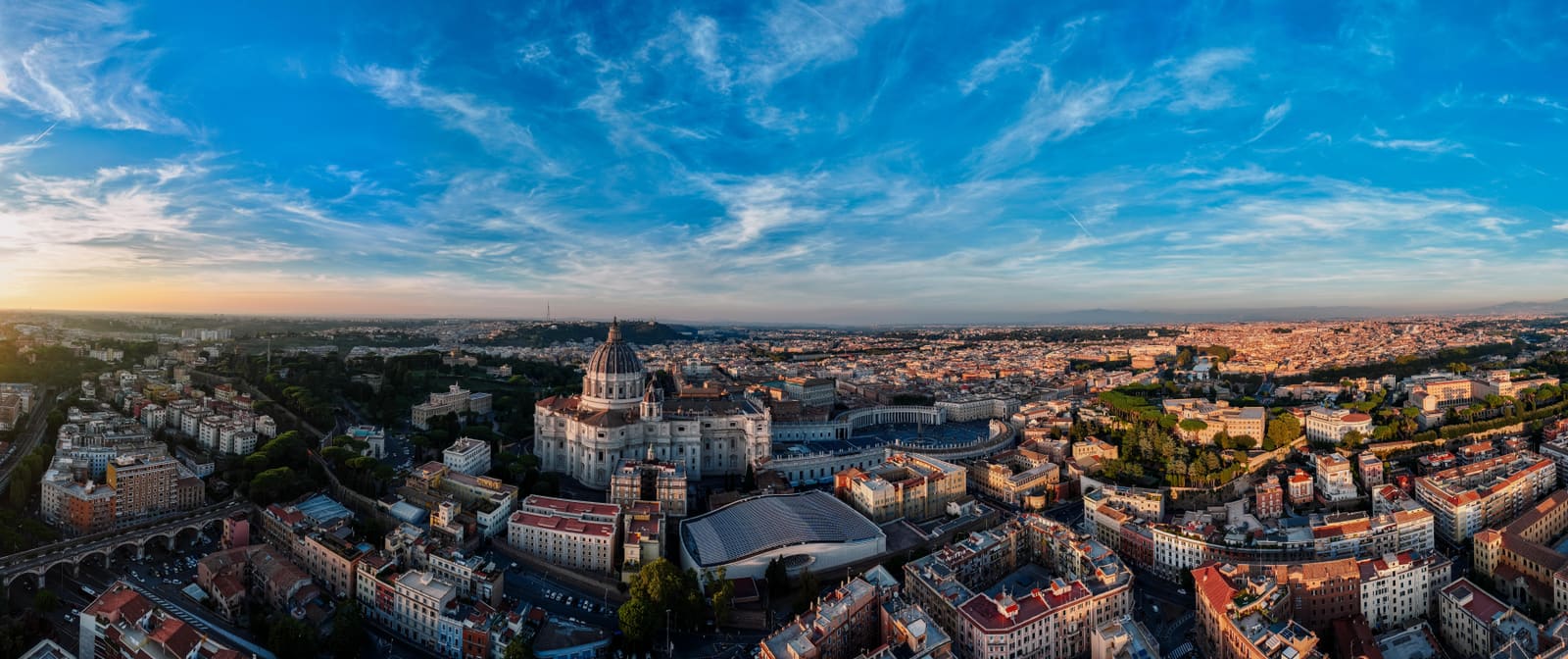
The terrace at Monte Mario is fifteen storeys above sea level, but the distance feels greater at dusk. Below, the cupola of St. Peter's catches the last copper light; the Tiber bends south through ochre and sienna rooflines; and somewhere in the tangle of streets, the Forum sleeps under floodlights. Up here, at the Rome Cavalieri, the air is cooler, the city quieter, and the dining room of La Pergola is setting tables for the evening's first guests.
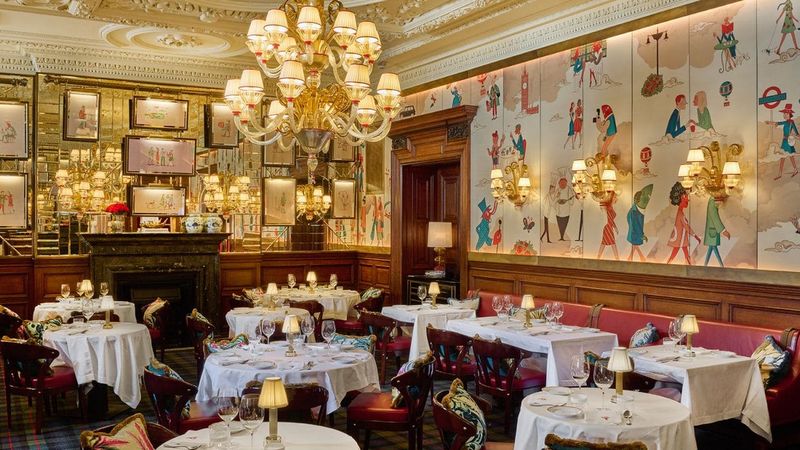
La Pergola holds three Michelin stars, the only restaurant in Rome to do so. The accolade is not new - it has worn the distinction for more than two decades - but the setting remains singular. Floor-to-ceiling windows frame the seven hills as though they were painted backdrop, and the interior, dressed in cream silk and Murano glass, suggests a kind of European formality that has largely vanished from the capital's dining scene. This is not the trattoria of cobblestone and checked cloth; it is a temple to technique, where each course is a constructed argument and the view is both prologue and punctuation.
The Language of Precision
The kitchen, led by chef Heinz Beck since 1994, speaks in the grammar of classical French cuisine but conjugates in Italian. Ingredients are sourced from the peninsula - sea urchin from Sardinia, lamb from the Apennines, saffron from Abruzzo - and treated with the kind of exactitude that borders on reverence. A single langoustine may be paired with burrata and bergamot; a risotto might arrive studded with bone marrow and finished with aged Parmigiano Reggiano that has been grated to the texture of snow.
The tasting menus, which change with the seasons, typically span eight to ten courses, each smaller than a fist but dense with intention. There is no rushing; service unfolds over three hours or more, timed to the rhythm of conversation and the slow dimming of the skyline. The wine list, heavy with Italian labels and Burgundy, runs to more than 60,000 bottles stored in the cellars below. Sommelier Marco Reitano, who has held his post for nearly fifteen years, navigates it with the ease of a cartographer tracing familiar coastlines.
The Weight of Expectation
Three stars carry their own gravity. They draw an international clientele - guests fly in for a single meal, book months ahead, dress in dark wool and silk - and they impose a standard that leaves little room for improvisation. Beck's kitchen has met that standard with remarkable consistency, earning not only the Michelin stars but also a place on the World's 50 Best Restaurants list and accolades from Gambero Rosso, the Italian guide that functions as both critic and arbiter of national taste.
Yet the dining room does not feel stiff. There is warmth in the service, a kind of attentiveness that anticipates without hovering, and the space itself - pale walls, low lighting, the city glowing beyond the glass - softens the formality. It is possible, here, to feel both pampered and at ease, to wear a tie without feeling strangled by it.
The Geography of Luxury
The Rome Cavalieri sits on the northern edge of the city, a fifteen-acre estate of gardens and stone terraces that feels removed from the tourist press of the historic centre. The hotel, part of the Waldorf Astoria collection, opened in 1963 and has since become a fixture of Roman hospitality, hosting heads of state, film stars, and the kind of traveller for whom a view of the Colosseum from a rooftop pool is not indulgence but expectation.
La Pergola occupies the top floor, accessible by private lift, and the sense of arrival is deliberate. Guests pass through a corridor lined with contemporary art - the hotel's collection includes works by Tiepolo and Warhol - before stepping into the dining room, where the city unfolds like a map. The effect is theatrical, but it is also earned; few restaurants anywhere command such a prospect, and fewer still pair it with cooking of this calibre.
What the Stars Signify
Michelin's three-star designation is awarded to establishments deemed worthy of a special journey. In practice, this means cooking that is technically flawless, conceptually ambitious, and executed with a consistency that can be measured across seasons and staff changes. Beck's kitchen meets these criteria not through novelty but through refinement - the kind of incremental perfection that requires decades to achieve and vigilance to maintain.
The menu at La Pergola reflects this philosophy. Dishes are not static; they evolve as ingredients come into season, as techniques are honed, as Beck and his team continue to interrogate what it means to cook at the highest level. A plate of fagottelli - pasta parcels filled with ricotta and topped with red prawns - has appeared on the menu for years, but each iteration is a revision, a response to the quality of that season's catch or the texture of a particular batch of cheese.
The View as Context
It would be easy to dismiss the panorama as ornament, a pretty distraction from the serious business of eating. But the view is not incidental; it is part of the experience, a reminder of where you are and what Rome represents. The city below is a palimpsest - imperial ruins beneath medieval churches beneath Baroque façades - and the dining room offers a vantage from which that layering becomes legible. To eat here is to participate in a tradition of Roman luxury that stretches back to the banquets of the patrician class, when feasting was both pleasure and performance.
The terrace, open in warmer months, brings the city closer. The scent of pine drifts up from the gardens; the light turns pink and then violet; and the dining room, already hushed, becomes quieter still. It is a setting that rewards slow attention, the kind of meal where the pause between courses is not dead time but part of the architecture.
The Ritual of Return
La Pergola is not a destination for spontaneity. Reservations are essential, often secured weeks or months in advance, and the dress code is enforced with polite firmness. Men are expected to wear jackets; women, evening attire. The formality is intentional, a signal that this is an occasion, not a casual bite. And yet many guests return, drawn not by novelty but by the reliability of excellence. In a city where restaurants open and close with the seasons, where trends shift and chefs move on, La Pergola remains a constant - a place where the standards are known and met, where the view never dulls, and where the cooking continues to justify the journey.