Where Japan's Fiery Green Condiment Finds Its Truest Home
The Izu Peninsula has nurtured wasabi in its mountain streams for centuries - and offers volcanic springs, coastal drama, and ocean-to-table dining that few international travellers yet know.
A Condiment Born of Mountain Water
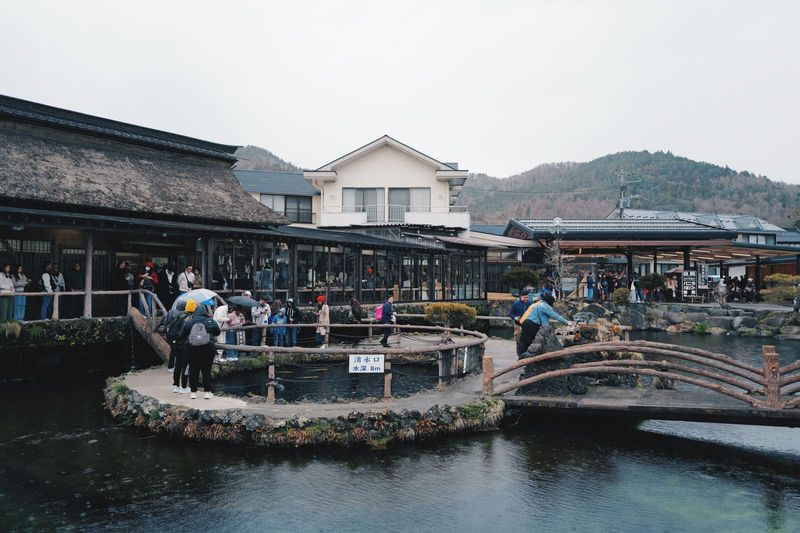
Stand at the edge of a wasabi farm in the hills of Izu and the first thing you notice is not the scent but the sound: cold spring water threading through narrow channels, tumbling over stone, filling the air with a quiet, persistent music. The rhizomes grow in shallow gravel beds, their broad leaves lifting above the flow, roots anchored in water that has travelled through volcanic rock for decades. This is where Japan's most prized condiment begins - not as a paste in a tube but as a living plant, particular about temperature, shade, and the mineral clarity of its water source.
The Izu Peninsula, a volcanic outcrop that juts into the Pacific south-west of Tokyo, has cultivated wasabi for more than four centuries. The plant, Wasabia japonica, thrives in environments that replicate the cool, flowing streams of its mountain origins. Izu's geology - porous basalt, abundant rainfall, and a network of springs - creates conditions that few other regions can match. Farmers here have refined techniques passed down through generations, controlling water flow, managing shade, and harvesting rhizomes at precisely the right age to balance heat with flavour.
The peninsula's association with wasabi is not merely agricultural but cultural. In Japanese cuisine, wasabi is treated as a finishing element, grated fresh moments before serving to preserve its volatile compounds. The difference between fresh wasabi and its imitations - horseradish-based pastes coloured green - is the difference between a sharp, bright note that fades cleanly and a blunt burn that lingers. Izu's growers supply many of Tokyo's high-end sushi restaurants, where the rhizome is grated on sharkskin or fine ceramic, releasing oils that dissipate within fifteen minutes.
Waterfalls That Shaped the Landscape
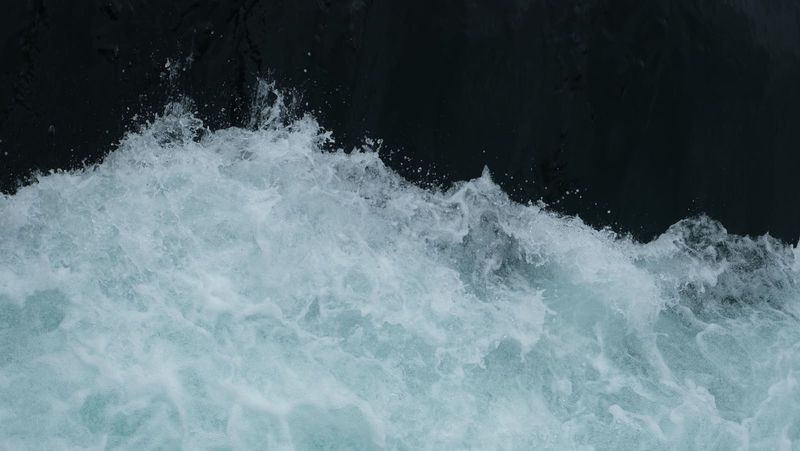
The same volcanic activity that feeds Izu's wasabi farms has carved the peninsula into a landscape of cliffs, ravines, and waterfalls. Jōren Falls, a series of five cascades in the central highlands, drops more than twenty-five metres through a forested gorge. The water originates from rainfall absorbed into the mountain's porous rock, emerging cold and clear at the base of the falls. In early summer, the surrounding forest is dense with ferns and moss; in autumn, the maples turn and the falls become a backdrop for photographers.
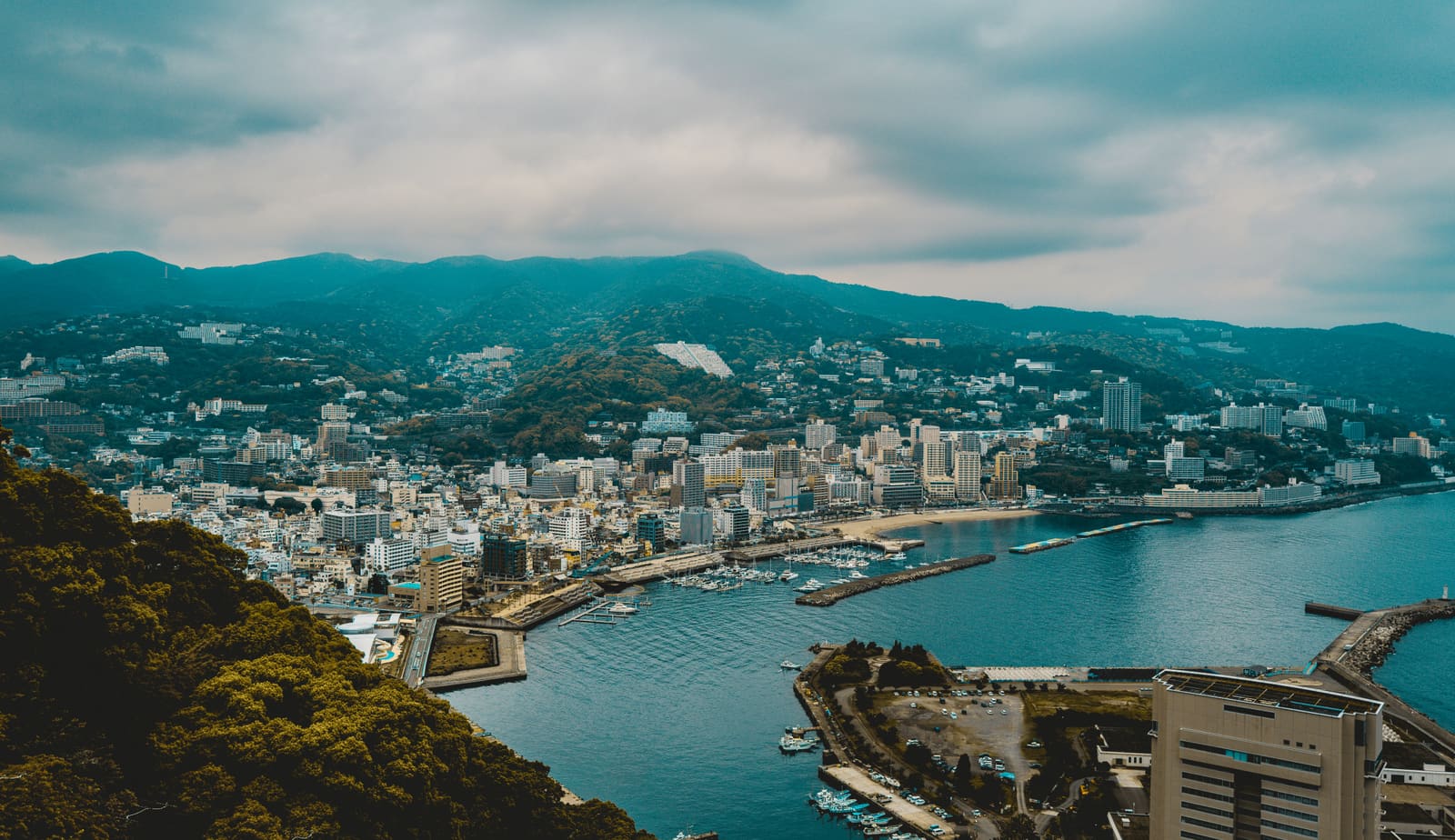
Further south, the coastline shifts from gentle inlets to dramatic headlands. The Kadowaki Suspension Bridge, spanning a narrow gorge above the Pacific, offers views of wave-cut cliffs and rock formations that have been shaped by centuries of erosion. The bridge sways slightly in the wind, a reminder that this is a landscape still in motion, still being rewritten by the forces that created it.
Izu's waterfalls are not grand by global standards, but they are integrated into the rhythm of the peninsula's life. Many are accessible by short trails that pass through cedar groves and bamboo thickets, and several are linked to Shinto shrines where water is ritually acknowledged as a source of purity and renewal. The falls are seasonal - fullest in the rainy months of June and July, quieter in winter - and their character changes with the weather.
Hot Springs as a Vernacular Architecture
The peninsula sits on the Philippine Sea Plate, a tectonic boundary that has made Izu one of Japan's most geothermally active regions. Hot springs, or onsen, emerge across the landscape, from coastal towns to mountain villages, and the culture of bathing has shaped the peninsula's architecture and social life. Traditional ryokan inns are built around communal baths, with wooden structures designed to frame views of the sea or forest while bathers soak in water heated by the earth itself.
Shuzenji, a town in the central valley, is known for its riverside hot spring, which legend attributes to the Buddhist monk Kōbō Daishi in the ninth century. The town's narrow lanes are lined with wooden buildings, their facades maintained in a style that evokes the Edo period. Bathing here is less about luxury than about continuity - an acknowledgement of the land's volcanic origins and the ways people have adapted to them.
The water's mineral content varies by location. Some springs are rich in sulphur, leaving a faint scent of rotten eggs and turning the water milky; others are clear and almost tasteless, their warmth the only indication of the heat below. The therapeutic claims associated with onsen bathing - improved circulation, relief from muscle pain - are supported by both tradition and a body of medical research in Japan. But the appeal is as much atmospheric as medicinal: the stillness of a bath at dawn, steam rising into cool air, the sound of water pouring from bamboo spouts.
A Seafood Culture Defined by the Pacific
Izu's eastern and southern coasts face the Pacific, and the peninsula's fishing ports supply Tokyo's markets with seafood that reflects the richness of the Kuroshio Current. The warm current brings nutrient-dense water that supports a diverse marine ecosystem, and Izu's fishermen have developed techniques specific to the species that pass through these waters.
Kinmedai, or splendid alfonsino, is a deep-sea fish prized for its delicate flesh and high fat content. It is often served simmered in soy and mirin, the sweetness of the sauce balancing the fish's richness. Spiny lobster, caught in the rocky shallows during autumn and winter, is grilled over charcoal or served as sashimi, its texture firm and its flavour clean. Abalone, harvested by ama divers using breath-hold techniques, is sliced thin and eaten raw, or simmered until tender.
The peninsula's seafood restaurants are concentrated in port towns such as Shimoda and Inatori, where morning auctions determine the day's menu. Many establishments are small, family-run operations where the chef is also the buyer, selecting fish based on condition rather than price. The presentation is restrained: a plate of sashimi arranged by colour and texture, a bowl of miso soup made with fish stock, rice cooked to absorb the flavours of the meal.
This is not fusion or reinterpretation. It is a regional cuisine shaped by proximity to the ocean and by a culinary philosophy that values the ingredient over the technique. The wasabi grated tableside comes from the farms in the hills; the fish was swimming hours before it reached the plate. The coherence of the meal reflects the coherence of the place.
A Peninsula That Resists Easy Narratives
Izu does not announce itself. It lacks the iconic architecture of Kyoto or the urban density of Tokyo, and its attractions are scattered across a landscape that requires time to navigate. The peninsula's appeal lies in its specificity - the taste of fresh wasabi, the mineral warmth of an onsen, the sight of a waterfall hidden in a forest - and in the way these elements connect to a deeper pattern of geology, climate, and culture.
Tourism here is growing but remains largely domestic. International visitors who venture beyond Tokyo often head to the Alps or to Kyoto, leaving Izu to those who seek a quieter immersion. The infrastructure is modest: narrow roads, small inns, restaurants that close early. This is not a limitation but a characteristic, one that preserves the peninsula's particular rhythms.
To visit Izu is to encounter a landscape that has been shaped by volcanic forces and human adaptation in equal measure. The wasabi farms, the waterfalls, the hot springs, and the fishing ports are not separate attractions but parts of a single, integrated system. The peninsula offers no grand gestures, only the accumulation of details - each one precise, each one rooted in place.