Tokyo Through the Eyes of a Musician Who Calls It Home
Rina Sawayama's guide to the Japanese capital is a study in contrasts - where farm-to-table pizza meets late-night fried chicken, and serenity coexists with sound systems that don't quit until dawn.
A City That Defies Simple Definition
There is something paradoxical about Tokyo that resists easy articulation. A metropolis of tens of millions that somehow manages to feel peaceful. A place where you might spend your afternoon in contemplative silence at a tofu restaurant, then find yourself dancing until sunrise in a club the size of a living room. Japanese-British musician Rina Sawayama, who recently returned from a two-year residence in the city where she was born, has tried to pin down what makes Tokyo singular - and found the task impossible. Perhaps that elusiveness is the point.
Sawayama's Tokyo is not the one you'll find in the glossy brochures. It is a city built from accumulated layers of experience, catalogued obsessively in a Google Maps file that grows with each visit. Vintage boutiques nestle alongside homeware shops. Discreet cocktail bars hide in basements. And the convenience stores - those fluorescent-lit temples of late-night necessity - offer fried chicken so perfectly crispy it borders on the alchemical.
Where Dinner Becomes Theatre
The evening begins at Pizza 4P's in Azabudai Hills, a farm-to-table restaurant where securing a table requires advance planning and a bit of luck. The burrata pizza is the sort of thing that makes you reconsider what you thought you knew about Italian cuisine. There is also a nori pizza, draped with seaweed, that plays with expectation in the way only Japanese interpretations of foreign food can. The claim that Japan makes better pizza than anywhere outside Italy might sound bold, but it rests on a foundation of truth: Japanese chefs approach borrowed cuisines with a rigour that borders on reverence.
After dinner, the night unfolds in stages. First, Tremolo, a karaoke bar where the usual private-room format gives way to a communal space - strangers singing together, inhibitions dissolving in the warmth of shared performance. Then onwards to HVEN, pronounced like the celestial realm it resembles. This is a small club, intimate in scale but vast in ambition. The sound system here is calibrated with the precision of a Swiss watch: punchy, crisp, never overwhelming. For someone who cares deeply about audio fidelity, these details matter. The music doesn't assault; it envelops.
The Ritual of Recovery
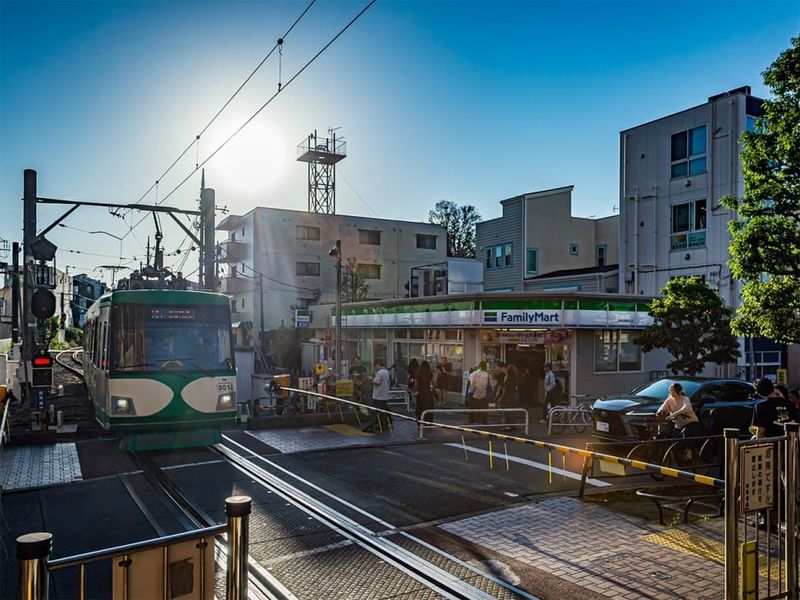
The night ends, as so many Tokyo nights do, at a convenience store. Not just any convenience store, but Family Mart, where the Famichiki - fried chicken that achieves the near-impossible balance of crispy exterior and tender interior - waits under heat lamps. Paired with Ukon, a ginseng drink in a glass bottle, and a Pocari Sweat for rehydration, it becomes a hangover-prevention protocol honed through trial and error.
Morning arrives gently. At Sorano, a tofu specialist with locations in both Shibuya and Ebisu, the menu offers dozens of preparations of a single ingredient. The interior is serene, the food kind to a recovering stomach. This is Tokyo's other face: contemplative, restorative, unhurried. A head spa might follow - one of those peculiarly Japanese indulgences where scalp massage becomes meditation.
The Architecture of Desire
Tokyo's retail landscape operates on a different logic than most global cities. The malls are not soulless shopping centres but curated experiences. Ginza 6 offers high-end browsing; Muji and Tokyo Hands provide the everyday essentials elevated to art. Then there is Itoya in Ginza: eight floors devoted entirely to stationery. For someone particular about pens - thick ballpoint, 1.0 millimetre, the kind that glides across paper with satisfying weight - this is not a shop but a pilgrimage site.
The obsession with stationery might seem minor until you understand its role in the creative process. Sawayama keeps journals, writes poetry longhand, highlights passages that later become song lyrics. The songwriting itself happens digitally, in the Notes app, but the raw material of lived experience gets processed first through pen and paper. It is a reminder that even in our screen-saturated age, certain acts of creation still demand the tactile.
Matcha, Morning, and the Art of the Ordinary
Wasachi in Roppongi serves what might be the city's finest matcha latte, prepared by Takuma, who has become both proprietor and friend. The shop was discovered through a Google search, that most mundane of modern rituals, which led to conversation, which led to connection. The matcha here can also be purchased by the tin, and has been gifted to friends abroad as a sort of liquid postcard.
Coffee has its place too, though Tokyo's cafe culture is vast enough to warrant its own taxonomy. What matters is not the beverage itself but the space it creates - for conversation, for solitude, for the kind of aimless wandering that cities do best when they are not trying too hard.
Fashion as Archive
Japanese fashion has always operated at the experimental edge. The flagship stores for Comme des Garçons, Yohji Yamamoto, and Junya Watanabe are not mere retail spaces but galleries of conceptual dress. Gr8 in Harajuku offers streetwear with a considered eye. But the real treasure lies in the vintage market.
Ragtag and Brand Off provide accessible entry points. Brand Collect Vintage in Omotesando specialises in bags - Birkin, Chanel, the sort of investment pieces that circulate through Tokyo's second-hand economy at a fraction of their original cost. Casanova vintage in Ginza and Amore vintage in Aoyama round out the circuit. The key to navigating this landscape? Reviews. Japanese customers are exacting in their assessments; anything above 3.5 on Tablelog, the local restaurant-rating platform, is genuinely excellent.
The Alchemy of Barware
Kimura Glass, a specialist in barware, produces glassware that rivals Waterford crystal at a more approachable price point. The discovery came via Bar Legacy in Shibuya, where the martinis - both gin and vodka iterations - achieve a kind of platonic ideal. There is also an Italian martini, made with pistachio, that manages to be indulgent without tipping into cloying sweetness. And a dashi martini, savoury and umami-rich, that speaks to Japan's genius for synthesis.
SG Club offers a basement bar called Sip, where a tomato basil martini plays with expectation. Ishinohana in Shibuya provides another node in the cocktail circuit. These are not destination bars in the tourist sense but neighbourhood anchors, places that reward return visits with familiarity.
The Sound of Late Nights
Rainbow Karaoke in Shibuya is clean, well-maintained, and welcoming to solo singers. There is something liberating about stepping into a private room, selecting songs from a vast digital catalogue, and singing without audience or judgement. It is stress relief distilled to its essence.
Karaoke, like so much in Tokyo, operates as both social glue and private refuge. You can go with friends and sing together, or you can go alone and sing to yourself. The city accommodates both impulses without forcing a choice.
Living as Research
The creative process, Sawayama has found, begins not in the studio but in the accumulated texture of daily life. Experience becomes emotion becomes journal entry becomes lyric. The city itself is the instrument, played over months and years until its rhythms become internalised.
Tokyo rewards this kind of patient attention. It does not reveal itself quickly or easily. The best meals, the most memorable nights, the shops that become touchstones - these emerge slowly, through exploration and conversation and the occasional Google search that leads somewhere unexpected. The city is vast enough to contain multitudes, intimate enough that a matcha shop can become a site of friendship.
What makes Tokyo Tokyo? The question remains unanswered, perhaps unanswerable. But in the gap between serenity and sound system, between tofu breakfast and fried chicken midnight snack, between the eight floors of Itoya and the basement bars of Shibuya, there is something that feels, for lack of a better word, like home.