Where Culture Leads, Travelers Follow
From gallery openings to architectural pilgrimages, the moments shaping contemporary travel are increasingly drawn from the worlds of art, design, and cultural expression.
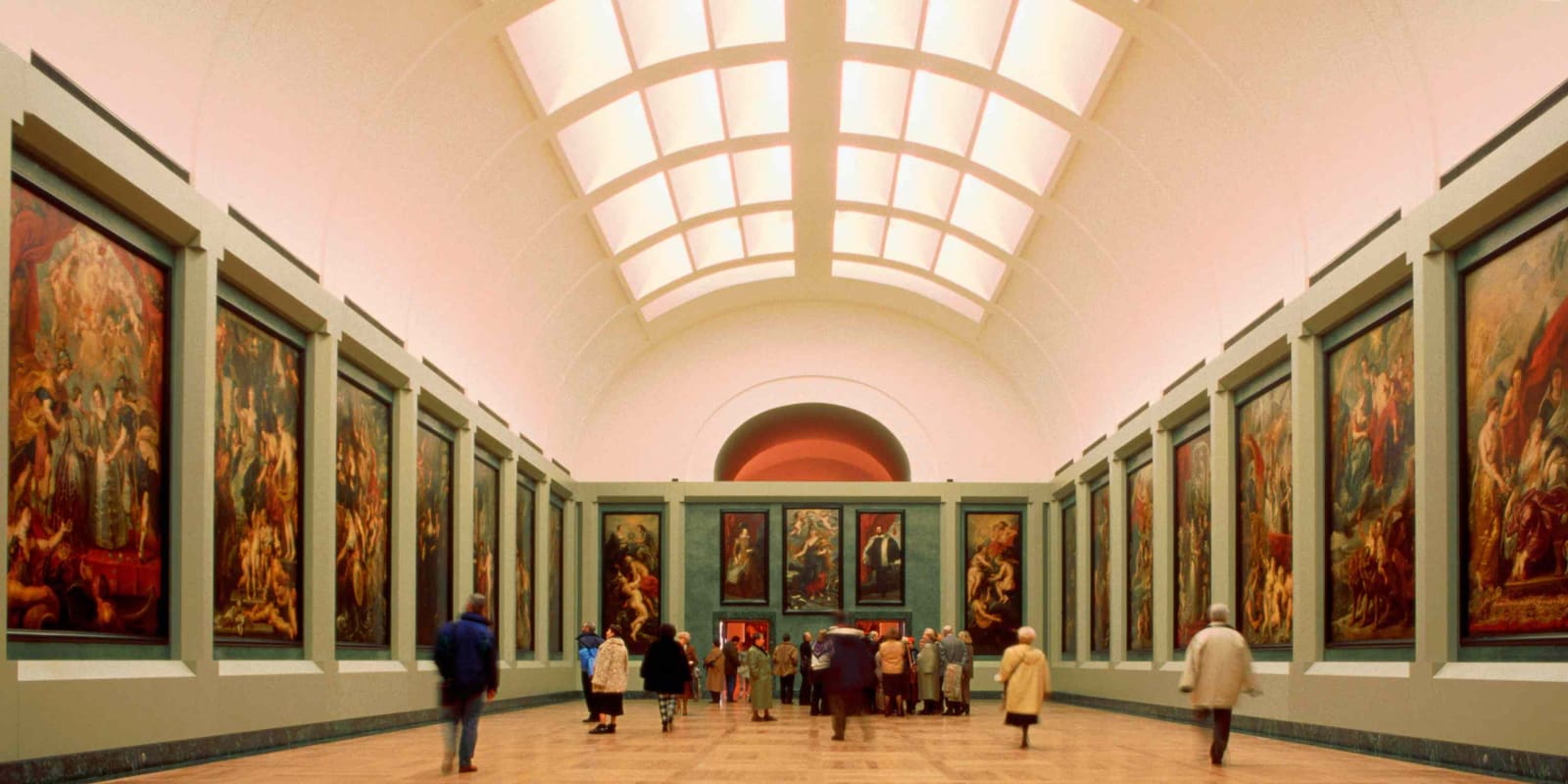
The New Compass
There is a street in Basel where the galleries stay open past midnight during Art Basel week, and the sidewalks fill with collectors clutching catalogues and cocktails in equal measure. A decade ago, the fair was an industry event. Today, it anchors an entire season of travel, drawing visitors who schedule their European summers around its dates. This is not tourism in the traditional sense. It is pilgrimage by another name, motivated not by relics but by the living pulse of contemporary art.
The phenomenon extends far beyond Switzerland. In Tokyo, travelers time their visits to coincide with architecture studio open houses during Tokyo Design Week. In Mexico City, boutique hotels curate itineraries around gallery districts and design ateliers rather than pre-Columbian ruins. The shift is quiet but unmistakable: culture, in its most immediate and evolving forms, has become the primary draw for a growing segment of travelers who measure a destination's value not by its UNESCO plaques but by its creative energy.
Architecture as Destination
Frank Gehry's Guggenheim Bilbao famously transformed a post-industrial Spanish city into a global destination, a case study so influential it spawned the term "Bilbao Effect." Yet the architecture-as-magnet model has evolved considerably since 1997. Contemporary travelers seek not just iconic buildings but the ecosystems around them: the studios, the material suppliers, the cafés where architects debate proportion over cortados.
Copenhagen's transformation illustrates this broader appeal. Yes, visitors photograph the Royal Danish Playhouse and the Blox building, but they also linger in Nørrebro's communal housing projects, studying how social architecture functions in daily life. They tour the Superkilen urban park not because it won awards, though it did, but because it represents a philosophy about public space and cultural integration that resonates beyond Denmark's borders.
In Chandigarh, Le Corbusier's mid-century master plan draws architecture students and design-conscious travelers in equal numbers. They walk the city's geometric grid, photograph the raw concrete of the Capitol Complex, and debate whether utopian modernism succeeded or failed. The destination offers not answers but questions, and for many travelers, that ambiguity holds more appeal than certainty.
Design as Cultural Translation
Design tourism operates at a different scale than architecture, more intimate and tactile. It manifests in the ceramic studios of Mashiko, Japan, where visitors spend days learning traditional glazing techniques, or in the textile workshops of Oaxaca, where natural dye processes connect contemporary craft to pre-Hispanic methods.
These experiences share a common thread: they position design not as consumer object but as cultural language. To understand how Finnish glassblowers at Iittala balance function and form is to glimpse something essential about Nordic philosophy. To watch a Korean celadon artist coax jade tones from iron-rich clay is to witness centuries of aesthetic refinement compressed into a single firing cycle.
Milan's Salone del Mobile, the world's largest furniture fair, has become a citywide festival that transforms the Italian design capital each April. Visitors navigate not just the fairgrounds but also the Fuorisalone, a sprawling network of exhibitions, installations, and brand activations scattered across Milan's neighborhoods. The event's success lies in its refusal to separate design from context, insisting instead that furniture, lighting, and textiles must be understood within the architecture and culture that produced them.
Cultural Moments, Captured and Missed
Timing matters. A gallery opening, a design biennale, a public art unveiling: these moments create temporary gravitational fields that pull travelers from their planned routes. The Venice Biennale transforms the city every two years, not just through its exhibitions but through the conversations and chance encounters its crowds enable. Frieze London does the same for the British capital each October, overlaying the city's permanent collections with a temporary layer of international contemporary art.
Yet the pursuit of cultural moments carries risk. Over-programming can flatten spontaneity. A city during its design week may offer density of experience but less room for discovery. The best cultural travelers learn to balance the scheduled and the accidental, attending the opening but also wandering the neighborhood afterward, when the crowds thin and the city reasserts itself.
The Permanent Collection
Not all cultural travel revolves around events. Some destinations sustain year-round appeal through the depth and accessibility of their permanent offerings. Paris remains the paradigm: the Musée d'Orsay, the Centre Pompidou, the Fondation Louis Vuitton, and dozens of smaller institutions create a gravitational field strong enough to justify repeat visits across decades.
Yet even permanent collections evolve. Museums rotate exhibitions, reinterpret their holdings, and commission new work. The British Museum's recent decolonization efforts, however contested, have sparked conversations that draw visitors interested not just in artifacts but in the politics of display. The Louvre Abu Dhabi's cross-cultural curatorial approach, positioning objects from different civilizations in dialogue, offers a model distinct from Western encyclopedic museums.
Contemporary travelers increasingly seek institutions that interrogate their own premises. They gravitate toward museums that acknowledge gaps, question provenance, and experiment with narrative. The cultural moment, in this sense, is not always an event. Sometimes it is simply an institution willing to think aloud.
Beyond the Gallery Walls
The most compelling cultural travel often happens outside formal institutions. Street art in Bogotá's graffiti district tells stories the city's museums cannot. Brutalist housing estates in the former Yugoslavia reveal architectural ambitions that outlasted the political systems that built them. Night markets in Taipei showcase product design and food culture in equal measure, collapsing the boundary between high and vernacular.
These experiences resist easy categorization. They are not tours, though guides can enhance them. They are not attractions, though they attract. They exist in the ambiguous space where culture is lived rather than curated, and they require travelers to develop their own frameworks for interpretation.
The Pull Forward
What unites these varied forms of cultural travel is their forward orientation. Unlike heritage tourism, which looks backward to preservation and memory, culture-driven travel engages with living practices and evolving conversations. It asks not what a place was but what it is becoming, and it positions the traveler as witness to that transformation.
This shift carries implications for destinations. Cities that invest in contemporary culture, not just historical preservation, create reasons for visitors to return. They signal openness to change and confidence in their creative communities. They understand that culture is not a fixed asset to be protected but a renewable resource that grows through use.
The travelers drawn to these destinations tend to be curious, engaged, and willing to move beyond the standard circuit. They book longer stays, explore secondary neighborhoods, and return home with stories that resist easy summary. They are, in the fullest sense, travelers rather than tourists, and the places they seek are destinations still in the process of defining themselves.