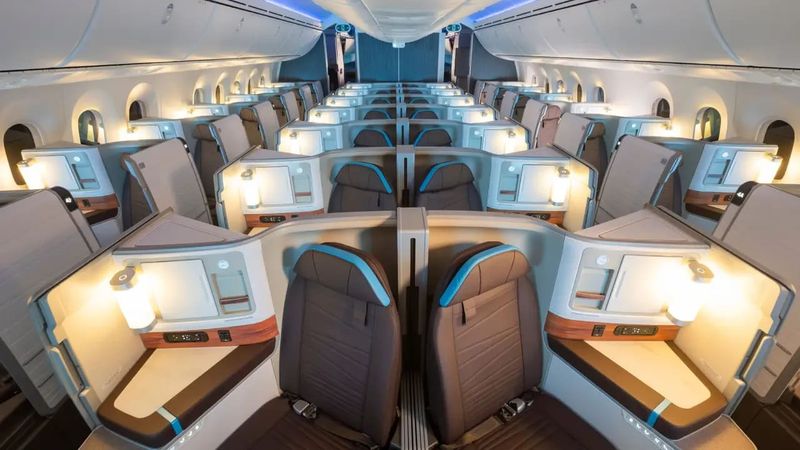
The confirmation email that settles nothing
Half of travellers have swapped a hotel they had already booked. New Skift Research and McKinsey data shows the confirmation email now sits in the middle of the decision, and that the second-guessing is bound up with the pleasure of planning.
Half of travellers have abandoned a room they had already booked because something better appeared on a screen. In research published this month by Skift Research and McKinsey, 51 per cent said they had changed a hotel or other accommodation after seeing a more appealing option on social media, and 29 per cent had done it more than once. Forty-one per cent keep watching the price of a reservation they already hold. Twenty-nine per cent keep looking in case a better room surfaces before they go.
The confirmation email has stopped being the end of the deciding. It now sits somewhere in the middle of it, and the months between booking and departure have filled up with the same comparing, checking and reconsidering that used to stop at checkout.
How a trip stopped having a finish line
In 2018, McKinsey followed the digital path to a hotel booking and found a journey of roughly 36 days and about 45 touchpoints. It wandered, but it ran in one direction. A traveller formed an intention, narrowed the field, booked, and went.
The 2026 version runs to 65 touchpoints and no longer holds that shape. Ideas now arrive before any intention forms: a courtyard in a friend's photograph, a series filmed somewhere with a particular quality of light, a creator who keeps returning to the same stretch of coast. Sixty per cent of travellers rank social media among their top three sources for a trip idea. The researchers describe the result as an orbit, with the traveller circling an idea, moving closer, drifting out again, and sometimes leaving for a different idea entirely. What matters for the booked traveller is that the orbit does not close when the room is paid for.
What people do in the months they have already committed
Seventy-eight per cent of travellers say they carry on planning and researching after booking. Only 18 per cent stop once the main reservations are made.
The activity is substantial and mostly pleasurable. Sixty-eight per cent go deeper on restaurants, activities and what to do when they arrive. Sixty-four per cent keep reading and watching content about the place. Forty-eight per cent share the plan with friends or ask for recommendations. Some of that browsing changes the trip: 60 per cent say social content led them to add an activity, 41 per cent to extend the stay, and 22 per cent to spend more than they meant to.
Some of it unpicks the trip instead. The diary study that accompanies the survey found that nearly two-thirds of the moves taking a traveller further out of a trip's orbit involved going from a booking session back into research. Seventy-four per cent revisit the same sites and apps repeatedly before settling anything.
Why the window stayed open
Two things hold it open, and the industry supplied both.
The first is the cancellation policy. Flexible terms were how hotels won guests back after the pandemic, and they have become a standing invitation to keep shopping. Naveen Manga, global chief information officer at Marriott International, puts it without much softening in the report: "One reason it lingers is cancellation policy. Travellers may be able to cancel up to a certain point, so they revisit. As an industry, we allowed that."
The second is that inspiration never switches off. A person who has booked a week in Kyoto still sees Kyoto, and still sees everywhere else, every time they open a phone. Nothing about holding a reservation removes them from the feed that produced the idea.
Underneath both sits a simpler motive. Travellers are reassuring themselves that the choice they made is still the right one, that they have not missed something better, and that they will know what to do when they arrive.
The part that is harder to admit
All of this is supposed to be enjoyable, and much of it is. Close to 80 per cent of travellers say they genuinely savour the planning. Evan Konwiser, chief product and strategy officer at American Express Global Business Travel, describes the pleasure precisely: "I've long believed that planning travel is half the fun. Most consumers relish having dozens of tabs open as they move across travel sites and experiences."
The same survey records the other half of that sentence. Fifty-two per cent still feel anxious about having made the wrong booking choice. Forty-three per cent report doubting whether they chose correctly. Forty-five per cent name comparing multiple options as the single most frustrating moment in planning their last trip, ahead of the doubt itself. Roughly half say the volume of choice online feels overwhelming.
Sheena Iyengar, professor at Columbia Business School, locates the difficulty in the comparing: "The desire for choice is real, but the actual exercise of comparing, contrasting, and making a choice is not straightforward. I know the difference between an apple, an orange, a banana, a peach, and a plum, but if you gave me five different kinds of apples, fifty shades of white paint, or a bunch of hotels that all look good and have beach views and you don't know which ones are telling you the truth or what they're leaving out, it gets very complicated."
Planning and second-guessing are the same activity. The tabs that make the trip feel real are the tabs that keep it open.
Why that may matter less than it sounds
Three things cut the other way.
First, travellers are not asking to be relieved of the decision. Offered three platforms with identical prices and inventory, 63 per cent chose the one showing ten recommended options, 30 per cent wanted the full catalogue of 500, and 7 per cent wanted a single plan generated for them. Iyengar names the constraint the last of those violates: "Travellers have to feel they chose it. If they don't feel empowered in the decision, you lose them." The reshopping is what choosing feels like from the inside.
Second, the checking has a human shape. Friends and family are the most trusted source of recommendation for 65 per cent of travellers, and 46 per cent go to them at the inspiration stage. Jonah Berger, professor at the Wharton School, explains what that conversation is for: "When people make decisions, they are not simply asking, 'Did someone else like it?' They are asking, 'Will I like it?' To answer that, they need to understand both what other people thought and how similar those people are to themselves." A booked traveller asking a friend whether the neighbourhood is right is doing something older than the feed.
Third, most of the postbooking activity improves the trip. Adding a restaurant, extending by two nights, trading up a room: those are the 60, 41 and 22 per cent figures above, and they describe a holiday getting better in the months before it starts.
The real test is narrower. It is whether the anxiety figures move while the enjoyment figures hold, because at the moment both are high at once and nobody can yet say which one the extra research is feeding. The survey measures the two separately and the same person can appear in both.
What this piece can and cannot show
The behavioural figures come from a survey of 1,015 US travellers, with data as of June 2026, and a diary study of 26 travellers logging 211 planning sessions in July. That is a source market, not a portrait of Asian travellers, whose habits around messaging, group planning and in-app payment may differ in either direction. Where this piece says "travellers", it means the people in that sample. The operator side of the same shift, including what Asia's largest booking platforms have built in response, is examined separately in OpenTechWire.
What to watch
Three things will settle whether the open window closes.
Whether any major chain narrows its flexible cancellation terms, which shows up in the booking conditions on its own site. Whether the platforms begin holding a traveller's saved comparisons and rejected options across sessions, so that returning to check something does not mean starting the comparison again, a capability Manga says the industry has not solved. And whether the share of travellers who abandon a booked room moves off 51 per cent in the next edition of this research.
Until then, the room is booked and the deciding continues.
Sources
Skift Research and McKinsey & Company, "Winning Hearts in an Age of Infinite Travel Choices," research report, September 2026. Survey of 1,015 US travellers, data as of June 2026; booking journey diary study of 26 participants across 211 sessions, data as of July 2026.
McKinsey & Company, "How to serve today's digital traveler," 2018, for the 2018 journey figures, as cited in the report above.