Essence: ISA Yachts Unveils a 269-Foot Superyacht Designed to Defy Time
The Italian shipyard's latest creation pairs classical proportions with a wellness-focused bridge deck and a pool that spills light through glass to the decks below.
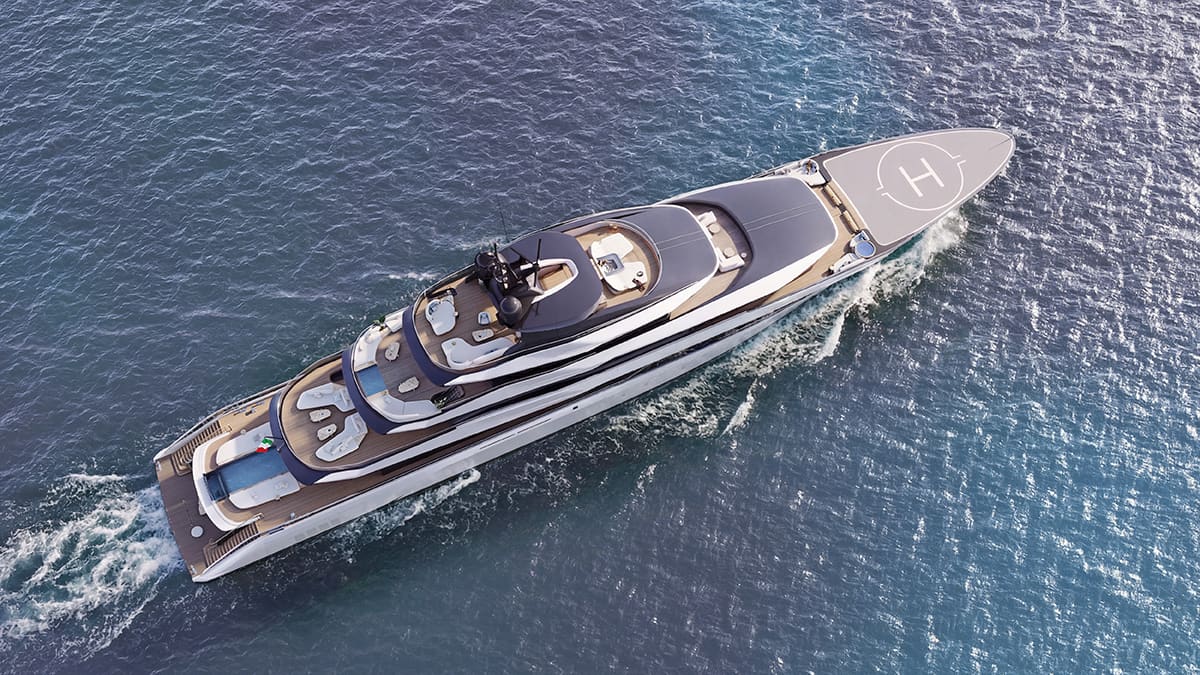
A Question of Permanence
Stand on any quay in Antibes or Porto Cervo in high summer and you will see the problem: a parade of vessels so aggressively contemporary that they risk obsolescence before their first refit. Sharp angles, asymmetric fenestration, hull colours chosen to signal rather than to settle. The language of fashion, not craft. ISA Yachts, the Italian shipyard operating under the Palumbo Superyachts umbrella, has taken a different course with Essence, the third entry in its Large Yacht Collection and a 269-foot exercise in restraint.
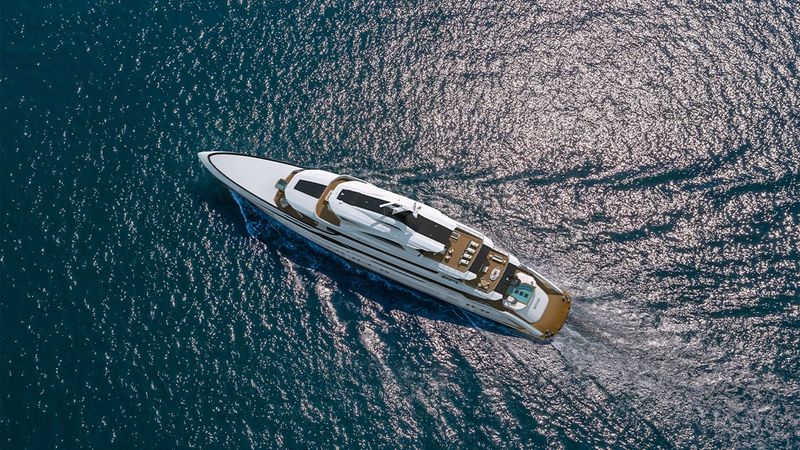
The brief given to Igor Lobanov Studio, the Barcelona-based practice responsible for both exterior and interior design, was explicit: create a vessel capable of remaining visually coherent not for five years but for twenty. That ambition manifests in proportions that feel neither derivative nor radical. A 42-foot beam. An interior volume approaching 2,250 gross tonnes. Clean sheer lines that curve rather than slice. The hull, constructed in steel with an aluminium superstructure, sits low in the water, a full-displacement form that privileges seakeeping over spectacle.
"We did not want to follow a trend," Lobanov has noted. The studio's approach reads as deliberate avoidance of the signature gestures that date a yacht as surely as a hemline dates a photograph. No knife-edge bows. No cantilevered balconies that announce their engineering. Instead, Essence offers the kind of visual composure that suggests it might have been launched a decade ago or a decade hence.
The Architecture of Light and Water
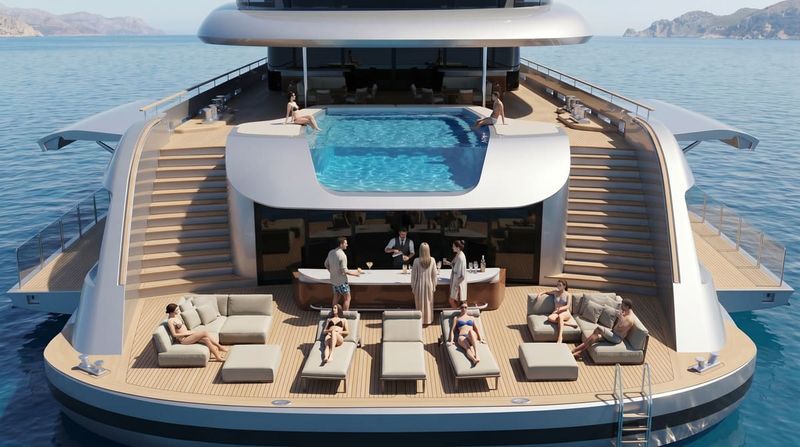
The pool on the main deck is not merely decorative. Its floor is transparent, a single expanse of structural glass that allows sunlight to filter through to the spaces below. The effect, particularly in the late afternoon when the angle is low, is to dissolve the boundary between decks. Light becomes a material element, shifting with the movement of water overhead. It is a device borrowed less from yachting than from contemporary architecture, the kind of spatial layering seen in museum atriums or high-end residential towers.
Below, the beach club extends this logic. Two fold-down terraces open hydraulically to expand the waterside footprint, transforming an enclosed space into a platform that sits nearly flush with the sea. The gesture is now standard on superyachts of this scale, but the execution here is unusually clean. No visible hinges. No intrusive railings. The terraces, when deployed, read as extensions of the deck rather than appendages.
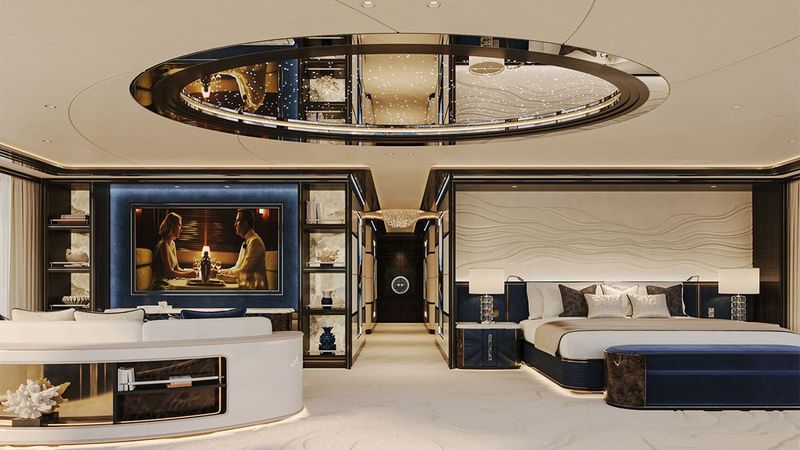
Forward on the upper deck, the owner's suite occupies the traditional position but departs from convention in circulation. Instead of a central corridor that channels movement and blocks sightlines, ISA has placed the passage along one side. The result is a suite in which every room maintains a visual connection to the water. It is a small adjustment with outsize effect, the kind of detail that separates a competent layout from a considered one.
Rethinking the Bridge Deck
The most significant departure from superyacht orthodoxy occurs on the bridge deck, where the aft section typically houses a lounge or informal dining area. Here, ISA and Lobanov have installed a wellness suite: gym, sauna, massage room. The decision reflects a broader shift in how owners use these vessels. Less floating hotel, more floating retreat. The wellness area is not tucked into a lower deck or squeezed into leftover volume; it occupies prime real estate, with full-height windows and direct access to an aft terrace.
The implications are worth noting. A bridge-deck lounge serves social rituals, the kind of entertaining that superyachts were historically designed to facilitate. A wellness suite serves the self, or at most a small group. The choice signals a move away from the yacht as stage and towards the yacht as sanctuary. Whether this represents a passing preference or a structural change in the market remains to be seen, but ISA is wagering on the latter.
The Practicalities of Scale
Essence accommodates twelve guests across seven cabins and twenty-one crew in separate quarters. The crew-to-guest ratio is generous, close to two-to-one, which allows for the kind of service that guests at this level expect but rarely articulate. The layout also includes a multi-level lift, a feature more common on yachts exceeding 295 feet, and a garage capable of storing three tenders. A touch-and-go helipad sits aft, large enough for most civilian rotorcraft but not certified for permanent mooring.
Performance figures, provided by ISA, position Essence as a long-range cruiser rather than a speedster. Twin MTU engines, each rated at 2,240 kilowatts, push the yacht to a maximum speed of seventeen knots and a cruising speed of fourteen. Range at twelve knots is approximately 6,200 nautical miles, sufficient for a transatlantic crossing with reserves. Two pairs of stabiliser fins, one set active and one passive, manage roll in open water and at anchor.
The hull form, developed by ISA's in-house naval architecture team, prioritises efficiency over novelty. No bulbous bow. No hybrid propulsion. The approach is conservative in the best sense: proven systems, redundant where necessary, optimised for reliability. For an owner commissioning a yacht of this size, the engineering is arguably more important than the aesthetics. A beautiful vessel that cannot make passage is a sculpture, not a tool.
Joining the Collection
Essence is the third model in ISA's Large Yacht Collection, following the Amarcord 82 and Amarcord 86 introduced earlier in the year. The collection spans vessels between 262 and 295 feet, all built to order and customised to client specifications. The business model is familiar: a platform architecture that allows variation without requiring a clean-sheet design for every hull. It is the approach that has sustained European shipyards for decades, balancing bespoke craft with industrial efficiency.
What distinguishes Essence within this framework is its clarity of intent. The Lobanov Studio's design does not attempt to be all things. It is not overtly sporty. It is not aggressively modern. It is not nostalgic. Instead, it occupies a middle ground that is surprisingly rare in contemporary superyacht design: a vessel that looks like itself, rather than like a statement about yachting.
Whether that restraint will age as gracefully as ISA and Lobanov intend is a question that only time will answer. But the bet is a compelling one. In an industry that often prioritises the spectacular over the enduring, Essence offers a quieter proposition. A yacht built not to impress at a distance, but to reward proximity. Not to dominate a harbour, but to disappear into it. And perhaps most importantly, a vessel designed with the understanding that the best luxury is the kind that does not announce itself.