Where Steel Meets Sky: The Explorer Yacht Reborn as Floating Architecture
A German studio reimagines the long-range cruiser, trading boxy utility for flowing lines and a lounge that opens to the waterline.
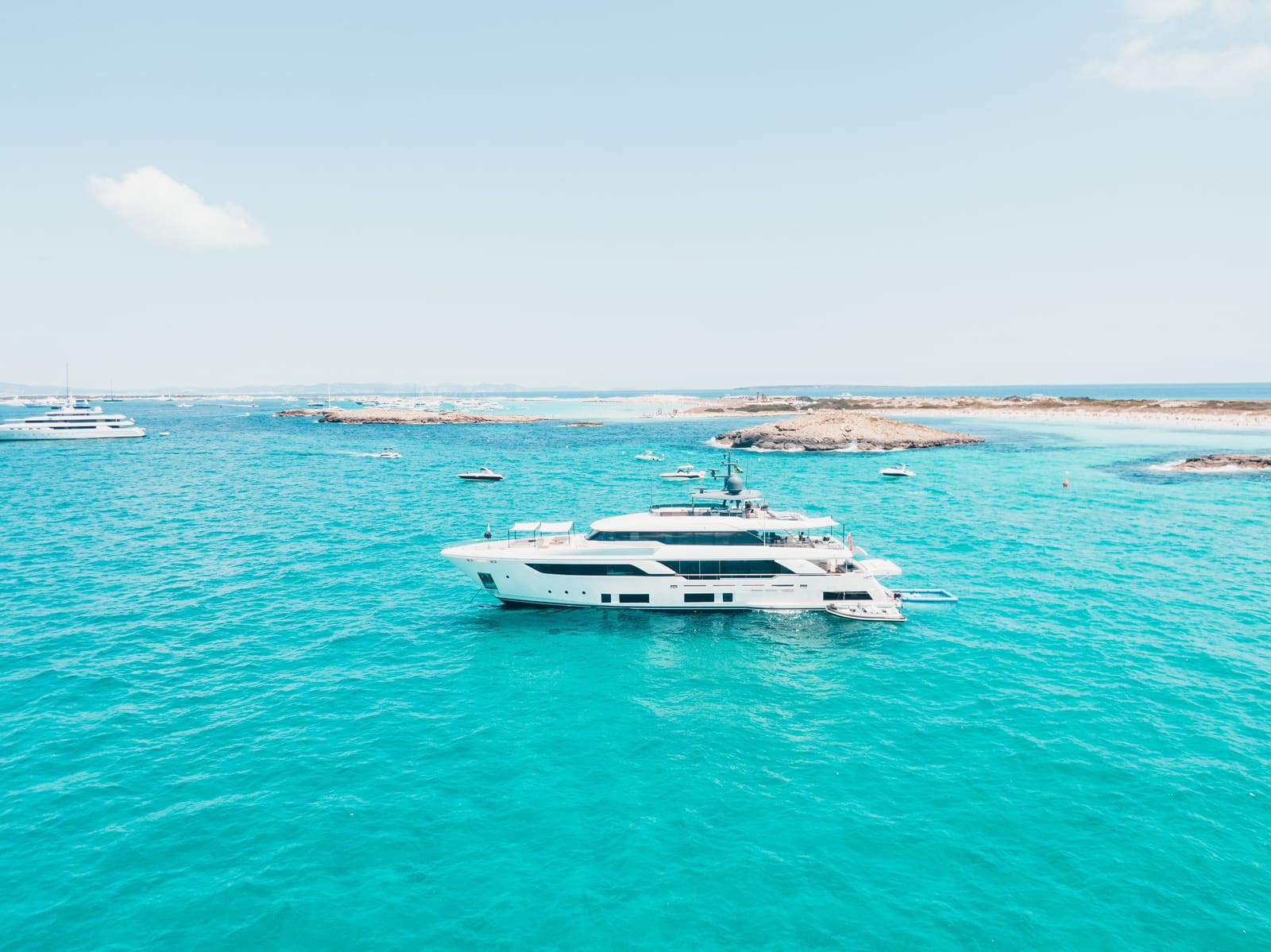
The Problem With Explorers
For decades, the long-range yacht has worn its function on its hull. Angular superstructures, broad beam, a profile that prioritises fuel tanks over visual grace. The vessels that venture farthest from port have typically looked the part: rugged, boxy, built to endure rather than enchant. Focus Yacht Design, a German studio, believes that compromise is no longer necessary.
Their latest concept, Invision, stretches 100 metres and proposes a different calculus. What if the vessel capable of crossing 6,500 nautical miles could also possess the flowing lines and sculptural presence of a superyacht designed for the Mediterranean summer circuit? What if the architecture that takes water seriously could also take beauty seriously?
A Hull That Pierces, a Profile That Flows
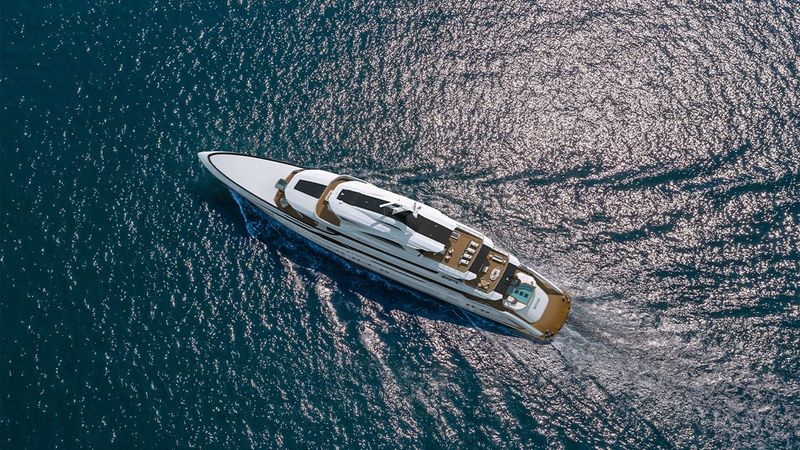
The design begins with structure. Invision pairs a wave-piercing plumb bow with a steel hull and aluminium superstructure, a combination familiar in the explorer category. Steel below the waterline ensures stability and impact resistance; aluminium above reduces weight and improves efficiency. The arrangement is orthodox, proven across hundreds of expedition builds.
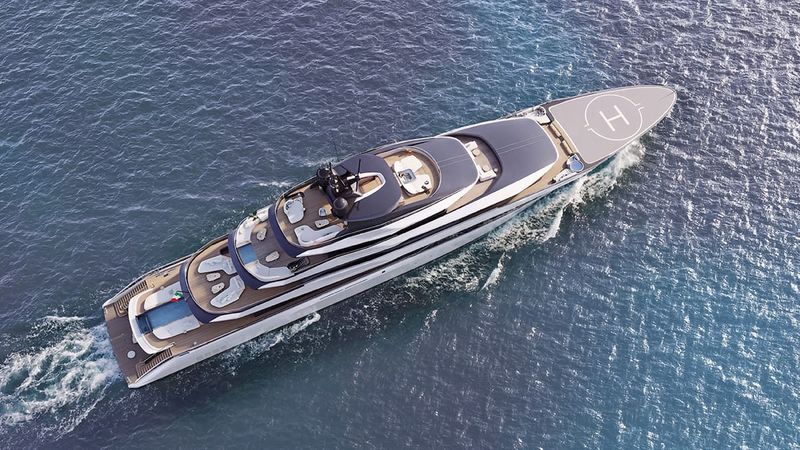
Where Focus Yacht Design departs from convention is in the treatment of the profile. Instead of the stacked, slab-sided volumes typical of the genre, Invision presents a continuous sweep from bow to stern. The lines are horizontal, uninterrupted, suggesting speed even at anchor. The superstructure steps back rather than bulking upward, creating terraces that read as part of the hull rather than additions to it.
Thomas Mühe, partner at the studio, notes that the technical solutions remain fluid. "We are still in the early planning stages and fully aware that the final technical solutions will ultimately depend on the latest technological developments, as well as the owner's individual priorities and preferences," he explained.
Propulsion, Range, and the Hybrid Question
Invision is conceived with an advanced hybrid diesel-electric propulsion system. The onboard battery bank allows for silent, emissions-free operation in harbour and in protected marine zones where engine noise would be unwelcome. At an economical cruising speed of 12 knots, the vessel is projected to cover approximately 6,500 nautical miles, a range sufficient for trans-Pacific crossings or extended polar itineraries, according to Focus Yacht Design.
The hybrid configuration also speaks to a broader shift in owner expectations. A decade ago, range and robustness were the twin pillars of explorer appeal. Today, prospective buyers increasingly weigh environmental footprint, particularly as access to certain destinations becomes contingent on low-emission credentials. Battery power extends the vessel's operational flexibility, enabling silent approaches to wildlife-rich coastlines and reducing generator use in anchorage.
The exact propulsion setup, however, remains open. Mühe's comments suggest that the studio views Invision as a platform rather than a fixed specification, one that can accommodate emerging technologies as they mature.
The Waterline Lounge
If the exterior challenges the explorer's traditional profile, the interior challenges its traditional relationship with the sea. Explorer yachts have historically treated the ocean as something to be observed from a distance, through modest portholes or from the safety of an upper deck. Invision inverts that logic.
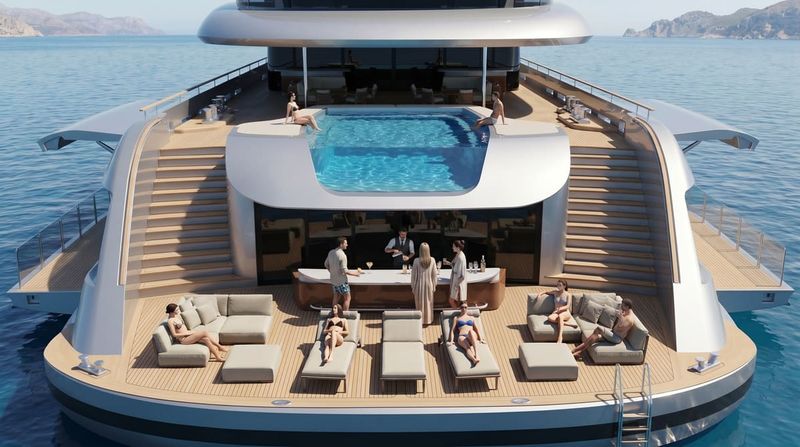
The aft waterline lounge unfolds directly at sea level, enclosed by a 180-degree glazed facade. When deployed, the space extends beyond the hull's original envelope, bringing passengers within arm's reach of the surface. The effect is not unlike the observation lounges found on certain research vessels, but rendered in a vocabulary of luxury rather than science.
The owner's suite follows a similar principle. Floor-to-ceiling windows and a large skylight dissolve the boundary between cabin and sky. The architecture does not frame the view so much as immerse the occupant in it. In northern latitudes, the suite becomes a theatre for the aurora. In the tropics, it becomes a lens for the movement of light across water.
Toys, Tenders, and Vertical Mobility
Invision's tender garage and toy storage reflect the current appetite for multi-domain exploration. The concept includes a fully certified helideck and provision for an electric vertical take-off and landing aircraft, a category that remains largely speculative in the yacht context but is advancing rapidly in urban air mobility sectors. For subsurface exploration, a submersible is included, a feature once rare but now increasingly common on high-end explorer builds.
Tenders of varying sizes allow for coastal and riverine excursions, extending the mother ship's operational reach into shallows and protected bays. The inclusion of these craft is standard in the segment, but their integration into the design, hidden within the hull rather than cluttering the deck, contributes to the vessel's uncluttered profile.
A Concept Open to Interpretation
Focus Yacht Design positions Invision not as a finished design awaiting construction, but as a framework for conversation. The studio describes it as "an invitation to owners who recognise themselves in the idea and wish to develop it further, shaped around their own ambitions, priorities and way of living at sea."
That openness is both strategic and necessary. The explorer category attracts clients with highly specific operational requirements: ice-class hulls for polar work, extended medical facilities for remote passage-making, laboratories for citizen-science projects. A concept that attempts to anticipate every preference risks becoming generic. By leaving certain systems and spaces deliberately unresolved, the studio allows prospective owners to project their own priorities onto the platform.
Form, Function, and the Future of the Category
Invision arrives at a moment when the explorer yacht is undergoing a quiet redefinition. The vessels that once served as support ships for adventure, carrying diving gear and expedition supplies in utilitarian holds, are increasingly being designed as destinations in themselves. The question is no longer simply how far a yacht can travel, but what kind of life it enables once it arrives.
Focus Yacht Design's answer is architectural. By treating the explorer not as a floating base camp but as a piece of mobile architecture, the studio suggests that function and beauty need not be traded against one another. The wave-piercing bow and the waterline lounge, the steel hull and the skylight, the range and the refinement can coexist, provided the design begins with the assumption that they must.
Whether Invision will be built remains to be seen. But as a proposition, it marks a shift in how the long-range cruiser understands itself: not as a vessel that tolerates the sea, but as one that opens itself to it, at every level, in every direction.