Inside the 269-Foot Superyacht Where Art Deco Meets Maritime Theater
Bilgin's latest flagship trades minimalism for mirrored opulence, gilded surfaces, and a cinematic swagger that belongs to a different era of luxury.
A Palace Afloat
Step into the main saloon and the first thing that arrests you is light. Not the diffuse Nordic glow that has dominated yacht design for the past decade, but something sharper, more theatrical. Curved sofas arc beneath a chandelier that might have been lifted from a 1930s Parisian hotel. The bar stretches long and low, framed by windows that pull the sea into the room. A sweeping open staircase spirals down toward the beach club, its handrails catching the light like jewelry.
This is Project Bond, the 269-foot flagship from Bilgin Yachts, and it represents a deliberate departure from the prevailing aesthetic of whisper-quiet neutrals and Scandinavian restraint. Here, the interiors designed by H2 Design lean into something bolder: Art Deco revivalism, complete with mirrored materials, saturated blues, and enough gold detailing to make a case for unabashed maximalism at sea.
The Owner's Realm
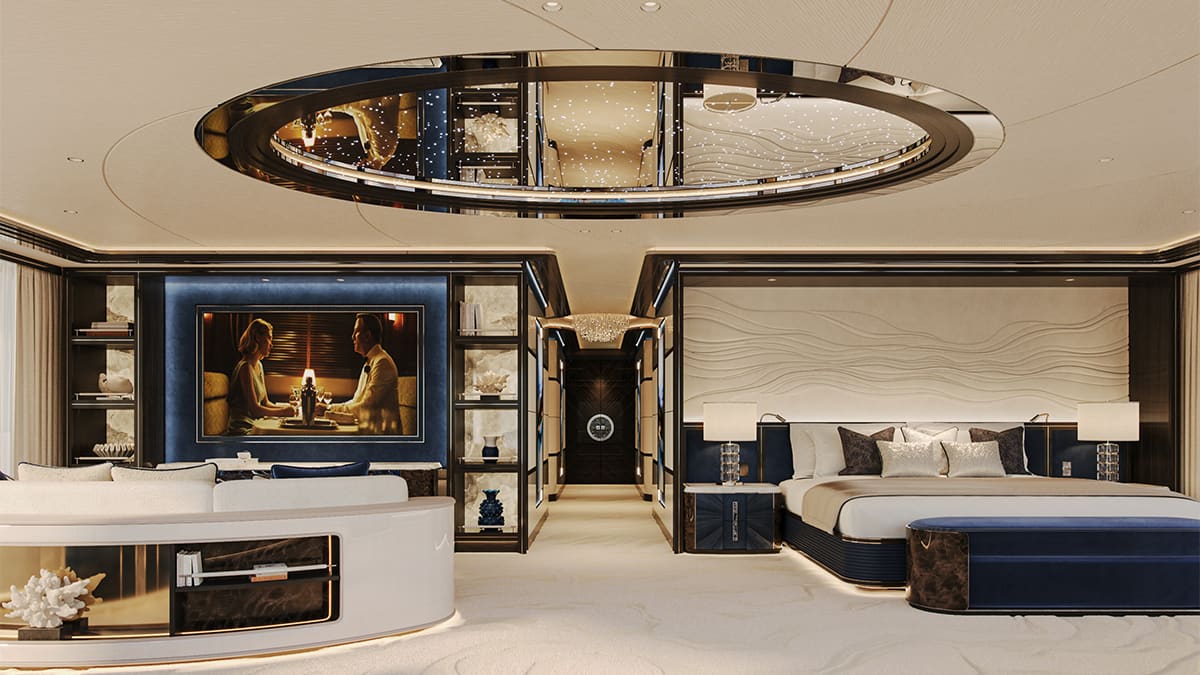
The owner's suite occupies its own world within the yacht. A twinkling mirrored ceiling hovers above the bed, while a wavy carpet underfoot softens the geometry of the space. A television and sofa pairing offer a private retreat within the retreat, and the design vocabulary remains consistent with the rest of the vessel: curves, shimmer, and a refusal to disappear into the background.
The bathroom amplifies the blue palette that threads through the yacht, pairing it with a gilded vanity that doubles down on the Deco references. Textures layer upon one another, from polished stone to rich fabric, creating a tactile richness that extends into the adjacent closet. There, another vanity sits flanked by ample storage, all finished in the same cabinet work found throughout the suite.
Guest Quarters and Cinematic Escape
Two VIP cabins continue the theme with their own interpretations. One features a desk and sofa alongside a striking motif behind the bed, a design gesture that anchors the room without overwhelming it. The other leans more heavily into the blue hues that define the yacht's color story, creating a space that feels both cohesive and distinct.
Guest accommodations maintain the opulence at a more intimate scale. Mirrored features reappear, large windows frame the ocean, and the twin cabin brings a note of sophistication that avoids feeling secondary. Every cabin aboard Project Bond appears designed to the same level of finish, a choice that speaks to a certain democratic approach to luxury, even within a hierarchy of spaces.
On the lower deck, the cinema offers perhaps the most immersive environment on board. Ribbons of light stretch across the ceiling, complementing walls and carpeting awash in varying shades of blue. Six reclining sofas face the screen, ready for extended viewing sessions. It is a room designed not for casual watching but for full immersion, the kind of space that invites you to settle in and lose track of time.
Performance and Provenance
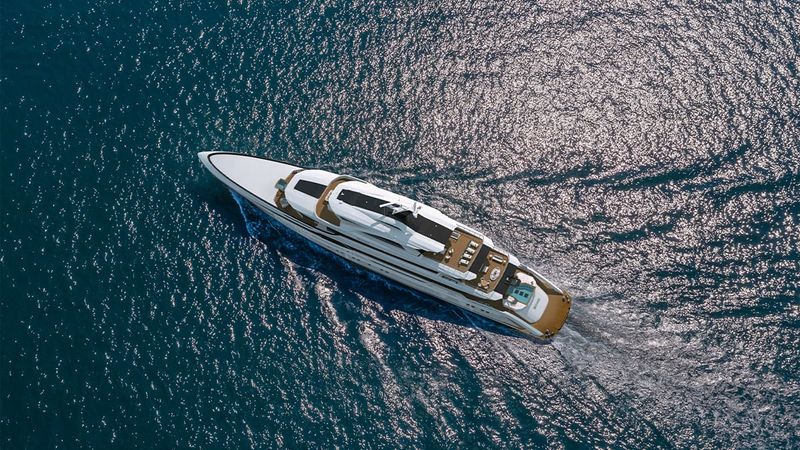
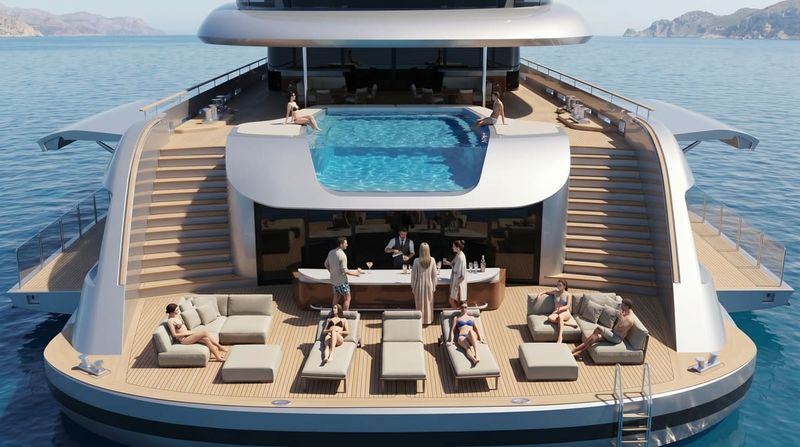
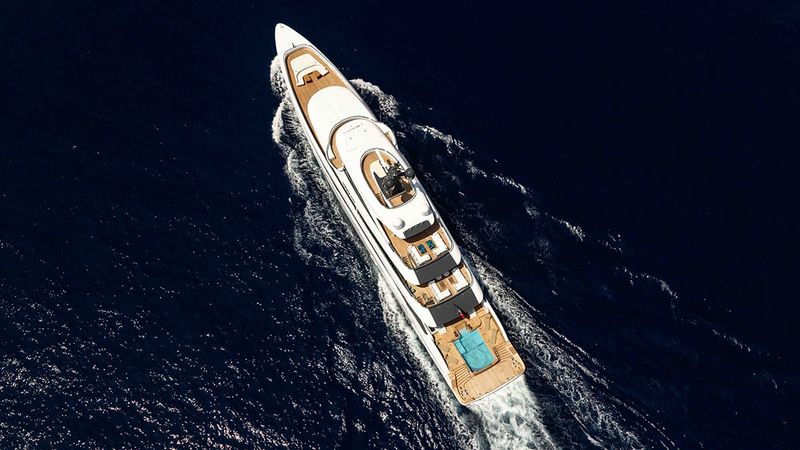
Bilgin reports that Project Bond can cover more than 5,000 nautical miles and reach a top speed of 17.5 knots, powered by MTU 16V 4000M73 engines. The exterior, handled by Unique Yacht Design, includes two pools and extensive lounge areas, though full details remain forthcoming. What is visible in early images suggests a vessel that balances deck space with architectural presence, avoiding the temptation to overload every surface with features.
The yacht joins a fleet of similarly themed vessels commissioned by American owner John Staluppi, each named after a film in the long-running spy franchise. Earlier examples include a 238-footer featuring a double-height atrium and a 16-foot pool, a 144-foot vessel known for an unusually high top speed, and another that pioneered the combination of specific engine and propulsion technologies in the American market. A 226-foot yacht in the collection references Parisian interiors, offering yet another interpretation of cinematic luxury.
Against the Grain
Jonny Horsfield, founder and creative director of H2 Design, describes the intent as creating "a grand rich style and a definite WOW factor," deliberately stepping away from current trends in favor of what he calls "a timeless classic interior." Whether that claim to timelessness holds depends on one's tolerance for drama and ornament, qualities that have fallen out of favor in an era that prizes understatement.
What Project Bond offers is an alternative to the reigning aesthetic consensus. The mirrored surfaces, the gold accents, the saturated color, the theatrical lighting are all choices that place the yacht firmly in conversation with a different design lineage, one that values spectacle and emotional impact over restraint and subtlety. It is not a yacht that whispers. It announces.
The Theater of Arrival
There is something almost novelistic about a vessel this committed to a singular vision. The interiors do not hedge or soften their approach. They double down, room after room, on a vocabulary of curves, reflection, and richness. The effect is cumulative, building as you move through the spaces, each one reinforcing the same sensibility.
Whether this represents a genuine shift in yacht design or simply one owner's very particular vision remains to be seen. What is clear is that Project Bond operates outside the current design conversation, drawing instead on references that predate the minimalist turn. In doing so, it raises questions about what luxury should look and feel like at sea, and whether the industry's recent embrace of restraint has left room for something more theatrical, more indulgent, more willing to court excess.
For now, the yacht stands as a statement, a floating argument for opulence as a legitimate design strategy. And in a landscape increasingly dominated by muted tones and quiet sophistication, that alone makes it worth watching.