When Three Pools Are Not Enough: Inside the New Poseidon Superyacht
ISA Yachts' latest 86-metre creation reimagines the relationship between vessel and sea, with a design language borrowed from Italian sports cars and a wellness deck that floats above the waves.
A Vessel Named for the God of Water
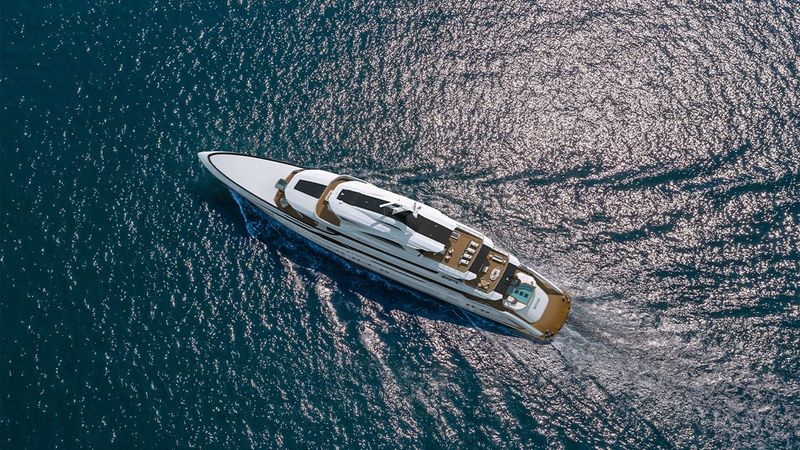
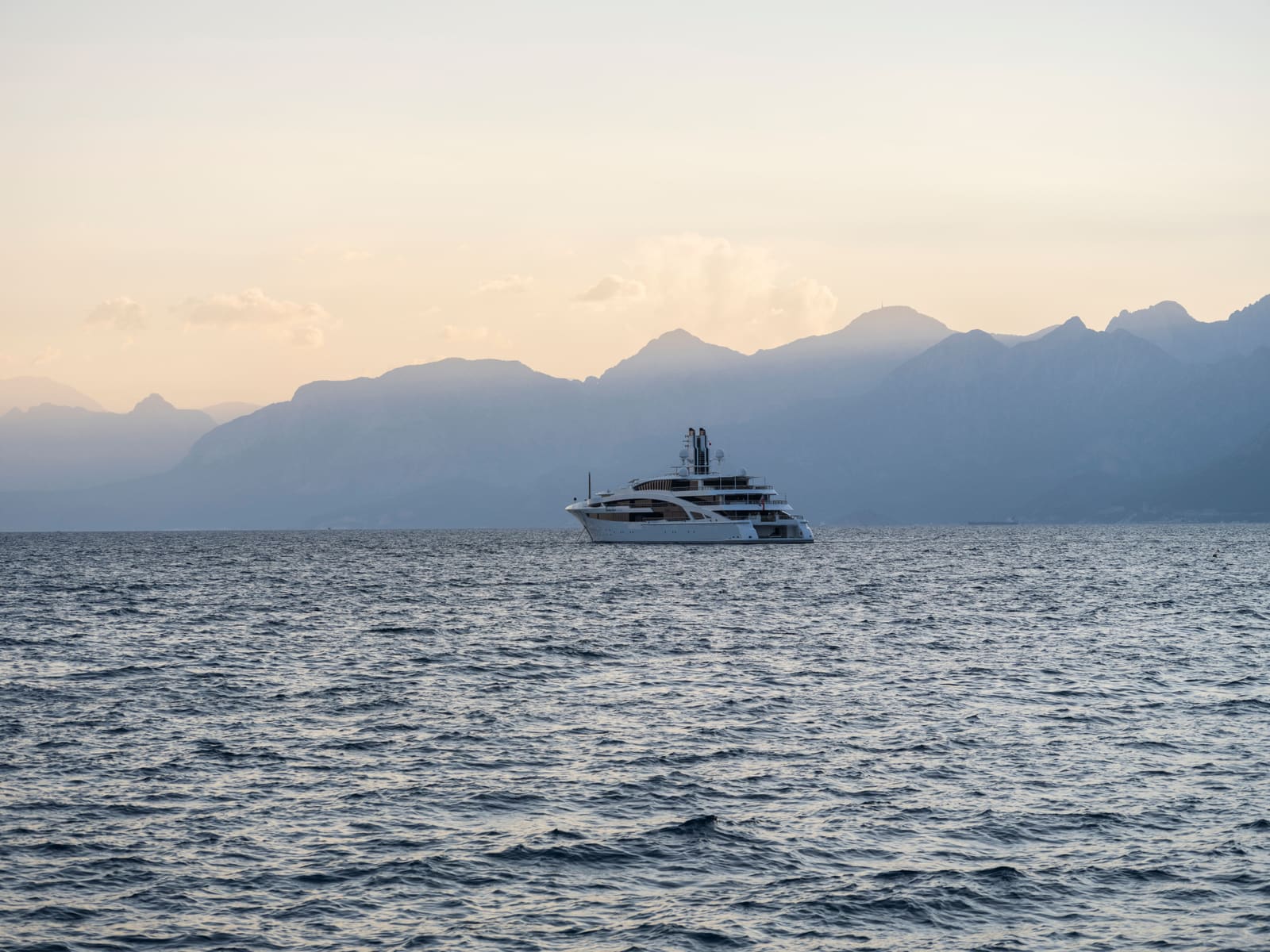
There is a certain irony in naming a superyacht after Poseidon - the Greek deity who commanded the seas - and then proceeding to build something that treats the ocean less as a realm to traverse and more as an immersive theatre. The latest vessel from ISA Yachts does exactly that. At 86 metres, this fourth addition to the shipyard's Large Yacht Collection refuses the traditional boundary between floating palace and marine environment, instead folding water, light, and open air into nearly every corner of its aluminium superstructure.
Poseidon joins a growing roster of highly customised vessels in the 80- to 90-metre range that ISA introduced earlier this year. The design, executed by Enrico Gobbi and TEAM for Design, is less about ostentation and more about spatial fluidity - a quality that becomes apparent the moment you consider its trio of pools, each occupying a different relationship to the vessel's social geography.
Three Pools, Three Philosophies
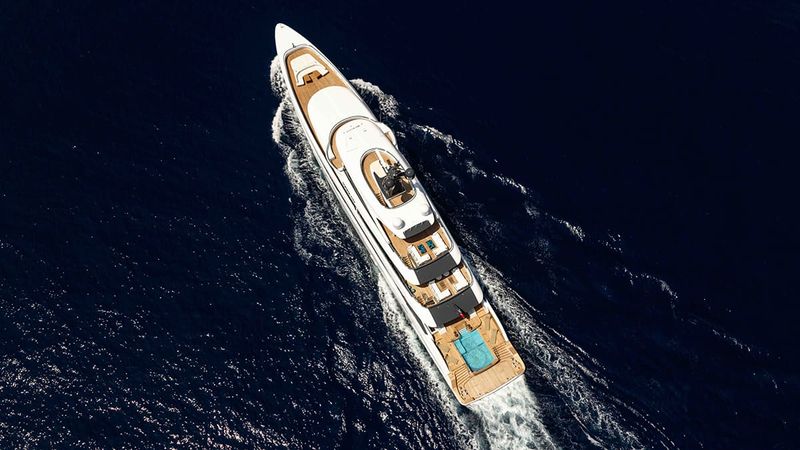
The first pool sits on the main deck, shaped like a T and equipped with a whirlpool section. It anchors the central leisure zone, visible from the salon and accessible from multiple vantage points. The second occupies the upper deck, positioned directly outside the owner's suite - a private expanse of water with unobstructed ocean views, reserved for moments when solitude matters more than spectacle.
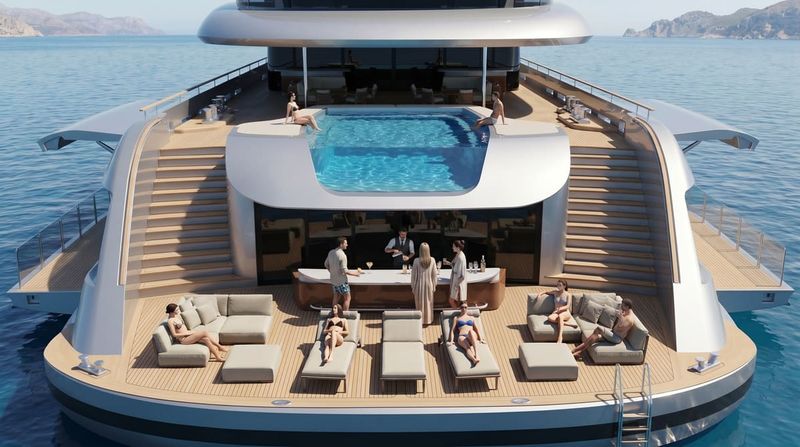
The third pool, however, is the most theatrically conceived. Perched above the beach club at the stern, it features glass sides, allowing light to filter through to the lounge below. Fold-down terraces extend from either side of the beach club, creating a platform that hovers at the waterline. A bar and seating area complete the scene. This is where the yacht's architectural ambition becomes clearest: the line between vessel and sea dissolves, and guests find themselves suspended between two bodies of water - one natural, one engineered.
Automotive Syntax in Naval Architecture
Poseidon's exterior borrows visual cues from high-performance sports cars, a design choice that might seem incongruous until you examine the details. Side air intakes punctuate the superstructure, lending a sense of forward motion even when the yacht is at anchor. The sky lounge roof mimics the canopy of a cockpit, sheltering a lounge and Jacuzzi beneath its streamlined form. It is a vocabulary more commonly associated with Maranello or Sant'Agata Bolognese than with Italian shipyards, yet here it translates into a language of speed and precision that feels oddly appropriate for a vessel capable of 17 knots at full throttle.
The main salon continues this theme of controlled openness. A cinema and dining space occupy the interior, but floor-to-ceiling glass ensures that the sea remains a constant presence. The upper deck aft takes this further: an indoor lounge flows seamlessly into an outdoor dining area, where a table seats 14 beneath the open sky. The effect is not one of grandeur but of choreographed intimacy - spaces that expand and contract depending on the occasion.
Wellness as Architecture
Midship, the wellness area occupies a zone that feels almost monastic in its focus. A gym, sauna, steam room, and treatment spaces are arranged around two sea-facing balconies, which extend outward like observation platforms. This is not wellness as afterthought or amenity checklist; it is wellness as spatial philosophy, with the ocean serving as both backdrop and participant.
The treatment rooms face the water directly, so that massage and movement occur within sight of the horizon. The balconies themselves are cantilevered, creating the sensation of floating above the waves. It is a design that understands the psychological value of immersion - not in the therapeutic sense, but in the literal one.
Accommodation and Hierarchy
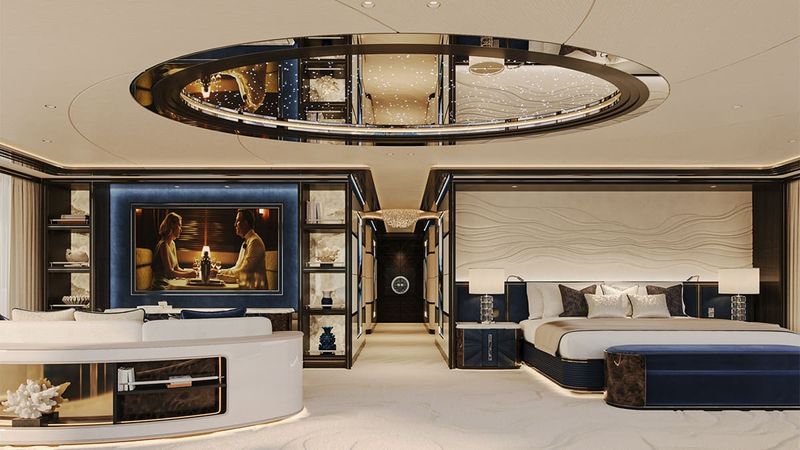
Poseidon offers configurations for either 12 or 14 guests, distributed across six or seven cabins, with space for 18 crew. The owner's suite occupies the entire upper deck, a private domain that includes a study, dressing room, and bathroom with double sink and shower. The suite's windows frame the sea in every direction, a reminder that even in a vessel this large, the ocean is never far from view.
Forward, a touch-and-go helipad provides aerial access, though it is designed to avoid the visual intrusion that helicopter platforms often impose. The helipad integrates into the bow's geometry, so that when not in use, it reads as part of the yacht's continuous surface rather than an add-on.
Engineering and Range
According to ISA Yachts, Poseidon is powered by a pair of MTU 16V4000M63L engines, which deliver a cruising speed of 14 knots and a maximum speed of 17 knots. At 12 knots, the yacht has a range of approximately 5,000 nautical miles - sufficient for transatlantic crossings or extended Mediterranean itineraries without refuelling.
Storage is distributed across two garages: a forward space for water toys and a rescue tender, and a midship bay designed to house a tender up to 9.5 metres in length. This separation of function reflects a broader design principle at work throughout the yacht - everything has its place, and that place is determined by use rather than convention.
A Shipyard's Expanding Ambitions
Poseidon is the fourth vessel in ISA's Large Yacht Collection, following Essence - a 82-metre yacht unveiled in September with its own glass-bottomed pool and helipad - and two models named Amarcord 82 and Amarcord 86, both introduced earlier in the year. Giuseppe Palumbo, director of Palumbo Superyachts, which owns ISA, noted that 14 superyachts are currently under construction at the yard, signalling a deliberate push into the upper echelons of the market.
The Large Yacht Collection represents a shift in strategy for ISA, which has historically focused on smaller vessels. These new projects - ranging from 80 to 90 metres - occupy a segment where customisation is expected and where clients often arrive with architectural ambitions that rival the shipyard's own. Poseidon, with its automotive flourishes and its insistence on bringing the sea into every corner of the design, is both a response to that demand and a statement of intent.
The Theatre of Water
What distinguishes Poseidon from other yachts in its class is not the number of pools or the presence of a helipad, but the way it stages the relationship between vessel and environment. The fold-down terraces, the glass-sided pool, the sea-facing balconies - all of these elements suggest a design philosophy that treats the ocean not as something to be observed from a distance, but as something to be inhabited alongside the yacht itself.
This is a vessel for those who want to be on the water, not merely above it. The beach club, with its open sides and its elevated pool filtering light from above, feels less like a room and more like a threshold - a space where the boundaries of the yacht give way to the larger expanse beyond. It is a gesture that recalls the ancient understanding of Poseidon not as a god who ruled the sea from afar, but as one who moved within it, shaping its contours and commanding its depths. In that sense, the name is apt.