A Rhineland Village Where Three Michelin Stars Hide in Plain Sight
Deidesheim, a medieval wine hamlet in Germany's Pfalz region, has quietly joined the world's most exclusive dining circle.
The Afternoon After
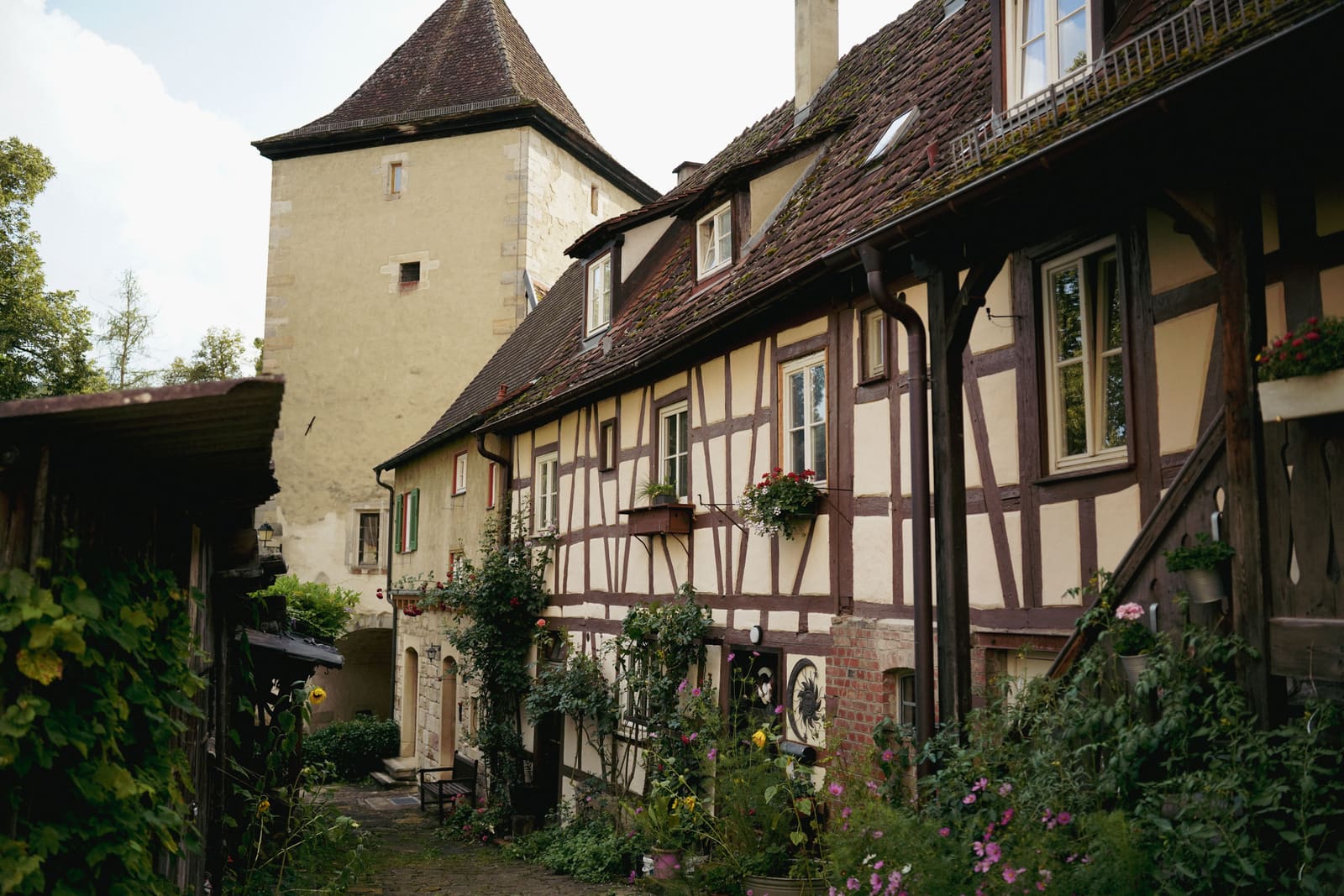
The cobblestones on Weinstrasse still hold the afternoon heat. Schoolchildren drift past medieval doorways, their voices soft against stone walls that have watched vintners and merchants come and go for four centuries. In the vineyards circling Deidesheim, rows of riesling vines pull tight around the town's medieval core, their leaves catching the slanting light. Nothing announces the news - no banners, no queues of pilgrims with reservations clutched in hand. Yet this village in Germany's Rheinpfalz, population 3,700, now holds a three-star Michelin restaurant, joining an exclusive circle of just twelve across the country.
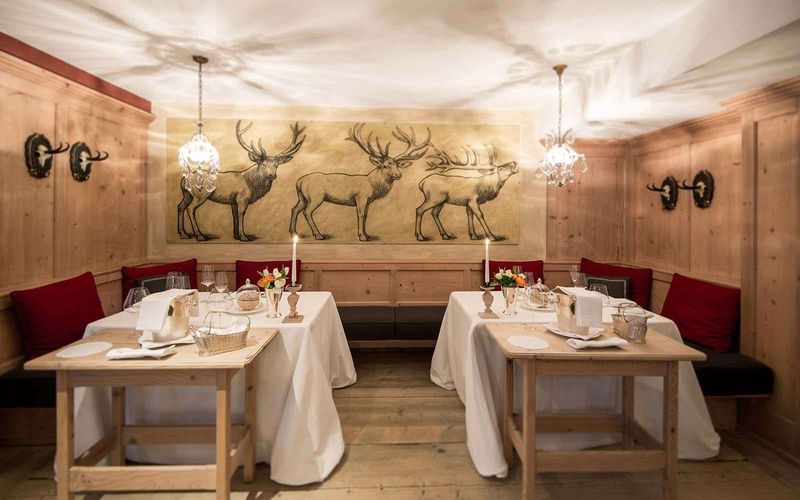
L.A. Jordan, the restaurant in question, takes its name not from sportswear but from Ludwig Andreas Jordan, a 19th-century wine merchant whose legacy runs deep here. The dining room sits discreetly along the main street, its façade modest, its interior a study in restraint. Chef Daniel Schimkowitsch earned the first star the year the restaurant opened in 2014, the second nine years later, and now the third has arrived, vaulting L.A. Jordan into the international conversation - one of roughly 150 three-star establishments worldwide, according to the Michelin Guide.
The morning after the announcement, managing director Ole Leidner recalls, the telephone began ringing before breakfast service. Reservations flooded in from London, New York, Frankfurt. The waiting list stretched through summer and into autumn. On Weinstrasse, the sign outside still bore two stars; inside, the kitchen moved with the same quiet precision it had the day before, though the stakes had irrevocably shifted.
A Town Built on Vines and Discretion
Deidesheim has long played a double life. To the casual traveller passing through the Pfalz on the way to Heidelberg or the Black Forest, it reads as picturesque and sleepy - a place where goats are ceremonially delivered each Whit Tuesday in exchange for centuries-old grazing rights, where the August wine festival fills the streets with schlager music and bratwurst smoke, where cellar doors open onto courtyards fragrant with lavender and fermenting must. Yet for Frankfurt financiers and diplomats, it has served as a discreet weekend refuge, an hour south on the Autobahn, where Helmut Kohl once brought Queen Elizabeth II and Margaret Thatcher to taste the region's cooking and wine.
The town's wealth is subtle but unmistakable. Mercedes sedans with out-of-town plates idle along Weinstrasse. The half-timbered houses, restored with care, shelter wine estates whose holdings have passed through families for generations. In the vineyards themselves, scattered among the vines, stand sandstone sculptures - some abstract, some figurative, including a fifteen-foot nude named Eva, mid-dance in the Pardisegarten plot. These are not relics but living markers of a place that takes both its heritage and its wine seriously.
What Grows Here
Riesling dominates, as it has for centuries, but Deidesheim's winemakers have diversified in recent decades. Gewürztraminer brings aromatic lift; spätburgunder, the local name for pinot noir, adds red to the portfolio; and auxerrois, a white varietal with a deceptive ease of drinking, has earned a reputation as the "sniper" - pleasant enough to disappear quickly, potent enough to catch the unwary.
The vineyards themselves are intimate, terraced, brambled in places, accessible by footpaths that wind through the plots. Picnic tables dot the hillsides. In spring, cherry and almond trees erupt in pale pink and white - a phenomenon known locally as Pfälzer Mandelblüte. By October, the leaves burn gold, and the progressive jazz festival, Jazzwanderung, threads its way through the forest at the edge of town.
The Dining Landscape
L.A. Jordan now occupies the apex, but Deidesheim's culinary scene extends well beyond a single kitchen. The restaurant 1718 offers a more casual, French-inflected menu. At Kaisergarten, the Riva terrace overlooks a koi pond, its service polished, its setting ideal for long lunches. Gaststätte Winzerverein serves schnitzels the size of dinner plates beneath a pergola; Café-Bistro Bellavigna handles breakfast with care and good coffee. In the forest, a thirty-minute hike from Weinstrasse, Waldschenke Deidesheimer Hütte functions as both cabin and beer garden, a retreat for walkers and cyclists. Sushi.B, tucked inside Weingut Reichsrat von Buhl, brings Japanese precision to a region otherwise steeped in European tradition.
The wine bars and cellar doors are the town's true social fabric. Weinbar 1911 anchors the main square, its tables prime territory for watching the evening promenade. Gasthaus Zur Kanne hides a rear courtyard where lavender syrup mocktails are served in the shade. Kimich Winery, housed in an original villa, offers tastings of fruity whites in a garden where a resident turtle roams and, occasionally, a flamenco guitarist appears unannounced.
The traditional drinking vessel here is the Dubbeglas, a dimpled pint glass holding seventeen ounces of wine - substantial by any measure. To temper the pace, many locals drink weinschorle, a fifty-fifty mix of wine and sparkling water, practical and refreshing in equal measure.
The Monkfish That Changed Everything
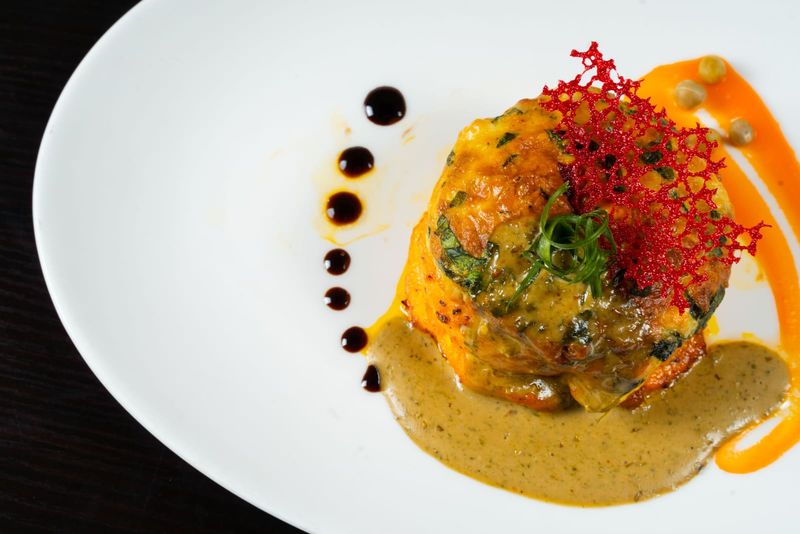
The Michelin judges' report singled out a dish of Atlantic monkfish paired with chanponzu sauce and Périgord truffle - a composition that married French technique, Asian seasoning, and luxury ingredients with the kind of clarity that earns top marks. The monkfish itself is sourced from Noirmoutier, a French island known for its Atlantic catch. It is this kind of sourcing, this layering of references without losing coherence, that distinguishes Schimkowitsch's cooking.
The kitchen at L.A. Jordan operates within a framework of seasonality and precision, drawing on both classical European training and a willingness to look beyond regional borders. The result is a menu that feels rooted in place yet unafraid of the wider world - a balance that resonates with a new generation of diners who expect both authenticity and ambition.
A Calendar of Occasions
Deidesheim's calendar runs on wine and ritual. In March, the almond blossom festival draws visitors to the orchards. May brings the goat ceremony, awarded UNESCO cultural heritage status in 2025. July sees Ketschauer Hof host its international wine and summer garden party. October's jazz walk winds through vineyards as the harvest nears completion. In November, St. Martin's Day procession moves through the streets - cloaked riders on horseback, children carrying lanterns, voices lifted in song. December brings a Christmas market, modest in scale but considered by locals to be among the finest in the region.
These are not events staged for tourists - tour buses remain rare, and English, though widely spoken, is seldom the first language heard on the streets. They are, instead, expressions of a community that has held its shape across centuries, adapting without abandoning.
The New and the Old
Leidner notes that roughly seventy-five per cent of L.A. Jordan's guests are German, but the third star has shifted the restaurant's profile. Calls now come from further afield - London, New York, Tokyo. The waiting list has become international. This, he suggests, is what a three-star designation does to a place: it redraws the map, pulls attention to a dot that was previously known only to insiders.
Yet Deidesheim has not fundamentally changed. The vineyards still belong to families. The festivals still follow the agricultural calendar. The cobblestones still warm in the afternoon sun. What has changed is the world's awareness of what has always been here - a place where excellence is pursued quietly, where tradition and ambition coexist without fanfare, where a meal can be as carefully composed as the landscape that surrounds it.
For those who make the journey, the reward is not simply a three-star meal but the context in which it exists: a village that has earned its reputation slowly, vintage by vintage, generation by generation, and now finds itself, almost despite itself, at the centre of the global dining conversation.