The Weight of a Red Book: What Michelin Stars Really Measure
Behind the restaurant world's most elusive accolade lies a century-old system built on anonymity, tradition, and a set of criteria few chefs will ever fully decode.
A Guide Born of Tyres and Travel
The story begins not in a kitchen but on the road. In 1900, when automobiles were still curiosities and paved routes rare, the Michelin brothers launched a small red guidebook designed to encourage French motorists to drive farther and, in doing so, wear out more tyres. Early editions listed petrol stations, mechanics, and places to eat along the way. It was practical, almost incidental. By 1926, the guide had evolved into something else entirely: a restaurant ranking system that employed anonymous inspectors and awarded stars to exceptional establishments.
More than a century later, that red book has become the most consequential publication in global gastronomy. A single star can transform a restaurant overnight. Two stars secure international reputation. Three stars, awarded to fewer than 150 establishments worldwide, represent something close to culinary immortality. Yet the system itself remains deliberately opaque, a blend of codified standards and subjective judgment that chefs spend lifetimes trying to decode.
The Anatomy of a Star
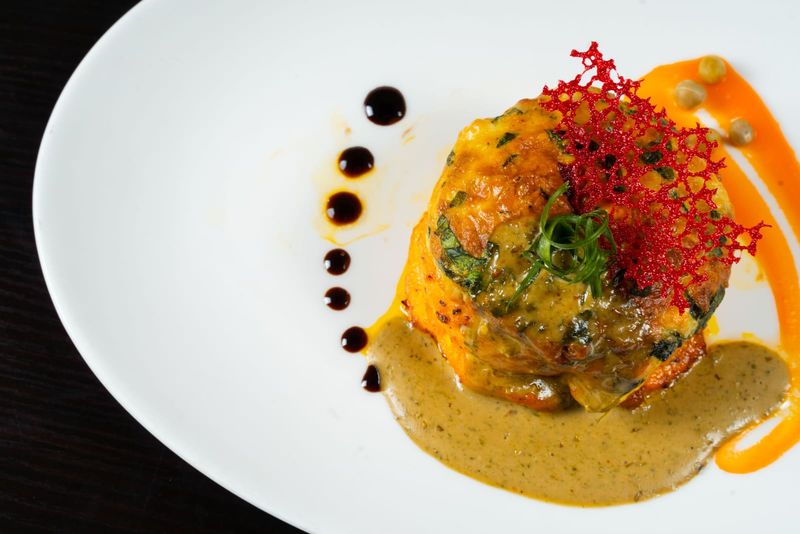
Michelin evaluates restaurants on five core criteria, each weighted but never precisely quantified. The first is product quality: the inherent excellence of ingredients, their seasonality, their provenance. Inspectors assess whether a kitchen sources thoughtfully and handles each element with respect. The second criterion is mastery of technique, encompassing everything from knife work to the control of heat, the balance of seasoning, the precision of timing.
The third pillar, often the most nebulous, is the harmony of flavours. Does the dish achieve balance? Do the components speak to one another, or do they compete? This is where subjectivity inevitably enters the equation, though inspectors are trained to distinguish personal preference from technical achievement. The fourth criterion is value, not in the sense of affordability but in the relationship between what is promised and what is delivered. A humble bistro can earn a star if it executes its vision flawlessly. The fifth and final measure is consistency: the ability to perform at the same level across multiple visits, across different services, across the passage of time.
What the criteria do not explicitly include is atmosphere, service style, or décor. Michelin insists that stars are awarded solely for what appears on the plate. In practice, however, the experience surrounding a meal inevitably colours perception. A flawless dish served in chaos is still experienced in chaos.
The Inspectors: Ghosts in the Dining Room
Michelin inspectors remain anonymous, even to one another. They dine alone, pay their own bills, and file detailed reports that are later cross-referenced with assessments from other inspectors. No single visit determines a star. A restaurant may be evaluated five, six, or more times over the course of a year before a decision is made. Inspectors come from culinary backgrounds, many having worked as chefs or in hospitality, and they undergo months of training in Michelin's methodology.
The anonymity is sacrosanct. Inspectors are forbidden from disclosing their role to family, friends, or colleagues. They book reservations under pseudonyms, avoid patterns that might reveal their identity, and rotate regions to prevent recognition. The system is designed to capture the experience of an ordinary guest, though the scrutiny applied is anything but ordinary.
This secrecy has its critics. Chefs argue that the lack of transparency makes improvement difficult, that receiving a star or losing one offers no roadmap for what changed or why. Others point out that the system privileges a particular kind of cooking, rooted in French technique and European aesthetics, and has been slow to recognise culinary traditions that operate outside those boundaries.
One Star, Two Stars, Three
The hierarchy is deceptively simple. One star signifies a very good restaurant, worth stopping for if you are in the area. Two stars indicate excellent cooking, worth a detour. Three stars represent exceptional cuisine, worth a special journey. The language is almost quaint, a relic of the guide's origins as a motorist's companion, but the implications are anything but.
A one-star restaurant has achieved something rare: recognition that its cooking is consistently superior, that it has mastered its chosen style, that it offers an experience diners will remember. For many chefs, this is the pinnacle. The pressure that accompanies a second or third star, the expectation of perfection, the scrutiny from guests who arrive with preconceived notions, can be creatively and personally suffocating.
Two stars elevate a restaurant into the international conversation. Reservations become harder to secure. Critics and travellers arrive with heightened expectations. The kitchen must deliver not just excellence but a distinct point of view, a culinary identity that justifies the journey.
Three stars occupy a realm unto themselves. These are restaurants where every element, from the amuse-bouche to the final mignardise, is calibrated to near-perfection. The experience is often theatrical, multi-coursed, expensive, and exhausting in its intensity. Chefs who hold three stars describe the weight as both honour and burden. Some, notably Sébastien Bras in France and Marco Pierre White in the UK, have voluntarily returned their stars, citing the toll of constant pressure.
The Global Expansion and Its Discontents
For decades, the Michelin Guide focused almost exclusively on Europe. Expansion into Asia began in earnest in the 2000s, with editions launched in Tokyo, Hong Kong, Singapore, and later Bangkok and Seoul. The guide arrived in New York in 2005, followed by San Francisco, Chicago, and Washington, D.C. More recently, Michelin has ventured into less expected markets: Dubai, Rio de Janeiro, Istanbul, Hanoi.
This geographic broadening has forced the guide to reckon with culinary traditions that do not fit neatly into its inherited framework. How does one apply French-derived criteria to a Bangkok street food stall, a Tokyo sushi counter with eight seats, or a Mexico City taqueria? Michelin has introduced the Bib Gourmand category to recognise good food at moderate prices, and it has made efforts to diversify its inspector pool. Yet questions persist about whether a system born of European fine dining can ever fully embrace the plurality of global food culture.
Why It Still Matters
In an era of crowdsourced reviews, influencer endorsements, and algorithmically generated recommendations, the Michelin star remains singular. It is not democratic. It does not reflect popular opinion. It is, instead, an assertion of expertise, a claim that trained judgment still holds value in a world awash with data. For diners, a Michelin star functions as shorthand, a promise that a certain standard will be met, even if the style or setting is unfamiliar.
For chefs, the stakes are existential. A star can secure investment, attract talent, and fill reservations months in advance. The loss of a star can trigger financial collapse, staff departures, and personal crisis. The chef Benoît Violier, whose Swiss restaurant held three stars, died by suicide in 2016, a tragedy that reignited debate about the psychological cost of chasing culinary perfection.
Yet the pursuit continues. Young cooks still dream of earning stars. Established chefs still speak of Michelin inspections with a mixture of dread and reverence. The red book, now available in digital form, still lands each year with the force of a verdict.
The Meal Beyond the Medal
There is a paradox at the heart of the Michelin system. It claims to measure only what is on the plate, yet it shapes entire careers, cities, and culinary movements. It insists on anonymity and objectivity, yet it is guided by human judgment, with all its biases and blind spots. It celebrates excellence, yet that celebration can ossify into orthodoxy, discouraging risk and experimentation.
The most compelling meals are not always the most technically flawless. They are the ones that surprise, that connect, that linger in memory not because every element was perfect but because something in the experience felt true. Michelin stars can guide diners toward extraordinary cooking, but they cannot capture the full spectrum of what makes a meal matter. That remains, as it always has, a question each diner must answer alone.