Five Chefs Rewriting the Language of Place
From Mexico City's marigold ceviches to Sonoran barrel-cactus bites, a new generation of cooks is turning personal history into edible geography.
The Geography of Memory
At Maria Isabel in San Francisco, marigold petals rest atop shrimp ceviche like pressed flowers in a family album. The dish is a reimagining of Acapulco's Fanta-spiked classic, recast here with preserved Seville oranges and three fried shrimp heads standing upright like tiny sentinels. It is both a record of a place - Guerrero, on Mexico's Pacific coast - and a declaration of intent.
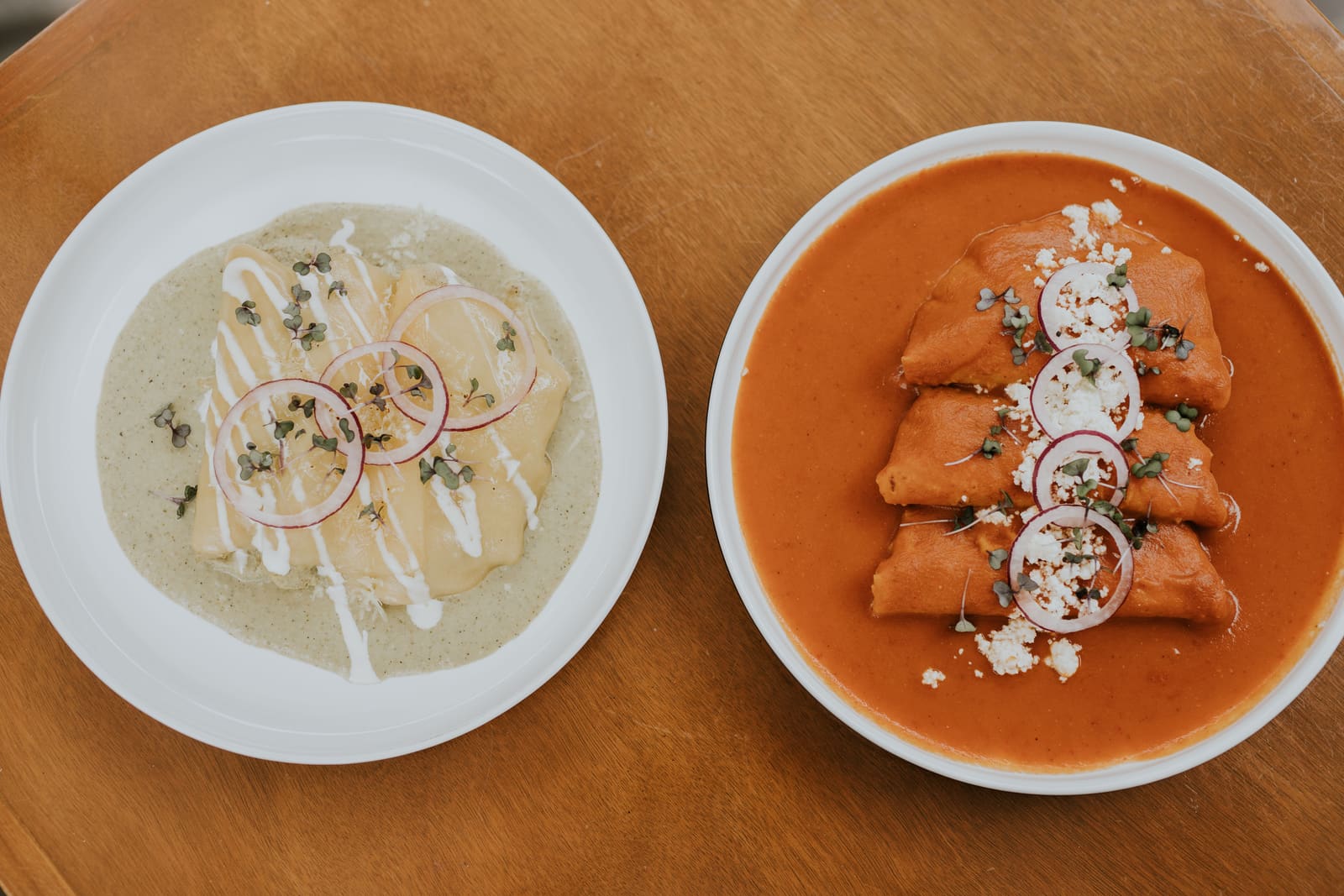
Laura Ozyilmaz, who opened the restaurant this year with her husband Sayat, has spent the past decade navigating the fault lines between Mediterranean and Mexican cooking. At their first venture, Dalida, the couple earned acclaim for Eastern Mediterranean cuisine rooted in Sayat's Istanbul upbringing. But Maria Isabel, named for Laura's sister and mother, is a different kind of cartography. Here, the menu traces Sinaloan mariscos and Guerrero's maize traditions through duck enmoladas draped in mole negro and chochoyotes - masa dumplings darkened with huitlacoche - that speak to techniques often overlooked in California's Mexican dining landscape. The wine list centres female winemakers; the ceramics come from Mexican artisans. It is a restaurant steeped in matriarchy, and in the conviction that personal history can be both inheritance and innovation.
Ozyilmaz's trajectory mirrors a broader shift: chefs no longer content to cook "authentically" are instead cooking autobiographically, layering technique with memory, place with imagination. Across the United States, a handful of kitchens are doing the same - turning the raw material of heritage into something that feels less like preservation and more like conversation.
Nikkei in the Capital
In Washington, D.C., Carlos Delgado's Maru San opened in February on Capitol Hill, and reservations for its 15-course tasting menu have been nearly impossible to secure since. The restaurant is a study in precision: Nikkei-style hand rolls and dry-aged sashimi pass across a 25-seat black marble counter beneath a mural of a pink octopus, while tropical house music pulses in the background. Delgado, who grew up along Peru's coastline and in the Andes, first made his name at Causa, a tiny Shaw tasting room that takes diners on a journey through Peruvian terroir. He honed his craft under José Andrés at China Chilcano, and the two still exchange texts regularly.
At 36, Delgado is expanding in multiple directions. He recently overhauled the menu at La Vie, a Mediterranean restaurant at the Wharf development, and a second Maru San is in the works. But it is the original that feels most taut with ambition - a place where high-end uni and meticulous sourcing meet the kind of technical rigour that has drawn comparisons to his former mentor's restless energy.
A Sofreh in Austin
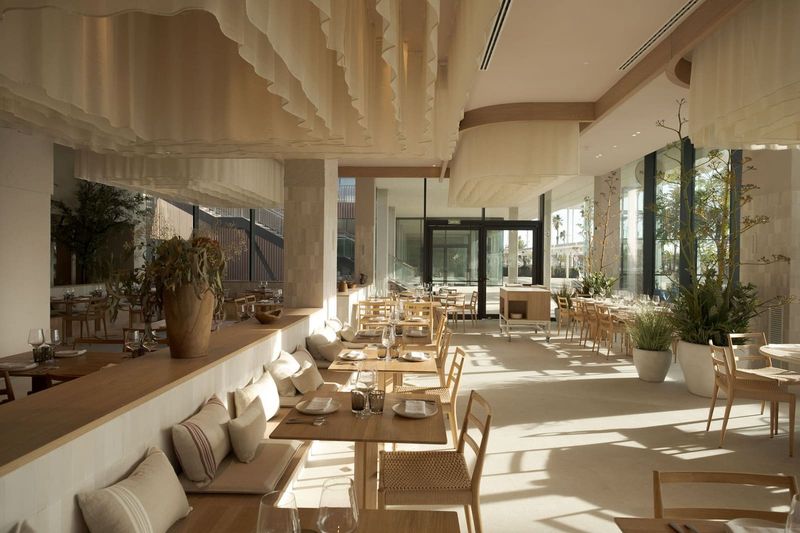
Amir Hajimaleki has been cooking in Austin for more than a decade, but until this year, he had not found the space to fully articulate his identity as an Iranian-born, Texas-raised chef. Roya, which took more than eight years to bring to fruition, is that space. Designed with his brother Ali, the restaurant feels transportive: intricate tile mosaics, burnished gold and deep blue tones, chandeliers that catch the light like something lifted from a Isfahan courtyard.
The sofreh experience - a prix fixe menu priced at 85 US dollars - is where Hajimaleki's vision crystallises. Servers lay down a delicate white lace tablecloth before presenting shirin polo, jewelled rice studded with nuts and dried fruit; ghormeh sabzi, a herb stew enriched with roasted bone marrow; and a trio of kebabs that arrive still sizzling. Tea service and a box of cookies follow, gifts meant to evoke the ritual of leaving a family home. Hajimaleki calls his grandmother to consult on new dishes. The effect is less performance than tribute - a way of walking diners through not just Persian cuisine's breadth, but the chef's own passage between two worlds.
Philadelphia's Boundary-Breaker
Philadelphia has long been an underdog in American dining, a city that punched above its weight but rarely received the recognition it deserved. That has changed in recent years, and at the centre of the city's current energy is Phila Lorn, who runs two restaurants with his wife Rachel: Mawn, a Cambodian noodle house that opened in 2023, and Sao, a Southeast Asian oyster house and raw bar that debuted last September.
Lorn's cooking is difficult to categorise, which is precisely the point. At Mawn, funnel cake meets coconut macaroons; vinegar peppers sharpen scallops in red curry. At Sao, the crispy rice in the nam khao salad - made with Italian sausage - reads like arancini, while tuna carpaccio is cured in lime until it takes on the aroma of the beef pho served a few blocks away on Washington Avenue. Lorn, who speaks with the bravado of South Philadelphia and peppers his sentences with "jawn", is uninterested in culinary borders. His food feels playfully free, emboldened by a refusal to stay in one lane, and the city's dining community has responded with enthusiasm.
Desert as Luxury
In Tucson, Aaron Lopez is making the case that the Sonoran Desert is a landscape of luxury. Ursa, the restaurant he opened with his wife June Chee, serves a 150-US-dollar tasting menu inside a high-ceilinged, brick-walled space downtown. The menu merges Indigenous cooking techniques with foraged and locally farmed ingredients, and every course feels like an argument for seeing the desert on its own terms.
Barrel fruit - a yellow cactus - arrives pickled with chiltepin leaves, a bite you would never encounter on a European tasting menu. Quail breast, dressed in pickled yucca, hovers over a jujube broth. Goat, roasted pit barbacoa-style in agave, is unveiled tableside and served over softened tepary beans. Lopez, who trained in top Los Angeles kitchens before moving to the desert, spent a year researching the region with a camera and little else, venturing deep into the landscape to understand its rhythms and possibilities.
The result is a menu that eschews conventional comfort, reimagining cactus, corn, sunflower tea and beans as true luxuries. There are no extraneous adornments; the kitchen lets the produce and meats speak. Lopez's message - that the value and beauty of the American Southwest lie not in what it borrows but in what it already holds - is the luscious pith beneath the surface, waiting to be found.
The New Cartographers
What unites these five chefs is not a shared cuisine or even a shared philosophy, but a shared conviction: that place is not static, and neither is identity. They are cooking from memory, yes, but also from imagination - drawing maps that connect past and future, inheritance and invention. Their kitchens are not museums. They are living rooms, laboratories, love letters. And in an era when dining often feels caught between nostalgia and novelty, their work offers a third path: cooking that honours where it comes from without being bound by it.
The sofreh tablecloth laid down at Roya, the marigold petals scattered across ceviche at Maria Isabel, the barrel cactus plated at Ursa - these are not gestures of preservation. They are acts of translation, and in the hands of these chefs, the language is still being written.