Monaco Beyond the Grand Prix: A New Riviera Rhythm
The principality has shed its race-day glitz for something quieter - barefoot beach clubs, morning pesto, and a coastline that finally feels lived in.
A Coastline That Has Learned to Sit Still
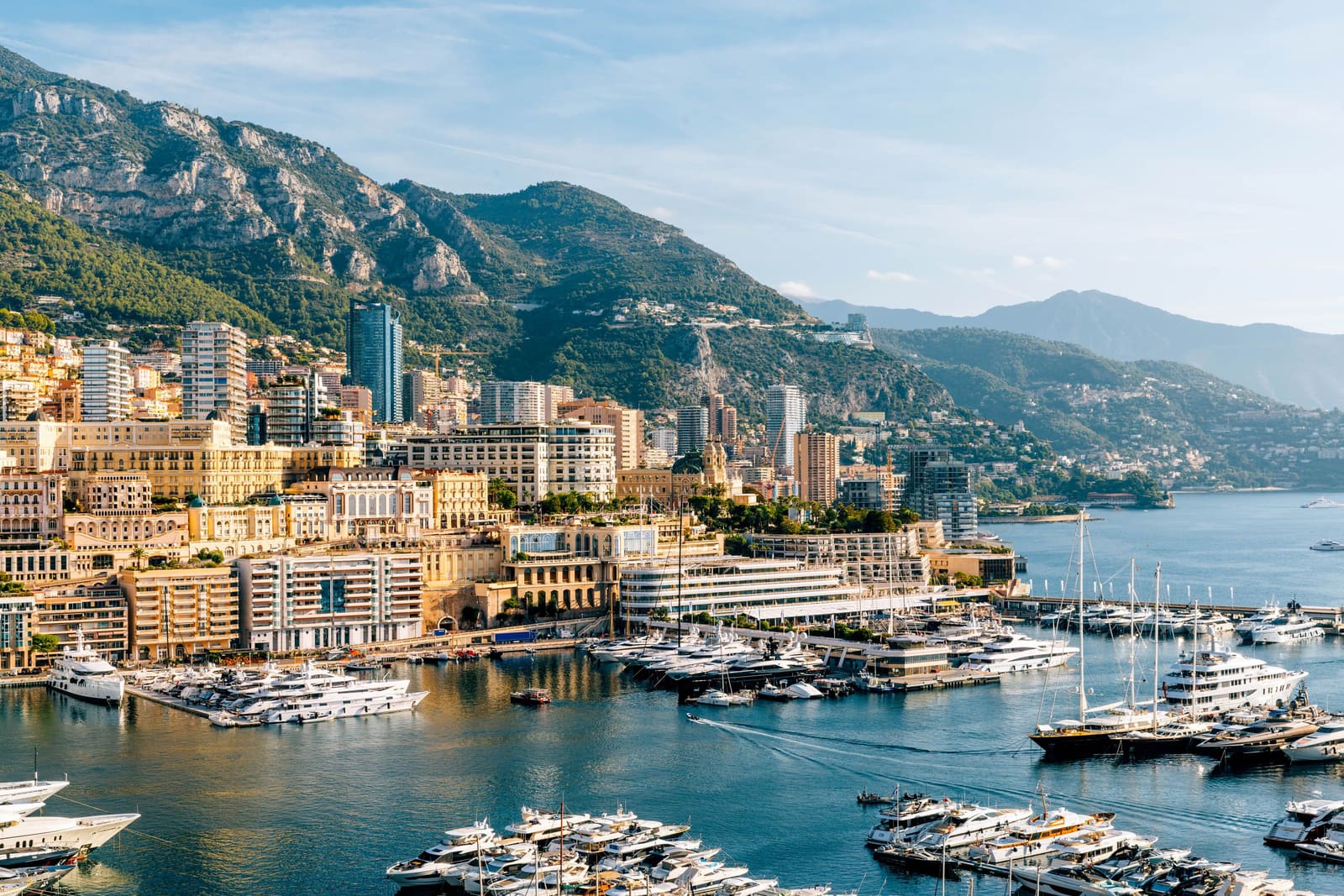
There is a moment, just after dawn, when Monaco's harbour forgets its reputation. The super yachts bob in silence. The cafés along the port are still shuttered. And for a brief window, the principality feels less like a showroom and more like a place where people might actually live.
It is a rhythm that has taken decades to emerge. Monaco built its identity on spectacle - casinos, Grand Prix, the Belle Époque grandeur of Monte-Carlo. But in recent years, something has shifted. The land reclamation project Mareterra has added new coastline, not for racing but for residences designed by Renzo Piano and Tadao Ando. The Larvotto beachfront, once a functional stretch of pebble and concrete, has been reimagined by Piano as a palm-lined promenade where locals walk their dogs. The principality is learning to exhale.
This is not the Monaco of champagne showers and checkered flags. It is the Monaco of morning oysters at Les Perles de Monte-Carlo, of barefoot lunches at clifftop trattorias, of evenings that begin with aperitifs under a glass dome and end with jazz in a 1920s bar. The jetsetters are still here, but so are the fishermen's huts - albeit spruced up - and the weekly markets just over the Italian border.
Where the Mediterranean Meets the Table
Monaco's dining scene has long been synonymous with Michelin stars and white tablecloths. Le Louis XV - Alain Ducasse remains the gilded standard, its dining room adorned with frescoes and gold leaf. But the principality's younger chefs are writing a different story, one that privileges the clarity of seasonal ingredients over the weight of tradition.
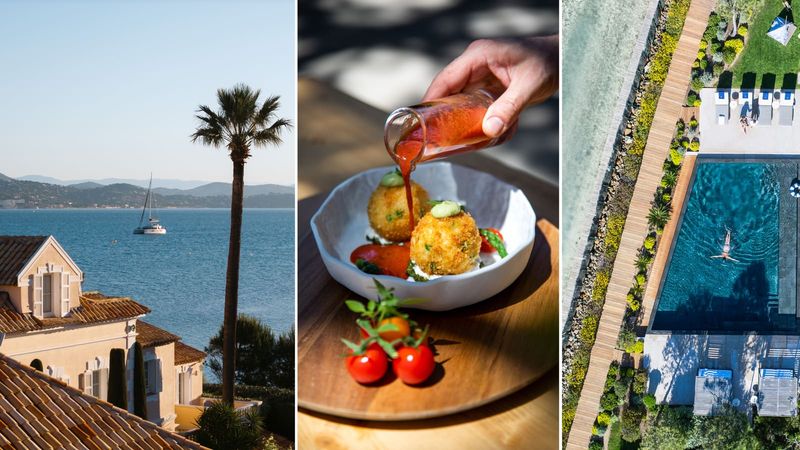
At Blue Bay Marcel Ravin, the Martinique-born chef layers Caribbean spice into Mediterranean restraint. Vanilla sugar cane vinegar dresses artisanal plates; cassava crumble adds texture where cream once would have. The open kitchen unfolds into a dining room of sleek wood paneling and coral-inspired screens, but the true draw is the terrace at sunset, when the light turns the sea to copper.
Nearby, Zeffirino serves Genovese pesto over fresh mandilli pasta - square-shaped, hand-rolled, the kind of dish that tastes like someone's grandmother made it, even if Frank Sinatra once ordered it here. The terrace fills quickly with locals who know to arrive early.
At La Vigie Zanoni, perched on a cliff across the bay, the Italian eatery feels like Capri without the crowds. Boats pull up to the private dock; diners linger over grilled fish and sweeping views of the principality. There is no fuss, no formality. Just the kind of lunch that stretches into late afternoon because no one is in a hurry to leave.
In the covered Condamine market hall - temporarily relocated to kiosks in Place d'Armes during construction - Mauro Colagreco's Mitron Bakery sells sourdough loaves milled and baked daily in nearby Menton. Colagreco's three-Michelin-starred Mirazur has been a fixture in Menton for two decades, reshaping the French Riviera's culinary landscape the way Noma did for Scandinavia. Now his bread arrives in Monaco still warm from the oven.
The Beach Clubs That Remember Bardot
Monaco's rocky shoreline has never been mistaken for Saint-Tropez. There are no long stretches of sand, no natural coves. Instead, the principality has built its waterfront leisure around pools and promenades, solariums and pontoons.
Larvotto, the crescent-shaped sliver of beach that serves as Monaco's main waterfront, recently underwent a modern redesign helmed by Renzo Piano. A handful of beach clubs now spill out along the palm-fringed promenade. La Rose des Vents anchors the strip with a seasonal, Gucci-themed beach club where floral-patterned sunbeds nod to the 1960s-era motif designed for Princess Grace. At your lounger, you can order caviar and king crab tacos without ever leaving the plage.
Across the bay in Roquebrune-Cap-Martin, La Môme Riviera's rose-striped parasols hover along the rocks. The restaurant and beach club can be reached by boat - shuttles depart from Port Hercule - and the private pontoon makes the arrival feel like landing on a hidden island. Nearby, Loulou Pirate channels the barefoot-chic energy of the 1960s and '70s, when Brigitte Bardot made fishermen's huts fashionable.
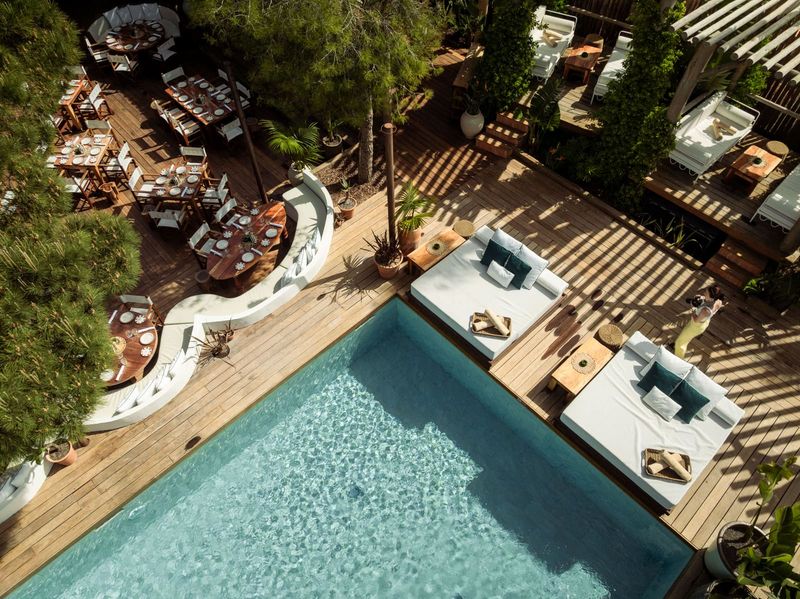
For those who prefer pools to pebbles, Nikki Beach Monte Carlo offers a cabana-clad rooftop with party-heavy Riviera vibes. But the real draw is the Olympic-sized saltwater pool on the port, open-air and public, where locals swim laps in the morning before the tourists arrive.
An Evening That Starts with Pisco and Ends with Picasso
Monaco's nightlife operates on two frequencies. There is the bottle-service circuit - velvet-lined SASS CAFE, the tribal house beats at COYA Monte-Carlo, the cavernous late-night clubs like Twiga and Jimmy'z. And then there is the quieter frequency, the one that hums beneath the spectacle.
At Hôtel Hermitage, the Gustave bar sits beneath an Eiffel-designed glass dome. Aperitifs arrive with small plates; conversations unfold slowly. Across the square, Le Bar Américain at Hôtel de Paris has been serving nightcaps since the 1920s. Joséphine Baker drank here. So did Cary Grant and Lady Gaga. Jazz, swing, blues, and soul performers entertain nightly, and the bar snacks include some of the best barbajuans - Swiss chard-filled fritters - in the principality.
Greek-Mediterranean GAIA draws a fashionable crowd year-round, including the occasional Formula 1 driver. Discretion is key; camera phones are discouraged. The foliage-filled terrace feels plucked from the Athens Riviera, and the wine list leans heavily on expertly curated Greek Assyrtiko. Start with classic spreads like taramosalata, then order from the restaurant's own fish market - carpaccio, ceviche, or whole grilled fish with lemon oil.
As the evening progresses, some guests filter into NYX, a speakeasy-style, members-only lounge. Others head to Amazónico, a rooftop setting overlooking the casino where entertainment ranges from Bossa Nova to electro-tropical DJ sets. At La Môme Monte-Carlo, a Roaring Twenties-inspired rooftop, a singer serenades tables that peer over the port and Prince's Palace.
At Mareterra, the new eco-district where billionaires and Formula 1 legend Charles Leclerc have bought homes, London transplant zēphyr has opened with its own cocktail bar, Naked & Famous. The drinks are sultry, the crowd well-heeled, the energy more restrained than the party-heavy beach clubs.
The Golden Square and Its Belle Époque Ghosts
Monaco's five-star hotels cluster around the Carré d'Or, the Golden Square crowned by the historic Casino de Monte-Carlo. These are Belle Époque institutions, gilded and storied, but many have undergone recent renovations that balance heritage with modernity.
Hôtel Métropole Monte-Carlo, independently owned and designed by Jacques Garcia, houses the Spa Métropole by Guerlain and the Karl Lagerfeld-designed Odyssey, an urban rooftop oasis with a heated saltwater pool and Italian poolside restaurant Zia. The hotel's two-Michelin-starred Les Ambassadeurs by Christophe Cussac revives Joël Robuchon's longstanding institution. Garcia returned to oversee the restaurant's two-year renovation, which introduced an open-kitchen concept, a chef's table with 360-degree views, and a cigar lounge in the extended lobby bar. Three museum-worthy pieces - by Pablo Picasso, Francis Bacon, and Andy Warhol - anchor the space. The legendary bread and dessert trolleys, beloved by fans of the former Robuchon eatery, have been brought back.
Hôtel de Paris Monte-Carlo, facing the casino, is perhaps the most emblematic of Monaco. After a multi-year, multimillion-dollar renovation, it remains timeless but no longer feels frozen in time. The gilded dining room of three-Michelin-starred Le Louis XV - Alain Ducasse still dazzles with gold leaf-painted frescoes, but the hotel's public spaces now feel as modern as they do grand.
The Weekly Ritual of Crossing Borders
Monaco's petite size - it is the world's second-smallest state - means that much of daily life involves crossing borders. Nice, 25 minutes by car or seven minutes by helicopter, serves as the gateway for most international arrivals. Direct flights now connect New York and Newark via business-class-only carrier La Compagnie, with seasonal service from Atlanta, Philadelphia, and Washington, DC.
But the most local ritual involves the Friday morning train to Ventimiglia, just over the Italian border. The 30-minute journey leads to one of Italy's largest open-air weekly markets, where vendors sell everything from produce to antiques. Locals pause for lunch at Marco Polo 1960, a waterfront stalwart, before returning to Monaco by early afternoon.
Within the principality, getting around is a matter of feet or buses. Credit cards can be tapped onboard; tickets are sold by drivers. Carshare services like Uber and Bolt will drop passengers in Monaco but cannot pick them up for outbound trips. Taxis, however, can be hailed or requested through hotels - particularly those within the Monte-Carlo Société des Bains de Mer portfolio.
For vintage and second-hand luxury finds, Le Dressing operates two boutiques in the portside La Condamine district. At One Monte-Carlo, the principality's fashion district near the casino, designer boutiques like Cartier and Saint Laurent line the streets. During certain seasons, Le Jardin Belle Epoque by Perrier Jouët sets up a pop-up outside Hôtel Hermitage, where champagne is served under Art Nouveau-style pavilions.
The Entertainment That Does Not Require a Starting Grid
Monaco's calendar is famously anchored by the Grand Prix, but the principality has quietly built a year-round cultural programme that operates at a slower pace. The Monte-Carlo Summer Festival brings performers like Norah Jones, James Blunt, and John Legend to open-air stages. The Opéra de Monte-Carlo hosts classical concerts and productions like Carmen. Beneath the Oceanographic Museum, an open-air cinema screens films under the stars.
The Rolex Monte-Carlo Masters, a prestigious tennis tournament, draws crowds each spring. Some seats offer panoramic views of the Mediterranean, a reminder that even Monaco's sporting events are designed with aesthetics in mind.
Half-day whale-watching safaris depart from the coast, tracking migrating fin and sperm whales around the principality. It is a quieter spectacle than the Grand Prix, but no less Monégasque - an extravagance measured not in horsepower but in patience, in the willingness to wait for something wild to surface.
A Principality That Has Stopped Performing
Monaco's transformation is not complete, and it may never be. The super yachts still line the harbour during the annual Monaco Yacht Show, which closes out high season each year and often touts the world's priciest vessels. The casino still glitters. The palace still perches on its clifftop, adorned with frescoes.
But something has shifted. The principality has learned to offer more than spectacle. It has built a promenade where people walk without destination. It has opened beach clubs that feel less like stages and more like refuges. It has welcomed chefs who prize clarity over decadence, and hotels that balance heritage with comfort.
Monaco is still a playground, but it is no longer performing. It has become, in quiet increments, a place where the rhythm of the day matters as much as the marquee event. Where dawn is as compelling as midnight. Where the coastline has learned, at last, to sit still.