Bar Leone Claims World's Top Cocktail Crown for the Second Year
The Hong Kong institution has defended its position at the summit of global bartending, while Mexico City and Paris prove their staying power on the international cocktail circuit.
A Familiar Name at the Summit
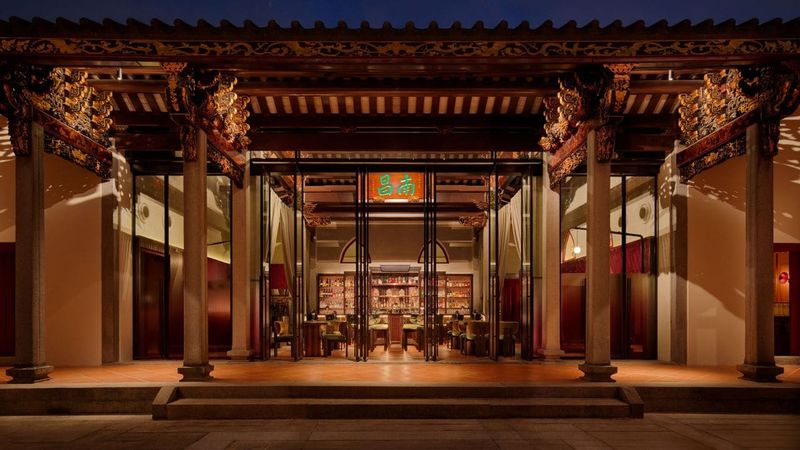
The scent of aged spirits and citrus oils filled the air in Milan on 7 October as industry professionals gathered to learn which establishments would define the year ahead in cocktail culture. Bar Leone, nestled within Hong Kong's dense urban fabric, emerged victorious for the second consecutive year, according to The 50 Best Bars Academy. The Academy, comprising hundreds of anonymous experts scattered across continents, compiles its annual ranking through a voting process managed by William Reed Business Media, the same organisation behind the restaurant world's most closely watched list.
What distinguishes this particular Hong Kong venue is less about spectacle than precision. The bar occupies a category where technique and hospitality converge, where a drink is both artefact and gesture. That it has held the top position twice suggests not a fleeting trend but a sustained mastery of craft that resonates across cultural boundaries.
Mexico City's Twin Ascendancy
No other city placed two bars within the top ten. Mexico City managed precisely that: Bar Mauro at number ten and Handshake Speakeasy at six. The latter also claimed the title of Best Bar in North America, a recognition that positions the Mexican capital as a destination for those who consider cocktails a serious pursuit rather than casual indulgence.
The achievement is notable within a broader pattern. Latin American cities have steadily claimed more territory on global rankings over the past half-decade, propelled by bartenders who draw from regional ingredients, pre-Hispanic distillation traditions, and a willingness to challenge European and North American orthodoxies about what constitutes a "proper" cocktail. Alquímico in Cartagena, which placed third overall, received the Best Bar in South America designation alongside the Michter's Art of Hospitality Award, underscoring the region's growing influence.
The European and Asian Landscape
Milan's Moebius Milano, honoured as Best Bar in Europe, landed at number two. Paris and New York each secured four entries across the full list, reinforcing their reputations as perennial cocktail capitals. Yet the European showing extended well beyond these familiar centres. Athens contributed five bars to the extended ranking, including Line at number five and The Bar in Front of the Bar at nineteen, the latter earning the Nikka Highest Climber Award for its rapid ascent.
Asia's footprint stretched from Tokyo to Bangkok to Singapore, with Bar Leone leading a cohort that included Gokan and Montana in Hong Kong, Zest in Seoul, and Bar Us in Bangkok, which placed fourth. The Asian entries tend to favour intimate spaces and meticulous service, environments where the bartender's movements become a form of quiet theatre.
The Architecture of Recognition
The 50 Best Bars 2026 list spans fifty core positions, with an extended ranking reaching to one hundred. Each year brings a shuffle: new openings surge upward, established venues falter or reinvent themselves, cities rise in prominence while others recede. Schmuck in New York claimed the Three Cents Best New Opening Award, while Bar Mauro's tenth-place debut earned the Disaronno Highest New Entry Award.
Special honours fell to individuals and specific achievements. Takuma Watanabe received the Altos Bartenders' Bartender Award. Giorgio Bargiani, assistant director of mixology at The Connaught Bar in London, which placed eighth, was recognised among Europe's fifty best. Shingo Gokan took home the Roku Industry Icon Award. Panda & Sons in Edinburgh, ranked seventy-two, won the Siete Misterios Best Cocktail Menu Award. Saikindō in Abu Dhabi earned the Sevenrooms Best Bar Design Award.
Regional Distinctions and New Frontiers
Continental awards illuminate drinking cultures that might otherwise remain obscure to global audiences. Mimi Kakushi in Dubai earned Best Bar in the Middle East, while Front/Back in Accra claimed Best Bar in Africa. Caretaker's Cottage in Melbourne took Best Bar in Australasia. These designations serve a dual function: they celebrate local excellence and signal to travellers where emerging cocktail scenes merit attention.
Africa's presence, though modest with two entries on the extended list, Front/Back and La Borracha, both in Accra, represents a frontier. The continent's bar culture has historically received little international recognition, constrained by infrastructure challenges, import duties on spirits, and the gravitational pull of established scenes in Europe, North America, and Asia. That Accra now appears on a list of this stature suggests a shift, however incremental.
The United States and Its Narrow Geography
Four American bars made the core fifty, all located in New York City: Bar Snack at forty-nine, Martiny's at forty-six, Sip & Guzzle at fourteen, and Schmuck at eleven. The concentration is striking. Chicago, New Orleans, and other cities with robust cocktail traditions appear only in the extended ranking. Kumiko in Chicago placed seventieth; Jewel of the South in New Orleans came in at sixty-four.
This geographic compression reflects both the density of New York's hospitality ecosystem and the Academy's voting structure, which privileges cities where members cluster. It also points to a broader reality: the American cocktail renaissance, which began in earnest two decades ago, has matured into an established order rather than an expanding frontier.
What the List Measures, What It Obscures
Any ranking of this nature is an exercise in codification. It transforms the subjective experience of a well-made drink in a thoughtfully designed space into a numerical hierarchy. The methodology relies on the aggregate judgement of industry insiders, bartenders, writers, and brand ambassadors, each casting votes based on their travels and tastes over a twelve-month span.
What it captures: technical skill, innovation, consistency, and the ineffable quality of a bar's atmosphere. What it cannot fully account for: the neighbourhood tavern that serves its community with unpretentious grace, the dive bar with impeccable instincts, the venues that lack the resources or inclination to court international voters but remain vital to their cities.
The list functions best as a map rather than a verdict. It identifies concentrations of ambition and craft, cities where the cocktail is treated as an evolving art form, and specific addresses where one might encounter a drink that lingers in memory. But it is a partial map, drawn by a particular set of cartographers with particular sympathies.
Looking Forward
Bar Leone's repeat victory cements Hong Kong's position at the centre of contemporary cocktail culture, even as the city navigates broader economic and social currents. Mexico City's dual placement suggests a scene still gaining momentum. Paris, with four entries including Bar Nouveau at fifteen and The Cambridge Public House at twelve, demonstrates that established European capitals can adapt without abandoning their traditions.
The next iteration will arrive in twelve months, compiled from votes cast over the coming year. Bars will open, others will close, techniques will shift, ingredients will move in and out of favour. The list will change because the culture it documents is restless, driven by individuals who view the cocktail not as a finished form but as a medium for ongoing inquiry. Whether that inquiry leads somewhere genuinely new or merely circles back to familiar territory remains, as always, a question best answered in person, one drink at a time.