Where a Merchant Prince's Mansion Becomes a Theatre of Cocktail Memory
Inside Singapore's Bar Kap, where six drinks trace 140 years of history through a single house on Penang Road.
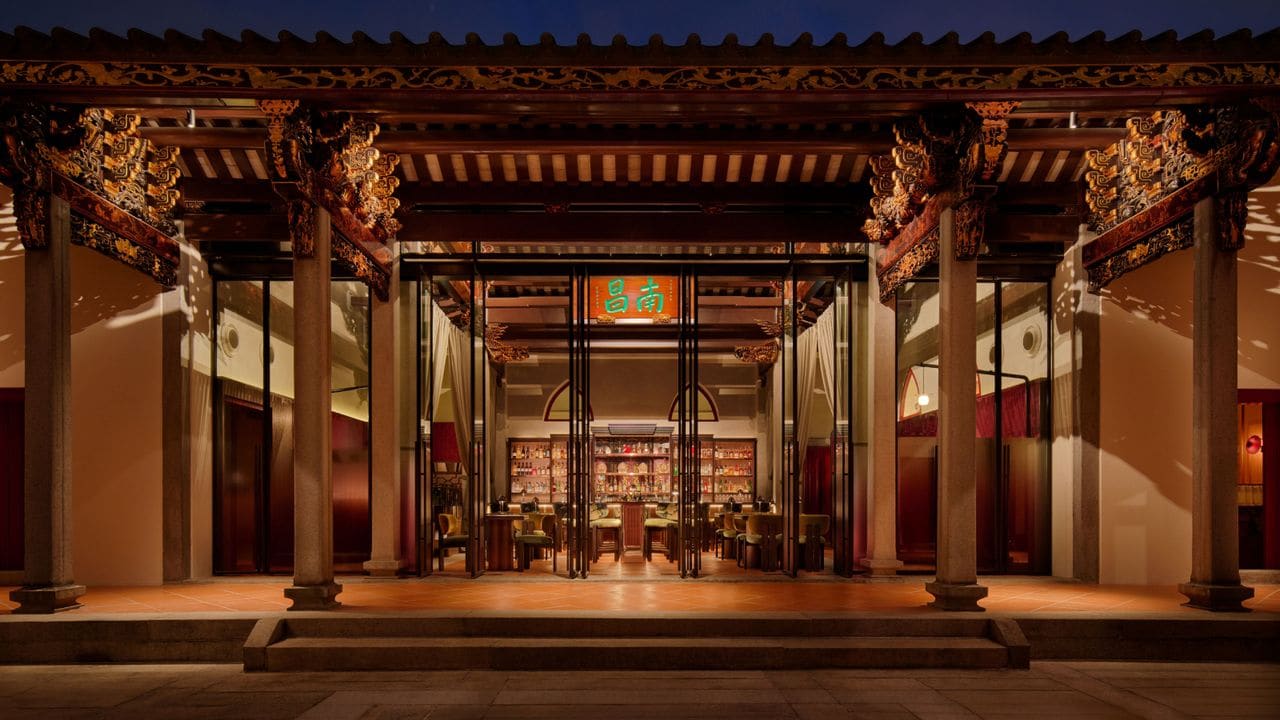
A House That Refuses to Forget
Stand on Penang Road today and the glass towers crowd so tightly you might miss the timber-and-tile mansion tucked between them, its carved eaves barely clearing the first-storey retail. Built in 1885 for Tan Yeok Nee, a Teochew merchant whose fortune rode on pepper and gambier, the house is the last of four grand private residences that once commanded this corner of colonial Singapore. Where the others fell to redevelopment, this one simply kept changing clothes: British railway official's quarters, St Mary's Home and School for Eurasian Girls, a traditional Chinese medicine clinic. Each era left its mark in the joinery, in the thresholds worn smooth, in the faint medicinal scent that clung to the walls long after the last mortar and pestle were packed away.
At Global Chic Voyage, we've watched heritage buildings pivot to hospitality with varying degrees of grace. Some treat history as wallpaper. Others, like Bar Kap, which now occupies the mansion's ground floor, understand that a building this old deserves a drink menu as layered as its past.
Restoration as Spatial Conversation
DP Architects undertook the structural restoration, preserving the antique timber beams and carved detailing that define the main hall's character. Local design studio Farm then intervened with mirrored surfaces, a subtle trick that doubles the perceived volume without altering a single original element. The effect is disorienting in the best way: you look up and see century-old joinery reflected back, the room folding in on itself like a memory half-recalled.
A Y-shaped bar console anchors the hall, positioned so that every seat offers a sightline to the pour. The design invites observation rather than conversation, a choice that feels deliberate in an age when bars too often prioritize Instagram backdrops over the craft happening behind the wood. Two private rooms flank the main space. The Carriage Room nods to the building's railway-official chapter, its walls upholstered in fabric and painted brass to evoke a first-class compartment circa 1920. The Chamber, meanwhile, channels the apothecary era: shelves lined with clay vessels used for ageing spirits, the air faintly herbal, the lighting low enough to make you squint at labels.
Six Cocktails, 140 Years
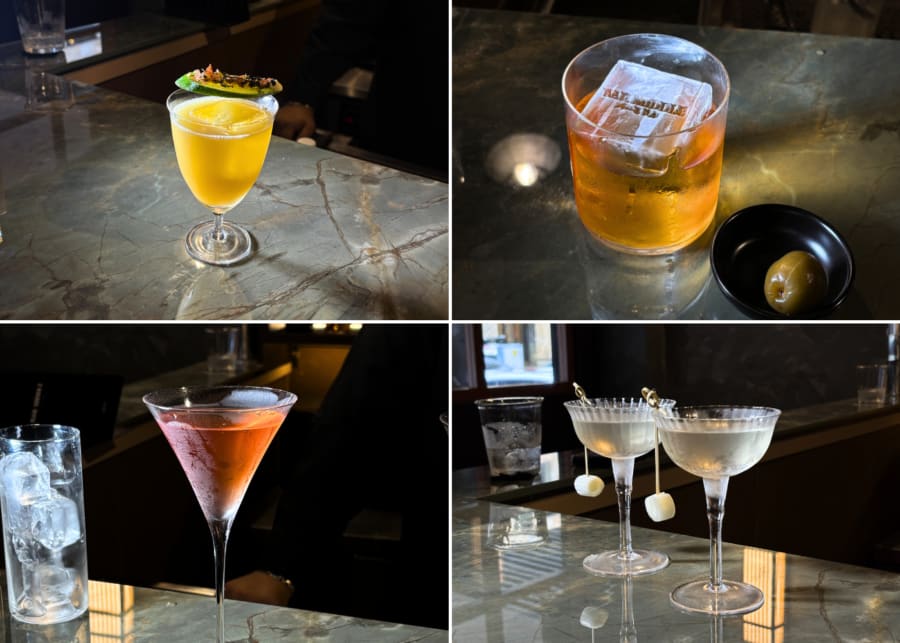
The drinks menu, developed with Studio Ryecroft, organizes itself around the mansion's six distinct periods of occupation. Each era receives one cocktail, and the progression reads less like a list than a timeline you can taste. The Pepper Peddler opens the sequence, a highball that blends baijiu, gin, and makgeolli into something peppery and faintly chocolate, a liquid echo of Tan Yeok Nee's spice-trade wealth. It's a bold opener, the kind of drink that announces its ingredients rather than hiding them in syrup.
Further down the menu sits the Dynamo, a cocktail aged in purple clay using a technique that stretches back eight millennia. Irish whiskey, amaro, and dark soy layer into a dense, savoury pour that tastes less like a drink and more like a very good broth. The clay ageing softens the whiskey's edges while amplifying the soy's umami, a process that takes weeks and yields something you can't rush or replicate in steel. It's the kind of cocktail that makes you slow down, that refuses to be consumed quickly.
The other four drinks trace the mansion's middle years: the railway official's gin-and-tonic variations, the schoolgirls' imagined lemonades grown up, the medicine clinic's herbal infusions turned boozy. The through-line isn't just historical accuracy, it's a willingness to let each drink carry the weight of its reference without collapsing into kitsch. A lesser bar would have leaned into novelty. Bar Kap leans into nuance.
Food That Follows the Same Arc
The food menu mirrors the drinks in structure and ambition. A salmon roe and yuzu granita arrives cold and sharp, a palate cleanser that doubles as an appetizer. Mee Kapitan, the house noodle dish, spikes Kapitan curry with mala heat, then folds in pork and shrimp paste for a bowl that tastes like three regional cuisines arguing in your mouth. The rendang-stuffed Bar Kap Bao offers a handheld version of comfort, the slow-cooked beef packed into a steamed bun that soaks up every drop of spice and fat.
These aren't dishes designed to photograph well, though they do. They're designed to pair with cocktails that themselves pair with history, a three-way conversation between what you're eating, what you're drinking, and where you're sitting. It's a tall order, and not every dish lands perfectly. The granita can skew too tart if the yuzu is aggressive. The bao can turn heavy if the rendang isn't trimmed of excess oil. But the intent is clear: this is food that respects the complexity of the drinks and the space they occupy.
Why a Mansion Finally Feels at Home
Heritage hospitality in Singapore often struggles with the question of purpose. A restored shophouse becomes a boutique hotel; a colonial bungalow becomes a private-event space. The results can feel precious, over-curated, locked behind velvet ropes and reservation minimums. Bar Kap, by contrast, feels lived-in. The mirrored walls and clay vessels and train-compartment upholstery could tip into theme-park territory, but they don't, largely because the drinks themselves are serious enough to anchor the theatre.
The mansion has spent 140 years adapting to whoever needed it next. Merchant prince, railway bureaucrat, schoolgirls, healers. Now it serves people who want a cocktail that tastes like pepper and memory, who want to sit in a room where the beams overhead carried the weight of a dozen different futures. After all those incarnations, the house has finally found an occupation worth lingering in, one that doesn't erase what came before but instead pours it into a glass and asks you to drink slowly.
The rest of the mansion now holds a restaurant, offices, and exhibition space, each tenant contributing to a broader revival of the grounds. But it's the bar, open late and lit low, that feels like the building's truest expression. A place where history isn't preserved behind glass but stirred, shaken, aged in clay, and served at room temperature. Where the past doesn't stand still but gets up, walks to the bar, and orders another round.