An Italian Seafood Sanctuary Arrives in a Whitehall Palace
Langosteria brings Milanese refinement and Mediterranean catch to The OWO's historic halls, where travertine meets hand-painted silk and tonno rosso blooms like roses on the plate.
From Via Savona to Whitehall Place
The trajectory of certain restaurants traces the itinerary of a particular kind of traveler. Langosteria began nearly two decades ago on a quiet Milan street, then multiplied across the city before seeking altitude and coastline: a perch in St Moritz, a slip of beach at Paraggi Bay, the red rocks of Porto Cervo, a suite inside Cheval Blanc Paris. Now the seafood specialist has crossed the Channel and settled into the former Old War Office, reborn as The OWO under Raffles management but designed so that diners enter through Whitehall Place and never register the hotel at all.
The London outpost has already attracted the city's Italian expats in numbers sufficient to make the dining room feel like an extension of Milan itself. Dress codes here skew formal, the kind of polished assembly one might expect during fashion week, not merely dinner on a Wednesday.
A Legacy in Stone and Silk
Carlo Samarati, the Italian architect who shaped Langosteria's locations in Milan and Paraggi, passed away before completing the London project. According to Enrico Buonocore, who founded the group, Samarati was a close collaborator whose absence left a profound mark. Yet the finished space functions as homage, a synthesis of Italian material craft and the gravity of British institutional architecture.
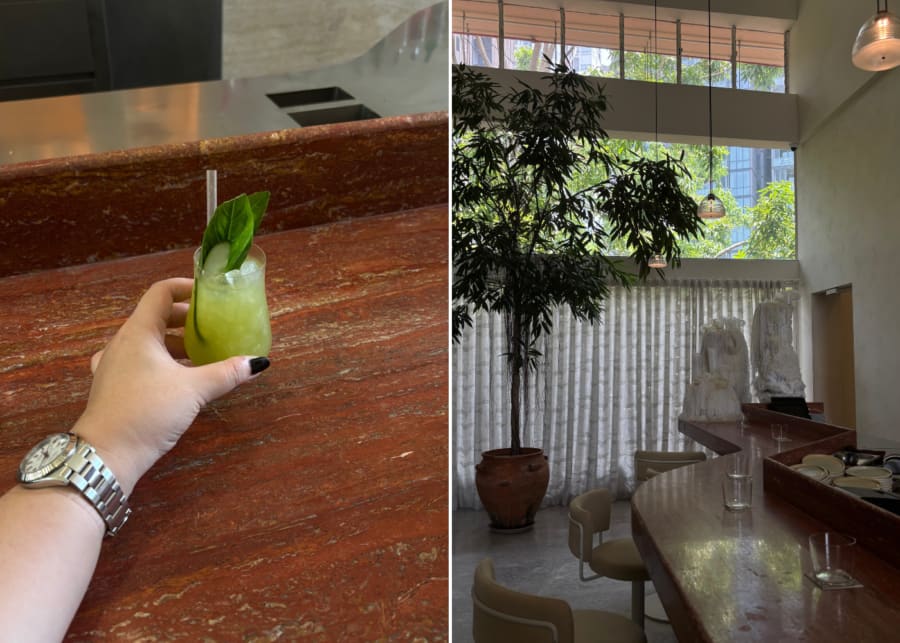
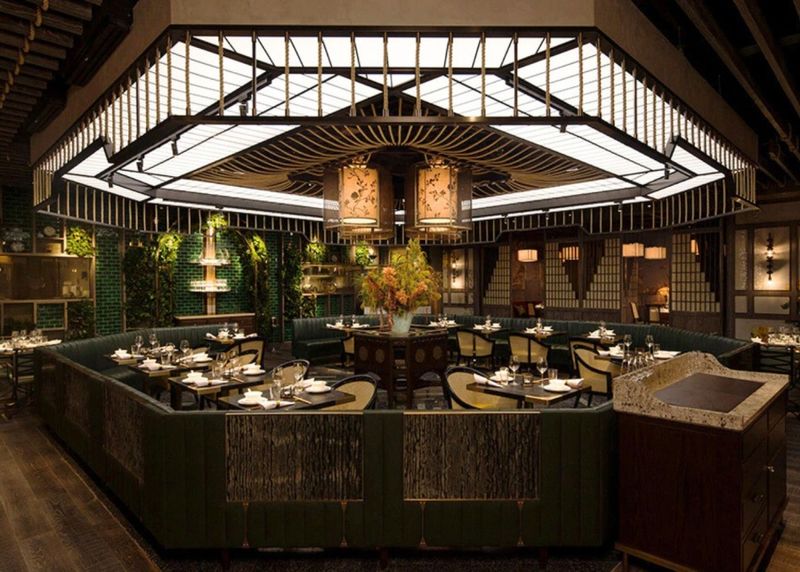
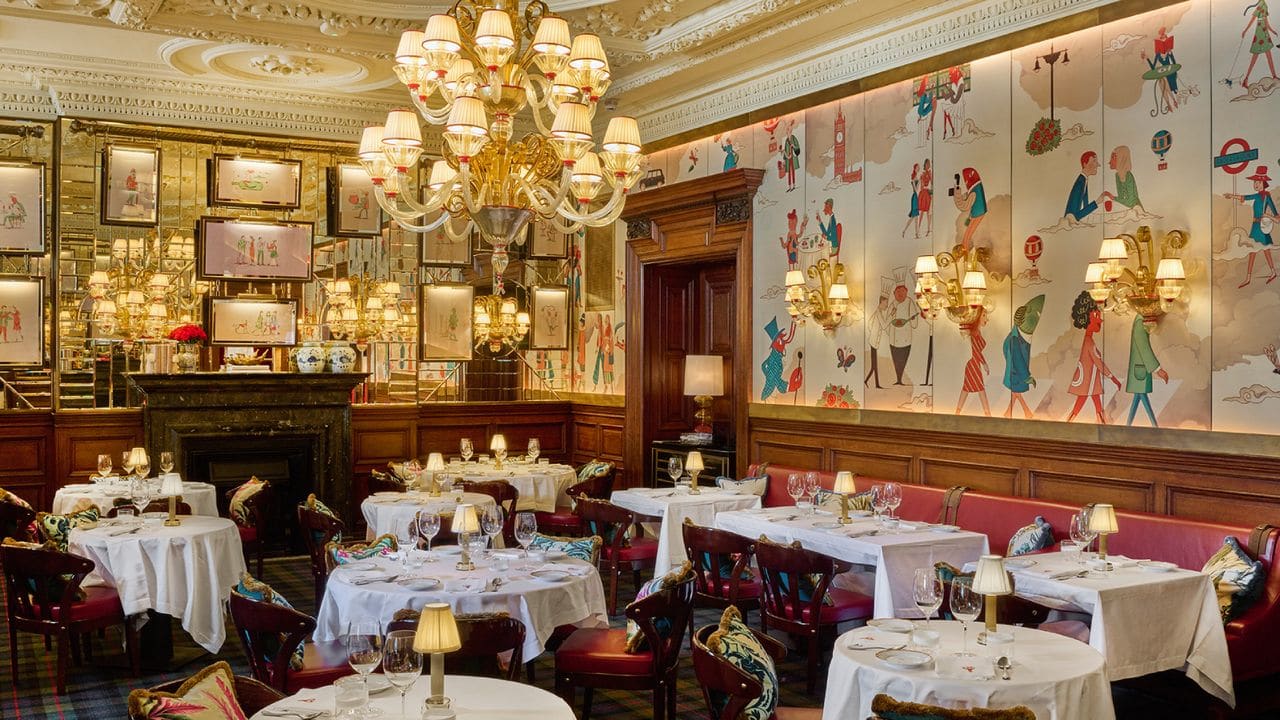
The bar introduces the vocabulary: travertine and Italian walnut at the counter, Verde Alpi marble in deep bottle green underfoot. A wine wall partitions the more relaxed dining zone from what is called the Historical Room, the original meeting chamber of the Old War Office. Here, stone fireplaces and ornamental plasterwork remain untouched, while hand-painted and hand-embroidered silk wallcoverings by Misha soften the formality. Chairs are custom pieces by Medea, tables come from Molteni, and Venini lamps cast flattering pools of light across each setting.
Buonocore's stated intention was to honor the architecture while layering in Italian hospitality, a balance between the building's imperial past and the ease of a well-run trattoria. The result reads less like renovation than careful negotiation, where neither heritage nor contemporary luxury dominates.
Signatures Transported from Milan
The menu does not rely solely on the familiar repertoire of fritto misto or salt-crusted sea bass, though both appear. Instead, the kitchen imports dishes that have become signatures in Milan: chateaubriand of black grouper, for instance, or orecchiette damare, a preparation in which sautéed seafood and al dente pasta achieve nearly identical texture, making it difficult to distinguish one from the other in the mouth.
The approach privileges quality of ingredient over elaboration. Sicilian langoustine and Mediterranean yellowtail arrive with minimal interference, their provenance doing much of the work. Yet presentation carries a distinct creative imprint. A carpaccio of tonno rosso arranges ruby slices into the shape of a rose, petals folded around a center of candied tomato and basil that verges on liquid. The effect is both sculptural and fleeting, a dish that collapses under the fork.
Mazzancolle prawns arrive in the Sardinian style, alla catalana: two large specimens, shells removed, arranged over Camone tomato, celery, and red onion. The composition is as much about color as flavor, a study in pink and crimson and green that tastes as vivid as it looks.
Closing Notes and a Cocktail Worth the Detour
Dessert veers toward the expected. Tiramisu wobbles on the plate, its coffee flavor subdued, closer to macchiato than espresso in intensity. The texture, however, justifies the choice: creamy without heaviness, the kind of finish that does not overstay.
For those inclined toward something sweeter and considerably stronger, the Prince Alfonso cocktail offers an in-house alternative. Zacapa 23 rum meets Dubonnet and aged cherry, a combination that delivers both sweetness and a bracing kick. It functions as a kind of punctuation, a final flourish to a meal constructed around restraint and precision.
The Broader Context of Arrival
Langosteria's arrival in London extends a pattern visible across luxury hospitality: the migration of European dining institutions into newly restored heritage buildings. The OWO itself represents one of the more ambitious adaptive reuse projects in recent memory, transforming a seat of wartime administration into a destination for a different kind of power lunch. That Langosteria secured a prominent position within the complex, complete with its own street entrance, suggests confidence in both the brand and the appetite for this particular style of dining.
The success among Italian expatriates speaks to authenticity of execution, a notoriously difficult standard to meet outside Italy. Whether the restaurant can sustain momentum beyond that core audience will depend on how broadly its aesthetic and culinary approach resonates within London's crowded fine-dining landscape. For now, it occupies a distinct niche: not quite hotel restaurant, not quite standalone destination, but something that borrows advantages from both.
The interplay between British architectural heritage and Italian material culture produces a space that feels neither purely historical nor entirely contemporary. It is a room where the past is visible but not oppressive, where luxury is legible but not loud. In that sense, the design mirrors the cooking: confident in its references, careful in its execution, and aware that sometimes the most compelling statement is the one that does not shout.