Inside Vito's, Where 1950s Manhattan Meets Sydney Sandstone
A heritage building on Bridge Street now holds a 170-seat Italian-American dining room designed to feel like it has always been there.
A Building with Memory
The Burns Philp Building on Bridge Street has stood for generations, its sandstone façade watching the city reshape itself around it. Now, behind that heritage-listed shell, something improbable has taken form: a dining room that looks and feels as though it might have opened in Manhattan sometime around 1955, when red velvet still meant something and a night out required ceremony.
Vito's, the latest venture from Sunday Co., occupies 170 seats across multiple levels of the building. The design, led by Craig Madgwick of Design Madgwick, required years of planning and an eight-million-dollar renovation to realise. The goal was not mere pastiche but the construction of a place that could pass for an institution, one with the weight and confidence of longevity already embedded in its bones.
Materials That Speak
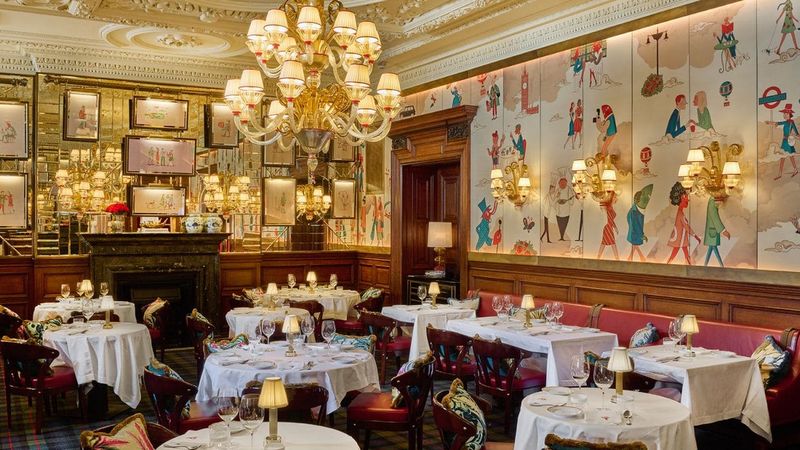
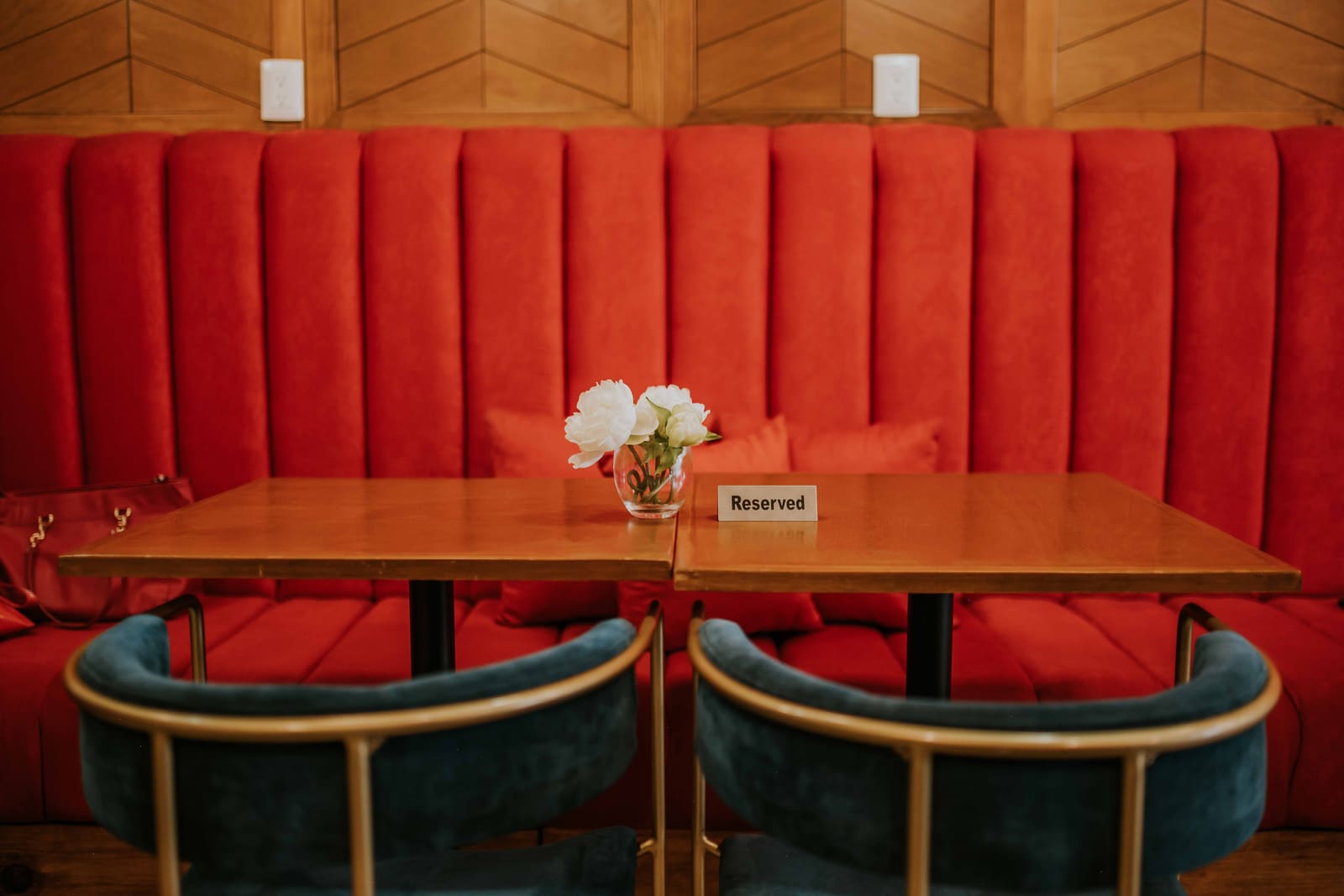
The entranceway announces intent: a mosaic floor finished with 24-carat gold-leaf tiling, a threshold that separates the ordinary street from the theatre within. Beyond it, the dining room unfolds in shades of ox-blood leather, red velvet and brass. Chandeliers measuring six feet across hang from ceilings that soar to 21 feet, casting light across a space that borrows heavily from the Italian-American dining rooms of post-war New York.
Yet the materials themselves are largely Australian. Joinery was crafted in regional New South Wales. The tabletops, made from Queensland Maple, are finished with American Maple burl veneer and brass inlay, a hybrid that nods to both hemispheres. Booths and raised carpeted alcoves ring the central floor, with a mezzanine overlooking the room below. The effect is one of layered intimacy within grand scale, a balance that mid-century American restaurants understood instinctively.
A Kitchen Built on Repetition
In the kitchen, executive chef Michael Fox, who previously served as chef de cuisine at Carbone in Hong Kong, oversees a menu developed alongside group culinary director David Clarke. The focus is handmade pasta, wood-fired grills and the canonical dishes of Italian-American cooking, a tradition that emerged not in Italy but in the immigrant neighbourhoods of New York and New Jersey.
The signature 10-layer lasagne is an exercise in patience and precision, each sheet of pasta separated by béchamel, ragù and cheese, the whole construction baked until the edges crisp. Conchiglie arrives with crab and green garlic butter, the shells catching pools of fat and sweetness. A one-kilogramme Prime Angus porterhouse is served with Marsala sauce, the cut substantial enough to anchor a table.
Seafood occupies a prominent position, reflecting Sydney's proximity to the Pacific. Scampi and scallop crudo are dressed with orange and capers, a preparation that leans on acidity to cut through richness. Wild-caught Skull Island tiger prawns, King George whiting and John Dory appear on the menu, each treated with the restraint that allows the fish itself to be the point. Desserts by Lauren Eldridge include ricotta and pistachio cannoli and a Tricolore Bombe Alaska, both gestures towards the sweet finales that once concluded every proper dinner.
The Drink as Ritual
The wine list, curated by group head sommelier Antoine Heurtier, spans 400 labels, a collection that ranges across regions and styles with the depth expected of a restaurant with this level of ambition. The cocktail programme adheres to the classics, the drinks that have survived decades because they work: Manhattans, Negronis, Martinis made cold and strong.
After half past ten in the evening, the restaurant shifts into a different register. An 18-inch New York-style pizza emerges from the kitchen, along with a bar menu designed for those who arrive late and hungry. It is a nod to the city's own rhythms, the way dining bleeds into drinking and then into something else entirely.
The Gamble of Scale
Sunday Co., founded by Brett Sergeant, James Wicks and Iris Kleimann in 2023, has built a portfolio that includes Whalebridge in Circular Quay and Morrison's Oyster Bar and Grill on George Street. But Vito's represents a different order of ambition. The investment, the scale, the deliberate construction of a space that asks to be taken seriously, all of it carries risk.
What the restaurant offers is not novelty but a particular kind of fantasy: the idea that a place can feel timeless even when it is brand new, that grandeur is not incompatible with warmth, that a city can support a dining room built on the logic of another era. Whether Sydney will meet that proposition with the same enthusiasm remains to be seen.
The Argument for Permanence
There is something quietly radical about opening a restaurant designed to look as though it has always existed. It is a rejection of the churn that defines much of contemporary dining, the relentless cycle of concepts that arrive with fanfare and disappear within a season. Vito's, by contrast, is built on the assumption of endurance.
The heritage building provides part of that narrative, its architecture a reminder that some things do last. But the real test will come not in the first weeks of curiosity and acclaim but in the years that follow, when the novelty has faded and the restaurant must rely on the fundamentals: consistency, hospitality, the quiet accumulation of meals that matter to the people who eat them.
Vito's is open seven days a week for lunch and dinner, beginning at noon and continuing into the late hours. Walk-ins are welcome, though the scale and spectacle of the space suggest that reservations might be wise.