The Gypsum Desert and the Lodgings That Orbit It
White Sands draws wanderers to a landscape of ancient sea-bottom dunes. Finding where to rest afterward becomes its own exploration of the Southwest's remote corners.
The Peculiar Geography of Stillness
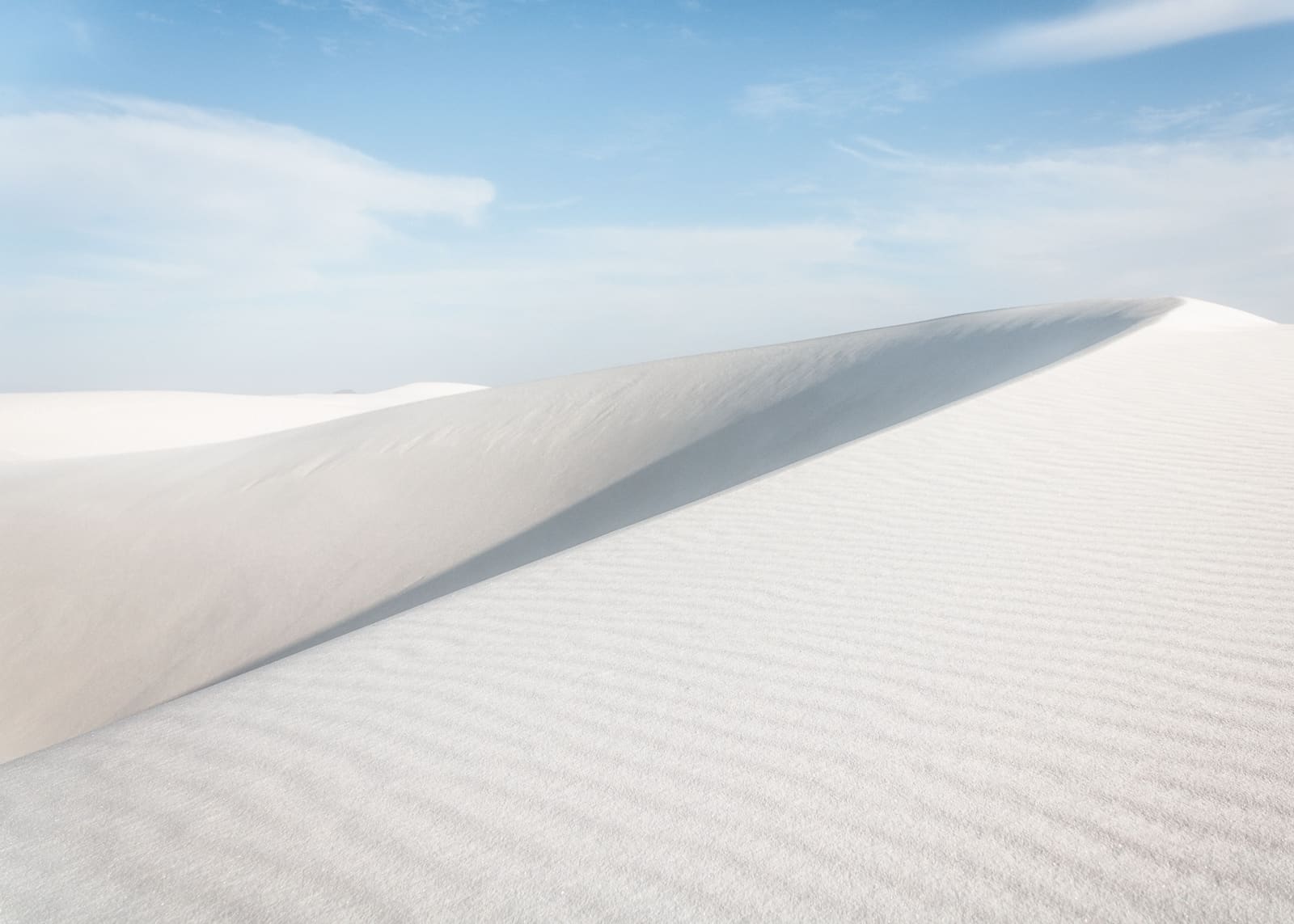
Standing barefoot on gypsum, you understand immediately that this is not typical sand. The dunes of White Sands National Park stay cool even under the New Mexico sun, their mineral composition reflecting rather than hoarding heat. What lies beneath your feet was once the floor of an ancient sea, its sediments compacted over 250 million years before wind and weather carved them into waves of white. Yucca and desert grasses punctuate the expanse, stubborn landmarks in a terrain that constantly reshapes itself.
At Global Chic Voyage, we've watched travelers return from this park quieter than they left, carrying something ineffable in their posture. The challenge, however, begins when the visit ends. White Sands sits in a corner of New Mexico where infrastructure thins and distances stretch. The nearest lodgings scatter across the surrounding desert, most requiring drives of 45 minutes to an hour and a half. Yet that remoteness, we've come to believe, is part of the experience. The act of seeking shelter after a day on the dunes becomes a meditation on the Southwest itself: its vastness, its palette, its refusal to be convenient.
Architectural Whimsy in the High Desert
The geodesic dome has become a curious fixture of American glamping, and the versions near White Sands lean into their otherworldliness. One property in Nogal sits on 30 acres of juniper and pinon pine, its triangular glass panels framing Nogal Peak in a geometry that feels both retro and futuristic. Inside, a spiral staircase winds to a loft where sunset becomes theater. The furnishings skew playful: hand-shaped chairs, tree-stump tables, a Crosley record player that invites you to slow your evening into vinyl time. Outside, a sculpture forest of mushrooms catches starlight, and faces nailed to tree trunks oversee birdhouses like silent sentries.
Another dome, this one in Chaparral, wraps itself in yellows and turquoises that echo the Southwest's chromatic boldness. A skylight punctures the ceiling, turning the interior into a sundial of sorts. Visitors report glimpsing tracer missiles from the nearby White Sands Missile Range during certain seasons, a reminder that this landscape has long served purposes beyond tourism. The dome's design invites a specific kind of occupancy: contemplative, slightly disoriented, attuned to the strangeness of being encased in a sphere while the desert stretches flat in all directions.
These structures resist the impulse to blend in. They announce themselves, and in doing so, they honor the park's own refusal to be ordinary.
The Casita Tradition, Renovated
Stucco and earth tones have defined Southwestern residential architecture for centuries, and the casitas near White Sands carry that lineage forward with varying degrees of polish. In El Paso, a two-bedroom property marries traditional form with contemporary finishes: black-and-white tile in the walk-in shower, wood floors that warm under bare feet, a washer-dryer to shake off the gypsum grains that inevitably cling to clothing. The space sleeps four across a king and queen bed, its layout straightforward and uncluttered.
Las Cruces offers larger options for groups. One four-bedroom home features vigas ceilings and saltillo tile floors, its interiors flooded with natural light that shifts as the day progresses. The Organ Mountains rise in the windows, a constant backdrop to morning coffee or evening planning sessions. Another property in the same town adds a heated saltwater pool to the equation, its year-round usability extending the day's rhythm beyond the typical siesta hours. A kiva fireplace anchors the living space, its wood-burning heat a counterpoint to the desert's daytime warmth.
These homes don't aspire to grandeur. They offer instead a kind of functional grace, spaces designed for the rhythms of group travel: communal meals, late-night conversations, the quiet pleasure of waking to mountain views without leaving your bed.
Heritage Lodgings and the Weight of History
Hotel Encanto de Las Cruces occupies a different register. Its 203 guest rooms span rustic Spanish Colonial decor and collaborations with Virgin Galactic, the latter producing suites that blend space-travel aesthetics with Southwestern motifs. Colonial-style French doors open onto private patios overlooking a terrace garden and pool. The property sits in downtown Las Cruces, positioning guests within walking distance of museums and plazas while remaining 50 minutes from the park. A White Sands Package provides sand sleds, bottled water, and sunscreen, a gesture toward the practicalities of desert exploration.
Further east, Hotel Paso del Norte in El Paso carries the gravitas of 108 years. Architect Henry Trost designed the 351-room property, which has since become a landmark of cross-cultural fusion. Texan and Mexican influences thread through the interior design and dining options: Sabor serves southern comfort fusion, while 1700° Steakhouse interprets West Texas ingredients through an upscale lens. The bar sits beneath a 25-foot Tiffany-style stained glass dome, its gold crown molding encircling conversations that drift between English and Spanish. Room views range from the Franklin Mountains to downtown El Paso to glimpses of Mexico, depending on which floor and orientation you choose.
These hotels anchor themselves in narrative. They ask guests to consider not just where they're staying, but what stories the walls have absorbed and what cultural currents still move through the lobbies.
The Calculus of Distance and Solitude
The drive times matter less than they might elsewhere. Forty-five minutes through the Northern Chihuahuan Desert offers its own rewards: the shift in light as elevation changes, the sudden appearance of a roadside shrine, the way the horizon refuses to resolve into anything familiar. We've found that travelers who resist this distance often miss a layer of the experience. The park itself demands a certain surrender to scale and emptiness; the journey to and from your lodging extends that surrender, turning it into something closer to practice.
Las Cruces emerges as the most practical hub, with multiple properties clustered within a 45-to-50-minute radius of the park. The town averages 294 sunny days annually, a statistic that shapes everything from the intensity of the light to the prevalence of outdoor seating. El Paso, an hour and a half away, trades proximity for urban amenities and a deeper cultural layering. Nogal and Chaparral, both beyond the 90-minute mark, appeal to those who want the desert to continue even after they've left the park boundaries.
The lodgings themselves range from spare to exuberant, from traditionally grounded to architecturally experimental. What unites them is a willingness to exist in the margins, to serve as waypoints rather than destinations. They understand that White Sands is the reason travelers have come, and they position themselves accordingly: as places to rest, reflect, and prepare for the next encounter with that improbable expanse of white.
What Lingers After the Gypsum Settles
The park imprints itself differently on each visitor. Some carry away images of the dunes at sunset, their contours sharpening as shadows lengthen. Others remember the surprise of cool sand underfoot, or the disorientation of a landscape without obvious reference points. The lodgings that surround White Sands offer a parallel education in how the Southwest accommodates those who pass through: with color, with space, with a certain indifference to convenience that ultimately feels like respect.
We've come to think of these properties not as accommodations in the conventional sense, but as extensions of the desert's own logic. They scatter themselves across distance, they embrace architectural idiosyncrasy, they ask guests to adjust their expectations of what proximity and comfort might mean. In doing so, they honor the strangeness of the park itself, that rare place where an ancient seabed has become a playground of light and mineral, where the only thing more improbable than the landscape is the fact that you can walk across it barefoot, sand sled in hand, tracing temporary paths through dunes that will erase your footsteps by morning.