Where Darcy Met Elizabeth: A Literary Traveller's Guide to Austen's England
From Palladian mansions in Derbyshire to Elizabethan ruins in Northamptonshire, the estates that brought Austen's novels to screen now open their doors to overnight guests.
The Romance of Place
Stand in the Temple of Apollo at Stourhead on a September morning, mist rolling across the Palladian lake below, and you might understand why a proposal scene filmed here could make audiences weep. The neoclassical rotunda, built in 1765, became the rain-soaked sanctuary where two fictional souls finally admitted what the preceding two hours had made unbearably clear. But the temple existed long before any camera arrived, and it will stand long after the last filmgoer forgets which adaptation placed Mr Darcy and Elizabeth Bennet beneath its dome.
This is the peculiar alchemy of England's literary estates: they are simultaneously stage sets and living monuments, backdrops to invented passion and witnesses to centuries of actual history. The latest screen version of Austen's work, a new telling of Sense and Sensibility directed by Georgia Oakley, shot across Devon and Dorset, from Dartmoor's windswept heights to the formal gardens of Kingston Russell House. The film joins a decades-long tradition of adaptations that have turned the English countryside into a kind of pilgrimage route for readers who never quite left the world of entails and morning calls.
What distinguishes these locations now is their willingness to let you linger. The camera crews pack up and leave; you can stay.
A House in Dorset, Before the Fall
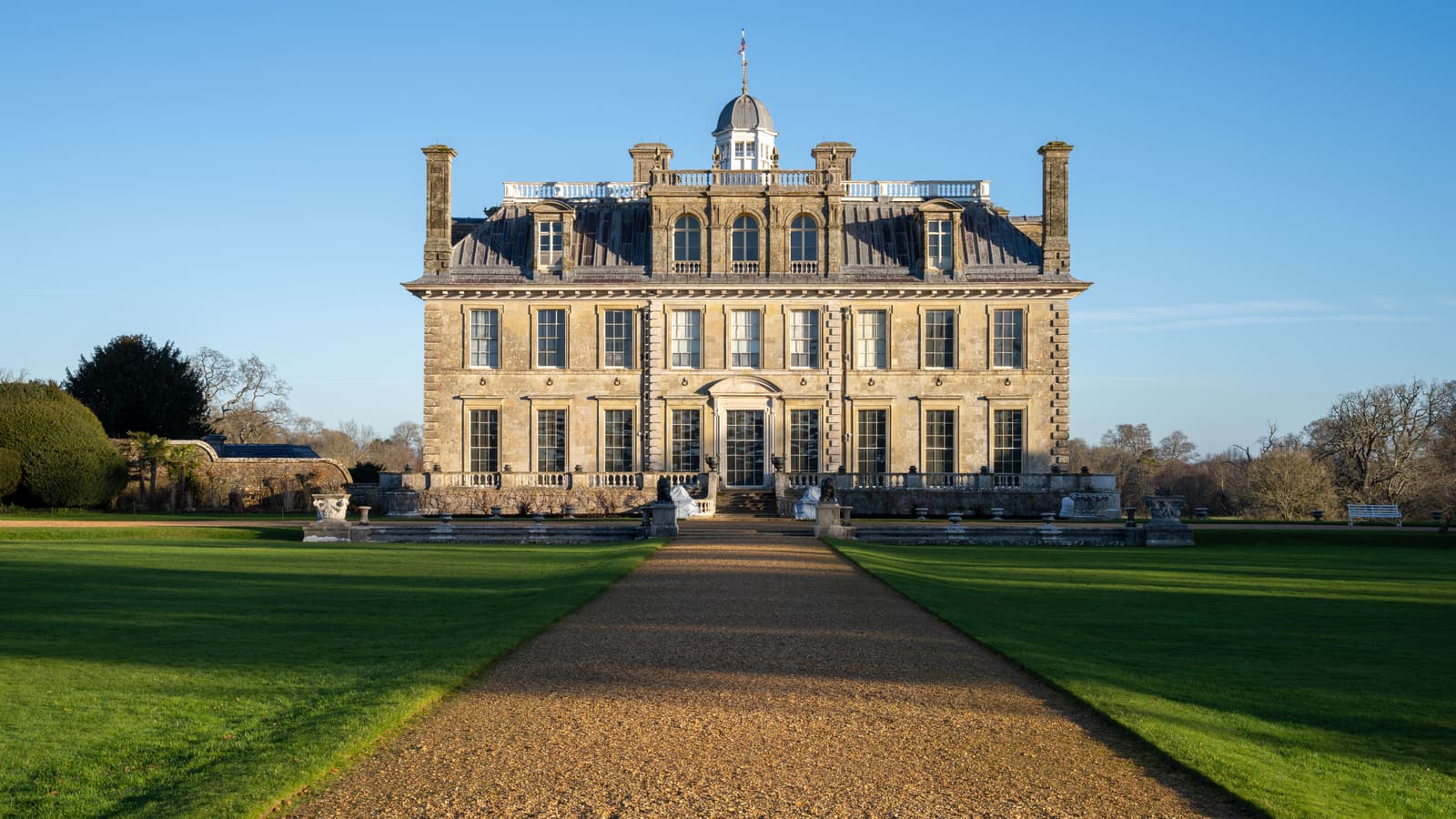
Kingston Russell House, a 17th-century manor a few miles inland from the Jurassic Coast, stood in for Norland Park in Oakley's film: the Sussex estate from which the Dashwood sisters are expelled after their father's death. The house itself remains private, closed to casual visitors, but a two-bedroom wing is available to rent. Inside, William Morris wallpaper climbs the walls, antique textiles drape the furniture, and a wood-burning fireplace anchors a library that feels borrowed from another century. Six acres of formal gardens spread beyond the windows, clipped and tended in the old manner.
The coast nearby is more commonly associated with fossils than fiction, but the limestone cliffs and shingle beaches carry their own kind of narrative weight: deep time, erosion, the slow work of water on stone. It is a landscape that knows something about loss, which makes it fitting for a story about sisters learning to live with less.
Three Cottages Called Barton
Adaptations of Sense and Sensibility have returned, again and again, to the motif of the modest cottage, the reduced circumstances into which the Dashwood women descend. Three different productions chose three different houses, all in Devon, all now open to guests.
Efford House, part of the 5,000-acre Flete Estate in the county's southwest corner, appeared in Ang Lee's 1995 adaptation. The estate encompasses estuary, woodland, and sandy beach; the newly opened King Charles III England Coast Path cuts directly through the grounds. Efford House itself sleeps thirteen across seven bedrooms, a generous interpretation of "modest," though the film required only its exteriors.
The 2008 version filmed at Blackpool Mill Cottage, a 15th-century house set in a sheltered valley on the Hartland Abbey estate along the North Devon coast. The cottage sits roughly 60 miles from Efford House by car, or some 300 miles and three weeks on foot if you follow the coast path all the way around Cornwall. The house sleeps eight, and its front door opens just 75 yards from the Atlantic, where tide pools collect crabs and anemones, and surfers wait for the right swell.
That the same fictional cottage should require three separate physical incarnations says something about the slipperiness of adaptation, the way a story can inhabit multiple geographies without losing coherence. Or perhaps it says something simpler: Devon has no shortage of photogenic stone houses near water.
Pemberley, in Several Versions
Chatsworth House in Derbyshire has long been rumoured as Austen's model for Pemberley, Mr Darcy's seat, though no documentary evidence confirms it. The 17th-century mansion sits in Peak District National Park, a landscape of limestone dales and gritstone edges. Director Joe Wright finally allowed Chatsworth to "play" Pemberley in his 2005 adaptation, filming scenes on the grand staircase, in the Painted Hall, and among the classical sculptures. A bust of Darcy created as a prop now resides in the estate's Orangery shop, available for purchase by visitors who wish to install a fictional character in their own homes.
Guests cannot sleep in the main house, but the 1,000-acre estate offers a constellation of alternative lodgings: hotels, inns, rental cottages, shepherd's huts, even a 1580s Hunting Tower with views that stretch across three counties. The variety reflects a pragmatic aristocratic adaptation, the conversion of heritage into hospitality.
The 1995 television production, meanwhile, chose Lyme Park in Cheshire for Pemberley's exteriors and grounds. It was here that Colin Firth, as Darcy, emerged dripping from a pond in a wet white shirt, an image that has since eclipsed nearly every other moment in Austen screen history. The scene was invented wholesale; Austen never wrote it. Yet the lake at Lyme Park is now more famous for something that never happened than for the 1,400 acres of moorland and the herds of red and fallow deer that actually exist there.
Two National Trust cottages on the estate, Lyme East Lodge and Lyme West Lodge, each sleep four and welcome dogs. Guests may walk or cycle to the pond, though swimming is prohibited. The fantasy has limits.
The Darker Estate
Mansfield Park, published in 1814, occupies a different register than Austen's other novels: more sombre, more interested in moral ambiguity, less inclined toward sparkling dialogue. It is adapted less frequently. The 1999 film version, with Frances O'Connor as the heroine Fanny Price, shot at Kirby Hall in Northamptonshire, an Elizabethan country house now partially in ruins. The estate's gardens have been restored, filled with topiary, statuary, and urns, but the house itself remains open to the sky in places, a monument to architectural ambition and the passage of time.
Peacock Cottage, built in the 1970s on the grounds, sleeps four and takes its name from the birds that strut across the lawn. After the site closes to day visitors, guests have the ruins to themselves, free to walk among the roofless halls in the evening light.
The 2007 television adaptation filmed instead at Newby Hall in North Yorkshire, a Grade I listed house designed by Sir Christopher Wren in the 1690s. The travel writer Celia Fiennes, who rode on horseback through nearly every English county in the late 17th and early 18th centuries, called it "the finest house I saw in Yorkshire." Three 18th-century cottages on the estate, restored in 2025, are available for rent. Guests can arrange for fresh eggs, homemade jam, apple juice, or bouquets cut from the owners' flower patch to be delivered during their stay.
Emma's Acres
Firle Place in East Sussex, a manor house with more than 500 years of history, stood in for Hartfield, the Woodhouse family estate, in Autumn de Wilde's 2020 adaptation of Emma. The house blends Tudor and Georgian elements; its interiors hold paintings by Van Dyck and Gainsborough, Sèvres porcelain, Chippendale furniture. The 7,000-acre estate spreads across the foothills of the South Downs, a landscape of chalk hills and beech hangers.
The main house, with ten bedrooms, is available for private events, weddings and the like. For those without Woodhouse-level resources, the estate offers smaller accommodations: Shepherd's Cottage, a rustic stone dwelling available through short-term rental platforms, and Woodfire at Chapel Field, a "gastro-camping" site where meals are cooked over open fire using seasonal and local ingredients.
The appeal of sleeping on an estate like Firle lies partly in the fantasy of inhabiting a certain kind of Englishness, the one Austen both celebrated and gently satirised. But it lies also in the simple pleasure of waking in a place where the land has been shaped by human attention for centuries, where the gardens were not planted last season but generations ago.
Gothic Imaginings in Ireland
Northanger Abbey, Austen's satire of Gothic novels, was published after her death in 1817. The story follows young Catherine Morland, whose love of lurid fiction leads her to imagine dark secrets in the titular estate, which turns out to be disappointingly modern and comfortable. The 2007 television adaptation, starring Felicity Jones, filmed not in England but in Ireland, at Lismore Castle in County Waterford, about an hour northeast of Cork. The decision was pragmatic; tax incentives drew the production across the Irish Sea.
The castle, filled with Old Master paintings, tapestries, and sweeping staircases, is available for private rental, sleeping up to 27 guests across fifteen bedrooms. For more modest budgets, Ballyrafter House, a ten-room bed and breakfast on a 15-acre farm nearby, offers a base from which to visit Lismore's gardens, contemporary art gallery, and castle tours led by the estate's butler.
Where Anne Elliot Returned
Persuasion, Austen's final completed novel, tells the story of Anne Elliot, who was once convinced to refuse a proposal of marriage and later encounters the same man again, both of them changed by time. The 2022 screen version filmed at Trafalgar Park in Wiltshire and Brympton House in Somerset, standing in for the Elliot and Musgrove family homes respectively.
Brympton House is available only for wedding buyouts, sleeping up to 80 guests, a use that seems oddly fitting for a novel so concerned with second chances and delayed unions. Trafalgar Park offers three holiday cottages, sleeping four, five, and eight guests, surrounded by a walled cut flower garden on land that once belonged to the main estate.
The Afterlife of Fiction
These houses were not built for Austen. Most predate her by a century or more; a few postdate her by as much. Yet they have become, through the alchemy of adaptation, inseparable from her work in the popular imagination. A temple in Wiltshire is now also a proposal; a pond in Cheshire is now also a wet shirt; a manor in Sussex is now also the home of a woman who meddles too much in other people's romantic affairs.
To stay in these places is to participate in a kind of layered fiction: the original novels, the screen adaptations, the fantasy of inhabiting an England that exists most fully in retrospect. But it is also to sleep in rooms with beams cut from trees felled 400 years ago, to walk through gardens planted by people whose concerns had nothing to do with film crews or literary tourism. The estates persist, indifferent to their fictional roles, available to anyone willing to pay the nightly rate and leave the grounds as they found them.