Where Living Light Turns Oceans Into Night Skies
From firefly squid in Japan to plankton-lit lagoons in Mexico, the world's most luminous waters rewrite the rules of darkness.
The Phenomenon That Makes Water Glow
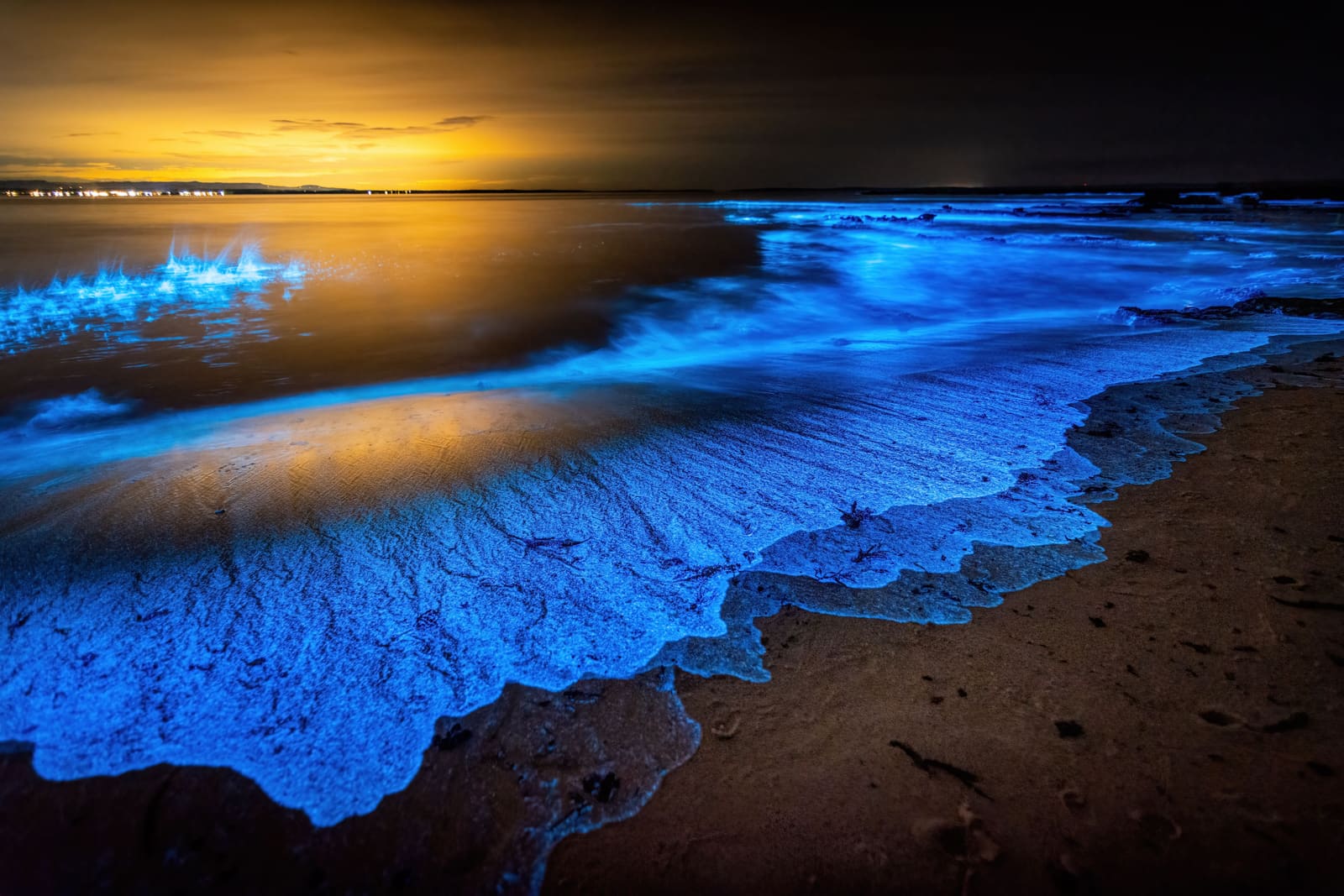
Stand at the edge of certain beaches after sunset and the ocean refuses to go dark. Instead, every wave that breaks releases a cascade of blue-green sparks. Every footstep in shallow water leaves a glowing print. The effect resembles a sky full of stars pulled down to sea level, though the source is far stranger: living organisms producing their own cold light through chemical reactions in their cells.
This bioluminescence occurs in scattered pockets around the globe, driven by dinoflagellates, plankton, algae, or in one remarkable case, small squid. The organisms emit light when disturbed, turning ordinary movement into phosphorescent theater. Not every glowing bay is safe for swimming; some blooms indicate harmful algae. But in places where the phenomenon has become a draw for travelers, the waters are generally benign, and the spectacle is worth the journey.
Island Atolls and Starry Seas
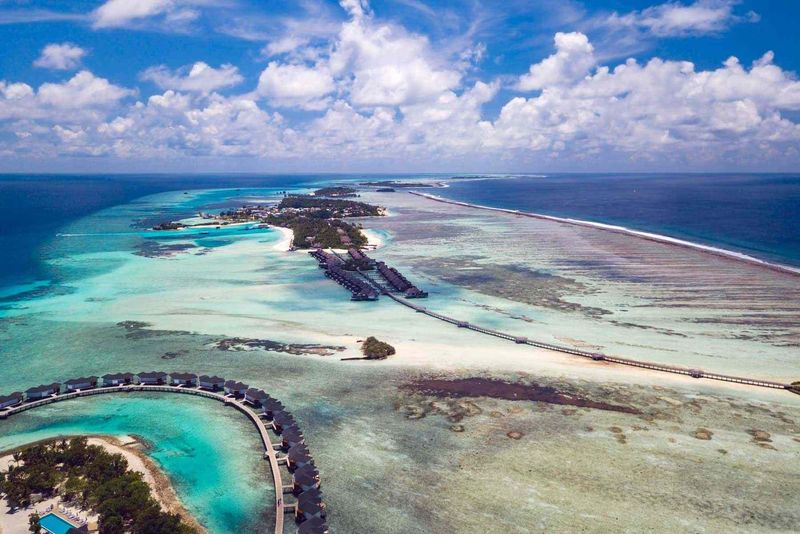
The Maldives holds a reputation for many things: overwater bungalows, impossibly clear lagoons, coral gardens. Add to that list some of the most reliable bioluminescent displays on the planet. Plankton congregate in the warm waters surrounding the archipelago, and when agitated by waves or passing boats, they light up in soft pulses of blue.
Vaadhoo Island in the Raa Atoll has earned particular fame. One stretch of beach on the quieter side of the island is known locally as the sea of stars, a nickname that undersells nothing. The effect is most vivid between June and October, when plankton populations peak. Vaadhoo itself is tiny and lacks the luxury resorts found elsewhere in the Maldives, but nearby properties such as InterContinental Maldives Maamunagau Resort offer beachfront access to similarly glowing shores.
The phenomenon is not exclusive to one atoll. Travelers staying across the Maldives report encountering luminous water on night swims and evening strolls. The lack of artificial light on many islands only intensifies the effect.
Caribbean Lagoons and Dinoflagellate Clouds
Off the coast of Puerto Rico, the small island of Vieques harbors one of the brightest bioluminescent bays in the world. Mosquito Bay contains an extraordinary concentration of Pyrodinium bahamense, a dinoflagellate that glows blue when disturbed. The bay's narrow mouth and mangrove-lined edges trap these organisms in high densities, creating conditions for an almost surreal light show.
Tour operators offer clear-bottomed kayak excursions after dark. Paddling through the bay, every stroke of the oar releases a cloud of blue light. Fish dart beneath the kayak, leaving comet trails. The experience is strongest during the dry season, from December to April, when rainfall and runoff are minimal. Accommodations on Vieques lean toward boutique and eco-conscious; Finca Victoria offers a blend of nature immersion and thoughtful design.
Jamaica's Luminous Lagoon near Falmouth operates on a similar principle. Dinoflagellates gather in the shallow waters, which range from three to eight feet deep. Boat tours depart at sunset, and as darkness falls, the water begins to glow. Some operators allow passengers to swim, and the resulting splashes create bursts of light that seem impossible outside of science fiction. The lagoon is accessible from Montego Bay, with Sandals Jamaica Caribbean Cay a short drive away for those seeking an all-inclusive base.
Coastlines That Shimmer
Australia's Jervis Bay in New South Wales is less predictable than some of the world's other bioluminescent hotspots, but when conditions align, the display rivals anything found in the tropics. The species responsible is noctiluca scintillans, a type of dinoflagellate that washes ashore during warmer months. The effect is most vivid from September to February, when the water temperature rises and plankton populations bloom.
The bay's white sand beaches provide an ideal vantage point. Observers describe the water's edge as resembling the aurora borealis translated into liquid form. For those inclined toward immersive stays, Paperbark Camp offers safari-style tents tucked into bushland a short distance from the coast.
Thailand's Krabi region contains several beaches where bioluminescence appears with regularity. Ao Nang Beach is the most accessible, with a well-developed tourism infrastructure that includes beachside restaurants and budget accommodations. A boat ride away, Phra Nang Beach offers a quieter setting. The bioluminescence here is best observed from November to May, outside the monsoon season. Phulay Bay, a Ritz-Carlton Reserve, provides a high-end retreat within reach of both beaches.
Cornwall, in the southwest of England, surprises travelers who associate glowing waters exclusively with tropical climates. During July and August, certain beaches along the English Channel light up after dark. Grebe Beach, tucked at the end of the Helford River, is a lesser-known gem. Pedn Vounder near Penzance also delivers occasional displays. The phenomenon is weather-dependent and less frequent than in warmer regions, but when it occurs, the contrast between the cool British coastline and the warm blue glow is striking. The Greenbank Hotel in Falmouth and Artist Residence Cornwall in Penzance serve as atmospheric bases for exploration.
Squid, Caves, and Other Exceptions
Not all bioluminescence comes from microscopic organisms. In Toyama Bay, Japan, the light show is produced by firefly squid, small cephalopods that migrate to the bay's coastal waters each spring. The squid possess photophores, organs that emit blue light, and during fishing season in April and May, boats pull them up by the thousands. The effect is a wet fireworks display, with each squid flashing as it surfaces.
The experience is tied to local fishing traditions and is best accessed via organized excursions. DoubleTree by Hilton Toyama offers a comfortable staging point for travelers arriving by bullet train from Tokyo.
On New Zealand's North Island, the Waitomo Glowworm Caves present bioluminescence in an entirely different context. Here, the light comes from Arachnocampa luminosa, a glowworm species endemic to New Zealand. The larvae hang from the cave ceilings, producing a soft blue-green glow that resembles a subterranean night sky. Visitors glide through the caves on silent boats, the only sound the drip of water from limestone formations. The caves have been open to the public for more than a century and remain one of the country's most distinctive natural attractions. The Narrows Landing Hotel in Hamilton provides a base roughly an hour north of the caves.
Lagoons and Islands in Southeast Asia
Mexico's Pacific coast offers multiple opportunities to witness bioluminescence, with Laguna de Manialtepec near Puerto Escondido being the most renowned. The coastal lagoon lights up during the rainy season, from July to October, when nutrient levels support dense plankton populations. Fish and swimmers moving through the water trigger the glow, and the effect is amplified by the lagoon's sheltered, brackish environment. A bit farther along the coast, Lagunas de Chacahua provides similar experiences. Hotel Escondido Oaxaca and Grana B&B offer distinct accommodations in the area, the former minimalist and earthy, the latter eclectic and colorful.
Cambodia's Koh Rong island is ringed by beaches where bioluminescent plankton appears regularly between November and May. The island draws families and couples during the day for snorkeling and swimming; after dark, the same waters transform. The lack of development and light pollution on much of Koh Rong makes the glow more pronounced. New moon periods are ideal. The Royal Sands Koh Rong is the island's most polished lodging option.
Vietnam's Halong Bay is famous for its limestone karsts and emerald waters, but the region's bioluminescence is often obscured by boat traffic and artificial light. Cat Ba Island, part of the same bay system, offers a quieter alternative. Overnight boat tours anchor in secluded coves, where splashes and movement in the water produce vivid displays. The experience is strongest from June to October. Valía Villa Cat Ba provides private villa accommodations for those preferring a land-based stay.
When Darkness Becomes a Destination
Bioluminescence occupies a peculiar place in travel. It cannot be scheduled with precision, cannot be guaranteed, and often requires patience, darkness, and a willingness to wade into unfamiliar water. Yet the phenomenon draws travelers to remote islands, quiet lagoons, and overlooked coastlines precisely because it resists commodification.
The glow is a reminder that oceans remain strange, that certain experiences still depend on timing and luck rather than advance booking. It asks travelers to slow down, to sit in the dark, to watch water for signs of life that only reveal themselves when the sun goes down. In an era of curated itineraries and optimized schedules, bioluminescence remains delightfully unscripted.