The Athenian Riviera Offers Quiet Elegance Where Santorini Offers Crowds
Less than an hour from the capital, a stretch of Aegean coastline trades white-washed celebrity for something rarer: space to breathe.
A Different Kind of Aegean
There is a moment, just after sunrise, when the light along the Athenian Riviera turns the color of honey on marble. The beaches are empty then, save for the occasional fisherman mending nets, and the water holds that particular clarity you find only where limestone meets sea. At Global Chic Voyage, we have watched Greece's island destinations swell with visitors each summer, their charm increasingly difficult to locate beneath the layers of tour groups and influencer tripods. But this stretch of coast, unfolding south and east of Athens, has somehow retained the rhythm of a quieter Aegean.
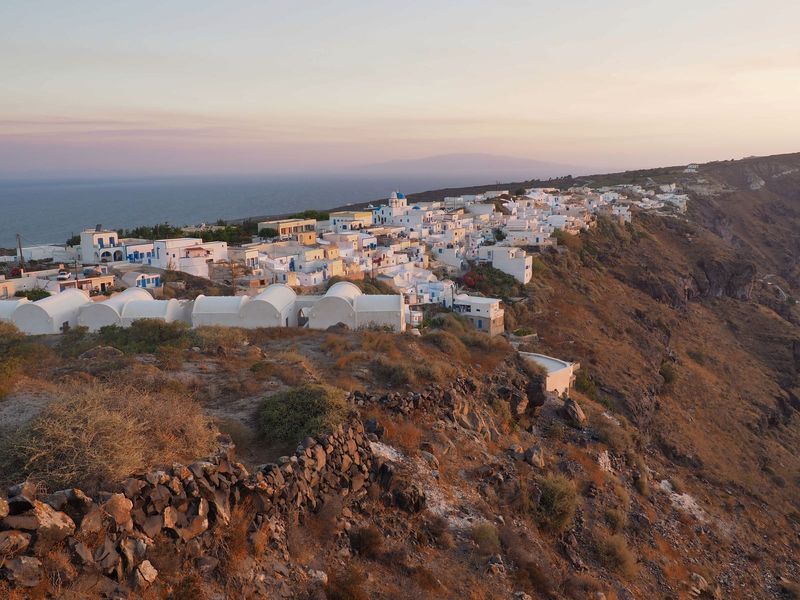
The Athenian Riviera does not announce itself the way Santorini does. There are no caldera views to frame in a single photograph, no cascade of whitewashed houses tumbling toward cerulean domes. What it offers instead is proximity married to seclusion, a rare pairing in contemporary Mediterranean travel. Within forty-five minutes of the Acropolis, you can find yourself on a crescent of sand where the only sound is the hiss of waves over pebbles, or seated on a terrace where the evening breeze carries the scent of wild thyme and salt.
The Geography of Escape
The riviera arcs along the Saronic Gulf, beginning in the southern suburbs of Athens and extending down the Attic Peninsula. Glyfada, Vouliagmeni, Varkiza, Lagonissi: each name marks a small shift in topography, from organized beach clubs to hidden coves accessible only by footpath. The water here lacks the volcanic drama of the Cyclades, but it compensates with temperature and texture. The seabed slopes gently, the sand is fine without being powdery, and the marine life, undisturbed by ferries and cruise tenders, returns each season in greater numbers.
We have found that the best stretches lie beyond the first wave of development, where pine forests still reach down to the waterline and the architecture shows restraint. Vouliagmeni Lake, a geological curiosity fed by underground thermal springs, offers a different kind of swimming entirely: warm, mineral-rich water enclosed by rock walls softened with greenery. It is the sort of place that resists hurry, where an hour dissolves into three without notice.
Where to Stay Without Compromise
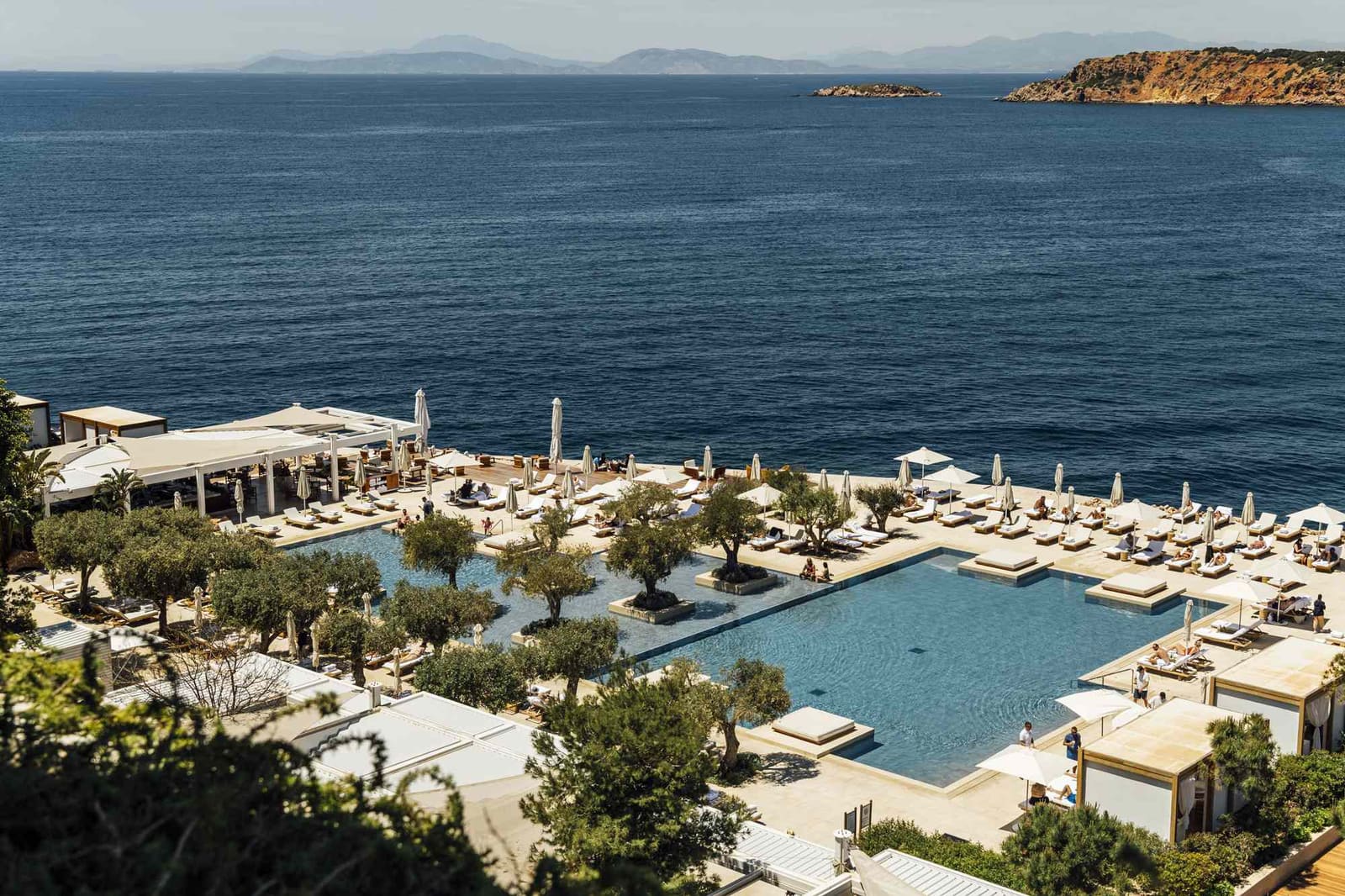
The accommodation along this coast has evolved considerably in recent years, moving away from the generic resort model toward properties that acknowledge their setting. Four Seasons Astir Palace, occupying a private peninsula in Vouliagmeni, has become the region's flagship address. Its recent reimagining preserved the pine groves that give the property its particular microclimate, and the beach clubs feel more Riviera than resort, with daybeds arranged to maximize privacy rather than capacity.
Further south, the hotels grow smaller and more idiosyncratic. Grecotel's properties in Lagonissi and Cape Sounio offer bungalow-style accommodations that open directly onto the sand, a layout that encourages the kind of barefoot luxury the brand has long championed. We appreciate the restraint in these designs: the palette of stone and linen, the absence of unnecessary ornament, the way rooms frame the landscape rather than compete with it.
For those who prefer urban energy within reach, the newer boutique properties in Glyfada provide a different proposition. You can walk to dinner, to galleries, to the small shops that still sell ceramics made by hand in nearby workshops, then return to a pool terrace with unobstructed sea views. It is a balance that few coastal regions manage well, this marriage of accessibility and exclusivity.
The Pleasure of Proximity
What the Athenian Riviera offers, above all, is the elimination of a particular kind of travel friction. There is no ferry to catch, no flight connection to worry over, no lost morning waiting in a port. You land in Athens, perhaps spend a day among the ruins and museums, then drive south as the city gives way to coast. This proximity allows for a different kind of itinerary, one that folds cultural immersion and seaside rest into a single, coherent journey.
We have long believed that the best travel experiences are those that do not require you to choose between modes of engagement. Here, you can stand before the Temple of Poseidon at Sounion in the late afternoon, when the marble takes on a golden cast, then dine on grilled octopus and horta at a taverna where the proprietor still catches the day's seafood himself. The layering of ancient and contemporary, urban and natural, feels effortless because the distances are manageable and the transitions unforced.
A Culinary Landscape Rooted in Place
The food along the riviera reflects its geography: Aegean seafood, Attic olive oil, vegetables grown in the inland valleys where the soil is red and volcanic. The best meals we have eaten here have been the simplest, preparations that trust their ingredients enough to leave them largely alone. Sea bream baked in a salt crust, zucchini blossoms fried in a batter so light it barely clings, tomatoes still warm from the sun and dressed only with oregano and coarse salt.
Vouliagmeni and Glyfada have developed dining scenes that rival the capital's, with chefs who trained abroad returning to work with local producers. Yet the small psarotavernes, the fish taverns that line the less-traveled bays, remain the soul of the region's cuisine. They operate on the logic of the daily catch: you choose your fish from the ice, discuss preparation with the cook, then wait while it is grilled over charcoal and brought to your table with nothing more than lemon and olive oil. It is a form of hospitality that feels increasingly rare, this trust in simplicity.
The Unbranded Aegean
At Global Chic Voyage, we have watched the Cyclades transform over the past decade, their identity increasingly shaped by the demands of mass tourism. Santorini, in particular, has become a victim of its own photogenic success, its sunsets now witnessed by thousands rather than dozens, its streets clogged with visitors seeking the same curated experiences. There is no judgment in this observation, only recognition that certain destinations reach a saturation point where the qualities that made them desirable become difficult to access.
The Athenian Riviera has not yet crossed that threshold. It remains a destination for the Greek themselves, a place where Athenian families have kept summer houses for generations and where the seasonal rhythms are still dictated by local life rather than tourist calendars. This authenticity, so often claimed and so rarely delivered, manifests in small details: the absence of souvenir shops, the prevalence of Greek voices in cafes, the fact that menus are translated as an afterthought rather than a priority.
The Calculus of Choosing Less
Choosing the Athenian Riviera over Santorini is not a compromise but a recalibration of priorities. If you require the drama of a volcanic landscape, the specific beauty of Cycladic architecture, the social proof of visiting one of the world's most photographed islands, then Santorini remains unmatched. But if you value ease of access, the presence of space and quiet, the pleasure of discovering a place before it discovers itself as a destination, then this mainland coast offers something increasingly difficult to find in the contemporary Aegean.
We return to the riviera not in spite of its relative obscurity but because of it. There is a particular freedom in traveling to a place that does not yet require advance planning measured in months, where a table at dinner or a spot on the beach can still be secured with a morning phone call. It is the luxury of spontaneity, a commodity that has become more precious than any amenity a hotel might provide.
The light here, in those early hours after sunrise, still belongs to the place itself rather than to those of us passing through. That balance, we suspect, is what will ultimately define the Athenian Riviera's appeal: not what it offers, but what it has so far chosen not to become.