Where Water Meets Wilderness: A Journey Through Vancouver Island's Coastal Baths
From harbour barges to forest-rimmed hot springs, the Pacific island offers a different grammar of restoration.
A Harbour That Floats
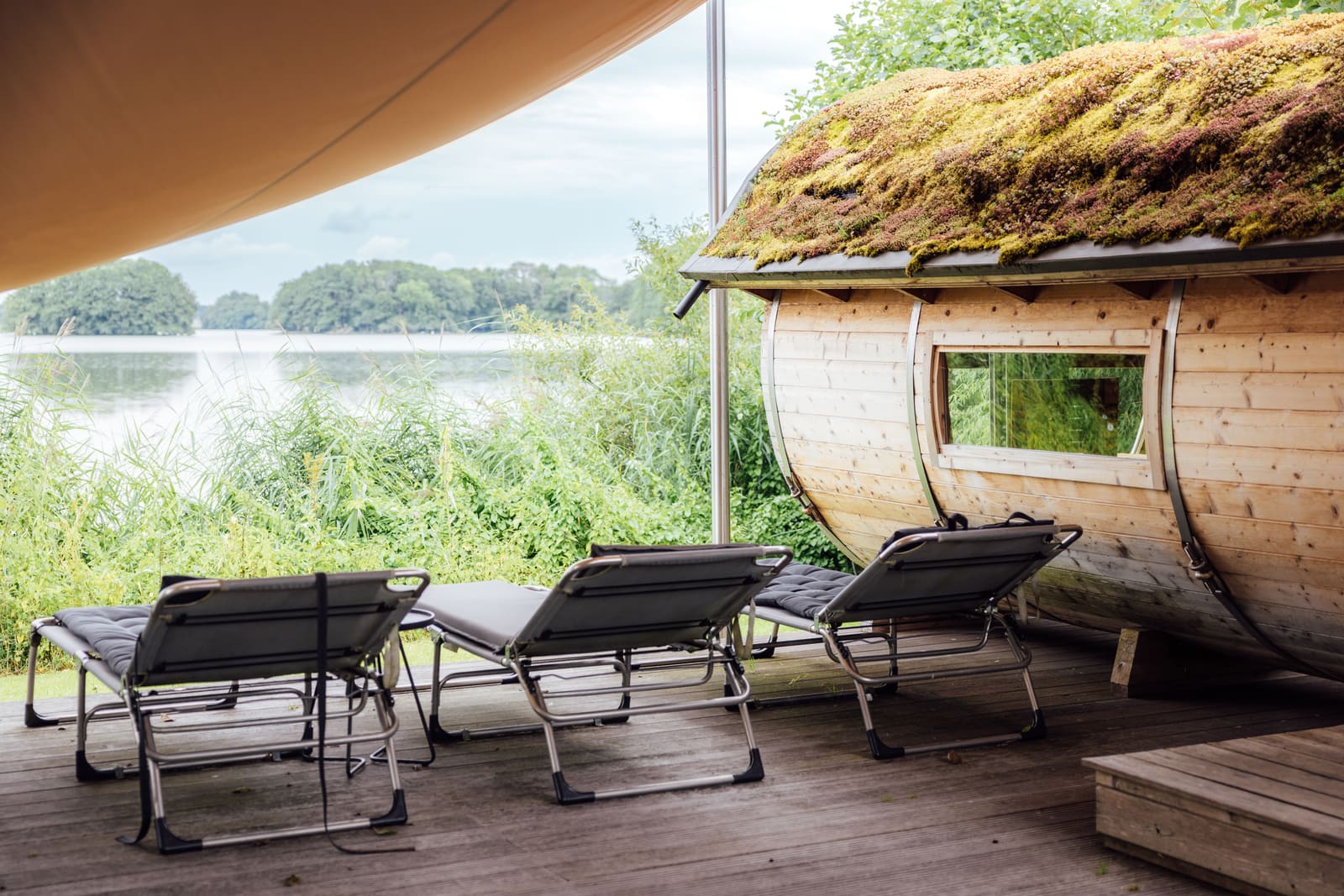
Victoria's inner harbour smells of salt and diesel in equal measure. Float planes bank low over the water, their pontoons kissing the surface with a hiss audible from shore. It is here, on a refurbished naval barge tethered near the city's British-influenced waterfront, that the concept of the urban spa dissolves entirely. HAVN replaces marble with maritime timber, essential oils with the scent of kelp drying on pilings. The sauna is hot, the plunge pool colder than any guest expects, and the magnesium salt piled in basins glitters under open sky.
The ritual is simple: heat, cold, scrub, repeat. No attendant hovers. The only interruption comes from the thrum of an incoming Beaver or the distant clatter of rigging against masts. This is wellness stripped of ornament, returned to its older, plainer purpose.
The Subterranean Circuit
Three hours northeast, past farmland that gives way to Douglas fir and arbutus, Kingfisher Pacific Resort occupies a stretch of sunrise-facing beach near Comox. The property has anchored itself in the regional wellness landscape for two decades, largely on the strength of its underground hydrotherapy circuit. Guests move through a sequence of grotto pools, rain showers, and waterfalls carved into rock, the air thick with steam and the faint mineral tang of heated water.
In late 2024, according to Kingfisher Resort, the property unveiled its Healing Caves, a 75-minute private journey through multi-sensory chambers. The experience begins in a plumeria-scented steam room threaded with a cool waterfall, then progresses through a salt cave glowing pink under concealed lighting, a cryotherapy chamber where LED screens project footage of arctic glaciers, full-body red-light therapy, and finally a storm pool where simulated wind, rain, and thunder accompany a swimmer's laps. Only three such facilities exist globally, the others located in Macau and Milan, according to the resort.
The theatricality is deliberate. It offers an indoor counterpoint to the island's famously unpredictable weather, a kind of controlled shipwreck.
The Grammar of Slowness
Vancouver Island has long attracted those seeking an alternative tempo. Since the 1960s, the archipelago has drawn astrologers, reiki practitioners, and back-to-the-land idealists, all of them drawn by the promise of what bumper stickers call "island time". The phrase is half joke, half manifesto. Here, the body softens at the edges. Blue water and rainforest mist blur the boundary between inside and out.
The island's wellness offerings reflect this ethos. They favour immersion over instruction, silence over soundtrack. Many are built not around treatments but around proximity to the elements: water, wood, stone, sky.
A Cove Reached by Skiff
West of the island's mountainous spine, the highway straightens as it approaches Tofino. The town occupies a narrow peninsula in Clayoquot Sound, a region of glacier-carved fjords and coastal rainforest. The Nuu-chah-nulth peoples, whose collective name translates to "all along the mountains and sea", have stewarded this territory for five millennia. In the 1980s and 1990s, they led successful campaigns to protect ancient cedar and hemlock stands from industrial logging, efforts that remain among Canada's most significant environmental actions.
Today, the region is home to black bears, orca pods, and eagles that perch in lichen-draped trees. It is also where off-shore builder Mike Mavis constructed Moon Jelly Bathhouse, a floating structure moored in a secluded cove 15 minutes by skiff from Tofino's main pier.
The bathhouse takes its name from the stingless white jellyfish common in these waters and from the wobbly, loose-limbed feeling that follows a long soak. Two wood-fired tubs, one filled with fresh water and one with ocean salt, are stocked with three varieties of local kelp. The practice draws from traditional Irish seaweed bathing. As the water heats, the kelp releases vitamins, magnesium, iodine, and potassium, turning the tub into a kind of nutrient broth.
Guests are left alone with wifi, a fire pit, fleece robes, and tea. The protocol is informal: soak, leap into the ocean, paddleboard, repeat. Submerged to the neck, rubbing kelp across skin and hair, breathing woodsmoke-scented air, the experience moves past pampering into something closer to gratitude.
Where the Fault Runs Hot
Further northwest lies Hot Springs Cove, a geothermal site within Maquinna Marine Provincial Park. The local Ahousaht Nation calls it mux̣ʷšiƛa, "steaming from rock". Reaching it requires a 90-minute boat journey from Tofino, a trip that doubles as wildlife observation. Orcas surface in pods. Bald eagles wheel overhead. Sea lions bark from rocky haul-outs, and sea otters drift on their backs in rafts.
Once moored, a boardwalk leads through old-growth forest to the fault itself. Ocean water is drawn in, heated deep underground, and released through fissures in the rock. Hot waterfalls cascade into a series of natural pools, each one slightly cooler than the last as the water merges with incoming surf. The sensation of hot water pounding sore shoulders, surrounded by forest and open ocean, is visceral and immediate.
Canvas, Steam, and Canopy
The final point on this itinerary lies furthest from road access. Clayoquot Wilderness Lodge is reachable only by floatplane or boat. The property operates off-grid, its accommodations a collection of canvas tents heated by wood stoves. Each tent includes a bed, a spruce-scented shower open to the forest canopy, and little else.
The distinction between spa and wilderness collapses here. Early morning stretches and glacial cold plunges are available, as are excursions such as canyoning or helicopter-assisted hikes through Bedwell Sound's ancient forests. The Healing Grounds spa offers hot tubs at the water's edge, a sauna and cold plunge circuit, and treatment rooms where bodyworkers trained in fascial release and deep tissue massage work in tents with forest views.
During one session, a senior therapist asked whether I had trouble getting out of my own head. The question was rhetorical. By that point, several days into the journey, the answer had already begun to shift.
Other Soaks Worth the Detour
Ancient Cedars Spa at the Wickanninish Inn offers a Cedar Sanctuary suite with ocean views and a eucalyptus-scented steam room, particularly welcome after hours spent in cold surf. Drift Spa at Black Rock Oceanfront Resort in Ucluelet incorporates ocean mud, salt, and seaweed into its treatments. Tofino Resort & Marina operates a Remote Floating Sauna, a 30-minute boat ride from the main property, where the only company comes from the occasional seal or bear on nearby shores.
For those interested in forest bathing, certified guide Kelly Hutchison leads mindful walking groups near Courtenay, Comox, and Nanaimo, connecting participants with the island's ancient trees. In Victoria, Hot Tub Boat offers a more whimsical option: hot tub boating in the working waterway, best enjoyed with a local beer in hand on a summer evening.
The Edge of the Continent
What Vancouver Island offers is not luxury in the conventional sense. There are no gilt mirrors, no marble vanities, no attendants in white tunics. Instead, there is water heated by the earth, kelp harvested from nearby coves, and saunas moored where the forest meets the tide. The island's wellness tradition is less about escape than about a return to older rhythms, the kind written not in treatment menus but in tides, in the arc of a float plane, in the way steam rises from a fault in the rock and dissolves into coastal air.
The body remembers this. It loosens, softens, recalibrates. And for a few days, or a week, the edge of the continent feels less like a boundary than a beginning.