Ksamil's Turquoise Waters and Late-Summer Sun Make It Albania's Best-Kept Secret
A small coastal village in the southern Riviera holds its warmth long after northern Europe turns grey.
The Colour of Water in September
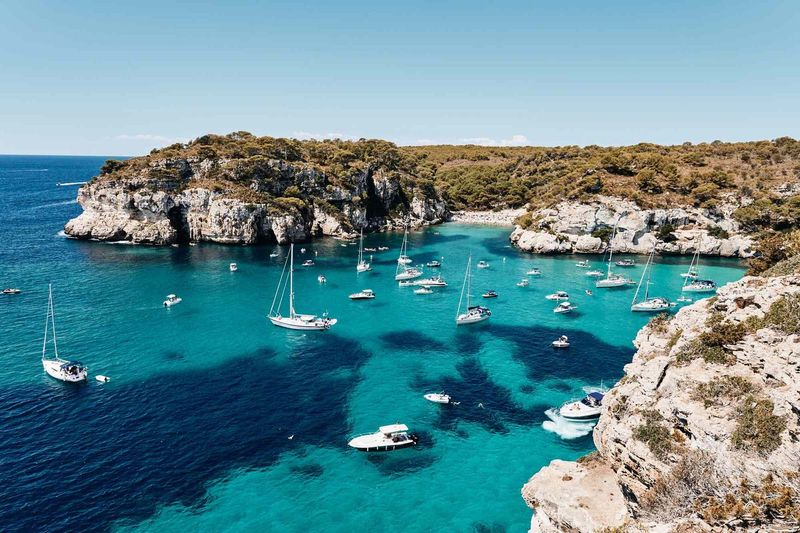
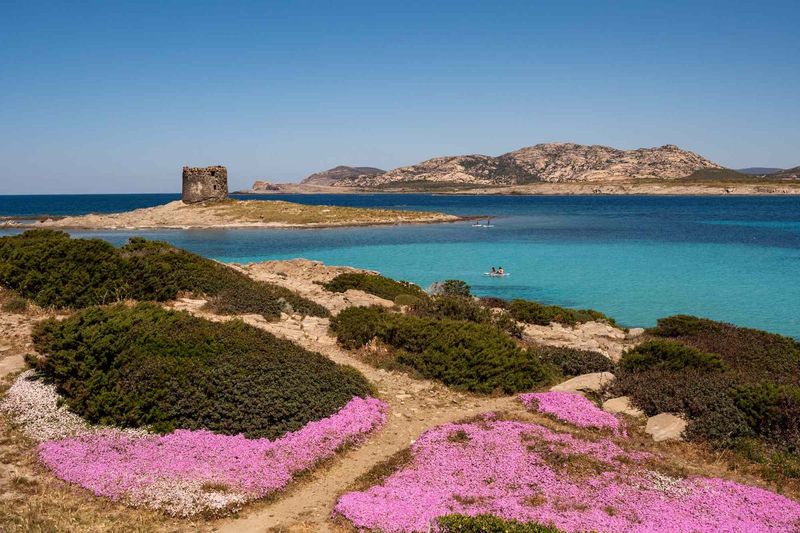
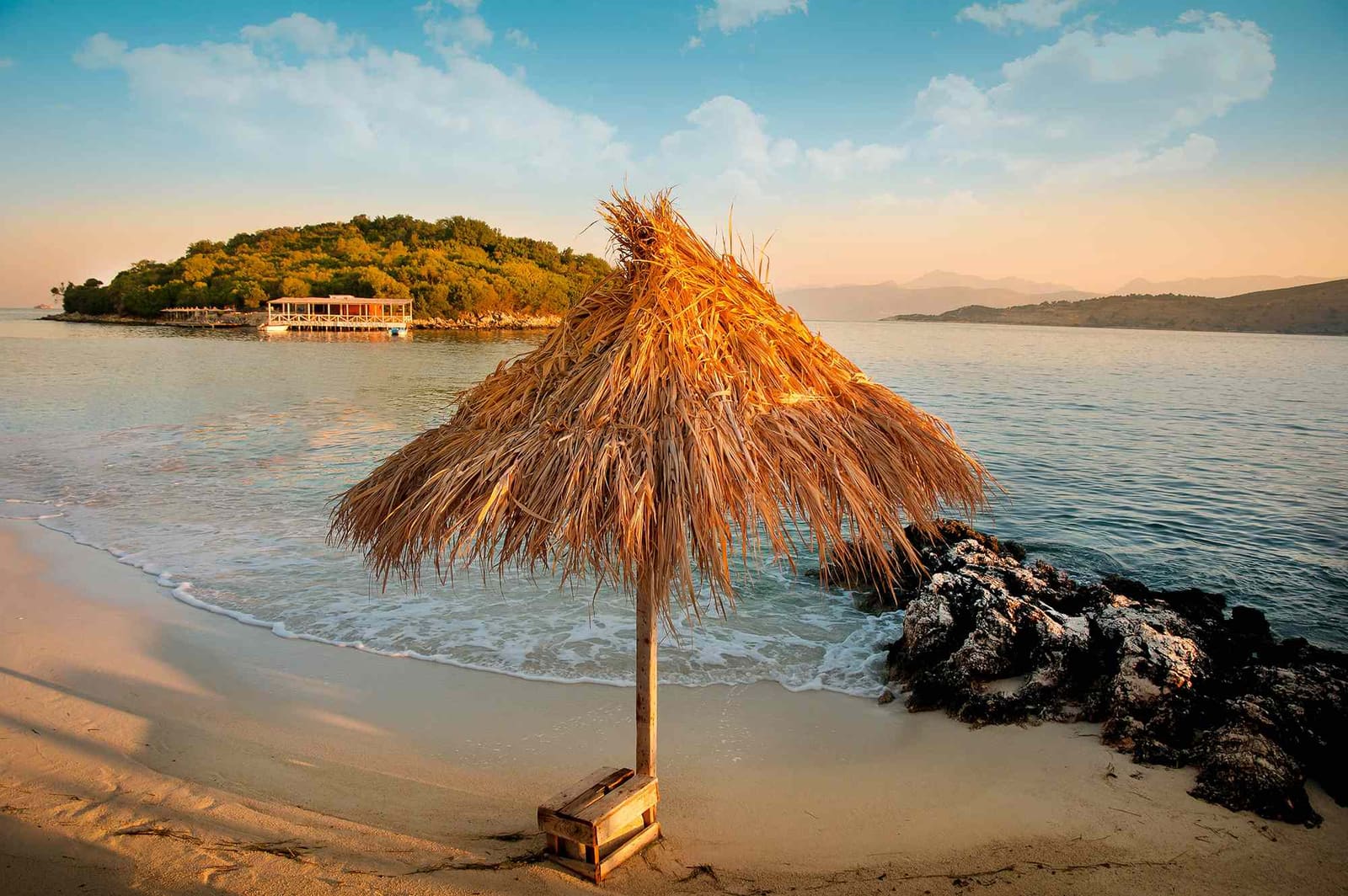
Stand on the limestone pebbles at the edge of Ksamil and the water shifts through three shades of blue before it reaches the horizon. Pale aquamarine at your feet, deepening to cerulean where the sandbars drop away, then a rich cobalt where the Ionian meets the sky. The light in southern Albania holds a particular quality in September and October, slanting low enough to catch the sediment and minerals that give these shallows their luminous clarity, yet warm enough that swimmers stay in past sunset.
Ksamil sits at the tail end of the Albanian Riviera, a few kilometres north of the Greek border and directly across a narrow strait from Corfu. It remains small, a village rather than a resort town, its population swelling only in July and August when Tirana empties southward. By the time autumn arrives in the rest of Europe, Ksamil is entering its second season, one defined less by crowds than by a slower, warmer rhythm that extends well past the equinox.
An Adriatic Anomaly
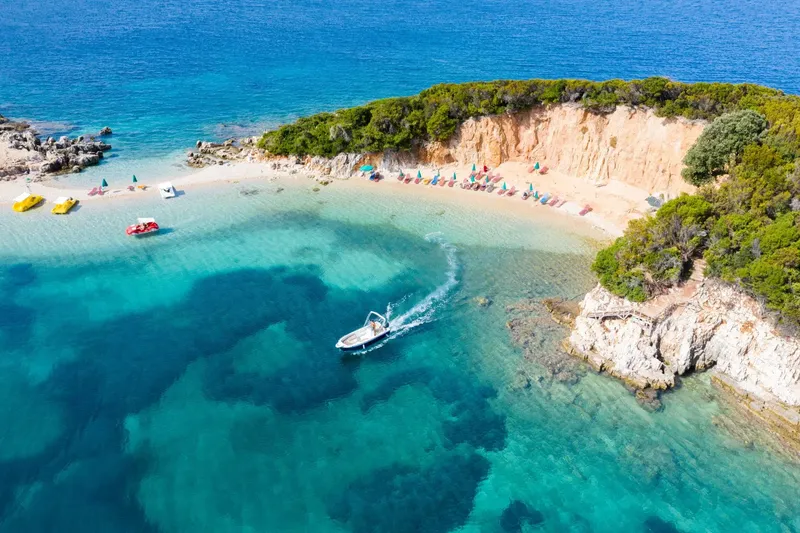
The comparison to the Caribbean is not entirely hyperbole. The water here is warmer and clearer than much of the Mediterranean, fed by currents that sweep up from the Libyan Sea and sheltered by the arc of headlands that cradle the southern coast. Four small islands sit just offshore, close enough to swim to, their beaches accessible by kayak or a short paddle on a rented board. The seabed between them is white sand and eel grass, shallow enough that light penetrates to the bottom, illuminating the water from below.
What sets Ksamil apart from other Adriatic beaches is not the colour alone but the persistence of its climate. While the Amalfi Coast cools and the Greek islands turn windy by late September, this corner of Albania holds its heat. Daytime temperatures linger in the mid-twenties Celsius through October, the sea temperature dropping only a degree or two from its August peak. It is a microclimate born of geography, the mountains to the east blocking the cold air that sweeps down from the Balkans, the sea to the west holding the summer's accumulated warmth.
The Architecture of Leisure
Accommodation in Ksamil tends toward the modest. Small guesthouses line the streets behind the main beach, their balconies hung with drying towels and herb pots. A handful of newer hotels have appeared in recent years, low-rise structures with whitewashed walls and terracotta roofs that echo the vernacular of southern Mediterranean building. There are no high-rises, no boardwalks, no infrastructure of mass tourism beyond a few beach bars and a scattering of restaurants that serve grilled fish and raki under pergolas strung with lights.
This restraint is partly regulatory, the result of building restrictions imposed after decades of haphazard development along other stretches of the Albanian coast. But it is also a function of scale. Ksamil has not yet decided what it wants to be, and in that indecision lies much of its appeal. It is neither undiscovered nor overdeveloped, existing in a middle state that allows for both solitude and sociability, depending on the hour and the beach you choose.
The Proximity Advantage
Corfu lies nine kilometres across the water, visible from Ksamil's southern beaches on clear days. The ferry from the nearby port of Sarandë takes forty minutes, making it possible to island-hop between Albania and Greece within a single afternoon. This proximity has shaped Ksamil's character, drawing a mix of travellers who use it as a base for exploring both coasts, as well as Greek weekenders who cross over for cheaper meals and quieter beaches.
The ferry traffic peaks in summer but continues through October, when the crossing becomes less about logistics and more about the pleasure of being on water, watching the coastline shift from the pale cliffs of Albania to the green hills of Corfu. It is a short journey, but one that carries you across not just a strait but a subtle shift in atmosphere, from the Balkan to the Greek, from the emerging to the established.
Late-Season Rituals
By October, the rhythm of Ksamil slows. The beach bars reduce their hours, the restaurants pare down their menus to a few essential dishes. The tourists who remain are mostly couples and older travellers, people who have learned to prefer the shoulder season's quieter pleasures. Mornings are for swimming, the water still warm enough that you can stay in for an hour without shivering. Afternoons are for walking the coastal path that leads south toward Butrint, the ancient city whose ruins sit on a lagoon a few kilometres inland.
Evenings settle into a pattern. A drink at one of the beach bars as the sun drops behind the headland. Dinner at a taverna where the fish was caught that morning and grilled over charcoal. A walk back along the unlit road, the Milky Way visible overhead, the sound of the sea a constant low note beneath the cicadas.
What Endures
Ksamil will not remain small forever. The Albanian coast is being discovered at a rate that accelerates each year, and with discovery comes development. Already there are plans for larger hotels, for marinas, for the infrastructure that transforms fishing villages into resort towns. Whether Ksamil can absorb this growth without losing what makes it distinctive is an open question, one that will be answered in the next decade.
For now, though, it remains a place defined by its water and its weather, by the improbable fact that you can swim in the Balkans in October and find the sea as warm and clear as it was in July. That is no small thing, and for those who seek it, Ksamil offers a rare combination: beauty without crowds, warmth without distance, and a season that refuses to end on schedule.