Where Cornwall's Best Chefs Eat When They're Off Duty
David Gingell left London's dining vanguard to return to Falmouth. His local haunts reveal a different kind of ambition.
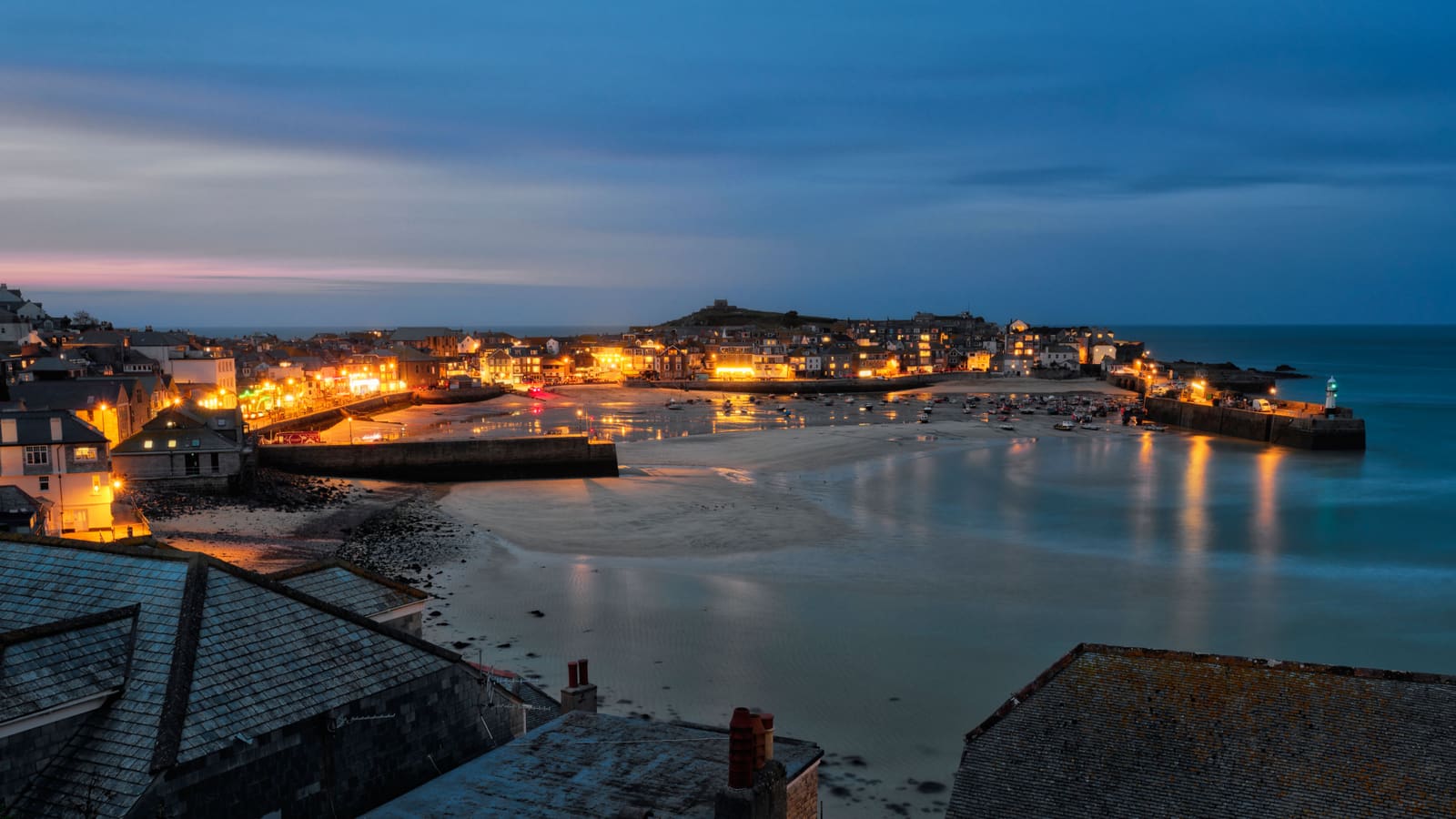
The Distance Changes Everything
David Gingell stands in a different relationship to ingredients now. When he co-founded Primeur in 2014, the north London restaurant that rewrote seasonal cooking for a generation, produce arrived through intermediaries: market traders, distributors, the infrastructure of a city. Back in Falmouth, where he grew up, the fish comes from the father of the man grilling it. The vegetables grow in gardens he can walk to. That separation, he suggests, is what defines the two food cultures. In Cornwall, chefs are tethered to what the land and sea offer in a given week. They have embraced not just the life, but the limitations. Being outside the churn of metropolitan trends becomes a form of freedom.
His map of the county's best eating is not a trail of tasting menus or destination dining rooms. It is quieter than that: a shack on a marina, a café attached to a gallery, a blue-and-white van on a quay. These are places where the cooking speaks in a lower register, where simplicity is the only honest response to what is on hand.
Fish With Nowhere to Hide
Gingell places Argoe at the centre of his Cornwall. The restaurant occupies an elevated shack on the edge of Newlyn's marina, a working port in the Penwith peninsula where the art scene and the fishing fleet have long coexisted in uneasy tandem. Rich Adams runs the kitchen. His father operates a fish business in the same town, which grants Adams first refusal on the day's catch: John Dory, sardines still silver from the water, whatever else the boats bring in. The cooking is direct. Fish is grilled, paired with vegetables grown nearby, and sent out. Gingell calls it the finest fish restaurant in the country, and the reason is structural. There is no technique elaborate enough to rescue inferior produce here. The food has nowhere to hide.
Helston, inland and off the coastal tourist circuit, offers two contrasts. Pica Rico is a standing-room taco bar, its menu compressed to a handful of tostadas and ceviche preparations, the walls painted in saturated colour. A few streets away, Cast Café sits on the edge of a studio and gallery complex, its menu equally compact: toasted sandwiches, fish soup, pig's head croquettes, duck cooked with a precision that surprised even Gingell. The pace is unhurried. The food is better than it needs to be.
The Godhead and the Estate
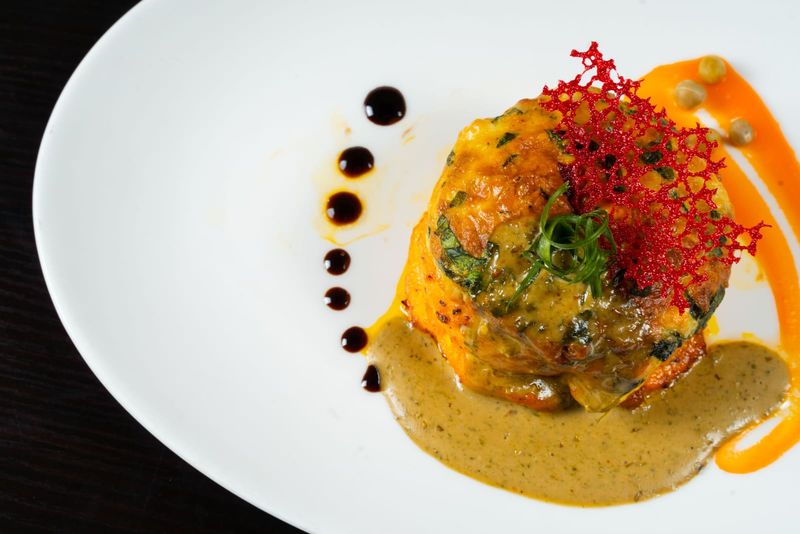
Near the village of St Martin, the Trelowarren Estate houses Flora, a café-restaurant run by Tim Spedding and his partner Louise. Spedding cooked in London for a time, including a stint at the wine bar P Franco, and Gingell counts him among the country's best chefs. But the food tastes different here. Gingell describes it as a kind of relaxation, a shedding of urban intensity that paradoxically elevates the work. Spedding's sourcing is pristine, his technique exact: Westcombe ricotta and cavolo nero agnolotti, smoked eel with green apple and curried egg mimosa. The dishes read refined, but they do not read anxious.
Pubs, Pontoons, and the Problem of Summer
The Seaview Inn in Falmouth has been Gingell's pub since before he left for London. Vernon Brewery, based in nearby Penryn, took it over several years ago and made the necessary improvements: cleaned the toilets, sanded the floors, kept the pool table. The beer is local, the IPAs well made. Gingell goes for pints and a curry. It is not beautiful, he concedes, but it does not need to be.
He owns a fishing boat, which he describes with characteristic self-deprecation as crappy and old, and it ferries him and his family to the Pandora Inn, a thatched pub on the river at Mylor. Children fish for crabs off the pontoon. The pub itself is old and handsome, but Gingell avoids it in summer, when the moorings fill with hire boats piloted by tourists still learning to steer. In calmer months, the trip upriver is worth the effort.
St Ives, too, is a place he visits only in winter. The summer crowds make the narrow streets impassable. But in the colder months, when the sea turns steel-grey, he and his family head to St Eia, a wine bar run by Mark Quick and Ellie Venning. They serve the occasional anchovy, a plate of something small. Nearby is Kiln, a new sauna. Gingell's ritual is to brave the cold water, then settle in for a long, wine-soaked lunch at St Eia.
The Van, the Garden, and the Grain
Kelp Canteen is a blue-and-white van stationed on Custom House Quay in Falmouth. The menu is brief: fried squid, oysters, whatever else the kitchen can turn out in a small space. Gingell describes it as a vibe, which is to say it is busy and full of life, the kind of place where tourists feel they have stumbled onto something real. On a hot summer evening, it is exactly where you want to be.
Potager, in Constantine, is the opposite in temperament. It is a community garden, studio hub, and café, serving soups, homemade breads, and salads studded with grains. The pace is slow, the atmosphere gentle. Gingell appreciates this as a counterbalance, a place that does not ask much of you.
Bread, Coffee, and the Undisputed Champion
For a man who co-owns Jolene, a bakery and restaurant group built on the promise of good bread, the question of his favourite Cornwall bakery is loaded. He praises Pavilion, which appears at Flushing farmers' market, but reserves special mention for Native Grain in Truro, a town he otherwise finds underwhelming. They do not sell coffee. Just pastries and bread, both very good.
Coffee comes from Dark Pony in Falmouth, a roastery that takes the work seriously. They roast their own beans and keep three or four varieties available at any time. Gingell orders at random and is never disappointed.
And then there is the Cornish pasty, the regional standard against which every visitor is measured. Gingell's answer is immediate: Gear Farm, near Helston. They grow the swede, carrot, onions, and potatoes on site, then bake the pasties there. He has never had a bad one, and he has eaten many. He calls it the undisputed greatest of all time, and he does not appear to be joking.
What the Distance Means
The food culture Gingell describes is not one striving to compete with London or any other city. It is not reactive. It is built on proximity: to the boats, to the farms, to the rhythms of the seasons as they actually unfold rather than as they are imagined by a menu printed weeks in advance. The chefs who have moved to Cornwall have not brought the capital's restlessness with them. They have adapted to a different set of constraints, and in doing so have found a different kind of excellence. It is excellence that does not announce itself, that does not need to. You taste it in a piece of grilled fish, in a pasty made from vegetables grown in the same field, in a pub that has been sanded and cleaned but not reinvented. The distance from London is not a deficit. It is the point.