A River City's Culinary Renaissance
Brisbane's new wave of restaurateurs reveal the waterfront capital where Queensland's food culture is quietly rewriting the rules.
The River Runs Through It
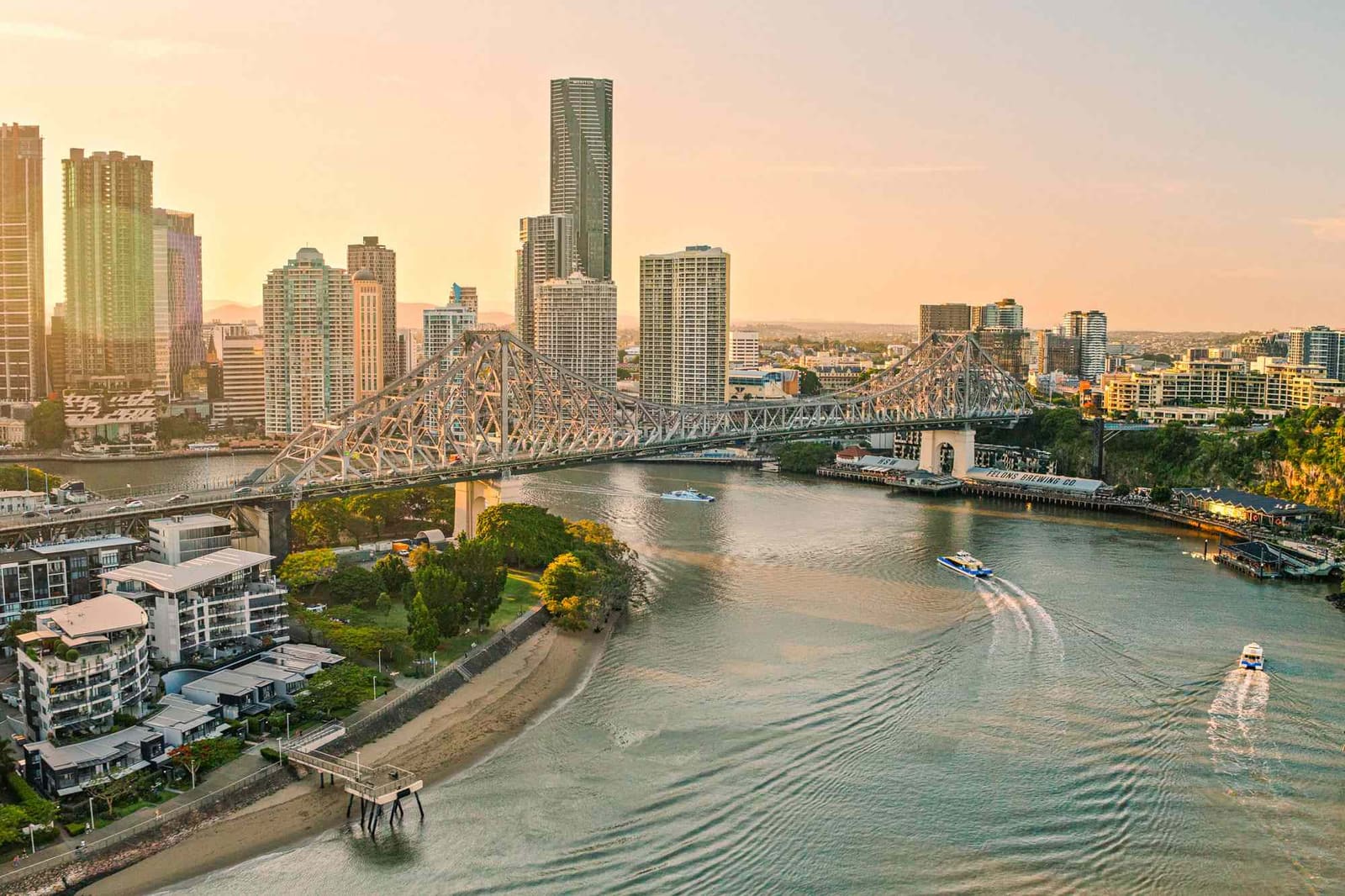
There is a particular quality to light on the Brisbane River at eight in the morning - the way it catches the jacaranda branches overhanging the water, how it softens the edges of the city's evolving skyline. It is in this early hour, before the subtropical heat settles in, that the city's culinary architects prefer to move through their territory. We have spent years tracking the evolution of Australia's river cities, and Brisbane has become something of a quiet obsession at Global Chic Voyage. Not for what it proclaims, but for what it has become when no one was paying quite enough attention.
The restaurateurs leading this transformation understand something fundamental about place. Their approach to dining in Queensland's capital does not mimic Melbourne's laneway intensity or Sydney's harbour glamour. Instead, it draws from the subtropical rhythm of the region itself - the abundance of local growers working volcanic soil an hour inland, the fishing communities along Moreton Bay, the Asian culinary traditions that have shaped Brisbane's palate for generations.
A City That Learned to Cook for Itself
Brisbane's culinary identity has long been overshadowed by its southern counterparts, dismissed as a provincial stopover rather than a destination. That narrative, we have observed, began shifting roughly a decade ago when a generation of chefs who had trained elsewhere returned home with a different ambition. They were less interested in importing cosmopolitan trends than in articulating what a Brisbane restaurant could mean - one rooted in the specific conditions of this latitude, this climate, this confluence of Pacific and hinterland.
The restaurant group that has come to exemplify this philosophy operates several venues across the city, each occupying a distinct register. Their flagship establishment in Fortitude Valley works with a hyperlocal ingredient radius, sourcing from producers within a two-hour drive. Another focuses on native ingredients and Indigenous food knowledge, presented through contemporary technique. A third explores the overlapping Cantonese and Queenslander traditions that define much of the city's domestic cooking.
What unites these ventures is an editorial point of view about regionalism. The menus change not seasonally in the European sense, but according to the subtropical calendar - mango season, mud crab season, the brief window when Davidson plums arrive from the hinterland. This is cooking that acknowledges its geography without performing it.
Following the Rhythm of a Subtropical Day
The duo behind this collection of restaurants structure their own days around the city's natural cadence. Mornings begin at the South Bank Collective Markets, where they maintain relationships with the growers who supply their kitchens. This is not the curated farmers market of European imagination, but a sprawling, pragmatic affair where commercial fishermen sell alongside Hmong vegetable farmers and second-generation Italian providores.
By mid-morning, they move to New Farm, where the riverside parks offer a particular perspective on Brisbane's geography. The city unfolds along the serpentine curves of the river, neighborhoods defined by the water's meanders. This topography has shaped dining culture - restaurants cluster in pockets, creating distinct culinary districts rather than a single concentrated dining precinct.
Lunch, they suggest, should happen in one of the city's suburban Vietnamese restaurants, where the cooking reflects decades of adaptation to Australian ingredients while maintaining essential techniques. These are the establishments that have quietly educated Brisbane palates, introducing generations to the interplay of texture and temperature, the importance of herbs, the structure of a properly balanced broth.
The Architecture of Evening
As afternoon heat softens into evening, the city's dining rhythm shifts. The restaurateurs prefer this transitional hour, when their venues begin to fill and the river catches the last horizontal light. Their flagship restaurant occupies a converted warehouse space, its design emphasizing the relationship between interior and the subtropical outdoors. Massive doors fold away entirely, collapsing the boundary between dining room and terrace.
The menu at this hour might feature Moreton Bay bug prepared with finger lime and native pepper, or a dish built around the sweet corn that grows prolifically in the Lockyer Valley. There is often a whole fish, sourced that morning from the fish markets, treated simply to honor its quality. The wine list leans toward minimal-intervention producers from Queensland's emerging Granite Belt region, a high-altitude wine country that few outside Australia know exists.
This is where the duo's philosophy becomes most legible. They are not chasing innovation for its own sake, nor are they preserving tradition as museum piece. Instead, they are articulating a culinary vernacular specific to this place - one that honors the Indigenous land management practices that sustained abundance for millennia, the waves of migration that built modern Brisbane, and the particular gifts of this climate.
What a River City Teaches
Brisbane's emergence as a culinary destination offers a useful counterpoint to the dominant narratives about food cities. It has not followed the familiar script of celebrity chef investments or design-driven hospitality concepts imported from elsewhere. Instead, it has developed organically, driven by restaurateurs and chefs who understand their region intimately and are willing to articulate it on its own terms.
At Global Chic Voyage, we have watched this pattern repeat in river cities across Asia and the Pacific - Chiang Mai, Hoi An, Kuching - places where culinary identity emerges from deep regional knowledge rather than global aspiration. Brisbane's lesson is that a city need not possess ancient culinary traditions or Mediterranean climate to develop a compelling food culture. It requires instead a willingness to pay attention to what is already present: the producers, the migrants, the Indigenous knowledge, the specific abundance of place.
The restaurateurs we have followed through their ideal Brisbane day understand this implicitly. Their perfect itinerary is not a greatest-hits tour of branded venues, but a map of relationships - with growers, with fishermen, with the other chefs who share their commitment to regional expression. It is a reminder that the most compelling dining destinations are not built through marketing or capital investment alone, but through the patient work of articulating what a place tastes like when it is allowed to speak for itself.
As evening deepens and the city lights reflect on the river's dark surface, Brisbane reveals itself as something more complex than its reputation suggests. It is a city that has learned to cook for itself, drawing from the particular gifts of its geography and the layered histories of the people who have made it home. For those willing to move through it at the pace it deserves, it offers a culinary experience that feels both unexpected and inevitable - the taste of a place that has finally found its own voice.