São Paulo's Kitchens Turn Inward, and the World Takes Notice
After decades of looking to Europe for culinary validation, a generation of Brazilian chefs is rediscovering what grows, ferments and flourishes at home.
The Moment of Reckoning
Luiz Filipe Souza remembers the morning routine with unusual clarity. For months before the 2019 Bocuse d'Or, he would arrive at his kitchen before dawn to work with cupuaçu, baniwa chillies and tucupí, a fermented cassava sauce his grandmother might have recognised. Then, as the sun climbed, he would set those ingredients aside and prepare for the evening service at Evvai, the São Paulo restaurant where he had been serving high-end Italian fare since 2017. Two worlds, one kitchen, and the growing sense that only one of them truly belonged to him.
The Bocuse d'Or changed that calculus. At the international competition, chefs are expected to represent their culture, and for Souza, that meant cooking Brazilian food professionally for the first time. "I didn't grow up at my grandmother's side eating gnocchi," he has said. "I ate rice and beans." The admission might sound simple, but it carried weight. Souza had spent years in Italy, had become what he calls a "super nerd" of Italian technique, yet he understood that his relationship to that cuisine would always be second-hand. The ingredients he worked with in the mornings, by contrast, carried memory and place in ways that imported Parmigiano never could.
In April, Evvai became one of the first two Latin American restaurants to earn three Michelin stars, recognition that arrived not when Souza was perfecting his sfogliatelle but after he had begun weaving Brazilian elements into the menu. The other restaurant to receive the honour was Tuju, another São Paulo institution that has undergone its own quiet revolution.
Seasons That Rain, Not Fall
Ivan Ralston opened Tuju in 2014 with a menu that included steak tartare and steak with chips. Within months, the restaurant earned a Michelin star, which Ralston initially assumed was a prank. A second star followed in 2018, but it was the two-year closure during the coronavirus pandemic that proved transformative. Ralston and his partner, gastronomic researcher Katherina Cordás, spent that time travelling across Brazil, visiting producers, asking questions about harvest cycles and regional foodways.
What they learned upended assumptions. "We grow up hearing that Brazil doesn't have seasons," Ralston has noted. But their research revealed that the São Paulo region does have distinct seasons, only they are defined by precipitation rather than temperature. Today, Tuju's tasting menu is organised around four climatic markers: rain, wind, drought and humidity. The rainy season, which corresponds to Brazil's summer, brings squid, tomatoes and tamarind. Wind season favours Jerusalem artichokes, clams and sardines. Drought highlights root vegetables such as cassava and carrots, while humidity ushers in artichokes and courgettes.
The approach has earned Tuju an Art of Hospitality award from The 50, which maintains a global list of outstanding restaurants. But for Ralston, the recognition matters less than the shift in perspective. "We have to have our own language," he has said. "Maybe a bit rougher but more original." Only ten per cent of Tuju's clientele are foreign visitors, and Ralston hopes to keep it that way. "I want to be a restaurant that Brazilians come to."
The philosophical shift has been supported by tangible improvements in Brazilian produce. World-class cheeses, charcuterie and wine, many grown organically or biodynamically, are now produced domestically. Native fruits and vegetables that were once dismissed as rustic have found their way onto tasting menus. At Tuju, only ten per cent of ingredients come from abroad. At Evvai, the proportion of imported Italian goods has steadily declined.
The Groundwork
The current moment did not emerge in a vacuum. When Alex Atala opened Dom in 1999, fine dining in São Paulo still meant European cuisine, served with European wine, in rooms decorated to evoke European dining rooms. Atala, like Souza and Ralston, had cooked in Europe and returned home with the realisation that replication was a losing game. He began travelling across Brazil, seeking out techniques and ingredients that had been overlooked by the country's culinary establishment. In the Amazon, he encountered ants eaten as part of indigenous diets. In coastal regions, he found fruits with flavour profiles that had no European equivalents.
Dom's menu shifted to reflect those discoveries. Today, diners might encounter alligator with bacuri, a fruit that balances sweetness and acidity, or veal in a coffee sauce. In 2013, Atala was named one of Time magazine's most influential people, and the restaurant has held two Michelin stars since 2015. "Atala brought a different way of looking at things, a Brazilian way, which was unthinkable at the time," Ralston has observed.
Helena Rizzo's Maní, which opened in 2006, took a different route to the same destination. After working at El Celler de Can Roca in Spain, Rizzo returned to Brazil and began fusing Brazilian ingredients with techniques and flavours drawn from the country's immigrant communities. The result is a menu that might include house-made hoshigaki, dried persimmon, in duck tartare, or an escabeche-style preparation using tambaqui, a large riverfish native to Brazilian waters. Ralston, who began his career at Maní, has called it one of the most influential restaurants in Brazil's history.
Beyond the Tasting Menu
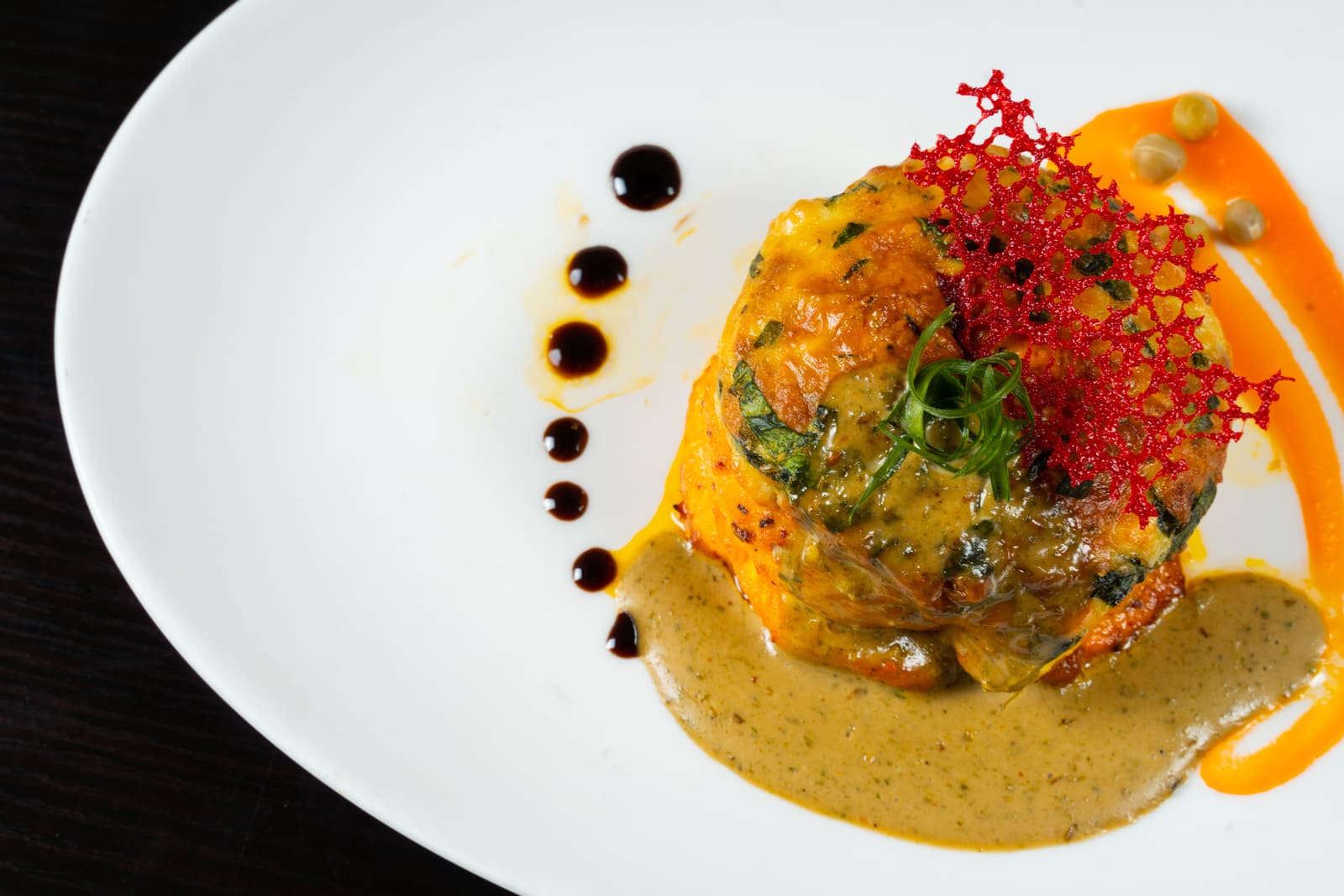
Not every kitchen pursuing a Brazilian idiom is located in a polished neighbourhood or structured around a multi-course progression. A Casa do Porco sits in São Paulo's often-neglected downtown, an area undergoing rapid gentrification but still far removed from the city's affluent enclaves. The restaurant focuses on pigs raised on the owners' farm, and the menu might include pork temaki or pork soufflé before concluding with roast pork, rice, beans, banana and vegetables. The service is attentive but relaxed; diners in flip-flops and shorts are welcome. Those unable to secure a table can order an excellent pork sandwich from the takeaway hatch.
Dêze began in Caraíva, a village in the northeastern state of Bahia accessible only by boat, roughly 1,700 kilometres from São Paulo. The restaurant has since relocated to Jardim Paulista, a neighbourhood in the heart of the metropolis dense with dining options. Dêze seats only 35 guests per evening, offering a tasting menu that draws on influences from across Brazil. Chef Yuri Escobar's approach emphasises seasonality and techniques such as curing and fermenting, methods commonly associated with Europe's top kitchens. But his menu also does something unusual in Brazil: it elevates vegetables to the same status as meat. Dishes might pair sole with lentils and green papaya, or duck breast with fig, rhubarb and karashi, a Japanese mustard.
The Japanese Thread
São Paulo is home to the world's largest Japanese community outside Japan, a demographic reality that has shaped the city's culinary landscape for generations. Many of the city's high-end Japanese restaurants adhere closely to traditional preparations, but Telma Shiraishi's Aizomê explores what she calls "Nipo-Brazilian" cuisine. The menu might feature pirarucu saikyo yaki, using a traditional Japanese grilling method with a fish native to the Amazon, or a ponzu made with tucupí. Diners seated at the wood counter can opt for omakase, which features some of the city's finest sushi, or retreat to private rooms for a more intimate occasion. The saké selection is extensive, and on occasion, Japanese wine makes an appearance.
The blending of Japanese and Brazilian ingredients is not a novelty act. It reflects a lived reality in a city where cultural boundaries have always been porous. Shiraishi's cooking is not fusion in the tired sense of the term; it is the product of a place where both traditions have deep roots.
What Rough Language Brings
Ralston's phrase, "a bit rougher but more original," captures something essential about the shift taking place in São Paulo's kitchens. For decades, Brazilian chefs operated under the assumption that refinement meant adherence to European standards. Technique was something learned abroad and imported home. Ingredients that could not be sourced from Europe were considered inferior, or at best, quaint.
That hierarchy has collapsed. The ingredients Souza worked with in the mornings before his Italian service, the seasonal markers Ralston and Cordás mapped across Brazil, the ants Atala encountered in the Amazon, these are no longer curiosities. They are the foundation of a cuisine that is beginning to articulate its own grammar.
The Michelin stars and international awards are evidence that the wider culinary world has taken notice. But the more significant measure may be Ralston's hope that Tuju remains a restaurant where Brazilians come to eat. Recognition is one thing. Belonging is another. In São Paulo, a generation of chefs is learning the difference.