Two Chefs on the Meals That Pull Them Across Continents
A Korean-American cook returns to a mountain county for dried pollock. An American pastry chef dreams of simplicity on the Adriatic coast.
A Bowl of Soup in the Smallest County
Inje sits in the Taebaek mountains of South Korea, a county so small it barely registers on the mental map of most travellers. Yet Clara Lee, co-author of Korean Soups and co-founder of food company Queens, returns for one dish: hwangtae guk, a soup built around dried pollock.
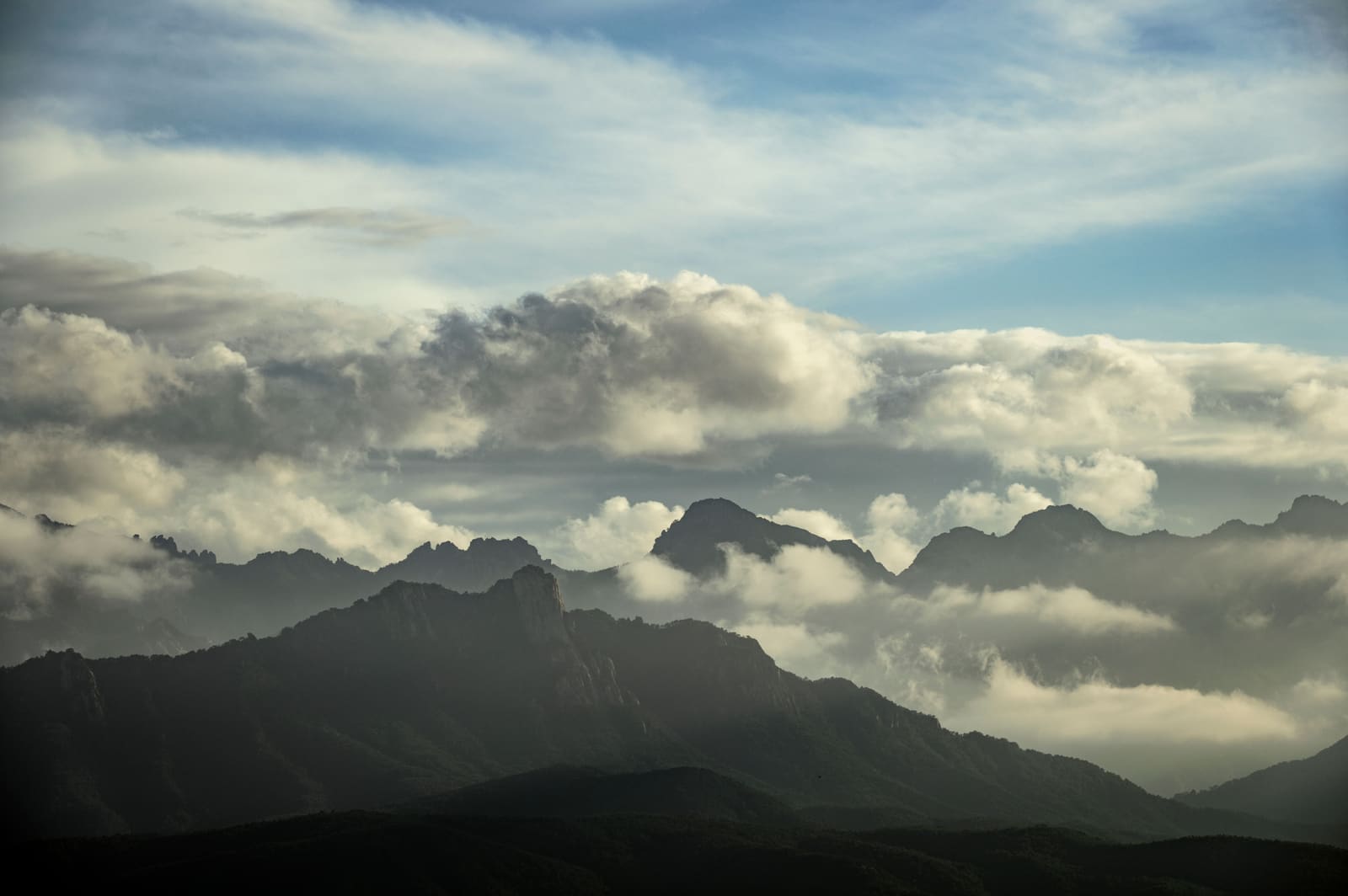
The drive from Seoul takes two hours, a route Lee compares to the Taconic Parkway upstate from Manhattan - tranquil, winding, a gradual shift from urban density to mountain air. The county's geography, shaped by rivers and basins between peaks, creates the ideal environment for preparing dried pollock, a process that depends on cold, dry winds and temperature fluctuations. The same climate nurtures wild greens and herbs, namuls that appear only seasonally in local farmers' markets, foraged from the surrounding slopes.
Lee's preferred restaurant, Song-yi Sikdang, serves a focused menu. The hwangtae jungsik arrives as a set: pollock soup, a whole grilled pollock, twelve small dishes of namul banchan - each seasoned with precision - and a bowl of warm rice. The meal is regional in the truest sense, bound to the land and weather patterns that make it possible.
The landscape shifts with the seasons. Verdant peaks in summer give way to crimson and gold in autumn, then snow-dusted ridges in winter. The food follows the same rhythm, shaped by what the mountains yield at any given moment.
Simplicity on the Adriatic
Abigail Dahan-Kramer, pastry chef at Provenance in Philadelphia, has not yet travelled to Puglia. But the southern Italian region occupies her imagination with a particular clarity: grilled fish, local olive oil, handmade pasta, regional cheeses. The appeal lies in what is absent - elaboration, complication, the layering of technique for its own sake.
Puglia's cuisine remains tethered to the land in ways that align with Provenance's ethos of sourcing. The food is local by necessity and tradition, not as a marketing strategy. A fish caught that morning, grilled simply. Orecchiette shaped by hand, dressed with what grows nearby. Cheeses that reflect the pasture and the season.
For Dahan-Kramer, this represents a different kind of skill: the ability to do less, to trust the ingredient, to let provenance speak. It is a form of restraint that requires confidence, the willingness to let a dish rest on the quality of its components rather than the ingenuity of its assembly.
The draw is not novelty but a deeper connection between food and place, the kind that emerges when both have had centuries to settle into each other.
What Pulls a Chef Across Distance
Both journeys - one made regularly, the other still anticipated - share a common logic. The food in question cannot be replicated elsewhere. Not because the ingredients are impossible to source, though some are, but because the dish exists in relationship to a specific place.
Hwangtae guk depends on the cold, dry air of the Taebaek mountains. The wild namuls grow only on those slopes, at particular elevations, in particular seasons. The meal Lee describes is inseparable from the two-hour drive, the shift in landscape, the altitude and climate that make the pollock possible.
Puglia's grilled fish carries the salt and temperature of the Adriatic. The pasta dough responds to the humidity, the local flour, the hands that have shaped it for generations. The simplicity Dahan-Kramer seeks is not minimalism as aesthetic choice but the outcome of a food culture still rooted in its environment.
This is what distinguishes a meal worth travelling for from one that is merely good. The former cannot be extracted from its context without losing something essential. The latter can be approximated anywhere with the right ingredients and technique.
The Geography of Flavour
Lee's description of Inje and Dahan-Kramer's vision of Puglia both gesture toward a larger principle: that certain foods are legible only in the places that produce them. Not because they taste better there, though they often do, but because the meal includes everything around it - the drive, the season, the landscape, the cultural memory embedded in how a dish is served and eaten.
The hwangtae jungsik is not simply pollock and banchan. It is the knowledge of how to dry the fish, which greens to forage and when, the rhythm of the seasons in a mountain county. The grilled fish in Puglia is not just the fish. It is the fishing tradition, the olive groves, the pasta-making techniques passed down through families, the particular way the region's abundance has shaped its cuisine over centuries.
Travel, in this context, becomes a form of education. Not the accumulation of dishes tasted or restaurants visited, but the understanding that food exists in conversation with place, and that some conversations can only be overheard in person.
Both chefs articulate a similar hunger: not for novelty or luxury, but for coherence. For meals that make sense in their setting, that could not exist anywhere else, that reveal something about the land and the people who have lived with it long enough to know what it can yield.