When the Country Club Weighs Anchor: The New Luxury of Floating Membership
A 508-foot vessel launching in 2029 asks whether the ultimate privilege is less about place than the company you keep at sea.
A Clubhouse That Refuses to Stand Still
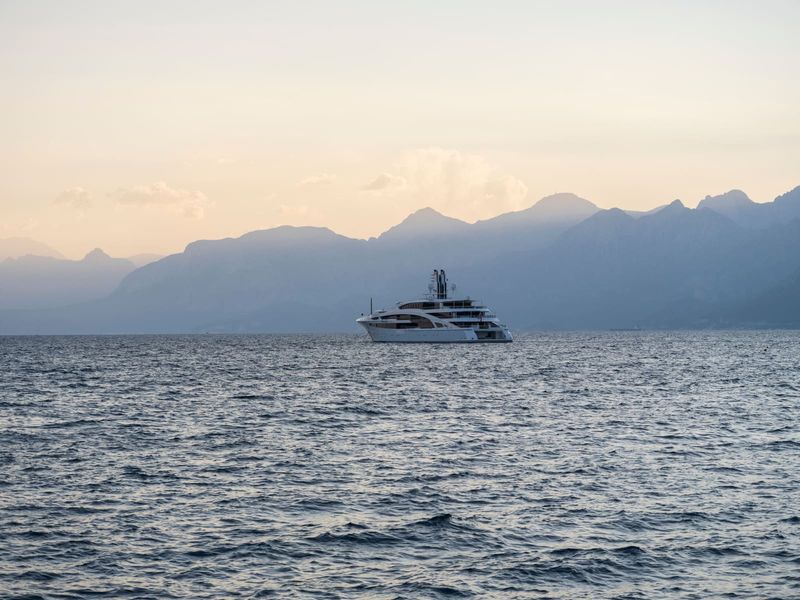
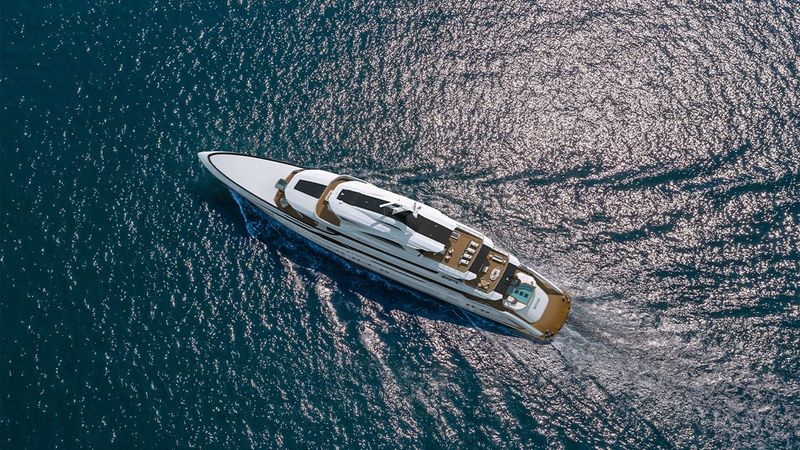
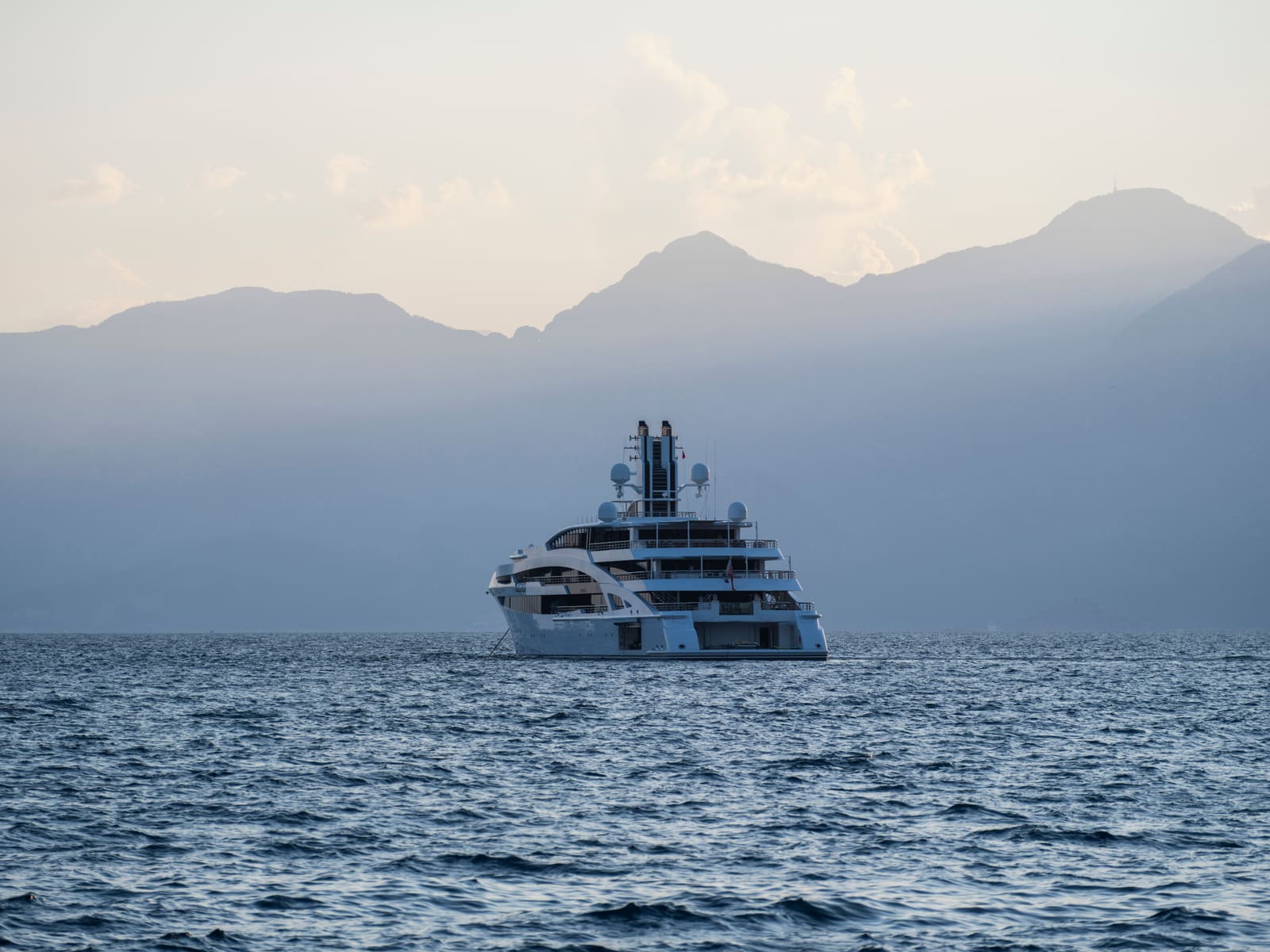
There is a particular quality to membership that traditional clubs have long understood: the threshold. A brass plaque, a discreet door on a side street, the knowledge that beyond it lies a world calibrated for a chosen few. The Maybach Ocean Club, preparing to launch its flagship vessel Beyond Horizons in 2029, dispenses with the threshold entirely. Its clubhouse will be a 508-foot superyacht, moving across oceans, never tethered to a single port, never quite in the same place twice.
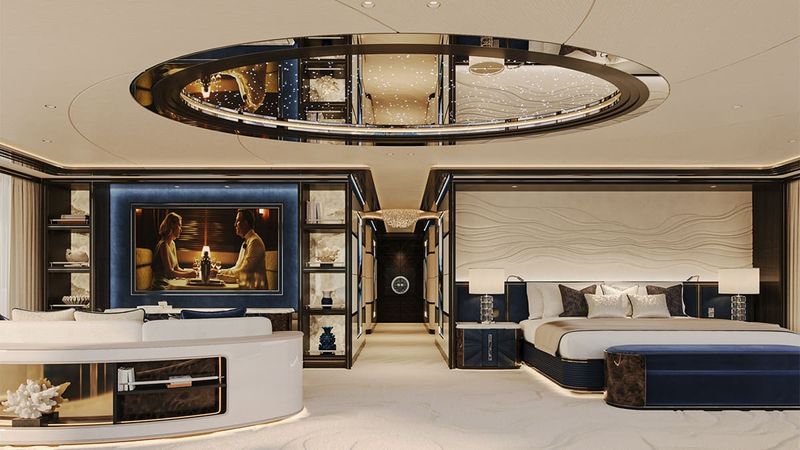
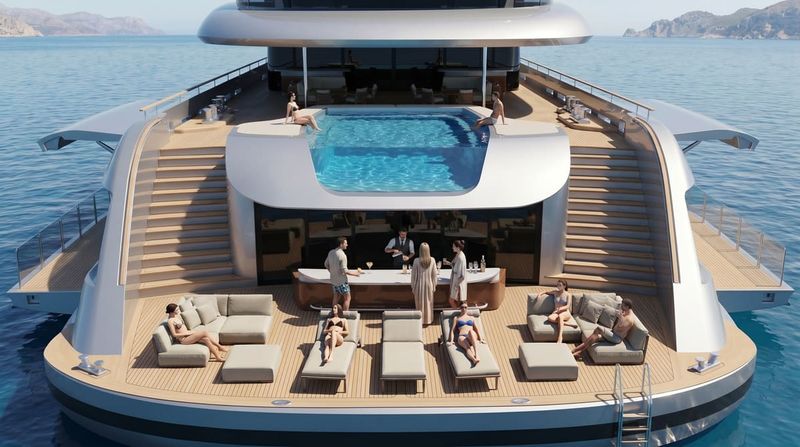
Three hundred members will share ownership, each allocated four weeks aboard annually. The proposition is straightforward on paper: helicopter transfers, a beach club, a spa, a 230-foot support vessel stocked with water toys. Yet Jamie Caring, founder of Sevengage Consultancy and the architect of the club's membership strategy, insists the yacht itself is secondary. What members are purchasing, he argues, is access to one another, a "vibrant, exciting, dynamic group with nothing to prove." The vessel becomes backdrop, the real commodity is the curated network aboard it.
This marks a departure from yacht ownership as it has traditionally been understood. For decades, the superyacht served as both status symbol and private domain, a floating extension of wealth that could be summoned, enjoyed in solitude, and stored when not in use. The Maybach model inverts that logic. Here, the yacht is shared infrastructure, and solitude is precisely what is not on offer.
The Vetting Process as Product
Membership will not be a matter of cheque-writing alone. Prospective co-owners will undergo extensive vetting, a process designed to ensure not merely financial capacity but cultural fit. The details of that vetting remain opaque, as they often do in clubs that prize discretion. What is clear is that exclusivity here is less about keeping people out than about engineering a particular social chemistry within.
This approach borrows from the playbook of urban members' clubs that have proliferated over the past two decades, spaces where professional overlap, shared interests, and a certain worldview matter as much as net worth. The difference is geography, or rather the deliberate absence of it. A London club offers proximity to Mayfair, a New York outpost trades on its neighbourhood. Beyond Horizons offers no fixed address, no anchor in a city's social topography. Its location is always provisional, dictated by itinerary rather than real estate.
That mobility carries implications. Members cannot simply drop by; their access is scheduled, allocated, finite. Four weeks a year is generous by fractional ownership standards, but it is also a constraint, a reminder that even at this level of expenditure (a buy-in reported at four million US dollars, with seven-figure annual fees), time aboard is metered. The yacht does not sit waiting. It moves, with or without you.
The Support Vessel and the Infrastructure of Leisure
The 230-foot shadow vessel that will accompany Beyond Horizons is worth pausing over. Shadow vessels have become standard in the upper echelons of yachting, utilitarian craft that carry tenders, submersibles, diving equipment, helicopters, and the crew required to operate them. They solve a design problem: how to offer every imaginable amenity without cluttering the main yacht with storage, machinery, and the visual intrusions of utility.
But the shadow vessel also represents a doubling of resource consumption, a parallel ship devoted entirely to enabling leisure. For a membership club premised on shared infrastructure, the presence of such a vessel is revealing. It suggests that even within a model designed around co-ownership, the expectations of service, variety, and immediate access remain uncompromising. The toys must be available, the helicopter on standby, the diving instructor ready. Efficiency is achieved not by reducing what is offered but by pooling demand.
This is where the economics of fractional luxury diverge from traditional ownership. A single owner might use a yacht a few weeks each year; the vessel spends the rest of its time idle or chartered. Three hundred owners, each taking four weeks, generate near-constant utilisation, transforming what would be an underused asset into a continuously operating hospitality platform. The environmental calculus remains complex, but the financial logic is sound.
The Calendar as Curriculum
Beyond the vessel itself, the Maybach Ocean Club promises a year-round programme: live concerts at sea, art exhibitions, private events in partnership with fashion houses and watchmakers, crossover gatherings with other members' clubs. This is where the model most clearly departs from yacht ownership and moves towards something closer to a cultural institution with a floating campus.
The programming serves a dual function. It provides content, reasons to return, experiences that justify the annual fee. But it also does the quieter work of community formation, creating shared reference points, inside jokes, the accumulated texture of repeated encounter. A concert attended together, an artist met over dinner, a panel discussion that ran late into the evening. These are the materials from which belonging is constructed.
In this respect, the club is responding to a shift within luxury itself. Possession, while still valued, no longer carries the cachet it once did. The ability to summon experience, to move fluidly between contexts, to be recognised and welcomed in disparate settings has become a more potent marker of status. The Maybach Ocean Club monetises that shift, offering not a thing you own but a world you inhabit intermittently, a network you can activate.
The Limits of Curation
There is a risk inherent in any model that depends so heavily on the people within it. Curate too loosely, and the social chemistry fails; members find themselves among strangers with little in common beyond the ability to afford the fee. Curate too tightly, and the group becomes insular, homogeneous, dull. The balance is delicate, and it is unclear how the vetting process will navigate it.
Moreover, the promise of a group "with nothing to prove" is itself a kind of aspiration, a bet that wealth and accomplishment can be worn lightly once a certain threshold is crossed. Whether that proves true in practice, or whether status competition simply takes subtler forms, remains to be seen. The history of exclusive clubs suggests that hierarchy finds a way to reassert itself, even in spaces explicitly designed to eliminate it.
What Cannot Be Stored
At its core, the Maybach Ocean Club is selling ephemerality. Unlike a yacht you own, the vessel cannot be summoned at will, cannot be passed down, cannot be parked in a marina as a visible marker of success. Your weeks aboard are consumed as they happen; they leave no residue beyond memory and, presumably, the relationships formed.
This is a curious form of luxury, one that resists the logic of accumulation. You cannot display it, cannot photograph it in a way that conveys its essence, cannot quite explain it to someone outside the network. It exists in the moments you are aboard and in the social capital you carry away. Whether that proves sufficient, whether ephemeral access can sustain the same gravitational pull as ownership, is the experiment the club is running.
The 2029 launch date is still three years away. Much can change in that span, in the global economy, in the appetite for this particular strain of ultra-luxury, in the regulatory and environmental pressures facing the yachting world. But the premise is already clear: the clubhouse is mobile, the membership is the product, and the ultimate luxury is not what you own but whom you know, and where you might encounter them next. Whether that proves to be a sustainable model, or simply a very expensive way to make friends, will become evident only once the anchor is raised and Beyond Horizons begins to move.