When Heritage Meets Scale: Inside Baglietto's First 60-Meter Icon
After 172 years of building yachts, the storied Italian yard has finally crossed a threshold most shipbuilders spend lifetimes chasing.
A Threshold Crossed
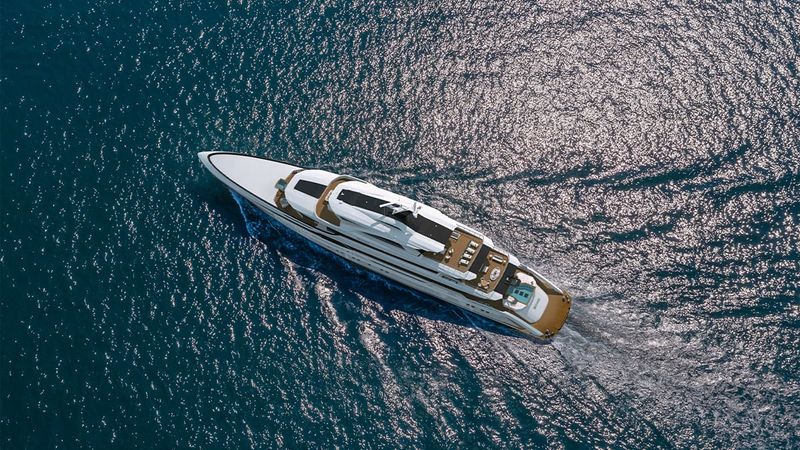
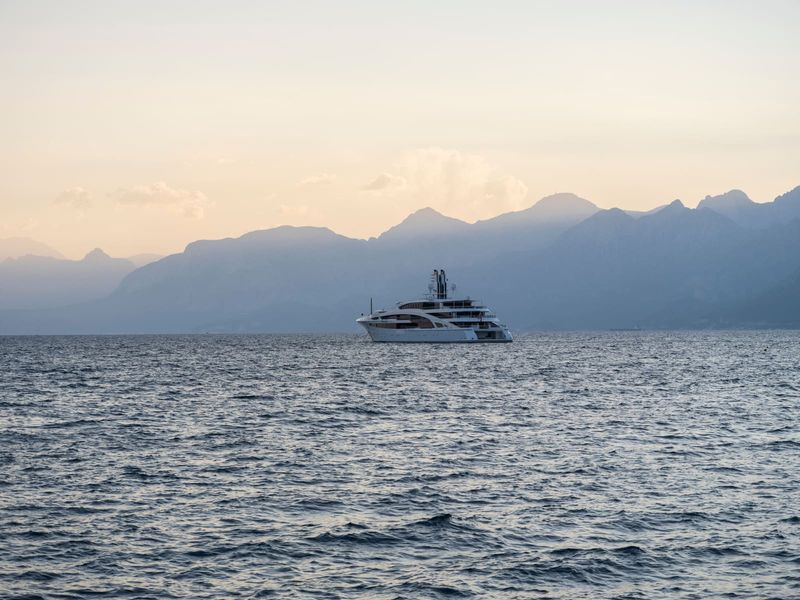
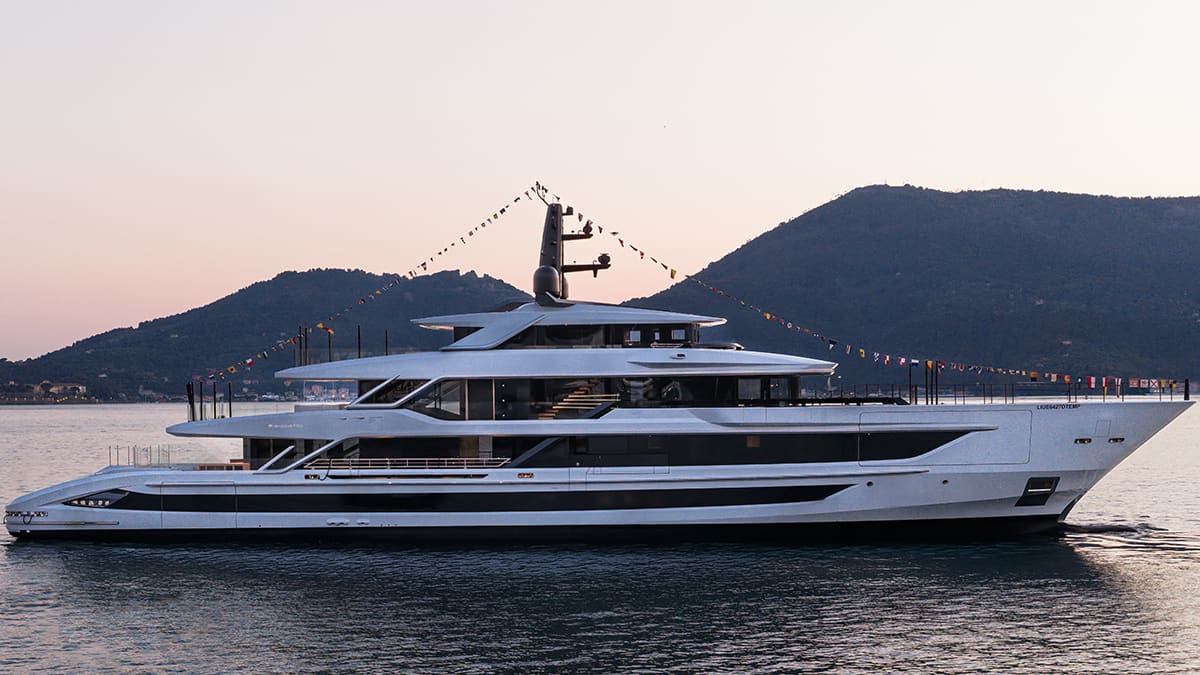
There is a moment in every shipyard's evolution when ambition crystallizes into steel and glass, when decades of incremental refinement give way to something that redefines scale itself. For Baglietto, that moment arrived this summer in the form of Kinda II, a 60-meter vessel that stretches the Italian yard's legacy into territory it has never occupied. At roughly 199 feet, she is the largest yacht the shipbuilder has delivered since its founding in 1854, edging past the 195-foot Vicky that held the title for eighteen years.
At Global Chic Voyage, we have watched heritage yards wrestle with this particular inflection point: the decision to expand not just in ambition but in physical dimension, to pursue clients whose appetites demand more volume, more space, more of everything. It is rarely a simple calculation. Scale brings technical complexity, operational risk, and the challenge of maintaining the craftsmanship and identity that built a reputation in the first place. Baglietto has chosen to cross that threshold with the T60 series, a line conceived only four years ago that has already sold three hulls.
The Architecture of Openness
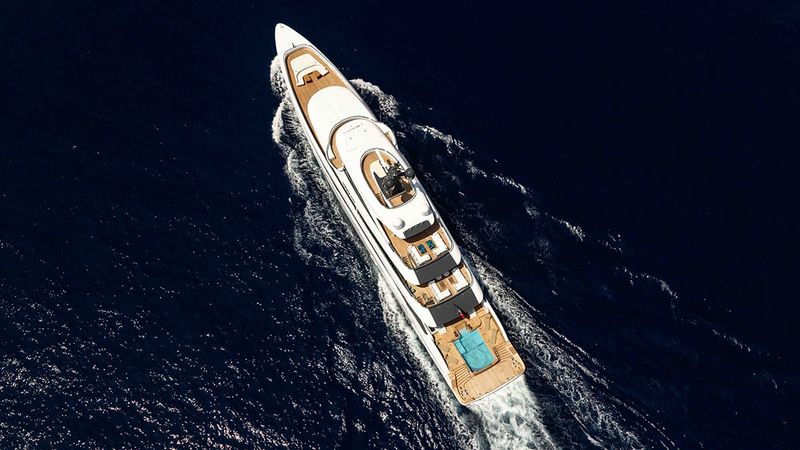
Francesco Paszkowski Design was tasked with giving the T60 a visual language that departs from Baglietto's more traditional silhouettes. The result is angular and assertive: a near-vertical bow that cuts rather than curves, hull sides that appear to float above the waterline, and a continuous band of black glass wrapping the superstructure. The stern opens wide, dissolving the usual boundary between salon and sea.
Inside, the yacht's 1,100 gross tons are organized around a single animating principle: fluidity. The main salon and dining area flow without interruption onto a beach club that incorporates a pool, bar, and gym. It is a two-level living environment designed to feel like a single, unbroken space, a rarity on vessels of this size where compartmentalization often wins out over continuity.
We have seen this approach gain traction among contemporary yacht designers, particularly those working with clients who spend their time on board differently than previous generations did. The appeal is less about formal entertaining and more about immersive living, about erasing the psychological distance between interior comfort and the water itself. Paszkowski has pushed that idea to its logical conclusion here, creating spaces that feel less like rooms and more like platforms for experience.
An Owner's Domain
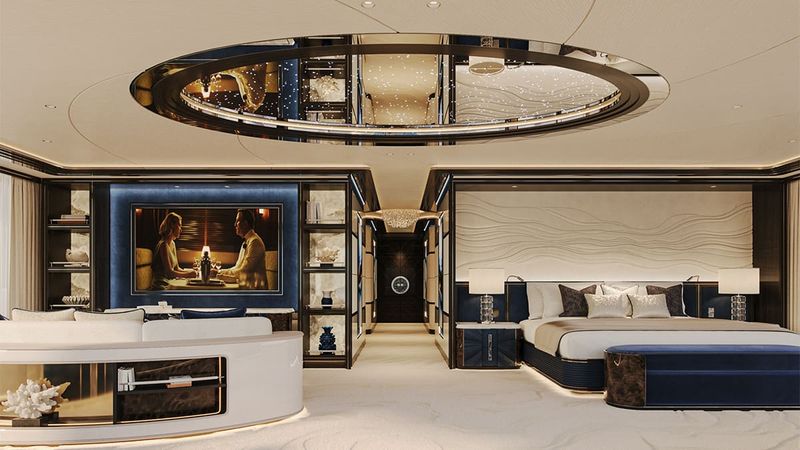
The upper deck belongs entirely to the owner, a private realm within the larger vessel. The suite includes a dedicated office, a walk-in wardrobe, and two en-suite bathrooms. Forward, a private pool; aft, an outdoor lounge, dining area, and Jacuzzi. It is a layout that privileges solitude and autonomy, allowing the owner to effectively inhabit a separate yacht within the yacht.
This arrangement reflects a broader shift in superyacht design toward verticality and stratification. Where older vessels often placed the owner's quarters on the main deck alongside guest cabins, newer builds increasingly dedicate entire levels to the principal user. It is a response to the reality that these vessels are not just vacation homes but working environments, places where business is conducted and privacy is non-negotiable.
The remaining accommodation is generous: two VIP cabins and two guest cabins on the main deck, a fifth guest cabin on the lower deck, and quarters for a crew of thirteen. The distribution suggests a vessel designed for extended family use or for hosting small groups over longer voyages, rather than for the large-scale entertaining that characterized an earlier era of yachting.
Performance and Practicality
Baglietto equipped the T60 with twin CAT 3512 engines, yielding a maximum speed of 16 knots and a cruising speed of 12 knots. These are not figures that will win any speed records, but they are appropriate for a vessel of this displacement and volume. The emphasis here is on range and comfort, on the ability to cover long distances without subjecting guests to noise or vibration.
The bow features a touch-and-go helipad, a practical addition for a yacht likely to spend time in regions where shore access is inconvenient or where the owner's schedule demands flexibility. The garage can accommodate a 23-foot tender, two personal watercraft, and a rescue tender, a suite of equipment that reflects the logistical complexity of operating a vessel of this scale far from established marinas.
There is also a wellness area with a fully equipped spa, and a sundeck configured for sunbathing. These are the amenities that have become standard on superyachts of this size, but their execution here suggests a yard that understands the difference between checking boxes and creating coherent environments.
What Scale Buys
Diego Michele Deprati, Baglietto's CEO, has described the T60 as both a milestone and a strategic achievement, the culmination of years of deliberate positioning within the superyacht segment. The fact that three units have sold before the first was even delivered speaks to the yard's ability to read the market and to the confidence clients have in its capacity to execute at this level.
At Global Chic Voyage, we recognize this as a moment of institutional risk as much as triumph. Expanding into a new size category requires not just design ambition but also infrastructure, supply chain coordination, and a willingness to absorb the complexity that comes with larger builds. Baglietto has been building yachts for nearly two centuries, but scale introduces variables that experience alone cannot fully anticipate.
The commercial success of the T60 series suggests that the yard has calibrated correctly. There is a segment of the market that values heritage and craftsmanship but also demands the volume and amenities that only larger vessels can provide. Baglietto is positioning itself to serve that client, one who wants the pedigree of an Italian yard with the spatial generosity of a vessel that approaches 200 feet.
A Line Extended
Kinda II will make her debut at the Monaco Yacht Show, the annual gathering where new builds are scrutinized by brokers, designers, and prospective owners. The other two T60 units are scheduled for delivery over the next two years, which means Baglietto will be managing multiple large builds simultaneously, a logistical and financial commitment that underscores the yard's confidence in the series.
We will be watching how the market receives this vessel, not just as a standalone achievement but as the opening statement in a new chapter for Baglietto. The T60 is a bet that there is room in the superyacht segment for a yard that combines Italian design sensibility with the scale and amenities typically associated with northern European builders. If the bet pays off, it may redefine what clients expect from Mediterranean yards more broadly.
For now, Kinda II stands as the largest yacht Baglietto has ever built, a vessel that pushes the yard's capabilities and reputation into new waters. Whether she becomes a template or an outlier will depend on how the next two hulls are received, and whether the market for 60-meter yachts built by heritage Italian yards proves as robust as Baglietto believes it to be.