What World-Class Athletes Look for in a Hotel Room
Constant travel teaches you what matters: silence, a good couch, and the ability to disappear.
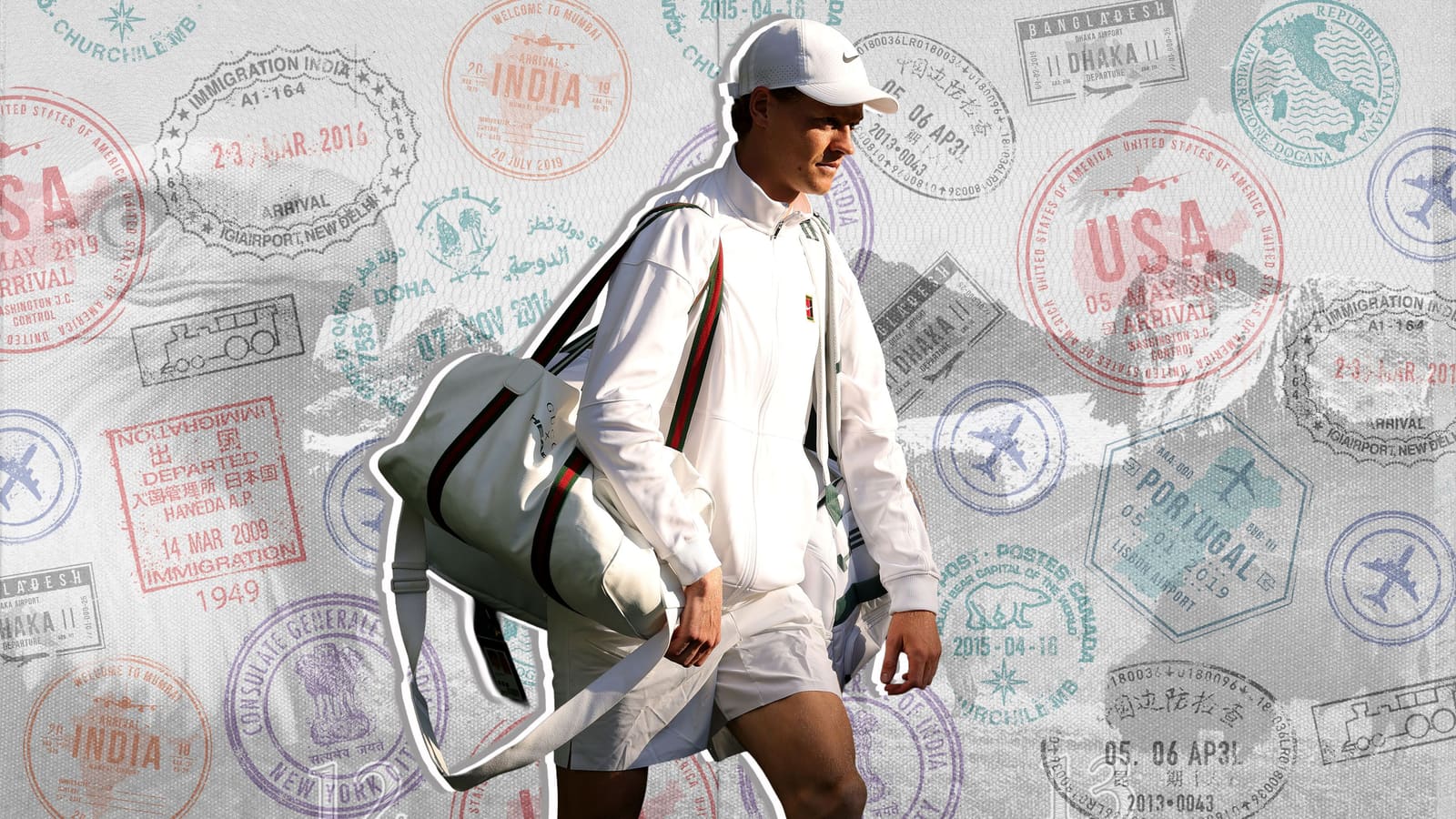
The Geography of Rest
The world's top tennis player spends more nights in unfamiliar beds than his own. Jannik Sinner, currently holding the men's singles No. 1 ranking, calculates his year not in months but in cities - each one a new mattress, a different pillow density, another attempt to convince his body it's somewhere safe enough to recover. He left his family home in South Tyrol at thirteen, and in the years since, the Dolomite peaks and his parents' kitchen have become a place he visits two, maybe three times annually. Never enough, he admits.
This is the arithmetic of elite sport: performance divided by recovery, multiplied by motion. And so athletes become accidental connoisseurs of the transient, developing preferences invisible to the leisure traveler but essential to those whose livelihood depends on what happens after they close the door.
Sinner's checklist is lean. Quiet. Calm. A hotel that doesn't throb with lobby energy or corridor foot traffic. And, crucially, a couch substantial enough to sleep on. Not as a backup, but as a destination in itself. He has been known to fall asleep there and never migrate the three or four meters to the bed, as though the couch's informality offers a psychological release the bed, with all its implications of discipline and routine, cannot.
Escaping the Unreachable
The same man who recently claimed a Wimbledon title and chased a second US Open trophy also finds himself aboard Explora III, the latest vessel in a new generation of ultra-luxury cruise ships. As the line's global brand ambassador, Sinner helps design athletic and wellness programming for passengers, but his presence on board is less about work than about access to a particular kind of solitude.
"You're kind of untouchable," he says of being at sea. The word choice is telling. In terminals, stadiums, even boutique hotels in secondary cities, a top-ranked athlete is always within arm's reach - of a fan, a phone, a question. The ocean offers distance in all directions. No one can walk up. The ship moves, and you move with it, cocooned.
Cruise travel, long stereotyped as retiree territory or family obligation, is being quietly recalibrated by a cohort that values inaccessibility as much as itinerary. For someone whose calendar is determined by tournament draws and whose rest periods are short and non-negotiable, a vessel that drifts from Genoa to Marseille overnight is less a vacation than a strategic retreat. Yesterday one country, today another, and you never packed or unpacked.
The Inventory of Comfort
Sinner's carry-on is Spartan: an iPad preloaded with series and films, AirPods for music and noise cancellation, nothing more. He sleeps easily on planes, a skill he considers a competitive advantage. Time collapses when you can sleep through it. But the one item he wishes he could bring - his own mattress - remains out of reach, a logistical impossibility that every touring athlete understands. Beds change weekly. Sometimes daily. The body is asked to perform at maximum output while never fully settling.
So the rituals become portable. After a match: an ice bath, unpleasant but necessary. Then a jacuzzi to release what the cold locked down. Recovery is not optional; it's embedded in the schedule like a second training session. Longevity, Sinner notes, is something you work toward, not inherit. New tools appear constantly, techniques proliferate on social media, and the professional's job is to sift the valuable from the viral.
Food, too, becomes a lever. Rigatoni with tomato sauce and a side salad on training days - carbohydrates in the most efficient, familiar form. On breaks, back in South Tyrol, it's wiener schnitzel, the crispy veal cutlet his parents make, the dish that signals he is, briefly, off the clock.
The Tuscan Exception
Italy, Sinner observes, makes it difficult to choose poorly. Mountains in the north, coastline on three sides, hills that roll in every interior direction. But he singles out the Tuscan hills as undervisited, at least by him - sun-soaked, pastoral, peaceful in a way that doesn't require effort. He has been once. He would go again, if the calendar allowed.
It's a telling omission in a life otherwise defined by completeness. Sinner is twenty-three years old and has already seen more hotel rooms than most see in a lifetime, yet there are still regions within his own country he hasn't had time to explore. The gap between proximity and access is wide when your profession is measured in rankings and match wins.
He is also a devoted Formula One fan, particularly drawn to Monaco, where he lives but has never attended a qualifying session in person. The race happens during the tennis season. The calendar doesn't bend.
The Couch as Anchor
If there is a single request Sinner would make of every hotel, it is this: a couch good enough to sleep on. Not as metaphor, but as literal furniture. A piece substantial in cushion and scale, something that suggests domesticity without the formality of the bed. He has fallen asleep on hotel couches countless times, waking hours later without having moved. The couch offers permission to rest in a way that feels less like obligation and more like choice.
It's a small ask, easily overlooked by designers focused on thread count and rain showers. But for someone whose home is provisional and whose rest is always borrowed, the couch becomes a stand-in for stability. It says: you can be informal here. You can let go.
Travel for athletes at this level is not about discovery or leisure. It is infrastructure - how you get from one performance to the next, what you do in between to ensure the next performance is possible. The romance is incidental. The priority is function.
Sinner arrives at airports late, cutting it close, a calculated gamble that minimizes exposure and waiting. He takes the window seat, always, to lean his head. He prefers restaurants to room service when context allows, because even an hour outside the room is an hour not spent staring at walls. He would travel with only a backpack if his profession allowed it, but tennis demands equipment, and equipment demands checked luggage. The dream is simpler. The reality is heavier.
What the Ship Offers
Aboard Explora III, Sinner points to the paddle court on deck 14, the pools, the jacuzzis - spaces where he can step away without stepping off. The ship, he says, is an elegant hotel that happens to move. The food rivals what he finds on land. The atmosphere is calm in a way that hotels, tethered to cities and streets and crowds, often are not.
For someone who began traveling as a teenager and never stopped, the sea offers something rare: a horizon with no one on it. You can turn off your phone. You are, in his words, unreachable. And that - more than the amenities, more than the itinerary - is what makes the journey valuable.
The lesson here is not specific to cruise ships or five-star suites. It is about understanding what rest actually requires when your life is spent in motion. Not luxury for its own sake, but the conditions that allow the body and mind to reset. A quiet hallway. A couch that feels like home. A bed that doesn't punish you for the last one. And, when possible, distance - enough of it that the world, for a few hours, cannot reach you.