Sweden's West Coast Emerges as the North's Answer to Understated Luxury
Where former Michelin chefs trade degustation for dairy farms, and quiet elegance replaces Mediterranean gloss.
A New Quiet on the Peninsula
The staircase in the guesthouse is hand-carved, each step fitted by craftspeople who understood that permanence, not spectacle, is what lasts. No crystal drops from the ceiling. No statement pieces command the corridors. Instead, two hundred lamps - vintage finds rescued from estate sales and flea markets - have been rewired, polished, and returned to service. The building itself is over a century old, its roof re-tiled in terracotta, its shutters painted the pale green of winter kale. On the Bjäre peninsula, where Danish and Swedish royals once took their summer rest, this is how you signal arrival: by saying almost nothing at all.
The property is Furuhem, and it opened this year with a three-month waiting list. Its co-founder is Magnus Nilsson, the chef whose previous restaurant, Fäviken, once drew diners to Jämtland's forests for thirty-two courses of bone marrow, dried blood, and arctic char pulled from nearby lakes. That project closed in 2019. What followed was a retreat to the coast, a pivot from intensity to simplicity, and a new venture managed alongside chef Frida Nilsson and Daniella Rebelo, formerly of Noma. The result is a bakery, an inn, a dining room - and a template for what luxury now means along Sweden's western shore.
The Geography of Restraint
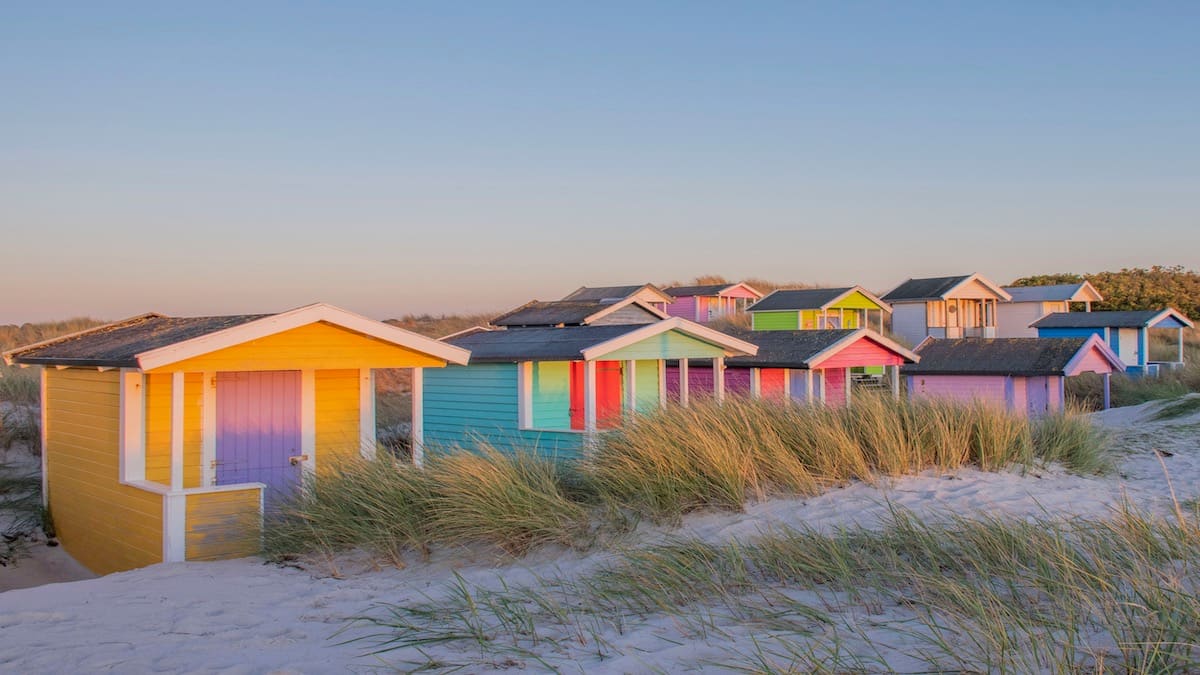
Skåne county stretches along the country's southern edge, its coastline punctuated by fishing villages, cycle routes, and beaches that remain cold enough to discourage crowds even in high summer. Åhus, one such town, sits on a 167-mile bicycle trail called Sydostleden. The route winds through farmland, past orchards, along cliffs where the Baltic meets the Kattegat. The landscape is flat, windswept, and profoundly unshowy.
This is deliberate. In a region where chief executives mow their own lawns and walk their dogs without entourage, luxury is not performed. It is embedded in materials, in time, in the refusal to announce itself. Janel Carnero, a travel adviser with Embark Travel, describes it as intentional rather than loud. "Luxury here is found in the extreme purity of the experience," she notes. "It's foraging for your own dinner ingredients with a master chef or taking a private ice-bath ritual."
The comparison to the Hamptons is imperfect but instructive. Both regions attract capital; both offer proximity to water and a weekend escape for urban elites. But where one trades on visibility, the other trades on its opposite. In Skåne, the Bentley parks beside the battered Volvo, and no one remarks.
From Dairy to Degustation
An hour inland from Furuhem, in Halland province, three siblings have transformed their family's third-generation dairy farm into something else entirely. Linda, Daniel, and Mattias Carlsson now run Åstad Vingård, a small-scale winery, spa, and guesthouse that draws bankers, Danish families, and couples carrying designer totes who want silence more than spectacle. The property has eight saunas. The restaurant, Äng, is housed in a glasshouse and holds a Michelin star. Chef Filip Gemzell and his wife, Ann-Catrin, serve nineteen courses of hyper-seasonal produce while cows graze in the background and guests look out over Åkulla Bokskogar Park.
The wine list is formidable: Krug Clos du Mesnil, Roederer Cristal Vinothèque, Montrachet Grand Cru. The dress code is sneakers and resort wear. "The other day, I walked past the car park and saw a rather worn old car parked right next to a Bentley," Daniel Carlsson says. "That is probably a fairly accurate picture of who we are at the moment, and I very much like that."
The Carlsson family has also acquired Varbergs Kusthotell, an 1822 bathhouse on the Halland coast near Apelviken, the country's most consistent surf beach. A major renovation is under way, including a new spa and redesigned rooms, in anticipation of increased demand from Scandinavian city dwellers.
The Cultural Architecture of Escape
Mathias Dahlgren, a Michelin-starred chef often called the godfather of Swedish cuisine, opened a new restaurant in his hometown of Umeå earlier this year. He speaks of nature not as amenity but as necessity. "We Swedes are born as nature romantics," he says. "I believe we've always used nature as a way to heal. It has been our escape from industrialisation, urbanisation, and modern stress. Picking wildflowers by the roadside, cooking over an open fire, swimming naked in a lake - that is the ultimate luxury for us."
This philosophy underpins the current wave of hospitality projects along the west coast. They are not retreats in the spa-resort sense. They are working farms, restored inns, glasshouses where dinner is harvested hours before service. The luxury lies in proximity to origin: the egg, the flour, the fish, the wine.
The Return of Daniel Berlin
Further south, overlooking the Österlen coast, Vyn Restaurant and Hotel opened in 2023 and marked the return of chef Daniel Berlin, whose previous restaurant was among the most celebrated in the country. Bookings at Vyn are notoriously difficult to secure, but those who manage it are rewarded with an eighteen-course menu that maps the fields, forests, and waters of Skåne. Everything is local. Everything is seasonal. The dinner costs four hundred and ten dollars; the prestige wine pairing, four hundred and sixty. The largest suite in high season runs eight hundred and forty-eight dollars, and includes what is widely regarded as one of the finest breakfasts in Sweden: cinnamon rolls baked that morning, and Äggakaka, a jiggly local egg speciality.
Vyn draws the same demographic as Furuhem and Åstad: high-net-worth Scandinavians who once summered in the Mediterranean but now prefer to stay closer to home. As temperatures rise along the southern coasts of Europe, the appeal of Sweden's cooler, quieter alternative has grown. This is not a party scene. There are no beach clubs, no sparklers, no salad Niçoise. There is bread, butter, eggs, wine, and the kind of silence that money, increasingly, cannot buy elsewhere.
The Mechanics of a Renaissance
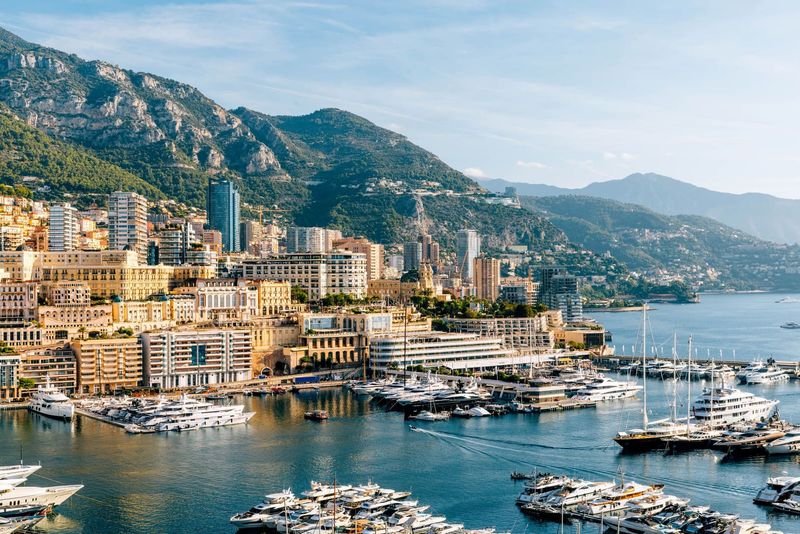
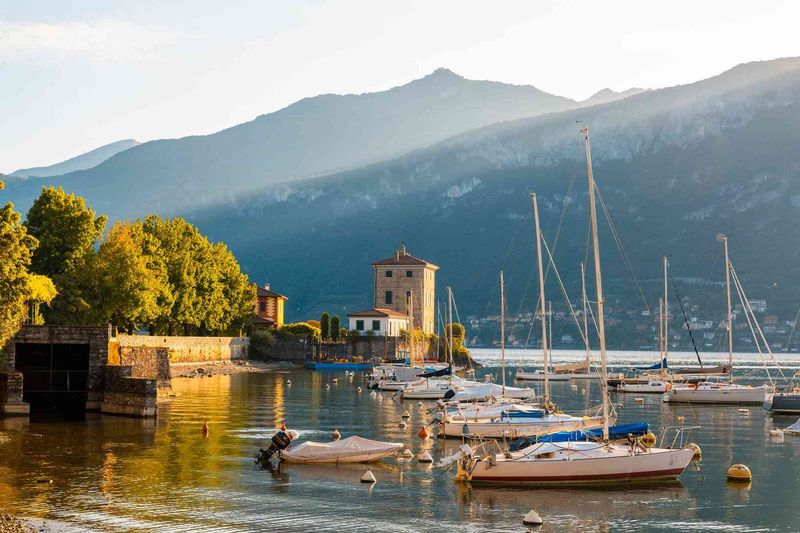
Southern Sweden fell out of favour in the 1970s, when the Mediterranean became the destination of choice for the Nordic wealthy. Saint-Tropez, the French Riviera, the Italian lakes - these were the places that signalled taste, leisure, and access. But a small renaissance is now under way along the Swedish countryside and shore. It is not a return so much as a recalibration: a recognition that luxury can be found in restraint, in craft, in the refusal to perform.
The properties opening across Skåne and Halland share a common vocabulary. They are small. They are family-run or chef-led. They emphasise materials over branding, process over polish. They do not advertise. They do not need to. Word spreads through the same social circles that once flew south, and now drive an hour west instead.
This is not a trend that will scale. The model depends on scarcity, on the impossibility of replication. But for those who can secure a table, a room, a weekend on the Bjäre peninsula, the experience is quietly transformative. It is luxury that does not announce itself, that does not need to. It simply is.