Seoul in Spring: A Tween-Led Journey Through Hanbok, Pancakes, and the Unfolding Self
What happens when a ten-year-old arrives with her own itinerary, and a city rises to meet her curiosity.
A Promise Kept, A City Added
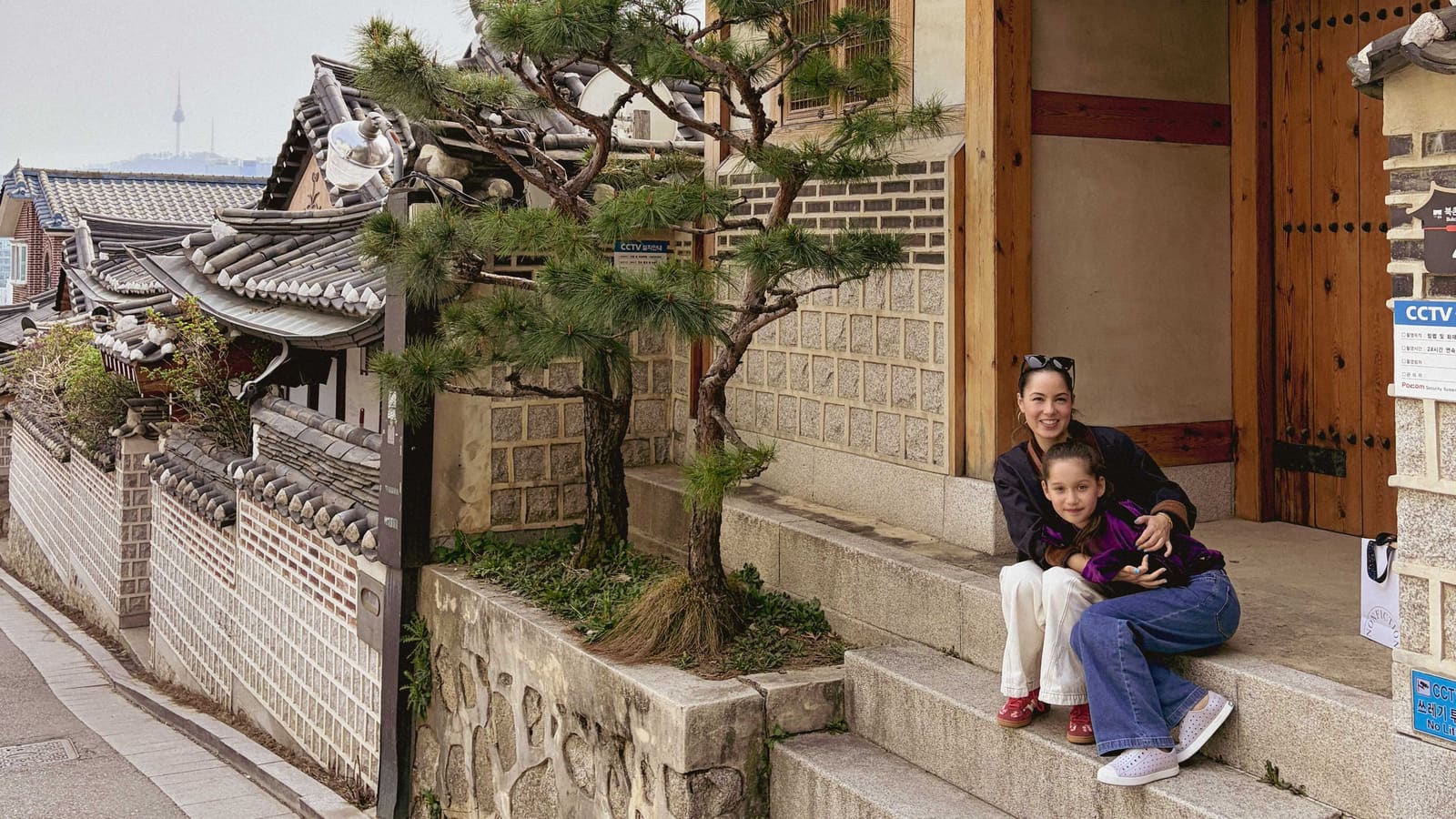
When a debut novel finds its publisher, certain promises take on new weight. For Juliet Izon and her daughter Avvie, the deal was Tokyo: ten days if the book sold. Spring break delivered on that pact, but the calendar offered more. Two weeks of school vacation, a transpacific flight already spent, and Seoul just two hours away by air. Avvie had been cataloging Korean beauty brands and memorizing K-Pop choreography for months. The food beckoned beyond the narrow corridor of what they knew from home. Four nights in Seoul folded into the itinerary with the logic of an open door.
Neither anticipated how completely the city would claim them.
The Practical Case, and the Real One
Seoul presented itself first as a matter of logistics. The time zone mirrored Japan's, sparing them another round of jet-lag mathematics. The exchange rate with the US dollar softened costs that might otherwise sting. For a ten-year-old with firm convictions about lip gloss and pop-music aesthetics, the city offered an almost reckless abundance of material.
But the deeper argument for Seoul belongs to a particular developmental moment. Ten is a liminal age, the threshold where a child begins arriving at her own passions, her own sense of what a day should hold. Avvie came to the planning table with lists: foods to eat, neighborhoods to explore, shops to visit. Juliet found herself in the unfamiliar position of following her daughter's lead, watching the trip take shape around someone else's curiosity.
This inversion of authority, this gentle abdication, is one of the quiet pleasures of traveling with a tween. The child is no longer a passenger in someone else's itinerary. She is co-author, sometimes lead architect. The trip becomes a conversation, not a monologue.
First Hours in Seongsu
Google Maps does not function in South Korea. The government has withheld high-precision cartographic data from overseas companies, though policy shifts are anticipated. For Juliet, who habitually pins every destination before departure, the adjustment required conscious effort. Naver and other local applications serve as substitutes, but retraining muscle memory takes time.
Spring in Seoul, however, requires no adjustment. Cherry blossoms arrive in force, especially on Namsan Mountain, and the city wears them without modesty. Japan claims the reputation, but Seoul's blossoms hold their own.
After dropping their bags, Juliet and Avvie made directly for Seongsu, a neighborhood in the eastern wards often compared to Brooklyn. The comparison holds, with qualifications. Think Williamsburg: boutique density, restaurant energy, immaculately composed pedestrians. Shops remain open until ten at night, and the streets hum accordingly. Avvie moved between makeup counters and bag-charm stalls while the city announced its tempo. The energy, Juliet knew within an hour, would be electric.
Alice, and the Architecture of Understanding
For two of their four days, Juliet and Avvie worked with a local guide named Alice, whose fluency in Korean culture, food, fashion, and history recalibrated their experience of the city. Hiring a guide is, for Juliet, less convenience than philosophy. A guide optimizes routes, yes, but more importantly provides a live channel for questions, which with a ten-year-old arrive frequently and without warning.
Alice led them to Gwangjang Market for lunch, navigating the sprawl to her preferred stall for bindae-tteok, mung bean pancakes fried to order. Another vendor supplied hotteok, sweet pancakes filled with nuts and sugar. Koreans, Juliet observed, understand the alchemy of pan-fried carbohydrates.
At Gyeongbokgung Palace, Alice offered the kind of layered historical context that transforms architecture into narrative. The palace became not simply a beautiful structure but a place weighted with meaning, its courtyards and gates holding centuries of political and cultural memory. The guided days set a standard for what understanding a place can feel like, a benchmark the solo explorations could not quite match.
Hanbok and the Calculus of Dress
Seoul's major palaces grant free entry to visitors wearing traditional hanbok. The rental shops cluster near the gates, and on most mornings the courtyards fill with silk and embroidery. The rental fee exceeds the cost of admission, but the economics are beside the point.
Juliet hesitated to suggest it during their first palace visit, uncertain whether a ten-year-old would embrace the formality. Then Avvie spotted the hanboks on other visitors and made the decision herself. They spent the morning selecting coordinating ensembles, then moved through the palace grounds in matching silk. The photographs from that day, Juliet says, will be framed.
This is the work of travel at ten: the child choosing her own enthusiasms, the parent learning when to step back and when to follow. The hanbok was not on Juliet's list. It became the centerpiece of their palace experience because Avvie saw it first.
K-Pop Sets and Beauty Counters
HiKR Ground, a government-run hub for Korean pop culture, turned out to be the rare venue that satisfies both a tween and her mother without compromise. Avvie filmed K-Pop videos on elaborate sets while Juliet sampled doughnuts from Knotted, a local chain with an outpost inside the building. The afternoon succeeded on everyone's terms.
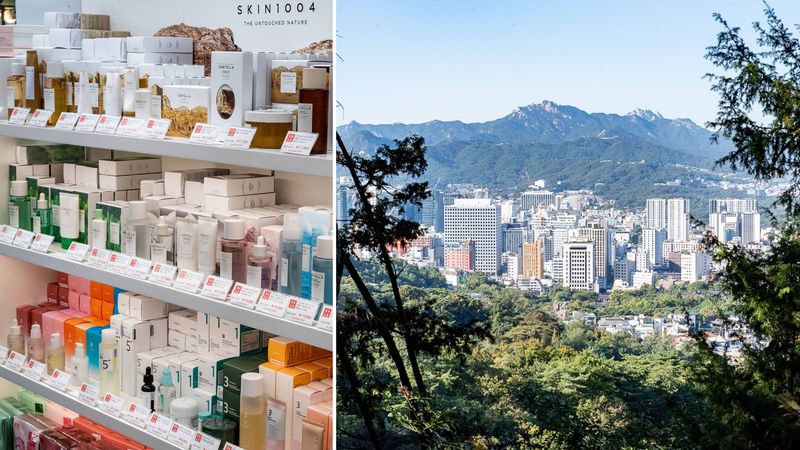
The Olive Young visits were, by necessity, numerous. Korea's dominant health and beauty retailer operates locations across the city, and Avvie had opinions about all of them. Juliet, who arrived with skincare research in hand, understood quickly that entering these stores without a plan invites its own kind of chaos. The shops are vast, the product density overwhelming. Knowing which skin concerns to address or which brands to prioritize makes browsing manageable.
But the moment Juliet returns to most often is quieter. Alice arranged for them to sit with a caricature artist on their first guided day, a cozy shop with the cartoonish warmth that feels distinctly Korean. While the artist worked, Juliet and Avvie sat together, talking through their days in the city. The resulting sketch, both of them grinning, became Juliet's favorite keepsake from the trip.
Starfield Library and the Multitudes Within
There is a particular quality to ten that resists easy description. The age straddles two entirely different modes of being: the goofy, wide-eyed child and the more interior, opinionated adolescent, sometimes within the same afternoon. In Seoul, Avvie moved between selecting lip gloss with forensic care at Olive Young and shrieking with unguarded delight at the Starfield Library, a soaring bookcase installation that arrests most visitors regardless of age.
Watching her daughter navigate these extremes, Juliet saw something clarify. Sometimes it is only when you break from routine that you can see a child's personality evolving in real time. The trip became a mirror, reflecting back a version of Avvie that daily life at home might obscure.
Where They Stayed, and What They Learned the Hard Way
Juliet and Avvie stayed at The Shilla, a five-star property in central Seoul chosen for its reasonable rate, its location in a neighborhood neither chaotic nor isolated, and a breakfast buffet of staggering scale. The buffet offered everything from soufflé pancakes to dim sum, serving double duty as both meal and culinary reconnaissance. Dishes sampled at breakfast could be sought out later in the day.
They relied on Uber for most transportation, which proved affordable given the exchange rate. In retrospect, a car and driver for the full trip would have been worth the cost. But Uber required vigilance. A miskeyed address on day one sent them to a quiet residential neighborhood forty minutes from their intended destination, a bakery in Seongsu. Avvie kept her composure, which defused what might have been a stressful detour. The lesson: verify the route before confirming any ride.
The Blueprint for Others
Seoul is vast, and the most important preparation is deciding in advance how to apportion time between cultural sites, kid-focused activities, and the slower hours of wandering. There are limits to how many palaces a ten-year-old can absorb in a single day. Two, spread across two visits, proved right for Avvie. No such ceiling exists for beauty stores.
Download a translation application before landing. Most shop and restaurant staff do not speak English, nor will ride-share drivers. Learn a few words of Korean; the effort registers and is appreciated. And hire a guide, at least for part of the journey. The two days with Alice were the most textured of their four in the city, not because the solo days lacked value, but because the guided days established a standard for what comprehension can feel like.
Plan the itinerary in advance, then leave room in the afternoon schedule for the unplanned trip, the detour that becomes the story you tell later.
What the Trip Cost, What It Gave Back
Four nights in Seoul for one adult and one child, appended to a longer Japan itinerary. Flights from Tokyo to Seoul and Seoul to New York totaled $1,728. Accommodation at The Shilla ran $1,400 for the stay. Food and activities came to $856. Two days with a local guide cost $2,250 per person.
The numbers are useful, but they map only part of the terrain. What Seoul offered Juliet and Avvie was something harder to invoice: the chance to see each other outside the familiar rhythms of home, to watch a ten-year-old step into her own enthusiasms, to discover that a city can rise to meet a child's curiosity as readily as an adult's. The trip was a celebration of a published book, yes, but also of a particular moment in a daughter's unfolding, a moment that will not hold still and cannot be revisited.
Seoul, in spring, with cherry blossoms and hanbok and pancakes and a caricature sketch that will hang on a wall somewhere, was the right city for that.