Three Mumbai Tables Where Ingredient and Intent Converge
From a decades-old seafood institution in Kala Ghoda to a fermentation-focused dining room where single ingredients anchor entire dishes, the city's restaurant landscape rewards both curiosity and restraint.

The Architecture of Restraint
There is a table at Ekaa in Mumbai where the evening's courses are determined by a single, deceptively simple request: the Magic Cake. What arrives thereafter is a sequence Chef Niyati Rao and restaurateur Sagar Neve have designed to surprise, though the team prefers guests discover the particulars in real time rather than through advance description. The restaurant's name translates to "the one", a reference to the structuring principle behind every dish on the menu: one ingredient, positioned at the centre, with everything else arranged in support.
Rao trained briefly at Noma, and the influence shows not in mimicry but in method. Ekaa sources locally and ferments in-house, and the cocktail programme draws on ingredients foraged from seven of India's ecosystems, spanning mountains, oceans, and desert. The menu is cuisine-agnostic, which is to say it refuses allegiance to any single culinary tradition. The tasting menu, which leaves the evening entirely in the chef's hands, operates as an argument for focus over abundance, for depth over breadth. It is the sort of dining experience that asks for trust, and for those willing to grant it, rarely disappoints.
A Benchmark Set in Butter and Garlic
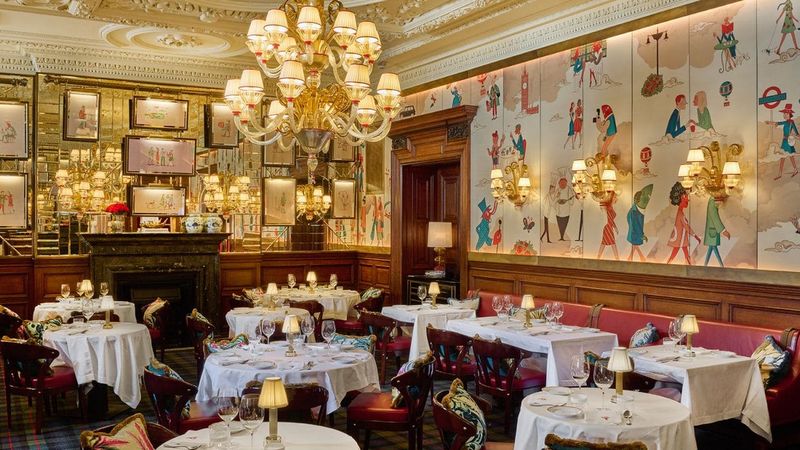
Fifteen minutes south, in the lanes of Kala Ghoda, Trishna has been serving Konkani and Mangalorean seafood since 1965. The restaurant is run by a family from Mangalore, and its butter pepper garlic crab has become something of a benchmark for the city, the dish against which others are measured. The room is small. The décor has not changed much over the decades. That has not stopped it from drawing regulars, first-time visitors, and the occasional celebrity in equal measure.
Beyond the crab, the rawas Hyderabadi deserves attention: black pepper-coated and pan-seared until the exterior crisps and the interior remains tender. The Koliwada prawns, too, are worth ordering. Trishna is the kind of place people plan their next visit to before dessert arrives at the first one, a rhythm that speaks to the durability of its appeal. It is not reinventing the category. It is, instead, performing it with a consistency that has outlasted trends and survived the churn of Mumbai's dining scene for six decades.
Foraged Ecosystems and the Tasting Menu as Trust Exercise
What separates Ekaa from the city's longer-established dining rooms is not novelty for its own sake but a willingness to let process dictate outcome. Fermentation takes time. Foraging requires knowledge of terrain, season, and availability. The decision to anchor each dish around a single ingredient is a structural constraint that forces clarity, a kind of editorial discipline applied to the plate.
The cocktails at Ekaa, which incorporate foraged elements from India's varied ecosystems, function as an extension of the same philosophy. They are not garnished with the exotic for effect; the ingredients are there because they carry specific flavour profiles that align with the broader narrative of the menu. The tasting menu, in particular, is designed to surprise, though surprise here is less about shock and more about the quiet revelation that comes from seeing a familiar ingredient treated in an unfamiliar way.
This approach, cuisine-agnostic and ingredient-focused, positions Ekaa within a broader global conversation about what it means to cook locally without being bound by tradition. It is a conversation that includes Copenhagen and Mexico City and Bangkok, but it is also one that remains rooted in the particularities of Mumbai's markets, its coastal geography, its access to both mountain and desert ecosystems within a single country's borders.
The Endurance of the Benchmark
Trishna's appeal, by contrast, lies in its refusal to shift. The butter pepper garlic crab has been prepared the same way for decades, and that consistency is the point. In a city where restaurants open and close with alarming frequency, where trends cycle through every season, Trishna's longevity is a form of resistance. It is also a form of validation: the family from Mangalore who opened the restaurant in 1965 understood something about seafood, about Konkani and Mangalorean preparations, that continues to resonate.
The rawas Hyderabadi, with its black pepper crust and pan-seared execution, is a study in texture: the crisp exterior giving way to tender fish beneath. The Koliwada prawns, meanwhile, are fried with a spice blend that carries heat without overwhelming the sweetness of the prawn itself. These are not dishes that announce themselves with theatricality. They are, instead, dishes that have been refined over decades, each repetition bringing incremental improvement, each service adding to the cumulative knowledge of how to prepare seafood in a way that honours both the ingredient and the tradition.
Two Poles, One City
Mumbai's dining landscape accommodates both approaches. Ekaa's fermentation-focused, ingredient-centred tasting menu exists in the same city as Trishna's decades-old butter pepper garlic crab, and the city is richer for the coexistence. One is not inherently superior to the other; they are simply operating within different value systems, answering different questions about what a meal can and should be.
At Ekaa, the question is: how much can be revealed by constraining the focus to a single ingredient, by allowing process and technique to amplify rather than obscure? At Trishna, the question is: what endures, and why? The answers, discovered over the course of an evening at either table, are worth the inquiry. They are also, increasingly, what separates memorable dining from the merely competent, the kind of meal that lingers in memory from the kind that fades before the bill is settled.
The Magic Cake at Ekaa remains a mystery until it arrives. The butter pepper garlic crab at Trishna remains a benchmark because it has earned that status through repetition and consistency. Both are worth seeking out, for different reasons, and both are distinctly, unmistakably Mumbai.