Rosewood Hong Kong Holds the Crown as Asia Claims Seven of the World's Top Ten Hotels
The 2026 ranking reveals a decisive shift eastward, with Victoria Harbour's 65-storey landmark retaining its position for the second consecutive year.
A Harbour Landmark Returns to the Podium
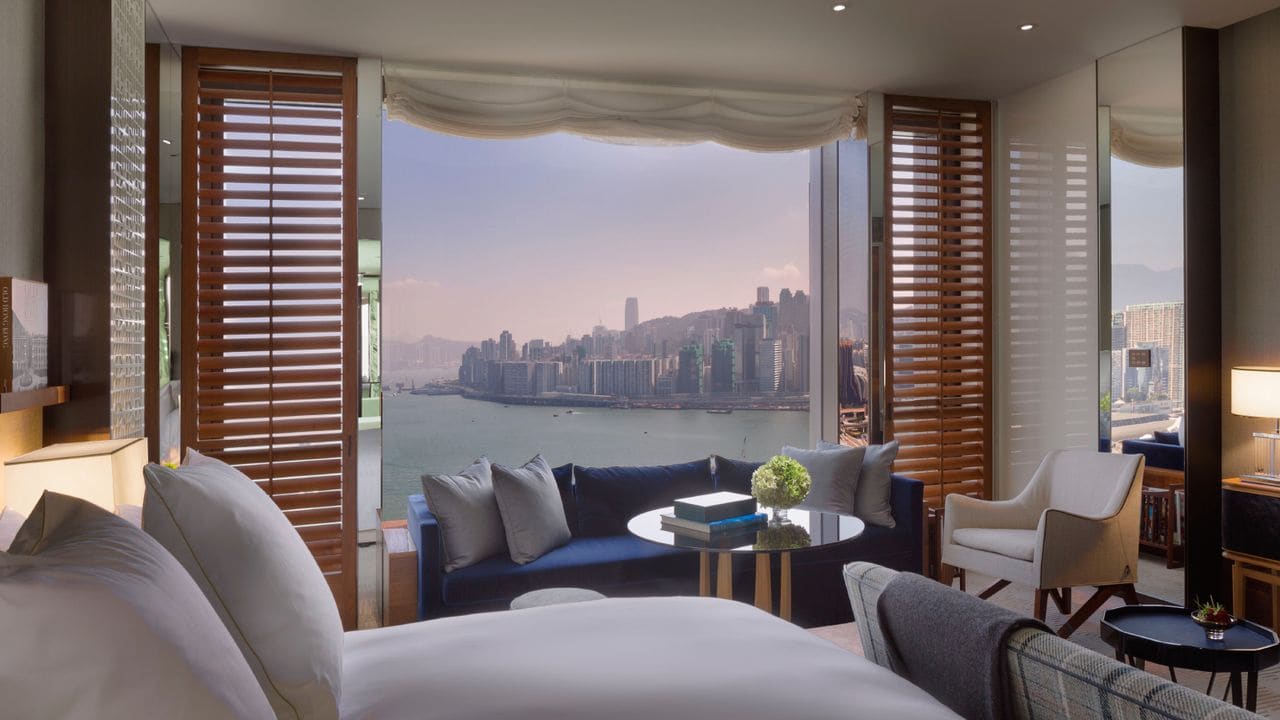
The view from Victoria Harbour has long been one of architecture's great theatre sets, where glass and steel rise against the water in silent competition. Among them, a 65-storey tower designed by Tony Chi stands apart, not for height alone but for what unfolds inside: 413 rooms and suites, eleven restaurants and bars, and Asaya, a wellness concept that spans multiple levels like a vertical village. This is Rosewood Hong Kong, and for the second year running, it holds the title of the world's best hotel.
The World's 50 Best Hotels announced its 2026 ranking on 15 September at Les Salles du Carrousel in Paris, marking the first time the ceremony has left London. The list draws from 22 territories across six continents, determined by an academy of more than 800 hoteliers, travel journalists, educators and seasoned travellers spanning 13 regions. Deloitte adjudicates the results independently, ensuring the process remains beyond reproach.
Rosewood Hong Kong's repeat win also secures its position as Asia's finest, a continent that claims 18 of the 50 places and seven of the top ten. The building opened in 2019, and its ascent has been swift. What distinguishes it is not novelty but a synthesis of place and purpose: the harbour is not merely backdrop but participant, visible from nearly every vantage point, shaping the rhythm of the interiors. Chi's design speaks in textures rather than declarations, a restraint that allows the city itself to do the talking.
Bangkok's Twin Ascent
Bangkok secures the remaining podium positions. Capella Bangkok rises to second place, having previously led the ranking in 2024, while Four Seasons Bangkok at Chao Phraya River claims third. The Thai capital's strength lies in its ability to reconcile tradition with a forward-facing hospitality model, one that does not treat heritage as museum piece but as living material. Both properties sit along the river, drawing on the city's historic artery to inform their spatial logic.
Further down, Mandarin Oriental Bangkok appears at tenth, reinforcing the city's presence across multiple tiers. At 48th, Aman Nai Lert makes its debut, one of ten new entries across seven destinations. The concentration of Thai properties suggests not just investment but a maturation of design thinking, where the hotel becomes a lens through which to read the city.
Europe's Quiet Plurality
Europe accounts for the largest share of hotels on the list, with 21 entries. Italy and France each contribute six, while the United Kingdom claims four. Yet the continent's highest-ranked property, Passalacqua on Lake Como, sits at fifth, retaining the best boutique hotel title for a third consecutive year. The villa's appeal is rooted in scale and restraint, qualities that resist the sprawl of mega-resorts elsewhere.
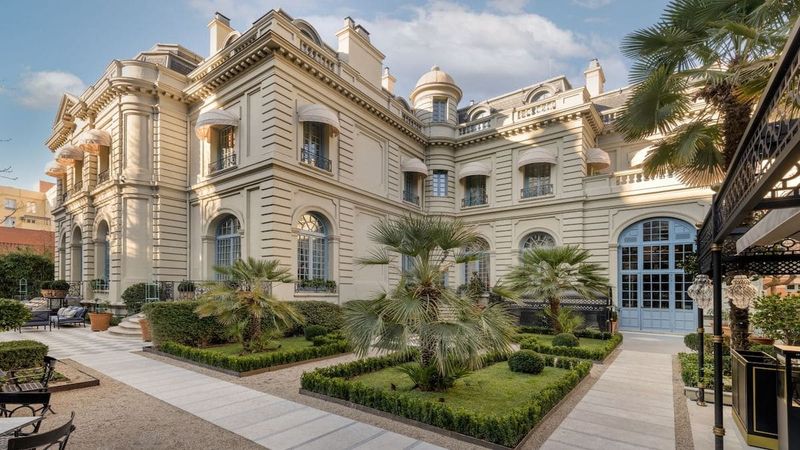
Four Seasons Firenze follows at twelfth, a Florentine palazzo where Renaissance bones meet contemporary service. At 18th, Casa Maria Luigia in Modena makes its debut, earning the highest new entry award. The property is the work of Massimo Bottura and Lara Gilmore, and it operates as an extension of the culinary philosophy that defines Osteria Francescana: hospitality as narrative, where every detail carries intention.
Paris places four hotels within the ranking. Hôtel de Crillon climbs nine positions to 14th, a rise that reflects renewed attention to its interiors and service protocols. Le Bristol sits at 19th, Cheval Blanc Paris at 20th, and Plaza Athénée, a newcomer, at 41st. Beyond the capital, Hôtel du Couvent in Nice ranks 38th and receives the Art of Design Award, recognition for interiors that balance monastic origins with contemporary materiality.
Claridge's leads the United Kingdom at 13th, a Mayfair institution where Art Deco geometry frames a hospitality model refined over decades. Raffles London at The OWO places 28th, The Connaught 49th, and Estelle Manor in Oxfordshire rises four positions to 43rd. The British entries share a common thread: they draw on historical architecture without succumbing to pastiche, allowing the past to inform rather than dictate.
Asia's Expanding Footprint
Beyond the top positions, Asia's presence deepens across the list. Mandarin Oriental Qianmen in Beijing arrives at seventh, a courtyard property that reinterprets hutong urbanism within a luxury framework. Upper House Hong Kong takes eighth, a hotel that privileges space over ornamentation, its interiors unfolding with the calm of a private residence.
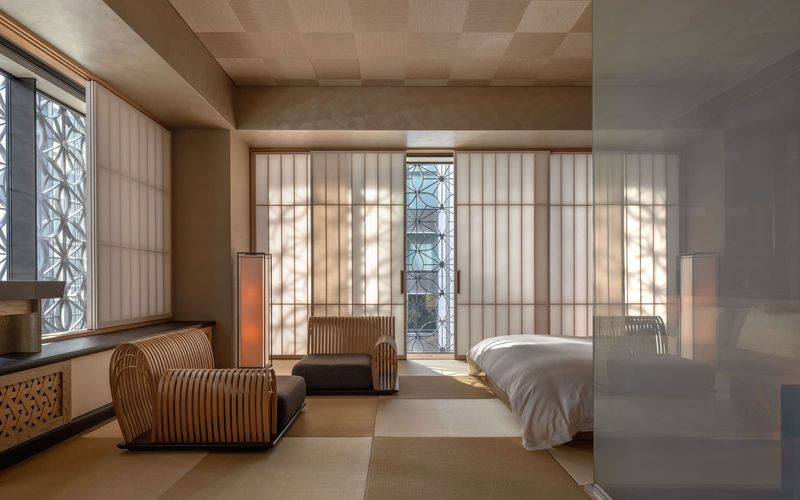
Japan contributes four properties, led by Aman Tokyo at 11th. The hotel occupies the upper floors of Otemachi Tower, and its design philosophy centres on reduction: tatami, shoji screens, and stone baths that foreground material over embellishment. Patina Osaka takes 33rd and wins the best new hotel award, a property that engages with the city's merchant history through spatial organisation and craft.
Raffles Singapore sits at 17th, a colonial-era landmark where whitewashed arcades and tropical gardens persist as counterpoint to the city-state's vertical ambitions. Bulgari Tokyo places 24th, and Park Hyatt Kyoto 37th. The Peninsula Hong Kong, a name synonymous with mid-century luxury, appears at 46th, a reminder that legacy alone does not guarantee elevation in a ranking increasingly attentive to contemporary innovation.
The Americas and Beyond
Rosewood São Paulo makes an 18-place ascent to sixth, becoming the highest-ranked hotel in South America. The climb reflects a broader recognition of Latin American hospitality, where design increasingly draws on regional materials and craft traditions rather than importing European templates wholesale.
Mexico places three properties within the ranking. Chablé Yucatán sits at ninth and wins the Eco Hotel Award following assessment by the Sustainable Restaurant Association, an accolade that acknowledges ecological integration beyond superficial gestures. One&Only Mandarina in Riviera Nayarit ranks 23rd, and Las Ventanas al Paraíso in Los Cabos climbs 19 positions to 25th, earning the highest climber award. The latter's rise speaks to a recalibration of what coastal luxury entails, moving away from resort sprawl towards more intimate engagement with landscape.
In the United States, San Ysidro Ranch in Santa Barbara debuts at 22nd, a property where bungalows nestle into hillside gardens, prioritising privacy over spectacle. Amangiri in Utah enters at 45th, a desert retreat where sandstone and concrete merge with canyon topography, the architecture reading as extension rather than imposition.
Middle East, Africa, Oceania
Atlantis The Royal in Dubai claims fourth place, along with awards for best hotel in the Middle East and best beach hotel. The property's scale is monumental, a vertical resort that redefines what a beachfront hotel can accommodate. Jumeirah Marsa Al Arab, also in Dubai, sits at 15th, while The Peninsula Istanbul makes its debut at 31st, a sign of Turkey's expanding presence within the luxury hospitality conversation.
Africa is represented by two properties: Royal Mansour in Marrakech at 26th and Mount Nelson in Cape Town at 34th. Both draw on distinct regional identities, the former through riad architecture and Moroccan craft, the latter through Cape Dutch heritage and botanical gardens that predate the hotel itself.
Capella Sydney stands as Oceania's sole entry at 16th, a harbour-facing property where sandstone warehouses have been reimagined as contemporary hospitality infrastructure. The scarcity of entries from the region reflects ongoing challenges in balancing boutique scale with the infrastructure demands of a global ranking.
Recognition and Legacy
Nihi Hotels co-founder James McBride receives the Icon Award, acknowledgement of a career spent redefining remote hospitality, particularly through Nihi Sumba, which appears at 35th. Badrutt's Palace in St Moritz is recognised for its approach to hospitality, a hotel where Alpine tradition and winter society intersect across more than a century of operation.
The ranking, now in its fourth year, continues to provoke debate over methodology and representation. An academy of more than 800 voters ensures breadth, yet the list inevitably reflects the geographies its voters inhabit and the circuits they travel. Asia's dominance in the upper tiers signals not just quality but visibility, a continent whose hospitality infrastructure has matured rapidly over two decades.
What the 2026 ranking makes clear is that luxury hospitality no longer orbits a single axis. The properties that rise to the top are those that engage deeply with place, whether through materials, spatial organisation, or cultural reference. Rosewood Hong Kong's repeat win is not an anomaly but a confirmation: the hotels that endure are those that understand the city, the harbour, the river, the canyon as more than setting. They are co-authors.