Inside the Private Hacienda Where Patrón Welcomes Its Most Devoted Guests
Deep in the agave highlands of Jalisco, the tequila house has transformed a historic estate into an invitation-only retreat for those who want to understand the spirit at its source.
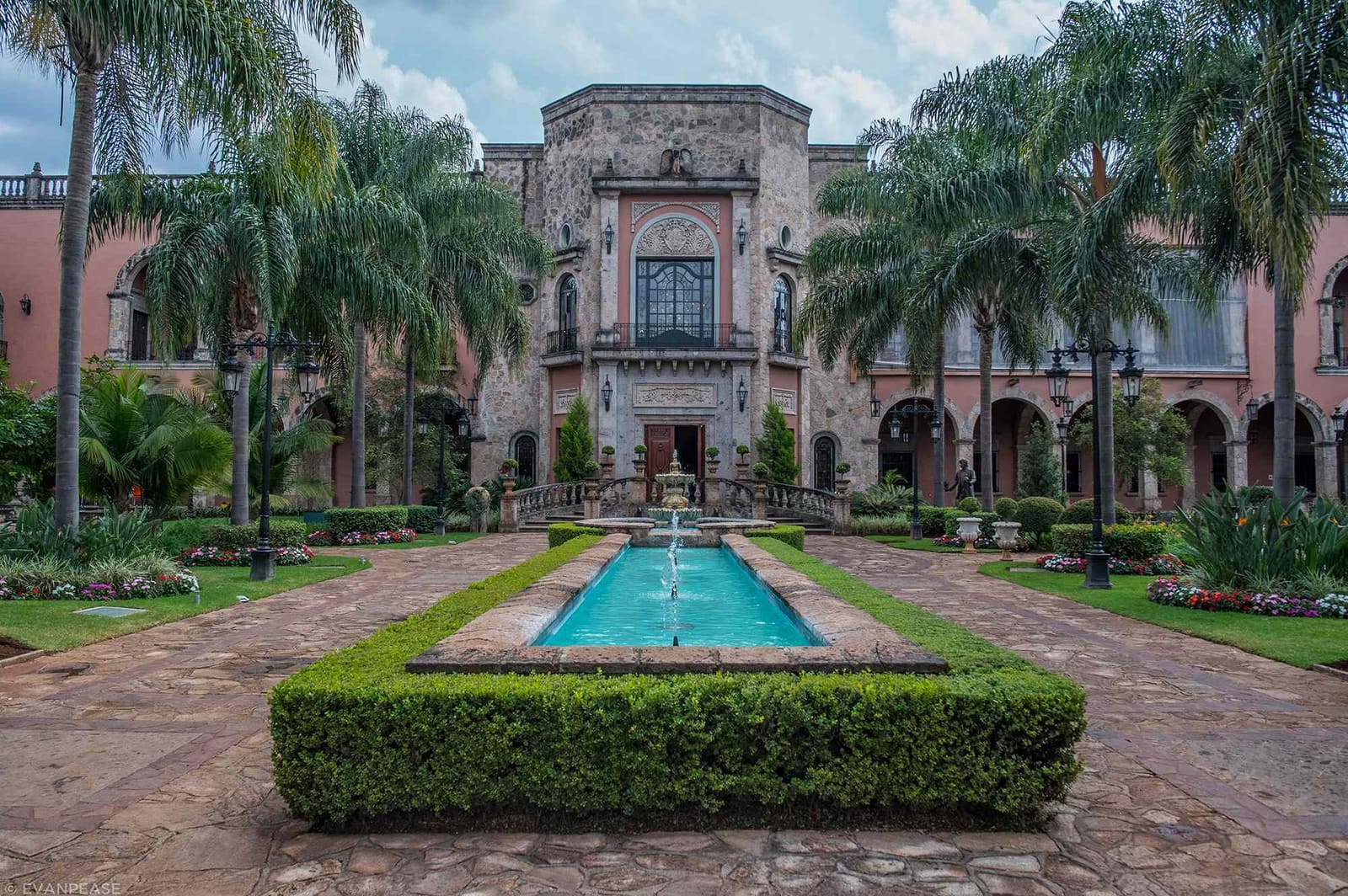
A Locked Gate in Agave Country
The road to Atotonilco el Alto climbs through fields that ripple silver-blue under the highland sun. Here, in the volcanic soils of Jalisco's Altos region, agave piñas grow fat and sweet, their sugar concentrations higher than anywhere else in tequila country. It is a landscape of patience: each plant takes seven to ten years to mature, and the families who tend them have done so for generations. Somewhere among these fields, behind a locked gate and a long gravel drive, sits a hacienda most visitors will never see.
La Casona is not a hotel in any conventional sense. It does not advertise. It does not take reservations from the public. Instead, the estate functions as a private guesthouse for Patrón, the tequila producer whose distillery surrounds it. Invitations arrive quietly, extended to brand partners, industry collaborators, and a small number of enthusiasts whose interest in tequila runs deeper than the bottom of a glass. Those who accept find themselves not merely touring a facility but inhabiting it, living for a few days inside the rhythms of production, harvest, and craft that define one of Mexico's most internationally recognized spirits.
The decision to open such a space speaks to a broader shift in luxury hospitality, one in which exclusivity is measured not by thread count or Michelin stars but by access to process, to the people and places that shape a product. It is the same impulse that has driven wineries to build guest villas and whisky distilleries to offer masterclasses in their cooperages. But tequila, with its deep roots in Mexican culture and its recent surge in global prestige, occupies a particular position. To stay at La Casona is to step inside a narrative that stretches from pre-Columbian agave cultivation to contemporary debates about terroir, sustainability, and the commodification of tradition.
The Estate Itself
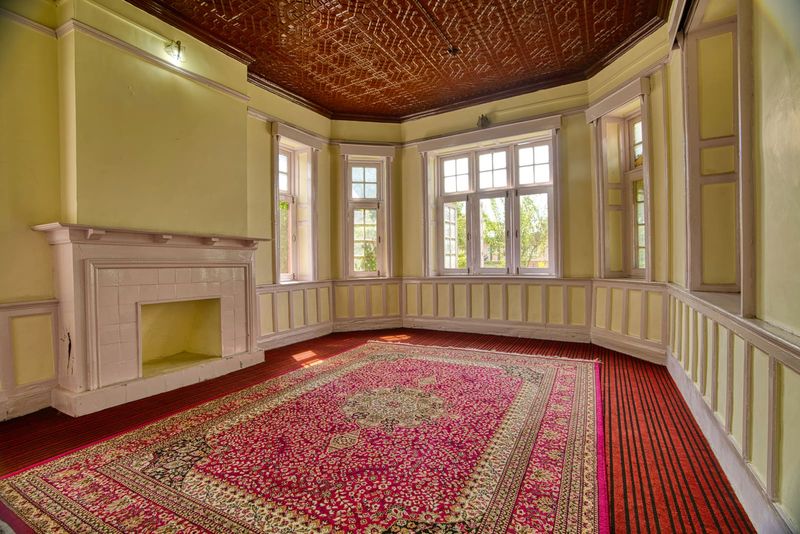
La Casona occupies a restored colonial-era building within the grounds of Patrón's Hacienda Patrón distillery complex in Atotonilco el Alto. The architecture is典型 of the region: thick adobe walls painted in warm ochre, carved wooden doors, interior courtyards open to the sky. The restoration respected the bones of the structure while introducing the amenities expected by contemporary guests: climate control discreetly integrated, plumbing modernized, furnishings that nod to both Mexican craft traditions and mid-century restraint.
The guesthouse can accommodate a small number of visitors at a time, though Patrón has not publicly disclosed exact capacity. What matters more than the number of beds is the intimacy the scale allows. Meals are prepared by a private chef using ingredients sourced from the surrounding region: heirloom tomatoes from nearby farms, cheeses from Jalisco dairies, fish brought up from the Pacific coast. Breakfast might be chilaquiles with salsa made from roasted tomatillos and árbol chiles; dinner, duck confit with a mole that takes two days to prepare. The beverage program, unsurprisingly, centers on tequila, though the focus is educational rather than indulgent. Guests taste through different expressions, learning to identify the grassy notes of a blanco, the vanilla and caramel that barrel aging imparts to a reposado, the complexity that time and oak bring to an añejo.
Immersion in Production
What distinguishes La Casona from a luxury hotel with a tequila bar is proximity. The guesthouse sits within the distillery itself, and guests are encouraged to move freely through the production areas during operating hours. This is not a sanitized visitor center with roped-off viewing platforms. It is a working facility, and the experience reflects that.
Mornings often begin in the fields, where jimadores harvest agave with coas, the same curved blade their grandfathers used. The work is physical and precise: a skilled jimador can strip the spiky leaves from a piña in under a minute, revealing the heart of the plant, which can weigh upwards of forty kilograms. Back at the distillery, those piñas are halved and slow-roasted in traditional brick ovens, a process that converts the plant's complex carbohydrates into fermentable sugars. The scent that fills the air is sweet and vegetal, like caramelized pineapple with an earthy undertone.
Fermentation happens in small wooden vats, and distillation in copper pot stills. Patrón has long emphasized its commitment to traditional methods, even as the brand has scaled globally. Watching the process unfold in person clarifies what that commitment entails: labor-intensive techniques that prioritize flavor over efficiency, equipment that requires constant attention, a pace determined by biology rather than production targets.
Guests at La Casona are invited into these spaces not as tourists but as students. They may taste unaged tequila straight from the still, sharp and floral and nothing like the smooth spirit that emerges after filtration and resting. They may sit with the master distiller and discuss the impact of yeast strains on flavor, or the way altitude affects fermentation temperatures. These are conversations that assume genuine interest, and the format rewards it.
The Broader Context
Tequila has undergone a remarkable transformation over the past two decades. Once dismissed in many markets as a party spirit, best consumed quickly with salt and lime, it has emerged as a category of serious interest to collectors, bartenders, and connoisseurs. Premium and ultra-premium expressions have proliferated, and with them, a new attention to origin, production methods, and the people behind the bottle.
Patrón has been both a beneficiary and an architect of this shift. Founded in 1989, the brand helped establish the contemporary premium tequila category, positioning itself as a luxury product at a time when few tequilas commanded luxury prices. Its success paved the way for other high-end labels and, more recently, for a wave of celebrity-backed brands that have further elevated the spirit's cultural profile.
Yet this success has not been without tension. As demand for premium tequila has surged, so too have concerns about sustainability, fair labor practices, and the preservation of traditional production methods. The agave plant's long maturation period means that supply struggles to keep pace with demand, leading to price volatility and, in some cases, the use of immature plants that yield inferior tequila. Meanwhile, the consolidation of the industry under large multinational corporations has raised questions about authenticity and the commodification of Mexican cultural heritage.
La Casona exists within this context. It is, in one sense, a marketing tool, a way for Patrón to deepen relationships with key stakeholders and to reinforce its brand narrative. But it also represents an investment in education and transparency, an acknowledgment that consumers increasingly want to understand not just what they are drinking but where it comes from and how it is made. The guesthouse offers a level of access that few brands are willing or able to provide, and in doing so, it invites scrutiny as much as admiration.
What Guests Take Away
Those who have stayed at La Casona tend to describe the experience in terms of shift: a shift in how they think about tequila, about craft, about the relationship between place and product. The exclusivity of the invitation adds a layer of prestige, certainly, but the substance of the visit lies in the details. It is the sight of a jimador's calloused hands. The smell of roasting agave at dawn. The taste of tequila so fresh it has not yet settled into itself.
There is also the landscape. The Altos region is high and dry, its light sharp and clear. In the late afternoon, when the sun drops toward the horizon, the agave fields take on a metallic sheen, and the mountains in the distance turn violet. It is a place of stark beauty, and spending time there makes it impossible to think of tequila as a generic commodity. It becomes, instead, a product of this specific soil, this specific climate, this specific tradition.
For the spirits industry, the model La Casona represents may point toward a future in which brand experiences are less about spectacle and more about substance. As consumers grow more sophisticated and more skeptical of marketing narratives, the opportunity to engage directly with production, to ask questions and receive honest answers, becomes increasingly valuable. Whether other brands will follow Patrón's lead remains to be seen. Building and maintaining such a space requires significant investment, and the invitation-only model limits its reach. But for those who do receive an invitation, the experience offers something rare: a chance to understand a spirit not as a bottle on a shelf but as the culmination of geography, history, and human effort.
The Question of Access
The invitation-only nature of La Casona will inevitably frustrate those who wish to visit but lack the necessary connections. This is, by design, a space for the few rather than the many. Yet it is worth considering what this exclusivity serves. In an era when distillery tours have become a standard component of the travel industry, often sanitized and scripted for mass consumption, La Casona offers an alternative: depth over breadth, intimacy over scale.
There is also a practical dimension. A working distillery is not a theme park. Integrating guests into the daily operations requires careful coordination and a willingness on the part of the production team to accommodate visitors without compromising their work. Limiting the number of guests and vetting them in advance ensures that those who come are genuinely interested and that their presence does not disrupt the facility's primary function.
Still, the exclusivity raises questions about who gets to tell the story of tequila. If access to the source is reserved for brand partners and industry insiders, then the narrative remains controlled, shaped by those with a vested interest in maintaining a particular image. For all its transparency, La Casona is still a curated experience, and what guests see is what Patrón chooses to show them.
These tensions are not unique to Patrón or to tequila. They are inherent in any effort to balance commerce with culture, to commodify tradition while claiming to honor it. The best that can be said is that La Casona represents a more thoughtful approach than most, one that takes seriously the idea that understanding a product requires understanding its context.
The Long View
Tequila's moment in the global spotlight shows no sign of fading. Sales continue to climb, new brands launch regularly, and the category has secured a foothold in markets far from its Mexican origins. How the industry navigates this growth, how it balances tradition with innovation and profit with responsibility, will shape its future.
La Casona is a small piece of that larger puzzle. It will not solve the industry's challenges, nor is it meant to. But it does offer a vision of what engagement with craft can look like when done with care and intention. It suggests that there is value in slowing down, in spending time at the source, in recognizing that the best stories are not told but lived.
For those fortunate enough to receive an invitation, the hacienda offers a rare gift: the chance to see tequila not as an end product but as a living tradition, rooted in a specific place and carried forward by people who have devoted their lives to its craft. And perhaps, in the end, that is the most valuable thing any brand can offer: not a product, but a deeper understanding of what that product represents.